Episode 12 - Katie Allen
29 June 2020 · Steve Prior
Listen to this episode ·
Subscribe in Apple Podcasts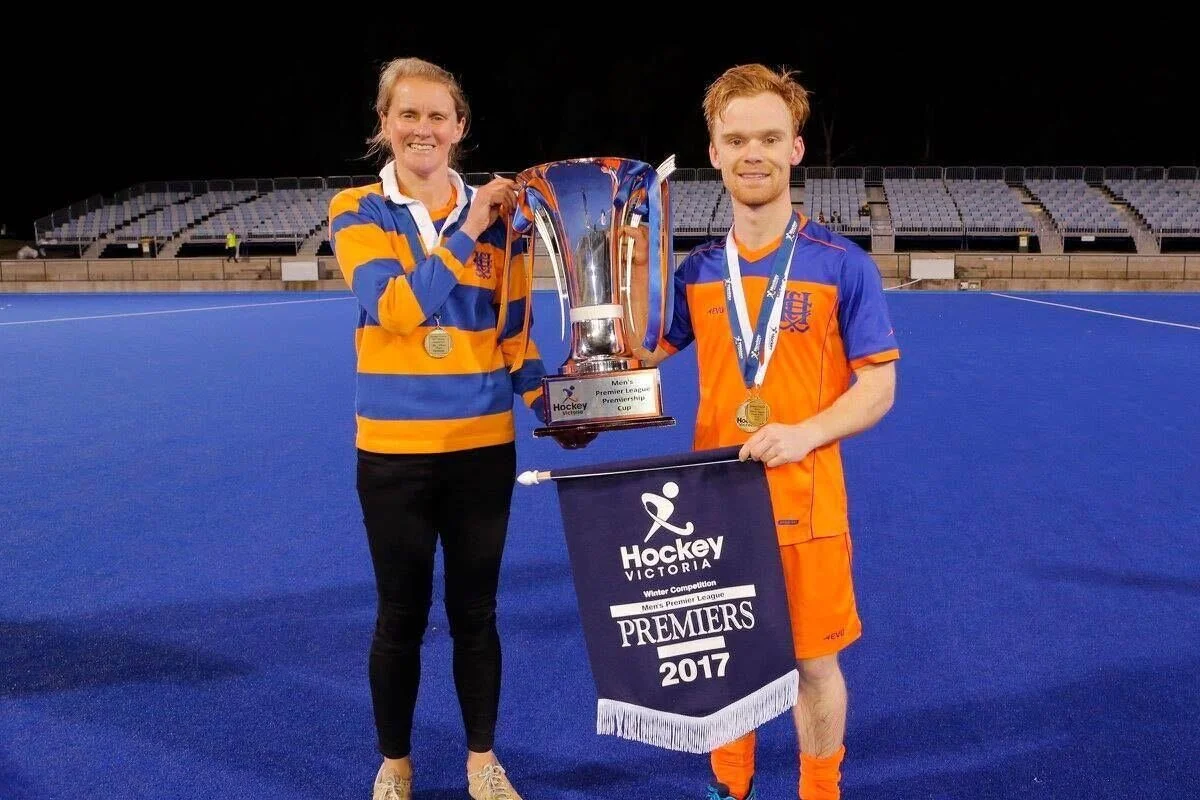
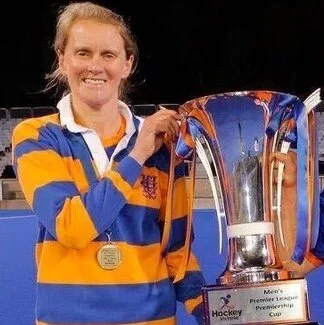
Katie took the helm of our Men’s Premier League team in 2017, coaching the group through a season of sustained dominance leading to an emphatic premiership in September.
Now assistant coach at the Hockeyroos, Katie or KA boasts an incredible hockey resume including being a member of the Australian Women’s Team of the Century, joint 2005 FIH Player of the Year and holding Commonwealth, Champions Trophy, World Cup and Olympic gold medals.
James Webster, Premier League captain under Katie, joins the podcast crew to host KA and discuss her incredible career. Learn how she started her hockey journey and overcame selection setbacks and challenges; the influences of standout players, super coach Ric Charlesworth and memories of that famous victory in Sydney.
Hear how the Hockeyroos are working through isolation and adapting to the new Olympic cycle, how the game has changed over the years and some fun memories of coaching the group at Camberwell.
00:00:33: Introduction
00:00:50: Working through Isolation
00:01:55: Introduction to Hockey
00:02:51: Adapting the Olympic Cycle
00:10:01: Hockeyroos Playing Memories
00:17:05: 2000 Gold Medal Match
00:18:57: Standout Players
00:22:07: Changes in the Game
00:25:39: Ric Charlesworth Influence
00:30:34: Selection Setbacks
00:42:31: Coaching Influences
00:52:22: Quick Answers
00:54:44: Coaching Men & Women
00:55:43: Balancing Life
00:59:16: Advice for Young Players
Episode transcript
⚠️ Automated transcript
This transcript was generated automatically from the episode audio and lightly corrected. It may still contain transcription errors, and individual speakers are not labelled.
Our guest this week is a Commonwealth, Champions Trophy, World Cup, and Olympic gold medalist, joint 2005 FIH Player of the Year, and member of the Australian Women’s Team of the Century.
Welcome to the Camberwell Hockey Podcast. This week, James Webster presents Katie Allen, Assistant Coach with the Hockeyroos, and of course previous head coach of our men’s Premier League group. Here’s Jimmy.
All right, welcome to all that are tuning in. I have the pleasure of talking with Katie Allen, Australian hockey legend and obviously a close friend of the Camberwell Hockey Club. Katie, welcome to another edition of the Camberwell Club podcast.
Thanks, Jimmy. Great to be here.
I guess to start, very, very simple: what have you been up to during this isolation period to keep yourself busy?
Yeah, I’ve still been working over in Perth with the national set-up. We’ve been down to four days a week, but doing some other projects that are sort of linked to the pathway, and things that we were targeting to do after the Olympics, so we sort of moved them forward. And then I’ve just been doing some study and a little bit of backyard tennis in the courtyard.
Nice.
Hitting against the wall, going back to my youth. But nothing much else, really.
How’s the eye? You still got the eye in good condition?
Yeah, it’s okay. My grandpa would probably be not that proud. He was a tennis coach, and he’d probably wish I was continuing to play. But it was good fun. Keeps me sane.
Nice, nice. I guess very basic, but how did you get into hockey?
I just started playing at school, actually, in my primary school in Adelaide. One of the parents of one of the kids at the school was part of a club, Burnside Hockey Club — much more like Camberwell. And he coached at the club, and he also started up a school team with the primary school. So I was a sporty kid, I just played everything and tried it at primary school, and went from there.
Nice. I remember, I think David Wansbrough spoke with both LB and Soph not that long ago — very, very similar — about the lead-up and the preparation for an Olympic year. And then obviously with this COVID lockdown period that we’ve gone through, and the devastation that’s had on a lot of sport, and the Olympics being postponed until next year: how has that changed preparation for you as a coaching group, but also obviously the players, and from a motivation point of view as well? How’s that differed for the whole playing group?
Yeah, it’s thrown things a bit. Initially it probably hit me pretty hard and quick when it all stopped. We were pretty much at the gym on the Monday morning with all the squad, and then slowly we got word that it was shutting down — the program was shutting down, and the Olympics — it was sort of within one or two days that it was postponed a year. So it happened really quick.
Well, it took a couple of days, because it was the logistics of getting people home and out of Perth, and then stopping the training program. But then, just the shock of everything stopping, and it being over, I guess, for what we were doing. We had such a short-term goal — we were within six months pretty much of the Olympics. So it sort of took us by surprise. And I think from the coaching group’s perspective, we went into the reaction of continuing to work and continuing to do things, and sort of scrambling a bit.
And then, as I said, it hit me quite hard that it would be another year. So more sort of shock, I think, to then go, okay, well, we have to sit back and reassess what we’re doing — everything. Because you plan everything down to the day, and the lead-up, and the pre-competition, and the loads of people. And even your own — like, I’d moved to Perth, so I’d planned to reassess things after August and see where I’d go next. So I think I’m still in a bit of shock about that, because it’s quite a big thing that you’re working to in a short-term goal.
I reckon that’s a really good point you brought up as well — with yourself, looking to replan after that August time. Because it must be that players either coming to the end of their playing career, or a little bit older, now have to get themselves up for another whole year; or now they’ve got younger players which may be pushing them out as that year goes on. So it must be very difficult from a motivation point of view — some of the players just thinking, where are they at?
And do they want this to go for a whole other year of that preparation stage?
Yeah, I think you’re exactly right. There are a number of players that were going to finish up, or were considering finishing up — whether it was through work, or having kids, or just travel, or there were other things on their agenda.
And they’d sort of put things on the back burner for this period of time we’re full-time training and leading up to a very short-term objective. So I do think a couple of people have really struggled with that. It’s taken them a while to work out what to do about it, and let it sit with them, I guess, and work out whether they want to keep going. And for others, it’s just business as usual — they’ve been hanging out to get back into it, and are sort of in the middle of their careers. And then you’ve got the younger ones who are probably given an opportunity, really, that they maybe were on the fringe of before, just coming in, but now get an opportunity with a bit more time. With six months, it’s a bit of a bonus for them.
So it’s a whole mix of situations, and it’s probably the same, really, with the coaching staff. I think the head coach is probably the hardest hit with it, because they really were head-down and the pressure’s really on to perform. You plan everything down to that detail that you need — to plan to win and be successful — and then it throws things to, okay, is it going to be the same squad, or what can we do in this time? Can we go backwards? All of those things sort of creep in, whereas we were on a mission, really. You’re pretty focused at six months to go for the Olympics. So some doubts and questions come in.
I guess from a selection point of view as well: no Hockey One this year, and doubtful when international hockey will restart again. So how do you go about the selection for next year? What does that look like?
Yeah, well, it’s disappointing there’s no Hockey One. I mean, really, for everyone — players that love playing at that level, and the national players love going back to the states, and it gives that broader group an opportunity to play at that level. And as you say, it’s for selection also. We’ve planned a couple of camps — they’re not all finalised yet, but selection camps, I guess. So a broader group of players would be invited in, including the senior squad at the moment, but a group broader than that — the development squad athletes — to come in and actually play a competition.
So a two- or three-team competition, and use that as selection. That’s really going to be it, in November. Other than that, it’ll be the performance in training, either in Perth or in the different states. We’ve still got some people based, as you said, with Soph and LB in Melbourne, and others in Queensland and New South Wales. So it’ll certainly be a compromise selection from what we’re used to, but it’s all that we can do at this stage, even with the travel restrictions and border restrictions at the moment still with WA.
We might move on to your playing record. I know that you’re a very humble person, but reading through your achievements over your playing career is just absolutely incredible. I’ll just run through a bit of a list: Olympic gold medalist at the 2000 Olympics, 2005 FIH World Player of the Year, two-time World Cup gold medalist, three-time Champions Trophy gold medalist, Commonwealth Games gold medalist, and also named in the Australian Women’s Team of the Century. Incredible list. During that period that you came through, there were some amazing players — Alyson Annan, Nikki Hudson, Rechelle Hawkes, just to go through a few names there. In terms of that era that you came through, the Hockeyroos team were known as one of the — or the — best team going around in Australia. From that era and your playing career, what are some of the fondest memories that stick out for you?
It really was a privilege to be in that era and be part of the Hockeyroos for that length of time. I’m probably realising that later on in life. I think at the time it’s a slog — it’s like anything, you’re doing it and it’s hard work. For me, I was probably in and out of the team at various times, and so never quite settled. And whilst that was a good thing in terms of always having to push myself, it’s always probably an uncomfortable place to be in at times, where you’re trying to get selected and be the best you can be at that level.
So now I guess I reflect on it and think how fortunate I was. You mentioned some of those names, and you could list ten, twenty more over the course of the ten years that I did have the privilege to play with and learn from. I came through South Australia, so I had the likes of Juliet Haslam and Alison Peake that I played with in my state team, and they were senior players in the national squad, so I sort of saw them firsthand in my own state and saw how they operated.
So I learnt a lot from them, and was, I guess, helped by them once I was in the squad. And then I had other senior players around me — like someone like Jen Morris, who I still think was the best fullback ever to play the game. And Leanne Tooth was before that even, and I got to overlap with her basically — the end of her career was the start of mine. She played in Seoul as well, and in Atlanta she pretty much was in the team, in the place that I was going for in Atlanta when I missed out. But she was a legend of the sport as well.
But I guess that’s what I think about fondly now — how much I learned from the people I played with. The different stories of people within that squad, and how they got there, and what they passed on to me — whether it was just yelling at me to pull my head in, or run, or do something better.
Are there any players that you remember that were quite vocal? Because I can tell you right now, I know a player that comes straight to my head, that was a Camberwell player — I think you might be thinking of as well — that used to yell, like, at players.
Yeah. Well, everyone that played with me in state would say it was me, so I can’t put people in a bad light. But in the national program, I think it was funny — it was an era of really strong personalities. Any number of people. I remember Jen Morris was — like, she was injured for two years and on the sideline. She’d done a knee and had complications. She was at every training session, and she used to just get stuck in. I’d be whinging about something and she’d be saying, get on with it, and run, and keep going, push yourself.
I remember that — I probably remember it fondly now because I think of how hard it would have been for her. But seeing this younger player just get out there and whinge, or not run, or whatever — she got stuck into me off the field, which now I think was the best thing for me. But, oh God, it’s—
Pushed you a lot.
Yeah, people were really competitive — probably more so just competitive at each other versus yelling at each other, that way. It was more about competing against each other — the likes of Juliet, and Rechelle Hawkes, and Kate Starre, and Jen. And Trini Powers, she had a good chirp on her — she’d have a go behind the scenes and stir you up. So I think it was just a really competitive era. That’s the other thing I remember about it — I remember how much I learnt, but I also remember how competitive it was.
And I think that striving really rubbed off on me. You couldn’t help but just go with it, and try and be the best you could be, because you had to be, to survive. It sort of seemed harsh at the time, but now I think about it, it really gave me a foundation into later life. I really do remember winning, and I remember the games — we won a lot, but I never tired of winning, and the big tournaments.
That must be a great feeling.
Yeah, I know. And I’m a bit spoiled as well, but I know how hard it is to win, and so now I appreciate it even more. But I do think the World Cup in Holland was probably a really special highlight — playing against Holland in the final. We were down 1–0 within a minute, and it was, you know, 14,000, 15,000 people in a soccer stadium that had been converted. It was like nothing else, having pretty much 15,000 Holland fans, and the singing of the national anthem at the start, and the wave of support they had for them — how hard that was for us, and being down.
And then we ended up winning that, and that was huge. And just the environment — Holland do hockey so well, and that atmosphere was just like being in a soccer match. So I mean, that, and — I mean, Sydney 2000, we had that support and it was 15,000, and everyone was yelling for us, and to win in front of all those people and in that environment was pretty special. It was clearly the most special thing, as well, from a prestige point of view, and how long we’d been working towards it. So those big things are big memories for me, definitely.
It must give you goosebumps when you watch replays. I watched it the other day — about a two-minute segment of that gold medal match in Sydney. It must just give you goosebumps when you see pictures again, or you see videos again, after — what are we — 20 years ago now?
Yeah, it’s 20 years ago. It’s funny — I watched it for the first time the other day. I’d never watched it, never seen it. I’d seen some highlights and things — we had our video operator put a VHS video package together for us to have afterwards, like a bit of a take-home, and I kept that, and I’d played that back when video recorders were actually functioning.
Yeah, but I got sent the link of it recently and watched the whole thing through, and it was funny. Some of it I really remember like it was yesterday, and others I just had no idea things happened in the game, or around the game, that did. It was a bit of a blur — I think it was just pretty intense at the time. So it’s special, because even just watching, I think I reflected on how well we played in a pressure game. I always think that’s a true test of players and teams and coaches — to be able to produce it when it really matters. And to watch that from like being an outsider almost, I was certainly very proud of us, and that time and that performance, I guess, as well.
Yeah, amazing. I know we mentioned a few, and you also mentioned a few players that you came through and played with, but is there one that stands out for you that you just go, she was just the best player I’ve ever played with, and just amazing in all aspects of the game?
It is tough, because of all those players I mentioned for different reasons — they were the best in their position, or the role model for me, or a real leader. I probably still think the best all-round player was Rechelle Hawkes, just for her consistency. She was almost underrated — but I don’t know how she could be, with three gold medals — and being the captain for a long time.
She was just — I say consistent because of the way she trained as well. She was exceptional at every training session. She really worked hard at every training session, but also her basic skills, and her competitiveness, her smarts, her skill — all of that was at this exceptional level, and she always produced it.
And she was very much a team — she played within our team and was not a — you wouldn’t say she starred, but actually, when I watched the game, the 2000 final — and that was her last game, she would have been in her early-to-mid 30s — she was what stood out. She was who stood out to me at the start of the game, and then throughout. You just kept going, oh wow, okay. She just trapped everything.
She was in every contest, and chasing back. So she had all those qualities of being really talented, but also an exceptionally hard worker, and did that for so long. I think she came into the team around ‘86, because she played in ‘88, and then she went right through to 2000. And I don’t remember her having a bad training session. So I guess, to me, she was probably the best all-round. I mean, I think clearly the best talent and skill player was Alyson. I think everyone would acknowledge that — having had to play against her every training session, and play against her when she was in New South Wales.
And she definitely had it all. So from a pure skill and talent point of view, she was pretty scary.
But I guess there were lots of players for different reasons — like the strikers that I had to train against and try and tackle, to the players in my position that I was fighting with. I found the midfield group were amazing, in terms of how much they wanted the ball all the time, and were always reliable under pressure. But I’d probably say Rechelle in terms of the all-round ability, and what she represented, I think, to our team, and led the team.
Someone to look up to.
Yeah, definitely.
I mean, now that you’re involved with the Hockeyroos from an assistant coach point of view — and obviously playing — what are the main changes? What do you see from when you were a player to the players of today, who are involved in that inner sanctum?
Well, it seems much faster. I think the rules have changed that, in terms of the play-on rule and interchange. We had interchange quite constant in our era — it sort of came in — but it certainly wasn’t as rapid. So I guess everyone’s able to maintain that higher level and higher intensity and speed.
I think definitely the speed of the game has increased. The difference in terms of groups of players — it’s funny that there’s a similar thread of drive, and want for team success, and a real push for the team to be better. I think I see that in the group today as well. And there’s a real value — they seek out and value the lessons of past
and past teams and past players. I think they acknowledge the importance, and I guess the honour it is, to play for your country and to play for the Hockeyroos — who, it’s a well-known and such a well-established, successful team. So I think there’s a real value in that, so they definitely have that. I think they whinge as much as we whinged back then. We always go, yeah, we used to do these things and we were tougher and all that, but I sort of reflect a little bit and think, yeah, I think we whinged a lot when we were going through — about how hard it was, or about the establishment, or coaches. And I think they definitely do that now. I just don’t hear as much of it, because I’m on the dark side now.
But there’s a lot of those things that have gone through, and we’re pushing now, and I think there’s more of it. There’s more of a competitiveness, and that sort of not shying away from putting yourself out there and actually striving to be better than the next person, or better yourself. I think that sometimes — I’ve seen at times in the past that hasn’t been there as much. It’s a hard measure against the group that I was in, because I do think we were a bit nuts with that, like the competitiveness part of it — we probably went a bit overboard.
But I think there’s definitely a core group of players now that are building that and bring that. And whilst it makes for some tension and conflict at times, I think it’s the only way you can really push. And as long as you can—
A bit natural as well, I guess.
Yeah, yeah. As long as you can do it with respect, and an acknowledgement that it’s not about real conflict — it’s just about pushing each other to be better. I think when you can acknowledge that, then you’ll get to be the best you can be. So I think we’re getting there with that.
This person has obviously had a big impact on your life. And I’ve just got a few quotes here from Ric Charlesworth’s book, The Coach: Managing for Success. He describes you as a wonderful young woman whom I would be proud to call my daughter. He also describes you as perhaps the most physically courageous athlete I’ve ever known, with preparedness to put her body on the line to stop the opposition from scoring. I mean, that little quote just there rings so true when I think about your competitive nature — but even just playing games against you, but also with you, it didn’t matter who it was, you were just willing to do everything. And I guess from just reading out those few little lines there from Ric Charlesworth’s book — he obviously adored you — so what was his impact on your life and hockey?
Yeah, he clearly wrote that after he finished coaching me. Yeah, I didn’t feel that adoration at the time! It’s funny when you look back — and I have a really good relationship now with him as well — but at the time, it’s just a coach, and he was a coach that dropped me and pushed me to be doing more. So it’s funny how afterwards you hear those things and you think, oh, I didn’t really know that. He did have a big influence on our whole group, and I think the way that we operated. First of all, I always do reflect on the fact that he trusted me as a player. I wasn’t a fast, athletic player. I wasn’t a really skillful player.
I was a defender that did those things he talked about. But I guess he saw that, and valued that in me, and trusted that I could produce at that high level. And I think that always stayed with me, and enabled me to be confident in what I could do, and what I could bring that was important for the team. I think that was really important to my own development. I think the work ethic and his intensity — he definitely brought that, and that suited me as well. As you said, I can be fairly intense when it comes to playing hockey, and coaching probably as well, most definitely. So there was a number of us, as I’ve referred to, that were all pretty competitive and intense.
So I think he drove that culture, and that striving to not stop and be happy where you are. Sometimes I resented that, because it was like, oh, can’t we just enjoy what we’re doing and be happy now? But in hindsight, that was the thing that really pushed us as a group. And now, as a coach, I see a lot of things that he did in terms of how he structured training, and how he really focused on the game — the team’s game that you’re playing — rather than always focusing on opposition and tactics. And he really focused on how we could be exceptional and take the game further.
He really advanced the game, I think — and our perceptions of what was possible. So all those things, I guess, rub off on you, especially after two Olympic cycles. Lots of his quotes, and lots of the things that he used to say, I find myself saying now, and reflecting on. Isn’t that funny?
Isn’t that funny?
There’s a number of us that, every now and again, see each other — whether we’re coming into hockey circles, or just as friends — and that stuff comes up all the time. So many different things. And I guess when you’re in this environment, when you’re a full-time athlete, you really do get exposed to your coaches and the people around you a lot. So what they do, and how they act, and how they operate, rubs off on you, definitely.
I guess I would encourage anyone and everyone to read — obviously there’s a chapter within the book that you wrote yourself, and you are a bit of a wordsmith. There was a chapter within his book that you wrote, and there were a few parts that I really took to and got a lot out of. You spoke about the stresses leading up to every selection that was coming up. But the thing that got me — and don’t even think about it — how teams used to be announced, and the process of having to call a phone number to just hear if your name was read out, and if you were part of the team. It just seems so bizarre in the world that we now live in, and the way that it would be done now.
Do you remember those moments of calling in, and the stresses involved?
Yeah, yeah, I do. I probably remember them better than some of the games. For me — yes, I was probably always on that fringe, and it was a highly competitive group, so you never really knew if you were in or not. So that certainly heightened it. And the process of phoning in — well, I think I said it in the book — one of them, I’m waiting, you say who you are, and then they looked down the list, and my name being Allen, I’m going to be the first one. And they were looking, and I’m like, oh, well, that’s it.
That was Atlanta. I remember that clearly, because I was overseas at the time as well. So you’re sitting there, wherever you are — I don’t think I had a mobile then, so I was on a landline in your bedroom or whatever. But it’s a bit like the exam, when you’re waiting for it — like exam results or something. We used to open them—
Like, you open the result, or if it’s opening an email or whatever, you’re getting that sort of, whether you’ve passed or failed, or you’re in or you’re out. It’s quite a dramatic and final thing. You kind of go along, training and playing, and you’re still in the mix, but that’s really the final thing — especially for Olympics, it’s the thing that everyone’s working towards.
So it was definitely the most nervous I’ve been. But I do reflect now, in terms of coaching, on how we communicate selection, and the information that you give to players, and the respect that you need to pay, and the time you need to pay to those things — because of how much it meant to me. And I know that players at every level, right through, they put so much into playing and training, and their own drive, and their confidence.
Everything’s on the line. And I think, as coaches, it’s so important to make sure that you give everything the consideration that it deserves, and the respect for the players and what they put in. Because I reflect on those moments of how much it meant to me, and how gutted I was when I missed out as well. You need to respect that, because regardless of whether people make it or not, at any level, they’ve put in the same amount of work.
So I think that’s certainly left me — well, still holds me in good stead for now, coaching and selecting.
You did mention a few times there — which is mentioned in the chapter in the book — about missing the 1996 Olympics, and I guess the impact that it had on you, and the importance, I guess, of failure, of not being selected. And I think there was the wording, value every incident, and you mentioned how that will remain with you forever. How did not being selected shape you as a person, and what lessons and skills did you come away with — probably between that ‘96, not being selected, and being selected at the 2000 Olympics? What did you take away in terms of lessons and skills?
Yeah, I do think it was certainly one of the most important things that I’ve gone through. Because up until then, I had gone through and probably made most teams that I’d been part of, through juniors and national teams. I’d even got into the national team — I’d come in as an injury replacement at a World Cup for Leanne Tooth, who was the vice-captain. So I kind of made this quick rise, and I’d done okay. And then it was the first thing I really missed out on. And I think — in hindsight, I sort of expected to get in, and that was a big mistake. So the lesson I learned from that, it sort of changed my understanding of the world a bit.
I actually do think I didn’t deserve to be in, now that I reflect. But at the time I did — I think I worked really hard, and I thought I was good enough, and I thought I had the belief, I guess, that you work and do everything you can, you’re a good person, you strive and you do the right things, and things will work out for you. That was my kind of understanding, and it kind of worked through life, really — I didn’t have anything happen to me that changed that. Whereas this, I think, did. I invested everything into that, but in the end I think it made me realise, well, you can do that, but you still may not get exactly what you want, or think that you need. And someone might be better than you — in this case, or it could be a job, or a selection, or whatever it is in life. There are people out there doing as much as you, and sometimes more, and sometimes are more deserving. And in Leanne’s case, she was — and I didn’t think that, probably, for two years. But I think it taught me you can do all those things, and it may not work out.
But I guess the thing that I also take with me is that it shouldn’t stop you investing everything. It was probably the hardest lesson, because most of the time when you have that happen to you, in whatever sense, in whatever part of life, you kind of think, why is it — it’s not worth it, why invest everything if you might not get it? And to me, that was the best thing to learn out of it — that, well, I still want to invest. I still think there’s such value in giving everything to whatever that pursuit is, because then you know that you have.
If you don’t then achieve it, that’s only one part of it. You’ve actually achieved a lot by investing, and striving, and becoming — the doing, I guess, of the everyday that you invest in striving for something like a goal like that.
And I guess you could have gone the complete opposite way. You could have not gotten selected and gone, I’m giving up, I’m done. But pushing yourself off the back of that hard time, and then obviously getting selected for the 2000 Olympics and winning gold, must have been an amazing feeling. You must have come away feeling very relieved off the back of that.
Yeah, well, it’s funny — I think I did go the other way for two years after that. I mean, I was still part of the squad over here, but I very much was angry and bitter about it, and sort of resented the environment, and I kind of just hung on, I guess. But I think I just emerged from that. And I was challenged to choose whether I wanted to continue. I was sort of like, oh, I want to go out — I had my teaching degree, and I said, oh, stuff it.
I’m going to go and teach. And I did that. And when it came back to, you know, you have to commit to the full-time environment again, I was like, oh, I don’t want to do it. And I was challenged — I remember Ric challenging me at the time, and I still remember the conversation. He said, you’ve got to choose at this point in your life, because this is what we’re expecting of people that are in the squad, and you can’t do both at this point.
And so I then made that, I guess, the choice — like the active choice of saying, yeah, well, I’m going to continue, and I’m the one doing it. I can’t blame anyone else, or the coaches — it’s my choice to do it, and I’m here because I want to be here. And I think as soon as you get to that point, then you can sort of just get on with it, and take what you can from the environment and your situation. So I think I got there eventually.
And there was a number of people — like, we had in the end four of us that were the train-on players that missed out on the ‘96 Atlanta Olympics — I ended up making the Sydney team.
Great feeling.
Yeah. I guess I think Ric said afterwards that he knew there was a hunger from us. He also included some younger players, and I think he valued the toughness, I guess, that it brings, if you’ve been able to stick at it and keep going.
And you just get a bit more mature, and get probably better as a hockey player, if you can stick at it. I was pretty young early on when I missed out, and so I had time to get better and to mature a bit. The value I had more placed on it when I did get in — knowing what the possibility was, and I still felt I was 50-50 at that time when that happened. I think it definitely ups the value of it, and the achievement, and then getting there and progressing, and end up winning in the end.
Yeah, I guess that’s the other part of when you have a setback or things go wrong — if you can continue on and come out the other side, you do value it more than if you just get it relatively easily, or without a setback. So, yeah.
Absolutely. Post your playing career, you jumped into the coaching career, I guess. And a few things, obviously, from a coaching career point of view: you were Victorian Institute of Sport women’s head coach, 2009 to 2016; you were part of the coaching panel of the Victorian Vipers. You were, I think, in 2016, the assistant coach for the Australian Women’s Junior World Cup team in Chile, which you were a medalist — which was the first time in 15 years at a Junior World Cup. Obviously the important one here is the Camberwell Hockey Club Men’s Premier League coach, and obviously now Hockeyroos assistant coach. We spoke very briefly just earlier on about some of the coaches that you had coming through your time, and some of the impact that they had on you. But now, when you reflect on your coaching style and the way that you go about your coaching, are there any coaches’ theories that you had that you’ve now implemented into your own coaching practice?
Yeah, it’s a great question. I’ve been really fortunate in the influences I’ve had throughout my sporting career, as an athlete, and then worked with coaches as well.
And even outside — I guess I spent quite a lot of time, in between playing and coaching, in education and in teaching, but also in the sports management and welfare industry. So I had quite a different influence from many different people and managers and coaches. So I’ve always tried to learn and take out what I see in those managers and coaches that I can use, and I probably have done that with a lot. Even if I didn’t agree with things that they were doing, or how they were doing it, I probably picked up what not to do.
But I think certainly I picked up around being really well-planned and organised, from a couple of coaches — even just the way that training’s done, or that you progress training over a year, what you’re trying to achieve, and putting a plan in place. And I learned that from teaching as well. In terms of the passion of coaching, and maybe the personal side — I think certainly someone like Ric was good at that, and the emotion of sport and people, and maybe looking at things a little bit differently. Yeah, I had him. And I had one of my first coaches, at club and institute, when I was playing.
Trish Hebley was a really big influence on me. She was a really clear communicator, and it’s something I probably still strive to now. I’m certainly not where she was, but I know how much of an impact that can have when you’re clear and inspiring, I guess, and a good orator — the influence that can have. So I’ve had lots of different coaches and managers, and I’ve tried to take bits and pieces out of all of them. I probably don’t think there’s one part of my coaching that I would attribute to someone — I guess all of them. What I have learned overall, I guess, is that each of them were very authentic and strong in their own way, and brought their own kind of strengths to the table.
And I think for me, that’s what I probably need to, and try to, continue to strive to do — is just bring what I have, and my experience and personality, to coaching, and not try and do it like someone else does. So it’s a fine balance, I guess, between learning from others but then doing what you do well. But it’s not a simple answer.
No, no, it’s not. But no, you answered that very well. Did you always think that you were wanting to jump into the national program and, I guess, be part of that Hockeyroos from a coaching point of view?
No, I didn’t always know that I wanted to be involved in the national team. I actually think that coaching at Camberwell — because it was towards the end of my seven years at the VIS, I was looking for some different influences and a different challenge, to learn as a coach and to think about things differently. And that’s when I came in as assistant coach with Rosie at Camberwell, and had a different role. And that, to me, probably just kept me going a little bit longer in the VIS role, because it changed — I did that concurrently. But then when I finished up with the VIS, I had a real time to myself, and time away. I went back and did some study, and I really challenged — I wanted to think about whether I really wanted to go on or not, and not just do it because it was the next step. I was a little bit burnt out at that time, and I thought, oh, I just want to step back from full-time coaching and see if I really want to do it.
So that time then was with Camberwell, and I took on the head coaching role, and I think it was pivotal in reigniting my interest in continuing as a coach. And it made me realise how much I had to learn and grow and go further with, and that I wasn’t quite done. And even taking on the head coach role in a team, I guess it also ignited that interest in, well, maybe actually I do want to continue and potentially get back into full-time coaching, because I really enjoyed that period of time, with a group that was really driven and positive and worked really hard.
And I saw the benefits of all of that. I’d experienced the same within the VIS, and I kind of had those experiences. But I think that time with Camberwell was really pivotal, when I decided, yeah, I want to keep at it and see what the next step is in my coaching. And I guess naturally that was to go into the national program. And I’d also just got involved in that Junior World Cup team, and helping there.
So all of those things came in at a similar time. And probably when you get involved in something like a Junior World Cup — it’s pretty exciting. We were in Chile, there were great crowds, a real — it’s a World Cup, so lots of teams, and the excitement of international hockey. I’d been out of that for a fair while, and that kind of prompted me — that spark in me that I’d really loved being involved in international hockey. There’s something about it. So I guess all of those things came together to prompt me to then go for the job as assistant coach with the Hockeyroos.
So yes — didn’t always know, but got there eventually.
I guess a few athletes that you’ve worked very closely with, through the VIS and our own Camberwell players in LB, Soph and Chrissy — it must be so pleasing, I guess, to have worked with them for a long period of time through the VIS, and then obviously have that connection at Camberwell. But now, to see their development and see where they’re at, it must be, as I said, very pleasing on your behalf to see the progression that they’ve made over many, many years.
Yeah, I think the beauty of coaching, the best part of it, is seeing people mature and improve — whether it’s make teams, or just do special things, or just make gains, whether it’s in hockey or outside of hockey. I think you’re right. I’ve been part of that, and seeing it along the way. I remember actually watching a tournament, an under-15 tournament, where both LB and Sophie were playing. So they would have been 13 or 14.
And I remember watching them then, and they had some of the qualities that they have now. Back then it was easy to see. So I guess I’m proud of them, and proud of — there’s people like Rachael Lynch and Ash Wells that I haven’t worked with in terms of the VIS for a long time, but to see them be near the best in the world in their position, and reflect on where they’ve come as people as well, and maturing to getting jobs and working full-time and managing both.
And I think there’s a pride in that. But you probably also step back and go, well, I probably didn’t do that much, because a lot of what they do now was present back when they were juniors as well. So there’s a — you touch on things, and you work with people over time.
Stop being modest, Katie. I’m sure that they would definitely say you’ve had a big impact.
Yeah, I think Camberwell would have had more influence. But I think lots of people have that influence. It’s nice to be part of it, and you sort of get to know people over time and see them come through. So, yeah.
What we might do is, this next section, we might make it quick hands — quick answers, quick questions.
That’s not my strength, Jimmy, you know that.
Well, here we go. So this is basically just a few on the Camberwell Hockey Club, which I know, yeah, you’re very well respected at. But I guess, how would you describe the club?
Yeah, strong and confident.
Oh, great. That was a great start. Biggest characters?
Oh God, where do you start? I mean, PC. Rosie.
Great start. That’s a great start.
Yeah, George.
I was waiting for George.
Yeah. I mean, Fozzy. Like, then you’ve got — God, any number of people. And you’ve got — Sophie can be a big personality on the field. Yeah, I think you’ve got Narelle. You’ve got — there’s some really different — a lot of great characters.
Yeah, different characters. But that’s kind of what makes it, too.
Yep. Best memories while coaching the Premier League men’s team?
Best memories. Well, I mentioned PC — PC on the barbie every Thursday night, and enjoying that part of the connection to the group, and having a — I mean, a VB. I don’t think I ever thought I would have a can of VB, but you know.
The old green thing.
Thursday night with the group. I mean, winning the premiership — I think in the two years in a row where I was part of it, with Rosie in his last year, and then with the group the year after that, those premierships. And I guess the consistency of the group, and how well they trained and played, and what they brought to the whole year — I think the premiership was just an icing on the cake. But playing in that — I think the second final, how well the team played, I think that was one of my proudest moments — against Doncaster. I think that was amazing, and pretty good to be part of.
This next one might be hard to keep it short, but we’ll see how we go. I guess, noticeable difference between coaching men’s hockey and coaching women’s hockey?
The similarities — there’s many more similarities than there are differences. I think maybe sometimes the guys probably just need to be slowed down a bit in terms of intensity, and to think about things a little bit more, and consider — whether it’s playing or off the field. And probably the opposite for the girls — like, sometimes they just need to get on with things and just start, whether it’s a drill or a game, just get into it, and be encouraged to take a risk. I think sometimes the guys probably push on the risk side, whereas the girls — I’m talking generally — would be less risk-taking, and I think we can encourage both the other side.
We can learn from each other, for sure. But a lot of similarities, I found. So, next part — and we’ve probably spoken about this enough — is, I can’t remember if you’re either about to finish your honours in psychology, or you have already done so. But from that study, have you benefited in any way, I guess, from the way that you communicate with players now, and your dealings with players?
Yeah, I definitely think it has. I haven’t quite finished it. I’ve got a couple more months to go, and I will have passed in my thesis. But definitely, over the time and the actual course, I think just around listening and understanding different perspectives — and, I guess, sometimes recognising the signs of when people are struggling a bit, or are not interested, and trying to understand those things and take the time. So that’s probably where it’s influenced me the most. And I would say understanding self — I think there’s a big part of psychology that’s around learning and being more aware yourself of what you do and how you operate, and how you think and behave.
And so I think that awareness, and trying to improve myself, has certainly come from the study as well. But just along the way, it’s definitely been helpful.
And you spoke, obviously — you got your teaching degree as well. Over many years, how have you found it, trying to juggle study, work, and obviously your own hockey as well? How have you managed that over many years?
I guess I prioritised it. I think it’s always been important to me, and being an intense person, I probably needed it — to have another interest to take my mind off whether it’s work, or sport, or whatever else that I’m invested in. So I think it’s been important, so I’ve prioritised it. And it is something I like — doing something that takes your whole concentration, and is learning, because I think sometimes, as you get older, you probably learn less.
So I do enjoy the learning process, and doing it in different areas away from what I’m currently working on. So I’ve prioritised it, and I’ve probably just persisted. I think at times I’ve not studied, or dropped out of things, and then picked it up again. Whether it was as an athlete — there’s times where you’ve got to prioritise being an athlete, or working, or whatever it is, you’ve got to spend more time on that and come back from something like study.
There’s other times where I’ve been able to pick it up. Like, during the COVID shutdown, I definitely had more time to do it — no excuses. So I think it’s something about being able to keep going with things, rather than just thinking I’m not capable of doing it because I’m busy. I’ve sort of just put it to the side and then come back to it, and wanted to finish it. I like to finish things eventually. It does usually take me a long time, but I think the stubbornness to try and do it has been important, I guess.
For all those young listeners, young hockey players listening in and tuning into this podcast — what advice would you have, and pass on to them, those that are striving to go to the next level and get to that elite level?
Yeah, that’s a great question, and you’ve probably been asked this many, many times before. I think you’ve got to be pretty persistent with things, and not get too fazed, or put off, if things don’t necessarily go exactly how you want — whether it’s on a particular day you had a bad day, or you don’t get to doing something, or you’re not feeling like you’re getting better, or things like that. I think that’s probably the biggest thing over time — the advice that I would give is to persist, and to find a way. If things aren’t working, then to find a different way, or to talk to people about it, or to just continue on and try and see a better day the next day, because often things sort of emerge — you can emerge from things. I think that, for me, is the big thing: to persist, and that it won’t happen straight away, and that there’s lots of ways of getting to a goal, or a team, or a result, or a job. There’s lots of different ways of getting there, and people can do it differently. You don’t have to be an Alyson Annan, you don’t have to be a Jimmy Webster — you can be your own version of that. And I think finding how you best work, and what you bring, and not apologising for that — really trying to push that through, and then work away at the things that you’re not as good at. I think, for me, that’s the best advice I can give.
I think that’s so apparent as well — as you spoke about just briefly then — in business, and also with study. It might take a little bit longer, but each individual can find a way, if they really want to, to get there. So, yeah. But my last question, which is a very important question: when can we expect to see you back around the club for a green soup?
Oh well, I’ve been hanging out to get back, and I’m even more annoyed now with WA shutting their borders for even longer. I was planning to come back this year, and had it on the list to come down to Camberwell on a Thursday night. So I’m not sure — it’ll be when the quarantine’s finished, because I can’t really go and come back and have to sit around for two weeks and not work. I mean, it’s appealing in some ways. But so I’m hoping to get back this year. So, watch out — I might just end up on, yeah, be up on the balcony calling out stuff from the bleachers, like the old Muppets.
With the rest of the Pinot crew.
Yeah, yeah. I might actually take them up on that red wine that they were offering me all those years — they usually offered it to me as I was going out to training. So, yeah. But no, I hope to be back soon, because I’d love to see everyone, and I’m sure that the club’s buzzing to get back, I guess, into action this season too. So hopefully this season.
Well, I guess that ends it. But Katie, thank you so much for making yourself available and being part of this podcast. I know, speaking to a lot of people, the club is very proud of you and where you’ve got to. And as I said, we hopefully can see you sooner than later.
I look forward to it, Jimmy. My shout.