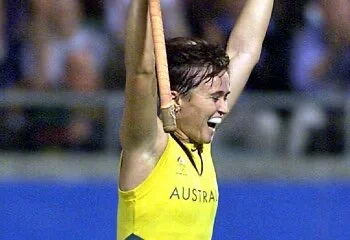
Episode 13 - Alyson Annan
7 July 2020 · Steve Prior
Listen to this episode ·
Subscribe in Apple Podcasts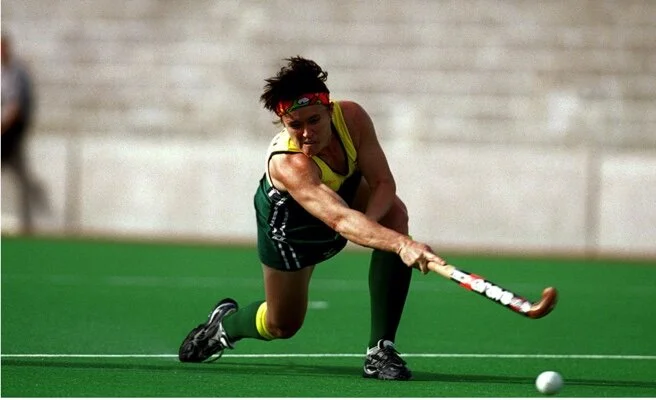
Following on from our episode with Katie Allen last week we’re super excited to present KA’s former teammate Alyson Annan, head coach of the Netherlands Women’s National Team and one of the best female players of all time.
Wansey is back to present Alyson who is a member of Sport Australia’s Hall of Fame, two time FIH International Player of the Year, FIH Women’s coach of the Year and dual Olympic and World Cup gold medal holder.
Hear how Alyson started her playing career in the outer west of Sydney, participated in the Hockeyroos Golden era and was influenced by legendary coaches Ric Charlesworth and John Cruijff. Discover a very candid insight into the Dutch national program’s approach to training; the new Olympic cycle and the experience and wonder of playing hockey in front of a rocking Amsterdam crowd.
00:00:54: Introduction
00:04:32: Back to Training
00:07:11: Early Playing Career
00:10:39: Charlesworth Influence
00:15:07: Hockeyroos Golden Era
00:18:03: Moving into Coaching
00:22:10: Johan Cruijff
00:27:28: Dutch Training Approach
00:34:14: Professional Staffing
00:36:25: Experience Hockey in The Netherlands
00:39:58: New Olympic Cycle
Episode transcript
⚠️ Automated transcript
This transcript was generated automatically from the episode audio and lightly corrected. It may still contain transcription errors, and individual speakers are not labelled.
A very special episode this week, one of the best players of all time. Sport Australia’s Hall of Fame member, two-time FIH International Player of the Year, FIH Women’s Coach of the Year, dual Olympic and World Cup gold medal holder, four-time Champions Trophy gold medallist, an Australian champion and head coach of the sublime Netherlands National Women’s Team. Welcome to the Camberwell Hockey Podcast.
Wansey is back this week to introduce Alyson Annan with a fantastic, candid insight into international hockey coaching. You can follow Alyson on Twitter with her handle at AlysonAnnan4 and keep up to date with the national team at OranjeHockey. Here’s Wansey.
It’s really exciting to have Alyson Annan on board for this podcast because her record, hockey record, her reputation is quite extraordinary. She’s been one of Australia’s greatest ever women players, one of the great players in the world. It’s all written, it’s all there in stats, but I saw a lot of it and I can certainly vouch for that. And then, of course, coaching career quite outstanding. To do Alison justice, I did go and do my Wikipedia. I must go and do my own Wikipedia and alter a few things because this one, this Wikipedia is pretty cool. We’ve got a couple of gold medals, as you do, for ‘96 in Atlanta and Sydney, Olympic gold medals playing for Australia, her real country, not this Holland stuff that she now calls herself a Dutchie.
A couple of World Cups, 1994 and 1998. These are all pretty hard things to win, if you didn’t realise. Four champions trophies, which also are very hard to win. Commonwealth Games, Junior World Cups, lots and lots of trophies, quite extraordinary. As a team, she played in a successful era, and of course, her individual awards are quite remarkable. Player of the Year a couple of times, World Player of the Year a couple of times, and Australian champion many times. So I wouldn’t do it justice, but it’s Australian Sports Hall of Fame, which is the iconic institution within Australia.
So it is quite remarkable. And as I introduced that, Alyson, I mean, you think about, if you do ever reflect back, young girl coming out of the western suburbs of Sydney to where you’re standing today, coaching now, you know, one of the best sporting teams in the world, certainly in the hockey world, the best women’s team, clearly for a number of years, and one of the great sporting teams. It’s a remarkable journey. It has been a rocky road, but it has been one, you know, I’ve been very fortunate in my career and growing up to have come across the right people at the right time who, you know, I just saw a young girl from Campbelltown who maybe had a bit of talent and needed a little bit of direction and just invested their time and energy in me and I’m forever grateful for those people.
I think that if I didn’t cross their paths that I might not be where I am today. That’s one of the things that is very dear to me that I was very fortunate and something that I really try and put back into the players and athletes that I come across when I see them and I meet them. Maybe there is someone in there that might be in the same state that I was in and just need a little bit of direction. So that inspires me each day to get better and be better and put back into the sport. Yeah, I think people see statistics and there’s always a story behind the stats and standing on the dais and everyone’s got their story.
But I think yours is quite incredible. It’s all well and good for you to meet the right people in your journey, but you’ve obviously got to have the self-drive and the confidence at the right times and the toughness, the resilience, all those clichéd words. But to take that journey and not only just play some good sport, but to be the best player in the world is remarkable. I watched you a lot and enjoyed watching you play. It was hard not to. Every great women’s player in hockey, if you’re talking about the real greats, the AMRs, they’re all a bit different.
I think you were a classic Australian hockey player. You had everything, the true Australian. I mean, you were tough and skilful, scored goals, made plays, all those things. But before we go too much further into all that, I’m going to sound like I’m just here talking about you, embarrassing you. But I’m interested just right now, you’ve just come back into training as the coach of the women’s Netherlands team. I’ve been reading, following the press, it’s reasonably exciting news from a sports point of view, because everybody around the world, certainly here in Melbourne, sports capital of the world, is anxiously keen to get back, whether you’re a child, a professional sportsman or whoever you are, you’re keen to get back on the sporting field.
Holland is starting to move that way and you’ve just restarted training with obviously Tokyo 21 in mind. Yeah, look, we were one of the first teams in the hockey world to stop being able to play. We stopped playing as one of the first countries. So we’re happy to, of course, be back getting back onto the field.
The kids here are playing back at the clubs. There’s different protocols for different age groups just being put in place in the last two weeks. And I think I heard that next week they’ll be changing the protocols again, which will give more room, more space. Yes, so Holland has restarted the hockey, and I guess you’ve relaunched your program again for Tokyo. And around the world, people are anxiously watching sport, hoping it resumes. How’s it been going this last week since you’ve resumed training in the Netherlands?
Yeah, look, I think the girls as one of the first teams that stopped playing, we weren’t allowed to. We went into isolation very early on. So getting back onto the field is exciting. I think they had a total of six to eight weeks, eight weeks of no hockey, not being able to play. All the clubs were close for a period of six, eight weeks. I think it was eight weeks in the end. So getting back onto the pitch has been fantastic. The youth have started to train with less protocols, with less restrictions.
We’ve got a lot of restrictions put in place to be able to train, a limited number of players per half per training with a limited number of staff around the field, which had to be put in place to be able to train, six per half with one trainer, three-metre distancing on the field, no duels, no games which is good for individual skills which is not such a bad thing those sorts of things have been put in place for us to be able to train so it’s been exciting it’s been new for us all with a lot of restrictions on what we can and cannot do which is meant that you know us as coaches have had to be very creative in our training methods yeah it must be an amazing challenge and I guess people will be looking to this team and what you do.
If it goes well, then, of course, hopefully restrictions will continue to loosen up, assuming that the country also is going well. Before we go too much further, like into your coaching career, which I didn’t actually go to after going through your playing record, but I will make sure I do that because that’s been just as extraordinary. But let’s just quickly jump back to your junior career. So you started at the western suburbs of Sydney, which has produced a lot of good hockey players and still continues to, both men and women, which itself is quite remarkable and a lot of it is about structure and facilities and people. That’s where you came from with your hockey and it’s probably, I can’t imagine it was the easiest environment. Did you grow up on artificial pitch or how did your junior hockey career play out?
No, we started in downtown Campbelltown at Raby Road Hockey Fields. That was all grass. So I started out on the grass fields and the Sydney competition was in place but you had to be extraordinarily, you know, you had to be very good to be able to play there. And in those days, it was an hour and an hour and a half to get there. So it was more a dream to be able to play there than to be able to get there. And having an immobile mother who wasn’t, you know, she wasn’t able to move about a lot. And my father worked, so I was very self-dependent of getting out there in the end when I could get out there, which meant that I learned a lot of skills that helped me later on in life to be able to make the decisions and become independent and get things done that needed to get done.
I had, again, I had a lot of people that helped me along the way and if I didn’t have them, they wouldn’t be where I was now. But Campbelltown provided us with a basis and John Robinson was my coach back then. He provided me with a sort of home base where I could grow and going into Sydney and training with Greg Corbin and Beth Shea and Judy Lang playing alongside of Loretta Dorman and Kim Small. You know, I did have a bit of a luxury growing up and being surrounded by those sorts of players. And as a kid from Campbelltown, that’s pretty big. Well, they were names that I remember.
And, of course, New South Wales always had a pretty powerful, you know, both country and city presence, men and women. So I guess you needed those role models. Very different sort of set up to kids that ride their bikes to hockey in Holland, I’m sure, but we all come from different paths and that’s what makes it, I guess, once you’re out there on the field competing, no one always knows your background. And then you progressed into New South Wales teams. When did you debut for the Australian, say, senior team? Can you remember that occasion and where it was and how you got into the team?
My first game was the last because back then we had substitution and sorry, interchange. It was a limited number of players that could play. And I remember I was in Tasmania against Korea and I played the last five minutes and I think I touched the ball maybe twice and that was my first game and that was in 1991. I think it was in June of 1991 or July of 1991 that I played my first game for Australia. You know, everything went pretty quick and I guess, again, I was lucky to, you know, Brian Glencross did take a big chance with a young kid back then.
So I guess my career went very quickly, playing with the New South Wales team and being guided by the right people and being given the opportunity to progress as I did. So, you know, my under-18s, we have under-18s in Australia, we don’t have that. So we moved in the under-21 national program and then from there moved pretty quickly on to the senior program. And then, of course, after 1992, Charlesworth, Ric Charlesworth took over, if I’m right, and he obviously became a big influence. I’ve read some of the comments and it doesn’t surprise me at all that, you know, he could see obviously this talented kid coming through. And, you know, he’s always been about maximising potential and driving people and what have you. So he could see what was in you and clearly it worked.
Yeah, he was very critical. And I actually spoke to him last week for the first time in a few years. He was on a Zoom session with an American coaching club and I jumped on and said hello. So it was good to see him. But, you know, I guess Ric was very hard in his ways. And, you know, I guess back then I looked at him as never been, I was never good enough. It always had to be better. And on the one side of things, that’s very good.
And you need to have someone who inspires you to be better. But I guess looking back, I also looked for a balance. I needed to feel comfortable that I was doing well. And I guess with him being so good and inspiring as he is back then and the less mature person I was back then was also very critical of him as a coach instead of maybe just looking back and taking a step back and thinking he’s doing this because he wants me to be the best I can be and that’s something that I take away now today to ensure that I do that with my own players here. Yeah, it is all part of a journey when you look back at different things and at the age we’re all at and how we react.
But I guess as long as you take learnings from it and use that however you can, it’s out of interest. If you’ve got a player now as a coach that mightn’t be performing to the potential that you know they’ve got, not from ability but just effort or doing all the right things, have you mastered the art of cajoling rather than driving, perhaps the empowerment rather than the dictatorship? How have you found that challenge? Yeah, look, we have a player in our national program now who’s extremely good but just doesn’t work hard to be the best she can be and she’s almost satisfied with being good and not being, you know, not wanting to be the best,
which disbalances herself and the team. So, you know, we’ve tried different methods and I’m more about trying different methods, you know. I’ve been critical, I’ve been helpful, I’ve been, you know, caring and, you know, setting goals for it together. And, you know, I’ve tried different methods and I guess, you know, nothing works for what I was trying. So in the end, I just had to drop her for a while and that seemed to work. So just, you know, pulling her out of the program. Yeah, I just pulled her out of the program and said, look, you know, this is not our culture.
This is not the way we do it. So if you need to choose, you’re going to be a part of it and do your best or not. So, you know, I guess it’s for me, it’s every day also about learning. We don’t know everything as coaches. We don’t know everything as players and we need to do it together. and I guess that’s the way I look at it now. I guess that’s also what Ric did back when he was coaching us, but I just wasn’t – I was maybe blinded because I thought he was too critical. Yeah, and you were a naturally competitive young player, intelligent player. You knew a fair bit anyway, so you had your own beliefs, but it’s all part of the journey.
Before I sort of move from the playing side, the one question I had of interest for me was the women’s team that you’d play with that era was exceptional, had an exceptional era, a bit like the Dutch women’s team at the moment, and won a lot of tournaments, had a really fantastic reputation. And they’re remarkably driven, cohesive, and lots of reasons that occurred. Here in Australia at the moment, I’m sure it’s in other professional sport around the world, but it looks like there’s some real issues in professional sport, whether it’s rugby, whether it’s Aussie rules, some of the cricket behaviour. But some of these professional teams, you’d have to sort of question how well their behaviour, not all of them. I mean, my football team, Richmond, have done a great job, apart from being successful, they seem to really, from a behaviour and a team bonding sort of thing, they really seem to have found a new way, a new mantra. But at the moment, even due to some of this social isolation, as the professional teams are trying to come back, there’s been some blowups and they’re struggling. But it makes me look back at that women’s team and think, gee, without the money to motivate them, they’re solely driven by success and travelling the world and being the best.
It’s quite remarkable. And I think about that, a lot of amateur sports, Olympic sports that we were lucky to see, they’ve been able to do it without that carrot of monetary reward and behave in an incredible way. Do you have any thoughts about that? And do you ever sort of reflect on, you know, you look at that Australian women’s team and how incredibly impressive they were as a unit? Yeah, look, to be honest, that’s something that I discuss quite regularly here in Holland. The club system in Holland, they pay money to have the players play at their club. Some clubs pay a generous amount and some clubs don’t. And I just, I’ve been talking a lot here in Holland to our hockey association about the fact that that’s not the way we want to be moving into.
I think that we’re not a professional sport, we’re an amateur sport, that act and live as elite athletes, which is different to being a professional sport. There’s no money generated from our sport commercially. So we need to be careful that we’re not creating commercial athletes in an amateur sport, meaning that money’s leading their decisions. I think that that is something that’s gotten in the way of possible decisions and behaviours of athletes, not needing to be the best that they can be to play the sport. So, you know, it’s definitely something that is here and apparent in Holland that’s very concerning. And it’s concerning because our sport needs people that love the game and are passionate about it and are not playing it just because they can fill their pockets. Yeah, I think it’s a challenge even just at club level. It always has been to a degree, but it feels again now it’s people moving clubs for perhaps the wrong reasons they’re playing the game. But if I think back to certainly the male Dutch side of my era, a number of the team are probably still the same. We’re studying a lot of the time.
Not that people have to study to be successful, but they were certainly balanced in terms of their approach. They loved the hockey. It was passionate for them. It was very important for them, but you knew that they had careers and they seemed to be pretty balanced. Guys off the field, I’m not so sure that’s been the case if you looked at a lot of the professional sports that probably aren’t as highly paid as some of those European soccer teams and others. So I think it’s come to a bit of a crisis here, certainly in Australia, and maybe this, I guess, the money coming out of sport in Australia is going to be a bit of a reality check.
Now, to the coaching side, which I didn’t give you due credit at the start because I got waylaid by reading through your Wikipedia. Now, so you finished playing sort of after the Sydney Olympics, another gold medal in Sydney, and then went across the Holland, some club coaching, and then you got to the national team. Before we sort of go into explore all of that, did you sort of naturally think, as one of the best players in the world, that coaching was a logical career move? Did you fall into it? Did you plan to do it? I could imagine with your hockey brain that it was a natural thing about understanding the game, but of course with coaching, is a lot more to it.
It’s understanding people as much as understanding the game. How did that all happen and how did you find it? You know, I think early on, particularly because of the people that I was surrounded with when I was growing up, I always knew that I wanted to put back into the sport what was put into me. So that was my real drive to become a coach. And so it’s something definitely I’ve always wanted to do, you know, with Beth Shea and Judy and Greg Corbin and Mick Kell, John Robinson, they’re all, you know, Brian Glencross, Ric, Frank, you know, they’re all names that have people that have invested in me and helped me become the person that I am today.
So it’s always something that’s – and let me see the world. You know, I’ve been fortunate enough to be in a great team and travel the world and seen a lot of things. So I guess from a young age I really wanted to coach. And I guess when I came to Holland, I didn’t expect to stay in Holland. That was definitely, you know, I didn’t expect to live here for the rest of my life. I did expect to go home. So that was something that is different. But being a coach is something I’ve always wanted to do. I thought very early when I stopped playing that I could be a coach straight away, you know, because I played and I played in a great team and I had a great coach.
I always say that I’ve had the best hockey coaching course that I would ever have because I was coached on the rig. And I thought that I could be, you know, a coach straight away. And I was so wrong. I couldn’t have been further away from the truth. In what way, what were the things that you look back at now? Was it about handling people? What was the hardest thing, if you look back at it now, that you weren’t ready for? I wasn’t ready for handling people. I wasn’t structured enough.
I wasn’t able to, and I was coaching a different culture. So I came to Holland and I came from a successful team. And so my belief was what we did with that team, you should do here because that works. But it’s a different culture. They communicate differently. I was also at the end of my career, so I had gained a lot of experience and a lot of knowledge of the game and was talking at that level to players that were just starting their career. And so I wasn’t communicating at the same level. So they were hearing my words but weren’t understanding what I was saying. And my expectation is that they were understanding exactly what I was saying because I was saying that.
It wasn’t the poor Australian accent, was it? No, sometimes it was. And then it was my broken Dutch. So that was the other thing. But I guess early on I did lean too much on the language side of things as well. You don’t understand me because my Dutch is not good enough or your English is not good enough. Instead of realising that I was trying to put the Australian culture into the Dutch culture that they weren’t ready for and it’s not possible to do, and I was coaching as a player instead of coaching as a coach.
So after a while, I did take a step back. I moved away from coaching and spent a few years managing some companies to learn management skills, to learn communication, to just grow as not the player but the person.
And then I really started becoming a coach. And I guess the last, definitely the last, I would say the last six years, I have learned so much about coaching and I’ve learned so much about myself and about coaching players. And even today, I’m learning different things. How do you communicate with people when they’re in a corona time, a period where they’re scared to go outside but come into training? That’s different. How do you do that? To go back a step, so you mentioned you mentioned companies. Was part of that when you spent some time at the Cruyff Institute, the Johan Cruyff Institute?
Do you want to talk to that period of your time and what that was about? Because whilst I’m old enough and sports mad enough to idolise Johan Cruyff, there wouldn’t be that many. There’ll be a few younger people on there, including my son, who doesn’t understand that there were good sportsmen in my time. But he was just a pure artist as a soccer player to watch, and he epitomised the Dutch still their hockey now and their soccer then, I guess. Yeah, look, I started managing an elite top sport community, sort of city. I was manager of a city here in the top sport, the elite sport section. Then I moved on to the Cruyff Institute where I was responsible for a sport management master’s, a coaching master’s and diverse coaching courses within clubs or within communities.
We did a community course. I worked with him, not with him. He was the name giver of the company. But he gave input and he was very much involved in the progress of the company. And I did learn there a lot because, you know, the coaching course we had to create, the sport management course we had to create to be able to put out there under his name. So I spent a bit of time there. I think I was the manager there four or five years before I moved away and spent a very short period of time as a director of another company. But I didn’t enjoy that very much, so I ended up leaving.
And just out of interest, the Dutch soccer-hockey connection, I asked Max Caldas in Melbourne a couple of years ago, just out of interest, did he use much, did they share ideas? And his answer was quite surprising to me. He said, nowhere near as much as you’d think. And he said, I watch AFL football each week. And your team, the Richmond Tigers, which did surprise me, given my team wasn’t going that well at the time. but I’m sure that’s not the normal answer. The soccer and hockey, there must be some historical crossover. Would someone like Cruyff have had reasonable knowledge and interest of the hockey life in Holland? It’s pretty hard not to, I guess. Look, Johan was a master of knowing everything
and I spent a number of times with him watching games with the national team. I went to games with him, so I went to the World Cup with him. he came to when we had a tournament in Spain with the national team he came to the games went out to dinner and I was lucky enough to watch a game with him in Barcelona so I was able to drive with him to the game and he had his special parking place in the car park and he had his special seating so I was able to sit next to him during a game against Barcelona as well so I guess I saw Johan in different environments and in each environment, he was open about sharing his knowledge about sport, but he was very much about the movement of the game, not so much about the skill sets, but how do you create chances in space and time and that’s really basic.
But yeah, it was – and each time I remember once I asked him for advice I was struggling with our men’s team of Amsterdam of saying look we’re doing simple things but they’re just not simple enough to get you know a flow in the training and he asked me what the drill was and I explained it to him that there were you know there were six simple passes in the in the in the drill and he said well that’s not simple because there’s six passes he said make it simpler I said how do you make it simpler I said that’s just a reception in to pass he said well don’t pass it six times pass it three times that was his answer where we look for maybe a little bit more variety in our training and that sort of stuff he said you know the simple things and I always knew that and I always believed it but hearing it from him you know the simple things are the most difficult things to be to be able to do so all the kids that go out there and trainers that create these phenomenal drills that are complex and got so many different aspects on them.
You know, it takes half the training for the kids to understand what we’re doing. So you’ve lost half the training’s time. So if you watch our national team train, it’s very basic because we want to train the way we play. We want to keep it simple. And I guess when Johan said that, I pulled my hair out because I thought, yeah, that’s a simple thought. But it’s so true. So when I watch the Dutch women’s team play, it’s like any great team you watch play. They look like all the characteristics you’d expect them to be described.
They’re physically fit there. They move the ball well. It looks fun. That’s obviously things don’t always go that way. but from the outside when you watch them and they’re playing well, which is a lot of the time, you know, that’s how it appears. And clearly that takes a lot of work. Interested in what, with your training, without giving away too many secrets, but you talk about keeping things simple, but the game is made up of a lot of decision-making, and obviously the smarter players you’ll pick in the right positions that can make good decisions.
But do you spend a lot of time on getting better in your drills at decision making or is it just pure execution of repetitive skill sets? What are your views around, I guess, the differing styles? Because I’ve certainly been exposed to both over my journey and the coaches you love, I found, could really help you get better at stuff that was around match play, decision making. Not that the skills weren’t important, they were, but it was almost, for me, secondary.
How did the Dutch, to me, look like they make great decisions a lot of the time or they certainly put the people in the right spots for that to happen. I guess there’s no secrets in sport. I really don’t believe there’s secrets in sport. And I’m saying this because I want to try and be open and I’ll share anything about the way we train because it’s not about what we put out there. It’s about how you perceive it, how you do it, how do you coach it. So there’s so many aspects that you need to add on to make something successful. Most of our trainings are open. People can come and watch them.
That’s not the secret. There is no secret. If you share it, everyone gets better. If everyone gets better, everyone gets motivated to become better. You know, I’m getting better. So I guess the boundaries are being great. So in our training, we just do very simple things. We start every single training with 20 to 25 minutes of basic skills. That’s it. Passing, receiving, passing, receiving, that speed, different receptions.
that’s standard in our training. Then we will spend 25 to 30 minutes on decision-making drills. And then we’ll spend 30 minutes on small games. Standard. Every training. We don’t train longer than an hour and 15 minutes to an hour and 30 minutes. So you will never see us train for two hours on the field. We never do it. Standard. That’s our training.
You’ve completely confused me because I assume that the Dutch just spent two hours doing penalty corners and they did nothing else. So there you go. I’ve learned something there. Just the areas for me, just we’ll touch on if you don’t mind talking a little bit about. So tactically, each player and the coach with the team, some of the areas of the game, tactics, the mental side, the technical side of things, the physical side of things from a Dutch point of view, maybe it’s not that different to Australia. But can you talk those four areas, you know, tactically the Dutch, how do you see, having come from Australia, what are the major differences in the way they play from a tactical point of view? And then I’ll talk about the other areas in a minute.
Or are they all becoming, do you think around the world teams are getting more similar? What are your thoughts around that? There’s been a sense of following examples. So if one team does something, everyone does it. So years ago, when the Australian men won the World Cup, they played the World Cup pretty much man-to-man. A lot of the other teams weren’t playing man-to-man. So all of a sudden, every men’s team started playing man-to-man all over the whole field because Australia did it well.
And you see that there’s, I guess, it’s not so much less creativity, but it’s what works, we’ll do that too. That means that there’s some sort of sense of, for us as coaches, to try and be creative to be that change so that people will follow. And as long as people are following, they’ll always be behind. So I guess the trend, I would say the trend is in tactically is what’s the latest thing that works and let’s do that. Argentina women started a few years ago with a different press. So they had two, the left and the right strikers were wider and the two centre players were dropped behind the two strikers. that was sort of like a bowl shape. No one had done that.
Now you see teams doing that everywhere. But, you know, why did – my question is before you would even think about doing that is why did Argentina do that? But people are following that. People are doing what other teams did without really thinking – well, I’m saying – I’m assuming not thinking about it, so that’s not a – that’s an assumption. But why did they do it? And is it necessary to change it to work with your team? And would you make, throughout a tournament, say a pro league, would you make subtle tactical changes at times or have you sometimes in a tournament made radical changes, you know, in terms of how you press and different things or within games?
So you’re talking about keeping things simple. Has that evolved for you? Do you change things more often than you used to throughout a game?
We have five or six different press forms that are structurally the same, but the approach is a little different and maybe the starting positions are different. and that is used within different, we use that against different teams and it can mean during the Europeans last year, we changed a press two weeks beforehand to see if it works and it worked and the players wanted to use it and I remember in the final of the Europeans, they asked me before the game, can we use this press and we’d only done it two weeks.
But because the structure is generally the same, just the, I guess, the starting, the way you start it and the first initial phase is different. It seems different, but it’s not so different. So, yeah, we’ll change that. We’ll change it in a game. We’ll change, you know, I remember last year before the Pro League, I wanted to try a different sort of press form because I believed that it had cut down the amount of time we were having to run without the ball. So we were spending a lot of energy running a press and having less energy when we got the ball. So I wanted to create more energy on the ball and less energy use off the ball.
There’s a few veterans players I play with could help you with those tactics, having to run less. They know that very well. The physical side of the game, the physical stuff, I was starting to think about even the mental side. Do you, sort of begs the question for me, how do you sort of use outside help, whether it’s obviously physios, but preparing the team physically for different campaigns, psychologists, nutritionists. How does that sort of work in the Dutch system? Are they full-time or do you call them in when you need them? I have one full-time assistant and the rest are all part-time. So in Holland, it’s completely different. And I have had this full-time assistant for six months. Before that, I had all part-timers. So I’ve never had really a full-time staff. which is completely different than Australia. Australia have a number of full-time staff members.
My physiologist that I had works one day in the week with us. If that, I have a strength and conditioning trainer that’s employed by the Olympic Committee and he’s able to be with us a number of hours in a week. It’s different. The psychologist, we don’t have full-time. We use a different structure. So we use it on a needed basis. We have a clinical psychologist and a sports psychologist and we have a head psychologist.
So we have three. The head psychologist is responsible for the reception. He’ll receive the question sort of thing. The player says, look, this is my problem. And he will decide whether it’s a clinical or a sports psychologist needed for a sports psychologist. and we do the group sessions with him. So we have a very steady psychological base, but it’s not full-time. Physiology, a head physiologist with a sports strength and conditioning.
With the pro league, we have two managers, three physios, two doctors that share the load. Technically, I have two assistants and an analyst, and that’s it. And a nutritionist is in there somewhere. Quite remarkable when you think this is one of the great sporting teams in the world. I was lucky enough last year to go and watch the Pro League finals in Amstelveen. I hadn’t been there for 30 years and took my two girls with the hope that it would be what it was 30 years ago.
Well, it surpassed that, and it was such a great thing as a lover of hockey to see the stadium still rocking and rolling. The hockey was obviously fantastic. The crowd was as much a part of it as the hockey. That must be just brilliant. I mean, if there’s one thing you’d hope young hockey players and old hockey players get to see is some hockey in Holland, particularly at Amstelveen, particularly when the Dutch national team is playing, hopefully Australia in a game. But it must be just fantastic sometimes.
I could see you and the excitement of the competition and playing well and winning. You can’t help but enjoy that. that would be as good as anything, you know, in all the great stuff that you’ve been exposed to, playing hockey at Amstelveen, you know, with the Dutch national team, you know, at the best level, you know, in the bright sunshine. Is it, can you beat that? Yeah, look, it’s absolutely fantastic.
And I guess, you know, the one thing that I would love Australia to do
is when I watch those games, of course, it’s exciting. There’s a lot of people there, but what makes it exciting that makes it real fun is that at halftime, all of the children are on the field playing hockey. So they’re not just there to watch. And if I look back at Australia, they don’t go on the pitch. They’re not allowed in the circle. There’s restrictions everywhere. But in Holland, they’re on the pitch at halftime. You ask them to get off, they’re off within 30 seconds.
So it’s sort of like this family environment that makes it fun and it makes it exciting and it really binds them with our sport. Yeah, I have seen that the times I’ve been there. And I do notice that every second kid goes to the circle and drag flicks a ball under the crossbar. So it is different to Australia. Yeah. The hockey in Holland, I’ve talked about it. It is still a great place. I hope it continues that way. Do you see, just a quick sort of comment about the world game, and we could waffle on for hours probably.
But as every sport deals with this corona and what it means financially and what it means for competition and, you know, grassroots development programs, It’s a bit scary, a bit frightening, but it’s a pretty important time for hockey. I mean, we’ve been probably concerned for a number of years. We haven’t grown in a competitive landscape around the world as we’d wish. I mean, they’re trying things, but now that the world is shrinking, it’s another challenge again. Holland being such an important part of world hockey, how you’re sort of seeing, I know your job’s to coach and get a gold medal, but you’re a lover of the game. How are you sort of feeling things are at the moment?
Have you given any thought to that? To be honest, I haven’t given it much thought, I guess. for us here what i’ve really thought about and what what i really realized is with us going back to training um i after our training i got a lot of messages sent from from around the world saying how great it was to see that we were back playing the sport uh the hockey was back on the you know getting back into the game and that it gave them hope that it gave other people hope that they’d also be following very soon and that means something that because you know that means that are alert. It means that people are aware that they want to get back into the game. And I guess maybe not being able to play the game will give people a little bit more hunger to want to get on the field and play. Yeah, I think it’s a great point for sure. It really is. Let’s just quickly touch on Tokyo. So assuming it sort of plays out and you’ve got to make that assumption when you’re planning programs, what does the next 12 months look like at this early stage? Obviously, it’s week by week at the moment but if it all goes well you know do you have things starting to get penciled in to prepare i guess this has never been done before so it must be pretty um pretty tricky no my calendar is empty the next four weeks are planned in but for the rest we have absolutely no idea when or where or if the pro league will be played um the olympics olympic games are pencilled in and that’s it.
The rest is just not, you know, I guess there’s hope but there’s nothing yet pencilled in. And it’s not even frustrating. Yeah. Look, it is a remarkable time. And it must be, I guess, every sport, every Olympic sport that does work on that four-year cycle, it’s incredibly frustrating when you nearly got to the start line to have it moved is incredibly tough. And now you’re a Dutch national.
to sort of look at the last little area I was going to just cover off. Thinking back to Australia, clearly your life’s now in Holland, but when you look back at Australia, you’ve mentioned a few times what it gave you in terms of coming through as a junior and playing the national team, obviously fond memories. How does it sort of, when you look at Australia from a sports point of view, playing, you’ve probably got used to it now, coaching against a team that you’re a huge part of your life. Is that still a little odd when you line up and the national anthems are playing and you’re standing on the pitch.
How does that work? Well, I sing both national anthems and I’m a dual citizen, so I have both citizenships. You know, I remember the first time I was, okay, this is weird, but since my family’s here and the kids have been born, it’s not weird anymore. It’s the way it is. And I guess the one thing that niggles is that, you know, the Australian team have struggled for a number of years and, you know, there’s a lot of potential there.
So I guess that’s something that’s niggled a bit. I’d love to come home and coach the team, but being surpassed a few times and having this job now, yeah, yeah, it’s disappointing. But I guess, you know, hopefully sometime ever in the future, I might be able to get back and get a job in the Australian hockey scene again to, you know, come back home. because hockey in Australia will always be my home. Yeah, that’s great to hear. I think, look, you’d clearly be extremely welcome home from an Australian point of view.
But I guess in some ways the Dutch story has been a pretty nice way to if you had to miss out on an Australian Guernsey coaching one of the best sporting teams in the world is not the worst thing they have to spend your week doing. But look, to finish with, from our point of view, thank you so much for giving up time. I know it’s a number of times, strange time. You’ve got lots going on, but really appreciate just some insights, having a chat about hockey, because most of the people listening to this will be, well, the majority will be hockey lovers, whether they’re in Australia or around the world.
It’s fabulous to hear that the whole story is incredible, but to get some insights into someone coaching a team at that level. I congratulate you too, not just for your career, but the coaching to watch last year was just a pleasure to be there, to see it. It was great that Australia actually put on a great performance against a great team and it made for, you know, a great experience from my selfish point of view. But, you know, all Australians that love their hockey, I think it’s a great story to tell, to remind people. I hate to think you’d ever be forgotten by just because you’re not here because it’s an incredible Wikipedia record.
And I think the way you’ve gone about it in a sort of a humble, intelligent, competitive way is so Australian. Yes, you’ve got a bit of Dutch in you now, but you can tell the way you go about things. All the attributes that Australia loves in their sports, men and women. So, you know, huge congratulations, huge thank you from us for doing it because you would get lots of requests. So thanks, Al. We wish you all the best.
We really hope you can get there on that silver medal dais next to Australia in Tokyo when it does happen. That would be fabulous. I heard that one. Yeah, I heard that.
You heard that. Nothing wrong with the silver.
Well, I did watch that Rio final and I’ve got to say, I’ve seen some, you know, being involved in the men’s team, some unlucky losses, but I think you may have been a little bit stiff on that day if I saw a goalkeeper get in the way for GB. I’m sure you still wouldn’t sleep at night thinking about that one. And before we finish, tell me, I’ve read about, just let’s finish on this happy note, I’ve read about a weird story, this is quite a funny story, where you sort of forgot where you were during a game. Do you want to talk to that story?
You probably had to talk about it a few times now. Yeah, I didn’t forget where I was. I knew exactly, I had a blackout. Yeah, that was one of my biggest learning mistakes ever. What game was it? It was the semifinal and it was in 40 degrees heat and I, no, that was Olympics and I looked at the clock and I knew the game was, it was weird, I knew the game was over and then I looked at the clock and I went blank and at the clock it said fourth quarter, 15 minutes and I’m thinking we’ve just played it.
And I just went totally blank. I blocked out and, yeah, it was a weird, never had it ever in my life. I will say that it will never happen again because I’ve created an environment around me to ensure that that will never happen again. And it taught me to take care of myself as a coach. You just got to, you know, so hyper around the whole intensity of the competition. Is that what you put it down to?
Or was it a hydration issue? What was the problem? Did you ever find it? Yeah, look, I spent nine months because I was – I took the team over in October and my idea was when I took the team over because the coach before got the sack, I had seven months, nine months in total in months but almost less than three months contact with the players to prepare them for the Olympics. So I spent, you know, day in, day out, 20 hours a day working to inform myself to be able to coach this team to the best that they could be.
So I never thought that I was doing enough. So I was always doing too much, which meant I wasn’t drinking, I wasn’t eating, I wasn’t, you know, I worked too hard, didn’t take care of myself. During the Olympics, I didn’t take care of myself. I was always looking for that one half percent that I just needed to stop looking for.
And that was a build up of all of that.
So that’s, you know, that’s a lesson for every coach that you’ve got to make sure that you’re fit in body and mind to make the right decisions and not have such a moment that you’re doubting yourself and that you’ve, you know, I just had a blackout and that was weird. Yeah, well, that’s probably not the best note. I should have finished on our chat, but it was an interesting story. And I guess it just highlights how demanding, you know, the job can be, particularly when you’re a perfectionist and a competitor.
It does sound a bit like your coach of the team, Mr. Charlesworth, who would probably often have had a few of those blackouts, I suspect, with the intensity and chasing those one-percenters. But look, your career as a player, quite unparalleled as a coach now, you know, quite remarkable and probably still just really evolving and starting. So we wish you, thank you again, wish you all the best from a Dutch point of view. I’m sure Dutch playing, you know, being at the top of the hockey tree is only a good thing for the sport.
So we wish you all the best and good health to you and your family through this crisis.
you’ve been listening to the Camberwell Hockey Podcast we’d like to send a big thank you to our hosting team our guests and you the listener for your support if you enjoy the show please give us a review on iTunes or wherever you get your podcasts this show is recorded and produced by Camberwell Hockey Club in Melbourne Australia if you have any feedback, comments or questions please find us on Twitter at camberwell underscore HC or see more information on our website camberwell.hockey.
See you next week.