
Episode 14 - Sports Training in Lockdown
15 July 2020 · Steve Prior
Listen to this episode ·
Subscribe in Apple Podcasts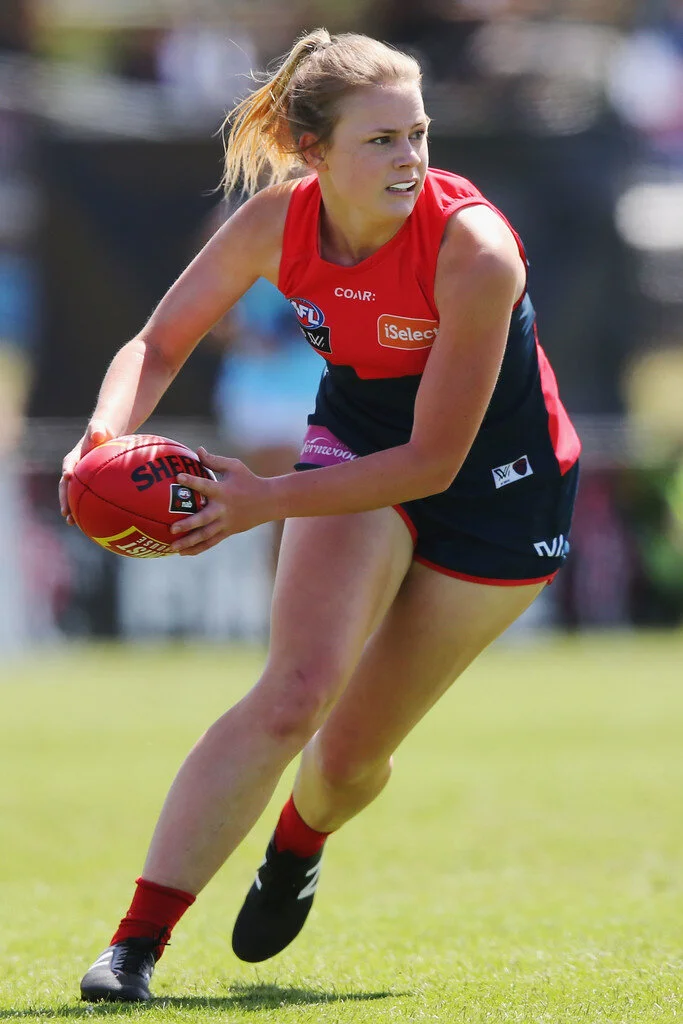
The physical and mental benefits of regular exercise are wide ranging and profound. What are the issues though arising from lockdown? How do we stay healthy, focused and connected? How can we resume training safely, increase our body’s loading and avoid common injuries; and where can we seek help when it’s needed.
Milly Bell returns this week hosting Brooke Patterson @Knee_Howells; an AFLW player and Physiotherapist investigating ACL injuries for her PhD studies and Dr Paul O’Halloran @latrobe; Deputy Director of the Sport Exercise and Rehabilitation Research Focused Area at La Trobe University and a practicing psychologist in the areas of sport, physical activity and mental health.
00:01:47: Introduction
00:03:23: Benefits of Exercise
00:05:26: Issues Arising from Lockdown
00:07:01: Returning to Training
00:13:02: Common Injuries to Lookout For
00:16:05: Increasing Training Loads
00:18:18: Seeking Help
Exercise at Home Resources
We use the Centr app which is a subscription $10 month but I think its worth it - has so many different work outs, meditation and recipes and shopping list function
https://centr.com/join-us
Mick Hughes You Tube Channel
https://www.youtube.com/channel/UCsQt7jXJG-IHUYDi\_8M6SaA
La Trobe TREK Exercise Site
https://exercise.trekeducation.org/
Episode transcript
⚠️ Automated transcript
This transcript was generated automatically from the episode audio and lightly corrected. It may still contain transcription errors, and individual speakers are not labelled.
This unusual season 2020 was within sight. We developed safety and hygiene protocols with the Council and Hockey Victoria, and together managed our training preparation to get within two weeks of the scheduled competition. A spike in community cases, though, placed the city in a second lockdown, forcing the club to again suspend all hockey operations, and leaving the Association no real choice but to cancel the 2020 winter season. Welcome to the Camberwell Hockey Podcast. After this crushing disappointment, we’re now looking at actions to promote engagement, support, social and fitness. The physical and mental benefits of regular exercise and fitness are wide-ranging and profound. But how do we manage this in lockdown?
How do we stay healthy, focused and connected? How can we resume perhaps new training regimes safely, increase our body’s loading and avoid common injuries? And where can we seek help when it’s needed? Milly Bell returns this week hosting Brooke Patterson and Dr Paul O’Halloran to discuss these issues and more. Brooke is a physiotherapist, AFLW player and now coach, and amongst other things, is investigating ACL injuries for her PhD studies. You can find Brooke on Twitter at knee underscore howells, H-O-W-E-L-L-S. And check the show notes for some exercise and fitness links Brooke suggested. Dr Paul is Deputy Director of the Sport, Exercise and Rehabilitation research area at La Trobe University here in Melbourne. Paul is a practising psychologist focusing in the areas of sport, physical activity and mental health. You can find Paul through the La Trobe University website, latrobe.edu.au.
Here’s Milly.
This is Milly Bell, one of the players at Camberwell Hockey Club, who’s here interviewing Brooke Patterson and Dr Paul O’Halloran. Thank you very much for both joining me today. The background for Paul is that he is a sport and exercise psychologist, researcher and lecturer at La Trobe University. Would you mind introducing yourself a little bit there, Paul? Yes, certainly. I’ve been a sport and exercise psychologist now for about 15 years and a psychologist for over 20. I’ve worked for things like AFL clubs and things like that in a whole host of different sports, including hockey and basketball and things. Over the years, one of the areas I’m particularly passionate about in my research is about participation in physical activity and sport and what we can do to increase participation. Excellent. Thank you very much for that. And Brooke is a physiotherapist. She is a PhD student like myself, and Brooke is studying ACL injuries. She was previously an AFLW player and is now continuing to be a player in the community as well as a current coach for AFLW for the Demons.
Brooke, can you tell us a little bit more about yourself? Yeah, thanks, Milly, for inviting me on. And I’m just sport mad. Played a lot of different sports growing up, but also had a lot of injuries, which I think led me to be a physio. My PhD is really around optimising outcomes after people suffer a serious knee injury, such as an ACL, but I’m also really passionate about preventing that injury in the first place as well.
and just keeping people active and on the sporting field because I love it and I know it’s what people love to do. Thank you both again for joining me. What we might start with is, Brooke, can you tell me about some of the physical benefits of regular exercise such as participation in a team sport like hockey? Yes, obviously the National Health Guidelines recommend at least half an hour a day of walking and 150 minutes a week of vigorous activity. So I think sport in a way helps us meet those guidelines, but then it obviously also has a lot of other physical benefits because for things like hockey, you need endurance, you need strength, you need power, you need coordination.
And I think that just carries over into other things that people like to do in their lives as well. So I think growing up, being able to develop all of those skills and maintain those skills long into life, I think, has really not only physical health benefits, but prevents lots of chronic health issues as well and is also really good for our mental health. On that, we might get Paul’s view from a psychologist’s perspective on what you think some of the benefits are of regular exercise and team sports. Absolutely. My PhD was actually on mood changes during running. So this area is of real interest to me.
Some of the psychological benefits you receive from physical activity include things like better mood. So people feel less depressed, less anxious and all those kinds of things. They can feel more clear-headed. After they’ve undertaken physical activities, you probably know — you probably notice that sometimes while you’re being active, you come up with these really great ideas about things and so forth. Also, there’s reduced feelings of stress. People tend to sleep better after they’ve undertaken activity, regular activity. There’s certainly a reduced risk of depression. And also, as Brooke was saying, there’s things like protection from chronic disease states and things like that. Team sports, such as hockey, are also wonderful for promoting psychological well-being and feelings of being socially connected.
And we know that that protects us from a whole host of different physical and mental health problems too, when we have that social connection and friendships. We’ve obviously been in our first lockdown for a couple of months since March, and everyone was starting to get back into hockey, and now we’ve just been locked down again. What do you think some of the problems can be, physically and mentally, from not being able to participate in their usual sport? So we might start with Brooke. I think with the restrictions, obviously, we can’t train at the moment with our sporting teams and can only go out individually or with one other person.
So I think the risk with that is a lot of people rely on team sport as their exercise, and they may not necessarily enjoy other forms of exercise. So I think, with all those benefits we just talked about, people are at risk of not getting those physical and psychological benefits from sport. And I don’t know if Paul wants to add to that, but I can go into detail about, I guess, the injury risks if we’re not participating as well in a minute. Yeah, and certainly, people might rely, as Brooke was saying too, on the team sports for that social connection and things like that, and also as a means to get their activity. Their training, their activity, might be centred around training for that team sport, so if you take that away, people might lose their motivation to engage in physical activity. And all those benefits that we spoke about before, if people aren’t motivated to do it and so forth, a lot of those things are going to disappear. So all of a sudden people can’t cope with stress as well, and we know what a stressful thing it can be being in lockdown. People aren’t sleeping as well, and mental health conditions can come on and all of those kinds of things. So I think it can be a real concern. How can we prepare to return to sport while we’re in this lockdown period? What’s the best way we can prepare ourselves physically and mentally to get back to sport following lockdown? A lot of people know, personally I started doing a lot more running, like long distance running and cycling.
as well. So in a way, I quite enjoyed that, I guess, change of type of physical activity, but some people might not like that. But I think the risk is that people might start doing those more straight-line activities, more endurance-type activities in the lockdown period. And we know that for a sport like hockey, you need to sprint, you need to change direction. There’s maybe some, a little bit of, contact, powerful movements, reactive movements, and then not being able to get into gyms as well, which are a really important aspect of training for any sport. So I think not being able to do those things, or people maybe not having the knowledge of how they can do those things on their own, or not being motivated to do those things on their own, then that is a risk for all types of injuries. So I guess if I start with the sprinting — if you’re not actually training sprinting, then you’re at an increased risk of soft tissue injuries, quads and hamstrings and calves probably for hockey, and also overload of the tendons.
And then I guess if you’re not doing those sport-specific skills and practising those things and reacting, then you’re probably more likely to — if you then jump back into those things once we can go back — you’re probably at risk of getting acute joint injuries, maybe to the ankle or the knee or the shoulder, or finger injuries for the kind of marking sports. So I guess they’re the main things that I preach to people in this period: yes, enjoy some other forms of activity, but also try and think of ways that you can incorporate some of those things I mentioned. Previously, we were gearing up to return to contact play and things like that, and the government put in some restrictions on when we could return to contact play, and then a week later they were saying we could return to competition.
Do you think that that could potentially lead to risks with such a sudden increase in return to contact sport? Yes, it was a pretty quick turnaround from not being out of contact to contact training for those types of sports. So I think you’d want at least a few weeks of building up to those types of things. Muscles, tendons, they don’t like sudden changes. So, yeah, just not practising those reactive contact skills would place those joints at risk. And then previously, when we had returned to training for a couple of weeks, we had very stringent guidelines and protocols in place to make sure that everyone was training safely and things like that. So coming in and socially distancing, not doing any tackling drills. We had to sign in and make sure that we were sanitising our hands before and after play, not sharing equipment and things, and only the coach could touch the equipment. And of course, you were told to stay away if you had any signs and symptoms of illness, and to follow guidelines in terms of getting testing if it was appropriate. But Paul, how do you think we will be faced with any stigma attached to people who have signs and symptoms of illness when returning to play next time? Oh, absolutely. And I think it’s pretty clear that that’s going to happen. I was just talking to someone earlier this morning and they were saying that they had a bit of a sniffle and a cough and they went for a walk the other day and people just cleared out of their way and went to the other side of the street and so forth. And that’s just in the street.
So I think that, yeah, I think there certainly is a stigma with that kind of thing. And it’s hard to know what would be the best way of addressing that. I think if people are honest about it and say, look, I’ve got a bit of a sniffle and things like that, but I’ve been tested for COVID-19 and I’ve come back negative, I think that puts people at ease a little bit. But yes, I think that’s one of those things that we’re just going to have to deal with. And, you know, in many respects, I think that probably if you do have a bit of a condition, you’re probably better off staying away anyway, because that’s just likely to spread even if it’s not COVID-19, and people are very conscious about their health and about getting sick right now. So I guess it’s about getting that bit of a balance — if it is more than just a really simple little sniffle, to maybe think about staying away anyway, for not just yourself, but for the benefit of other people. Yeah, I think that’s some really good advice.
I think we do run into tricky situations. I’ve got friends who have asthma that is brought on by the cold. So in winter, they’re coughing. So at the moment, they’re coughing, they’re at the supermarket and everyone stares at them. And as you said, people clear out of the room or clear out of the shopping aisle and that sort of thing. Or you’ve got — you know, I’m allergic to dogs and I have three dogs. So I find myself sneezing all year round. But certainly I think, as you said, trying to address these things and saying, you know, it’s my allergies or it’s asthma, or yes, I did have a runny nose, but I’ve been tested and I don’t have COVID. But it will certainly be interesting to see how that plays out in the future, even when coronavirus isn’t a threat, whether or not people sort of stick with this quite stringent hand washing and protecting their coughs and sneezes from the public, regardless of whether or not there’s a pandemic going on.
Yeah, absolutely. I think there’s even some data that says there’s been a reduced amount of cardiac events and medical events. And obviously, that’s probably a combination of people not wanting to go into hospital, but I think overall there’s been a reduction — maybe because people are being healthier and have better hygiene and there are fewer infections in general. My sister’s a doctor and that’s what she was telling me anyway. Yeah, well, and the flu numbers are down a lot this year too, because I think a lot more people have been making an effort to get vaccinated, and social distancing has clearly protected us from the standard flu as well. Hopefully we can do that again in the future.
So, Brooke, what are some of the most common injuries for community athletes returning to sport after a hiatus, or stopping and starting like we are looking at doing at the moment? Yeah, as I mentioned before, Milly, the soft tissue injuries, I think, particularly when people aren’t doing those sprinting, agility, sport-specific movements. So if you look at — I guess the AFL is the one competition that’s still going, pushing ahead at this stage — they are seeing a few of those calf and hamstring injuries now, kind of three to four weeks into the season. So you won’t often see them in round one or two. It’s that kind of cumulative, acute-on-chronic fatigue that you’ll see those soft tissue injuries. If it’s not the actual muscle, it’ll be the tendon. So those kind of tender Achilles tendinopathies, or hamstrings probably in hockey from that kind of bending-over repetitive action. So if you’re not, I guess, going out and practising hitting or that bending-over action, it does put a lot of load on the hamstrings.
And then I guess for you guys on the hockey field, it would be probably ankles. Do you get many ankles? Yeah, I think ankles, knees. Yeah. Spend a lot of time with Grey’s knees. Yeah. Shoulders. Do you get many shoulders? Not that I’ve seen. I think lower back injuries are pretty prevalent.
Obviously, with that bent-over position, we have — particularly taller people are bending further over. You know, odd hand injuries and things like that. I can’t seem to spend a season without getting at least one knock to the face. But thankfully, I wear a very good mouth guard. Yeah, I think they’ll go back. Actually, I’ll go back at the moment, because I went for a kick on Tuesday and I’d probably been sitting all day and didn’t kind of get moving well enough. And then I had to react to mark a ball and it was like, oh. So I guess people are maybe sitting around at home a bit more and getting stiff in general as well.
So I think for the hockey players out there, it would be just keeping up your strength. Like, you need such good lower limb strength, upper limb strength and kind of across the whole core. So I guess it’s getting creative in terms of what you can do with minimal equipment and guidance at home. And I think there’s a lot of great online resources, or people within your sporting community or club, that could help with that. And coaches getting creative and players designing drills, I guess, that you can do on your own or in partners to keep them exposed to those types of movements. I know our team has been sharing different drills and meeting up one-on-one, even just doing some education about your sport or — I don’t know, I was thinking the other day as well about, like, the gaming as well.
Like, a lot of players will play their sport on the PlayStation or something just to kind of, I don’t know, keep the mind active. It can help. All of those kinds of things can help. And, you know, even using imagery and things like that, which people can use when they’re not actively participating in sport, can be useful. So yeah. And the gaming stuff too can help your concentration, I think. What sort of strategies can we put in place to return to sport safely in terms of physically, emotionally, and keeping in mind that we’ll certainly have COVID restrictions in place when we do come out of the lockdown? Is there a safe way that we can increase load? Yeah, I guess, without going too much into detail about the nitty-gritty of acute and chronic workload, I kind of tend to say to people 10% to 15% per week of increasing load.
And when we say load, that could be anything from the distance that you run, the speed that you run at, how much agility and speed is in that session. I wouldn’t add more than one of those types of things at once, either. So if you, I guess, have a week and you’re just going for some runs, then next week you might run 10% further. So if you go 3K one run, then 10% of that is 300 metres. So really, it’s only really small increments. And until you actually say it like that, some people go, oh, I did 3K on Monday, so on Wednesday I’m going to do 4K — but that’s actually a really big increase for the body. So that’s a good rule. And then, yeah, not going from running, jogging three or 4K, to kind of, all right, I’m going to do a full-on skill session and sprint and change direction, and that ends up being 5K plus you’re adding in those different elements — that’s where people’s bodies will start to break down a little bit. Yeah. And it sounds very simple, but I guess until you actually say it and you hear it from someone like yourself, a lot of people will just think, yeah, I can do that, I’ve done it before. But we do forget that there are a lot of changes that happen, and that muscles start to atrophy quite quickly if we’re not using them the way we normally do, which we certainly aren’t during COVID.
From a psychological point of view, I think that, you know, Brooke’s right on the money there. It’s about increasing load gradually, and it’s about setting realistic goals and going into those first few training sessions with that clear plan of just those gradual increments, and holding back a little bit, even if you do feel great. I think people often make a mistake that, oh, I feel fantastic today, so instead of doing 3Ks, I’ll do four and a half, and that’s where the real risk can be. So it’s about sticking to the plan, I think. What about if you do make that mistake — you think, oh, I feel great, I’m going to do more — how can athletes, or who can athletes reach out to, if they think they need a bit more support either physically or mentally for returning to sport?
A good way is to self-monitor how you feel. So if you do have a bit of a niggly — either a niggly Achilles tendon — and I will get a bit excited sometimes as well, and it’s more so the next day. So as Paul said, you feel good at the time, but it’s the next morning, that 24 to 48 hours, how you feel. So just making note of how you feel and listening to your body — I think it’s taken me just in the last five years to be able to listen to warning signs when I shouldn’t be pushing myself. But if you’re not really sure about what you should be doing, then reaching out, whether it’s your local physio or exercise physiologist, or a coach that might have a bit of knowledge, or a teammate that is a health professional.
So physios are still in practice at this time, and they do online consultations as well. So yeah, don’t be afraid to ask for help. No question is a silly question. Paul, what about you in terms of — you know, this can have quite a big mental implication for people who have gone from — we’ve reduced our way to the stage one restrictions where we’re able to see friends, still with physical distancing protocols applying, but now we’re all back to just your household and things like that. Who can people reach out to if they’re feeling a little bit down or confused or, you know, have any mixed feelings? Yeah, I think that’s a great point. So one place you can do that is you’ve got your informal networks, I guess, and you’ve got your formal networks. In terms of informal networks, of course, it’s about reaching out to family and friends via Zoom and phone calls and things like that, texting and social media and things. It’s making sure that you still keep that up and, in fact, probably try and do that more than you were, because people were getting used to going out and seeing people in a face-to-face setting and things like that. But also, I think another thing, if you need more formal help and assistance and things: most workplaces, if people are employed at the moment, have access to EAP counselling — Employee Assistance Program counselling — where you get a certain amount of counselling free. So it might be five sessions or something like that. And that can be really useful for a lot of people. Yeah, absolutely. That’s a great point as well. And I would say that within our club, we’ve got a very varied age group. We’ve got people from juniors right the way up to masters and everywhere in between, but I think you’ve covered some really important points there, that probably the younger members will certainly have really strong informal relationships and supports, and hopefully everyone of all age groups feels that they can reach out to someone within the club if they need to, or someone more formal if they don’t feel comfortable talking to people that they know about struggles they’re having at the moment. The other thing I recommend with that, like, I guess, social support and missing out on that support from your teammates, is creating, like, I guess, some challenges within that group.
Like, I know at Laysom, we started the Strava group. So everyone’s kind of logging their runs or their rides or their walks on there. And that’s just a way to help with a bit of goal setting and motivation, and people commenting and putting photos up of where they’re riding or running, I think, really helps. And yeah, you do kind of — I’ve realised that you miss that, like, energy, feeding off your teammates. It’s not until — I have been okay with isolation, but then when I’ve gone and actually met up with someone for a kick, you just, like, your energy, you just feed off one another. So I think that’s the hardest thing for a lot of team sport athletes at the moment, and just trying to find other ways to do that. And then at the same time, I’ve also been, like, a bit overwhelmed from all the, I guess, Zoom meetings, WhatsApp chats, all these different groups and everyone’s trying to stay connected. And sometimes you do just have to — it’s okay to take a step back from it as well, because it can be a little bit overwhelming, all of that stuff on social media, and there’s a lot of negative stuff on there as well.
So it’s getting that balance, I reckon. And I think you raise a great point there, Brooke, about, you know, putting up how many Ks you’re running and all those kinds of things — as long as it’s safe for people, as we were saying before in relation to injury. People really kind of like that bit of friendly competition amongst their teammates and stuff. Yeah. I mean, that’s what competitive athletes strive for, don’t they — a bit of competition. And I think that, yeah, people can really benefit from that.
I think there’s definitely a few people that got a bit competitive on ours. Mel and I were in for Achilles, and people starting to get on trams to get their Ks up.
Well, yeah, I think those are some great tips as well, because obviously we’ve got many different options, whether or not it’s a social chat and a catch-up on Zoom. But as you said, Brooke, sometimes we’ve all got a lot of Zoom meetings going on at the moment, whether it’s for the school-aged kids who are trying to learn online and potentially facing that they’re going to be doing that again, or our workers and things who have meeting after meeting after meeting. You know, having that option of going for a walk or a run with someone, just one other person at the moment obviously, and still physically distancing as well, but having the option of going out and doing something within the guidelines of what the government’s saying too. It’s also, like, getting back into it, I reckon. I found over the last month, as we were able to start doing stuff, it’s all of a sudden everyone wants to do something, and then you’ve gone from doing nothing to having something on every night of the week. Yeah. So it’s also, when you do return, it’s not just the physical gradual increasing load, it’s the kind of mental fatigue, like as soon as you’ve got a really busy week, it’s like we’ve just gone back to our crazy busy lifestyle straight away. So I think we can probably learn a bit from this period and actually slow down in life a bit as well. Absolutely. Great point.
Well, that’s all the questions I’ve got for you guys today. So I just want to take the opportunity to thank you again for taking some time out of your day to discuss this with me. And I know that the whole Camberwell Hockey Club will certainly appreciate you taking the time out as well. Hopefully we can all get back to our sport and things very soon after our lockdown. So we’ll all just have to stay home for now and do what we can in terms of getting out and exercising and reaching out and keeping an eye on our friends too.
You’ve been listening to the Camberwell Hockey Podcast. We’d like to send a big thank you to our hosting team, our guests, and you, the listener, for your support. If you enjoy the show, please give us a review on iTunes or wherever you get your podcasts. This show is recorded and produced by Camberwell Hockey Club in Melbourne, Australia. If you have any feedback, comments or questions, please find us on Twitter at Camberwell underscore HC. You’ll see more information on our website at camberwell.hockey.
See you next week.