Episode 15 - Men's Pennant A
21 July 2020 · Steve Prior
Listen to this episode ·
Subscribe in Apple Podcasts
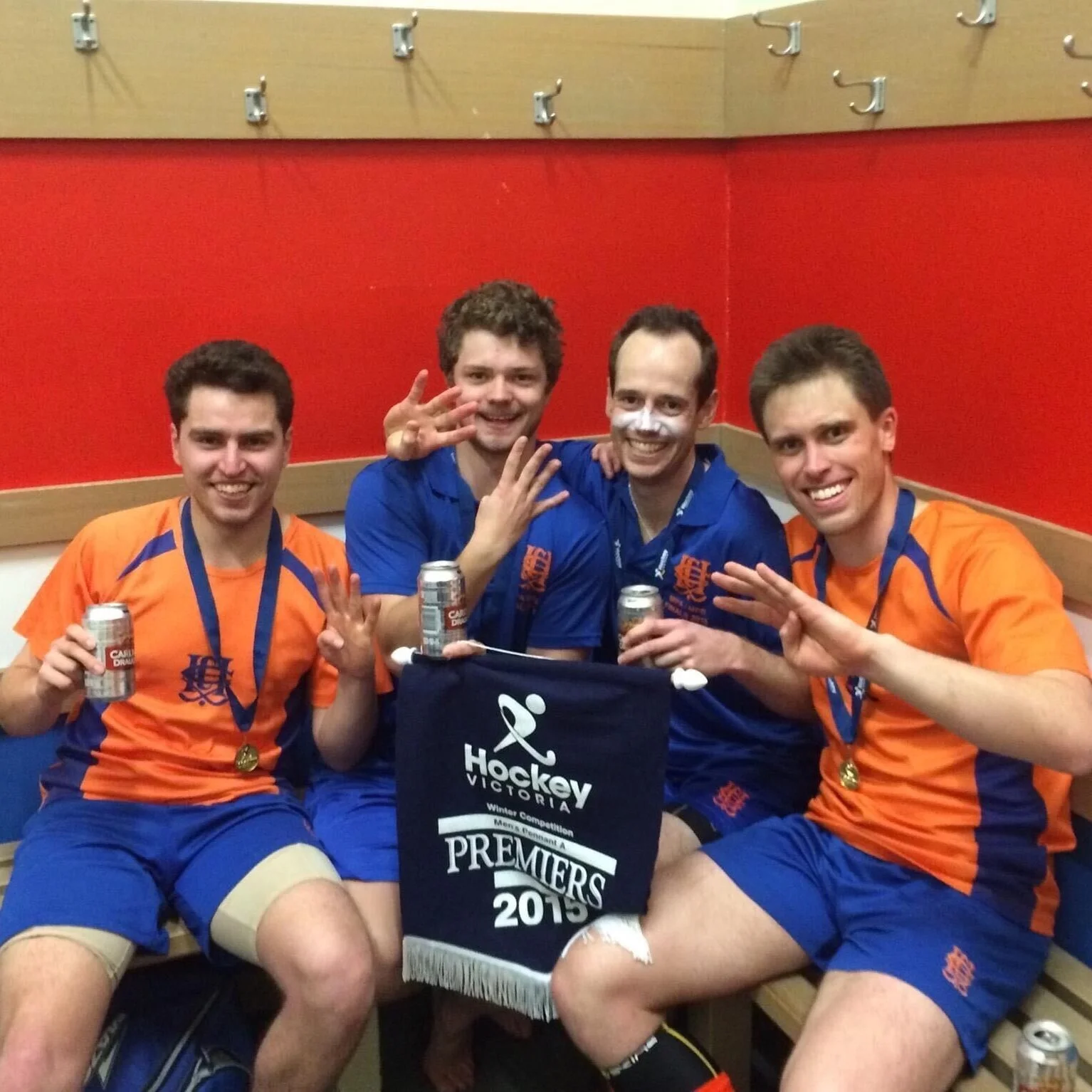
This week Tom Winter presents a panel discussion about our Men’s third team, our Men’s Pennant A. A group now including more than 100 players who have won 12 out of the last 14 premierships and the last 8 in a row.
Listen for some greatest hits, recollections and anecdotes; but also discover an intriguing insight into how this group instilled professionalism, resolve and accountability. How they doubled their training efforts, engaged specialist coaches; and embraced detailed match statistics, video and opposition analysis. Preparation not generally seen in club hockey outside Premier League.
Episode transcript
⚠️ Automated transcript
This transcript was generated automatically from the episode audio and lightly corrected. It may still contain transcription errors, and individual speakers are not labelled.
In Melbourne senior club hockey, there are two separate competition hierarchies. Premier League and Reserves at the top, followed by Vic League 1 through 3. There is promotion and relegation, and each club can enter only a single men’s and women’s team into the structure. In addition, there are seven levels of city-wide competition, Pennant A through G, and three levels of localised competition, known as Metro A through C. There is promotion and relegation, but clubs can enter multiple teams into this structure. Here at Camberwell, we generally have one team at every pennant level. This week you’ll hear about our men’s third team, our men’s Pennant A: a group now including more than 100 players who have won 12 out of the last 14 premierships, and the last 8 in a row.
Welcome to the Camberwell Hockey Podcast. Tom Winter joins the hosting team to present a panel discussion. Now, there is a little bit of hubris in this episode, but you’ll hear an intriguing story of how this group instilled professionalism, resolve, and accountability; how they doubled their training efforts, engaged specialist coaches, and embraced detailed match statistics, video, and opposition analysis. All this at a level not generally seen in club hockey outside Premier League. This group has not only enjoyed success, they have been instrumental in creating the club template for player development and continued generational excellence. Here’s Tom. All right, well, welcome to the Camberwell Hockey Podcast, gentlemen. Thanks for joining us.
For those tuning in this week, we’ve got a panel discussion of the men’s Pennant A, or the men’s thirds, at the Camberwell Hockey Club. To provide a little bit of background, the Pennant A side is the third team in the men’s section. This group has been incredibly successful over a number of years now, winning 12 premierships in the last 14 years. A number of the guys in this conversation have been in this group for a long time, so we’re going to delve into exactly what made Pennant A so good over such a long period of time. And to start off, I’d like to welcome Tim Burkhalter. Tim, do you want to give us a quick rundown of your history in the men’s Pennant A team?
Yeah, so I started out in men’s Pennant A in 2006 under Wansey, who was coaching at the time, and been fortunate enough to play in 11 flags since then. So I’ve sort of seen two eras: the Wansey era, and then the, I don’t know what you want to call it, the eight-peat era, I guess. It’s the other era. So, yeah, that’s my story.
So the men’s Pennant A team, having actually started as men’s Pennant D, I think that’s right, Berkey, then won four premierships in a row, including two promotions up from, or three promotions even. And then we lost two years in a row, and then went back, and the boys haven’t lost since, which has got them eight in a row. So Berkey, you’ve just got 11 premierships. If we go down the premiership ladder here, Lockie Hunter, you’ve got eight men’s third premierships. Is that about right?
Yeah, so Tim, you’ve obviously had a pretty successful career, and the two eras you’re referring to is the promotion rise of the — I believe they started as the men’s Pennant D team, rose all the way up to men’s Pennant B, and then won that back-to-back. We then had two years where we didn’t win premierships, and then, Lockie Hunter, I believe you joined the team at that stage and have just gone on to win eight premierships in a row. Is that right? Yeah, yeah, that’s correct. 2012, first year in Pennant A.
I was in the team below the year before, but I felt like I would take a risk and try and play a little higher.
Yeah, well, I mean, eight premierships in eight years would kind of indicate that that’s been a fairly successful transition for you, Lockie. So a pretty good senior career coming along. And then our last two panellists for this afternoon: we’ve got Simon Easton and Hamish Currie. Simon, you’ve played at other clubs, but then you’ve obviously come to Camberwell.
And if my records are right, you’ve won six senior premierships. Is that right?
That’s correct, yes. I played my juniors at Camberwell, probably before a lot of you guys were even born, and then went out and played a couple of years at Monash, and then came back in 2009. So the first year I came back in, we won it — it was the last of those four years that Berkey referred to with Wansey. And then played in the two years where we weren’t lucky enough to win it, but then was part of the start when we started the run that we’re on now. Yeah, so I played in the first five of those.
And Hamish, I think from my experience in this team, you’ve been one of the real staples and fairly decorated in this group. Obviously, you’ve won six premierships. One year you missed out with an injury, and the other year you went off and played footy, I think. Is that about right for your journey in this team? Yeah, and had a bit of a Europe trip that year. Started in 2012 with Hunts as well. I played the year before, where we lost — we lost the grand final in 2011 — and that burnt a little bit and sort of then inspired the next eight, which has been terrific.
So, yes, like you said, I’ve been in six of them. Was out this past year in 2019 with my knee. Yeah, had a very successful run. It’s been pretty good. I think the first three years I took out the best and fairest, so that was quite nice to get them in. I like, Hamish, that this Camberwell Hockey Podcast has had the likes of Jay Stacy, Travis Brooks, Katie Allen and Alyson Annan on the podcast, and none of them have hyped their accolades. And it’s taken you three minutes to tell us that you won three best and fairest in a row. So that’s pretty impressive. But yes, an incredibly successful and decorated career in the Pennant A group for sure.
So I think we’re probably going to focus predominantly on what has now, amongst the players, been known as the eight-peat guys. So Simon, you’ve been part of it since the very start. Do you want to talk us through what changed in — I think we were talking earlier — what changed in the 2012 season that you think might have been a fairly pivotal moment in all of this? Yeah, probably. I think Berkey refers to it as the line-in-the-sand game at Kew.
If I try and paint the picture a little bit, I reckon we’d gone through the first half of the year
around about third or fourth and fifth. We weren’t dominating in the way we probably did in some of the years subsequently. We were kind of around third, around fourth. And I reckon as we turned to start the second half of the year, we lost a tight one to Hawthorn, who were on top. And then two weeks later, I reckon we lost to Waverley, who we were competing with for one of those final spots. And we dropped to about fifth. And then we went out to Kew to play Kew at the time,
and they were ninth, I think, and I think we thought we’d smash them and get our goal difference back up and be back up in the fight. And we went down 2-0. We played really, really poorly, really lacklustre. And at the end of the game, I remember a couple of the older blokes — we just got together and said, we’re not going to let everyone go, we’re just going to have a quick five-minute chat. So we called everyone in for a five-minute chat after the game. And really, the message was pretty simple at the time. We felt like we were probably just cruising a bit, not taking it seriously enough.
So what we just wanted to understand from the group was, if you just want to cruise and just enjoy it, no problems, we’ll coach it and manage the team on Saturdays that way. But if you want to be serious and try and win it, we probably need to change a couple of things. And to a man, everyone put their hand up and said, no, no, we’re in it to try and win it. So we said, all right, there was only one request we made of them, and that was we need to all start committing to turn up to training twice a week. So the Tuesday of that week, pretty much everyone turned up, and everyone turned up every Tuesday and Thursday for the rest of the year. And I suppose the rest, they say, is history. And we’re now sitting here talking about having not lost the premiership since. And I believe after that meeting, Simon, I don’t think we lost a match for the rest of that year. Yeah, it’s been a pretty incredible run.
Well, I don’t think we actually lost a match for nearly two years, because we went through the next season. Yeah, undefeated. Yeah, because we didn’t lose a match for the rest of that year, and then the next year undefeated. I don’t think we actually lost until round two, 2014, at Southern. So the chat certainly worked. So it’s almost a year and a half, two years of winning. I think, Simon, one of those points you raised there about buying into training and really stamping that culture — that was certainly something I, being part of this group for a little while, certainly something that I felt.
Do you think, Lockie, that the way that we train and the way that we go about it and the commitment that everybody shows to the group, even at the level at which we’re playing — what sort of hand do you think that’s had in the success of this group over the journey? Well, I think it’s been huge. When you look at other Pennant A, Pennant B, Pennant standard sides across different clubs, no one else really trains twice a week.
And I think that’s a big thing for us. We love training as a group. We find fun and enjoyment in that, and it actually carries across into the games. So it’s been a big thing with our success, training those two days a week and getting more match practice for the games, I guess. Yeah, for sure. Berkey, you were obviously sort of team manager, coach, essentially just captain of the ship for so many years there. Turning up to training twice a week, having to wrangle anywhere up to 30 guys, really, when we put together all the groups who were training together — did it make it a lot easier on your end that everybody came super prepared to work and really committed to the cause?
Yeah, definitely. So basically what I started to do — the really big thing which helped was we created a Facebook group, and I think that really helped to create the banter and the culture, and then it just made it a lot easier to organise training and get people along and actually make ourselves our own team. And what’s the title of that Facebook group, Berkey? So the title gets updated every year. So it’s now the men’s eight-peat squad. Is that the name of it, Hans? It is, yeah. That’s the name. Yeah, yeah.
Yeah, but I guess, as Simon said, when we had the chat at Kew — I just think ever since we had that chat, there’s just been a real drive and a real commitment. And yeah, it’s just a standard that we’ve set now, that if you can, try and get to two trainings a week. And I think that’s been — as Hunt said, if you compare that to a lot of other Pennant A sides, they’re just not doing that. And I think when you work harder, you create your own luck. The harder you work, the luckier you get.
That’s a favourite saying of mine. And I just think it’s really true with this group. And yeah, I’m not going to steal your thunder for later on, Wintz, but obviously there’s been a lot of close ones we’ve won. And I just think we’ve just worked hard and you get that luck in the last 30 seconds of a game. And I think the real key to this group is no one — no individual is bigger than the team. I think that’s been a real key. Everyone contributes. Everyone is important in their own way. We wouldn’t have achieved any of this success without a collective effort.
It’s taken 100-plus players to win eight flags. It hasn’t taken one player, and that’s what I’ve been the most proud of — it’s a collective effort. I think one of the quite key things is we get quite high numbers to training, but no one’s forced to. We’re not having to give everyone a rev-up to make sure they turn up; it’s pretty natural. Everybody wants to come along. We’re not having to punish blokes for not coming much. It’s all pretty natural buy-in from everybody, I think, and that’s because we all get a lot out of the sessions. But also, we’ve established quite a good social group, and everybody seems to get quite a bit out of the training, from both the hockey point of view but also the social point of view. Even though we get lots of people coming twice a week and a lot of other teams don’t, it hasn’t been something that we’ve really had to fight for. That’s what I think is quite pleasing and key, and that’s how we’ve been able to sustain it for so long: everybody wants to be there. I think that’s a really good reflection of the group, and that doesn’t just happen. Particularly in thirds hockey, you’re not going to have a coach that’s going to be able to do match day and twice a week. A coach with that sort of dedication is typically going to be coaching higher levels, so often the trainings are run by the senior players. Or Berkey, along the way, has done a terrific job over all these years to tap into the resource that is Camberwell Hockey Club and all the terrifically experienced players that are hiding around the place, getting them in to do two or three training sessions a year. Over the years we’ve had Ash Carey, Will Unkles, these sorts of guys come down. They weren’t our coach for the year on match day, but Berkey would get them to commit to a few sessions a year, and they’d come and give some expert tips to us, things that we would then be able to carry on for the next month until they came again. And I know personally I got a lot out of that. It meant that we were able to get the buy-in from everybody at training, but we were also able to get a lot higher quality coaching and teaching at training compared to lots of other clubs.
And I think these other clubs definitely have these resources, but they just don’t tap into them. So I think that was one of the huge things that Berkey did early on that really set this machine up in a sustainable way to keep it going. From my perspective, I wasn’t good enough — I was training at times with the PLR group, but probably wasn’t ever in the squad. I was really enjoying the professionalism associated with the top two grades, and I guess I was just trying to recreate that at a Pennant A level. That was what drove me: to try and create that professional culture at a level below.
Yeah, there’s certainly a lot to unpack out of all of that. But I think, talking on culture — and it’s been mentioned a number of times already — Simon, you’ve played at a couple of clubs, as we’ve mentioned already, started at Camberwell, went away and came back. Looking at the Facebook groups, we’ve had 100 players across the men’s Pennant A and men’s Pennant B groups over this journey. Simon, what have you noticed in that group that allows us to have such a large turnover of players, but we never seem to lose the intensity or the drive or the game structure? What do you think keeps it all ticking over? I think probably in the first couple of years — and I think this chat’s largely talking about, obviously, the eight years subsequently and the premierships —
I think in the first couple of years we were lucky we had the same core group. So we had Berkey, I think we’ve already talked about — obviously he was managing the team and was captaining the ship at the time. But for those first couple of years, I think it was the first three in fact, we had the same — he was playing coach at the time, but we had Steve Swan. And I think just having the same key people in those key roles at the start was really important for setting the foundation. And it’s not that — I mean, I’ve obviously moved away now and dropped down in the last couple of years to play Pennant B — and it’s not that it’s a whole lot easier for the guys coming through now to create that or sustain it. But I think getting it off the ground and creating it in the first instance, it was important to have the same people delivering the same message for that first couple of years. And now what we’ve probably got is almost like a bit of a self-fulfilling prophecy. So when new kids come in and stuff — I mean, the senior players — one thing that I’ve noticed in this group versus some of the other teams or clubs that I’ve played in, even at cricket, where they’ve tried to create player-driven cultures, is that players obviously have to challenge other players when they don’t think that they’re doing the right thing, or when they feel that they’re not adhering to the game plan or something like that. And it can be a bit difficult when someone does something wrong and the player might challenge them, but they don’t necessarily respect that player. I think one of the beauties is, because we’ve now kind of — the group’s won flags — when someone like Hunts has got eight medals or Misha’s got six medals and they challenge one of the younger kids, they’ve got that respect instantly from having that ongoing success.
And so the younger kids start to buy into it a whole lot quicker. And then obviously over time, as they spend more time in the team, they start to have those, I suppose, habits and methods ingrained in them. And then they start to challenge the new kids coming through and stuff. But I think, to go back, my point is probably that in those first couple of years it was important to have the same people in those key posts, to just keep the message consistent initially and start to build what has now turned out to be very sustainable. Agreed. I think that’s a really good point, having those key people in — and obviously Berkey has certainly been one of them, and then all three of you as well; you’re on here because you’ve been such key cogs in the wheel over the journey. Now Berkey, this could be a long answer, it could be a short answer. There’s been some superstars float down to the men’s third over the journey, and probably none bigger than David Wansbrough, who actually, having looked into it, bookended his career probably with men’s third premierships. I think it was in the ’80s and then in the back end of the 2000s. So quite an incredible thing for the men’s thirds to lay claim to. But who are some of the other guys that you’ve managed to get down that you think have really bolstered the squad over particularly probably the last four years?
I started calling them marquee players. I sort of realised… The big salary cap in men’s play, eh, that we have at our disposal? I sort of thought, look, we’ve got the core group and we’ve got our juniors coming through, but we need a bit of cream on top, I guess, or cherry on top. The first one I think we got was Tom Allen, when he wasn’t playing at all. And it was one of those old things where, you know, if you never ask, you never get.
And so I just asked him a question. I said, what are you up to? Maybe, you know, keen to play at any level?
And I nearly fell over when he said, oh, I’d actually be keen to play Pennant A. If I can’t make it to every training, but I’d be keen to play. And then it sort of started from there. And he was really fantastic to have in terms of his knowledge and experience and with the younger guys. And then it sort of started from there, where we tried to get a marquee player every year. So then I think the year after we got Sam Ganguly, who was fresh off a Premier League premiership the year before.
And then we got Steve Unkles for a six-week stint. And then Steve decided he wanted to play Premier League Reserves. So then, luckily enough, we got Nick Rees to replace him pretty soon after, so that was very handy. And then we got Declan Gerrity for a bit last year. Yeah, I just think those marquee players are really important. I don’t think you can have too many of them, but I think they’re just really important to provide that experience and just that polish that, sometimes in thirds hockey, having one of those guys can really give you that extra push.
So, yeah, it’s been really good to have them. And it’s also great to have guys like that around training and match day, because you learn so much from just playing with them, especially earlier on. Having those guys in the team when I was a younger player, you learn so much from just watching them so closely in the match, and then the coaching tips that they’re able to give you, because they’ve played at that higher level. They see things that you haven’t quite got to yet, and it just helps the development of the young kids in the team as well, so much. Definitely, definitely. And I guess, just to add to that, that was just part of, again, just trying to create a professional atmosphere. So just trying to never be satisfied with where we were at, so always just trying to push. In the first three years, the three-peat, we didn’t have a marquee player. And then I’m just trying to constantly challenge the way we do things and trying to — can we do this better? Can we get someone to help us with defence? So we got Will Unkles in to help us with our defence one year.
Just trying to always think outside the square, I guess. Because if you stay still, then you’re going backwards. So you’ve always got to try and keep pushing the envelope. Can I just touch on one point? I guess we’re talking about marquee signings. I think one of the biggest ones has been Ian Launder. Ian’s son, James — JL — has been in the team for, I’m not sure how many premierships, three or four maybe. But he’s provided us, from the bench, some stats. And if people know me, I’m really into my stats around sports.
But he’s been taking stats for us for a number of years, and this has allowed us to have a look at our game plan, our game style, check out what we’re doing well and what we aren’t doing so well, and adjusting through that. I guess that’s just another sign of the professionalism of our team and how we’ve got a bit of a leg up on the competition. Yeah, no doubt. Definitely. For those at home that don’t know, Lockie is a super coach extraordinaire, so if he’s impressed with the stats, then that means something. I think definitely having so many impressive older guys — and I can certainly speak on behalf of myself here — having guys like Nick Rees scoring drag flicks whenever he sort of feels like it, and guys like Tom Allen running around in the forward line, certainly lightens the load on the rest of us.
But I think also something that I’ve always been incredibly impressed by is the fact that so many young guys come into the thirds group but then go on to play at a much higher level. And just at a very quick skim yesterday, you look at the current men’s Premier League side and you’ve got James Forsyth, who won a premiership with the thirds; Tim Everist did; Matt Drakos did; Josh Henderson did. Liam Henderson was in the team on and off for a little while when he was about 12, and he’s yet to play Premier League, but something tells me that he might make the grade at some point in the near future.
I think, Berkey, that having the skilled top-enders and guys who are possibly coming down from the top of their careers, teaching those younger guys, is just quite incredible, to be honest, and it’s certainly been a hallmark of this group over the journey. And I think the other thing that everybody who plays in this team associates with this team is the success that we’ve had. We have, as a group, won eight premierships in the last eight years. This might be an easy question or it might be a hard question, but Hunt, how do you keep winning?
Oh, well, it’s fun, I think. I think that’s an important answer. We love playing hockey. We all love being around each other. We always have youth coming through that are good players. But yeah, I think it’s a good, fun winning, and we see what that success brings us, and we just love to keep going. This is the way I always thought about it: every year’s a new year.
I never really considered the way that we’d won four flags previously. I was always like, well, that’s done and dusted. You’ve always got to recreate yourself for the new year. Everyone’s on a level playing field again. Really focus on the moment, rather than — because then I think if you start to think about previous years, it sort of starts to weigh you down a bit. And as I said earlier, just trying to push the envelope: what can we do in this particular year to make us better? I think at the end of each year, we’ve actually reflected — we’ve looked at the previous year’s grand final team photo.
And I think on average, you’ve got about a turnover of seven or eight players from one grand final to the following year’s grand final. It’s about half the team, and yet we still keep winning. And I think it’s because none of the wins, none of the flags, have come easy. It might seem like that from the outset. There’s been fighting that’s had to go along the way in every single year. And the core group of guys that have gone through and played multiple years have known that they’ve had to fight for it, and they’ve known what it takes, and then they’ve been able to embody that into the next year and drive that standard the following year for the new guys that are coming through into the team — who, just from the outset, are coming into a team that’s won seven in a row and they think, all right, I’ll just rock up and give me my medal, thanks.
But that isn’t the case, because the standards are driven and the message that it requires the hard work is reinforced. There’s been no resting on our laurels for many of the years, and there certainly hasn’t been an easy year. And I think that’s been the key — and a lot of that’s come from us knowing that, which has come from Berkey driving those standards and always trying to push us forward. Yeah, I certainly agree, Cuz. And I think it’s interesting to hear you both speak of the fact that the team has had the ability to stay in the moment and not rest on the laurels or dwell on the past.
Hans, do you think — because my take on it is that we’ve been pretty good at that, but I also suspect that other teams can sort of sense a little bit of swag as we roll into the season, and particularly when we get to finals, we’re pretty comfortable. Hunt, do you reckon that other teams have sort of seen our success, either played us in finals and maybe not got over the top of us, or just known that we’ve been successful? Do you reckon that’s helped us in finals and in big games? I’m not sure. I guess they definitely do fear us in those big finals, and they know if it’s close, it’s going to be a fight.
There’s no real easy wins against our team, and that’s how we set up. I remember last year, after the first final — we’d played Doncaster and beaten them, and it was first versus second, so that was quite good. I think we’d drawn with them earlier in the year. We’d had tough matches with them. But then I was walking to the car park, and I heard a couple of Doncaster players say to someone else from the club that was just arriving — they said, oh, how’d you go? And their response was, oh, we played Camberwell, so of course we lost.
I think, to answer your question, Wintz, they do fear us a little bit, because that was the team that was second place on the ladder saying that. I think there is a little bit of that that goes on, which has only been built by the hard work and success that we’ve had. Do you know when I reckon I noticed sides feared us more than anything? And I think we’ll probably get to this year at some point — it was 2016, the year when at one point we were talking about relegation two-thirds of the way through the year. But when we got on our run late in the year, we had to play, I think, three of the teams in finals in consecutive weeks, and you could almost sense when we turned up that the other two teams were hoping that they were going to look at the results on Monday morning and see that we’d lost and weren’t going to make the finals. And I think we smashed each of those three teams — well, obviously we did, we smashed each of those three teams in consecutive weeks. And I just got the feeling that each of the two teams that we weren’t playing were looking at the — whatever it was, Sporting Pulse — on Monday morning and going, oh, crap, they won again.
They’re still in the race. It’s now up to us to beat them, to knock them out. They were just hoping that we weren’t even going to get to the finals and they didn’t have to worry about us. And then I remember that final series — did we play Hawthorn in the first round and we beat them like 6-0? I think that was definitely a final series unlike any other, where we were so used to winning in shootouts the whole time, and then in that final series I sort of got the feeling at times sides had already put up the white flag.
I don’t know, it was a weird feeling, that final series. I’ve never had one so lopsided before. But I think Simon’s right. I think in that season, towards the end, sides were fearing us, because they knew we were coming. And I think they, in their minds, had sort of written us off halfway through the year, and then they saw us get on a roll. And I think that struck a bit of fear in other teams, because they were like, oh no, they might actually make the finals and do some damage here.
Yeah, that was certainly a pretty impressive year, and we will no doubt be getting into that shortly, because it’s pretty rare that you win finals the way we did that year. But you mentioned there, Berkey, shootouts. Now, for teams who have been in finals and have entered a dreaded penalty shootout — and I can speak from experience, having won one and lost one in the finals campaign last year — if my numbers are right, Berkey, out of eight grand finals, there’s been four go down to shootouts, with the men’s thirds having a record of four wins and zero losses in penalty shootouts.
Now, most people would think that it would roughly be 50-50. There was a semi-final as well, I think, that went to a shootout. I think we’ve been — you’re right, actually, against Waverley. Yep, so you’re right. So Berkey, I mean, I sort of raised the fact that maybe other teams got a bit worried, and I think we’ve all acknowledged that other teams knew that we were quite strong during this period. But you walk into four or five shootouts in finals and you never lose one. What’s the vibe amongst the group when it goes to the shootout? We always practise them.
And just watching other teams, I’m not sure that they necessarily practise them. Don’t give away the secret. Yeah, well, I think we definitely practised them more than other teams. I think that was one thing. I think also it wasn’t just the people taking the shootouts — I also think we had some fantastic goalkeepers. Andrew White was an absolute pro at them. He was something else in shootouts. Ben Hoople was very good. Yeah, Ben Hoople was very good.
So it wasn’t just the people — and Chopper. So it wasn’t just people taking the shootouts, it was also the goalkeepers. We’ve had some amazing goalkeepers that — there’s been times where we’ve missed a shootout and then the keeper’s had to make a save, and they’ve done it. So, as always, it’s a team thing. Probably the other thing — I remember a lot of the times, even just to get to the shootout in one grand final, we were down 3-2 against Waverley, and we had to actually score a goal.
There’s been a number of times in grand finals where, just to get to the shootout, we’ve had to score a goal in the last minute to even get there, and I think that is amazing in itself. So obviously there was the Hawthorn grand final, and then I think we played Waverley at Hawthorn — they were two that stick in my mind. So that’s also amazing in itself, scoring in the last minute to even get to a shootout. If I was just to add to that, I think then, if I was the opposition and I’d had effectively the win taken from me in the last minute, you would feel quite demotivated at the time. So I think that certainly helped us in two of those shootouts. But I just go back to: the harder you work, the luckier you get. I mean, that’s the saying I’ve said throughout this whole thing, and I truly believe it.
I just think you work hard, you create your own luck. We’ve certainly had a heck of a lot of luck, but we’ve worked hard for it. I certainly agree with you, Berkey. There were a couple of heart-stoppers in there. And I know, talking to my family and particularly my mum after the games on a few of the occasions, she wasn’t particularly happy that we decided a goal in the last minute to take it to a shootout was the best way to go about it. I think she enjoyed the 7-0 a little bit more.
It was a little bit stress-free for all of our spectators. But I mean, Simon, you’ve won heaps of these, and all of you boys have. But do you think — someone asked me the other day in the lead-up to this podcast, they said, do winning grand finals get any less special? And you guys haven’t lost one in a long, long time. I lost one last year, and it hurt pretty bad, I’ll tell you that, and I’d much rather be on the winning side than the losing side. But Simon, do they get less special?
I actually lost one as well last year, Wintz, in Pennant B. Jeez, dark year for this group.
So I’m like Hunts and Mish, and unfortunately Berkey was with me on that one last year. So I’ve got that bitter taste in my mouth this year. But no, I mean, I played in the eight that we’re talking about. I played in the first five — unfortunately, I broke my thumb and missed the sixth one, sitting on the sidelines. But I think when we get to — I think you’ve got a question a bit later where you’re going to ask us about our favourites. My two favourites are probably the bookends of those that I played in: so the first one that we won, and then the 7-0 against Southern.
So no, I don’t think they get any less special. For varying reasons, I think the year on the whole can actually determine how you feel about the grand final. And what I mean by that is, as I just said, the first one for me is particularly special. The 7-0 one against Southern — not just because of the dominant performance that day, but probably the two months leading up to it and where we’d come from — pretty special. I think we were playing probably some of the best hockey I think we’ve just about ever played. I just felt like we were almost invincible in that last month. The three in between — the second one we won, if I think really quickly, we didn’t lose a game all year, and I think we won them all in shootouts, and it was more relief. And you might want to ask Hunt the Iceman in a minute just about his little lob in the shootout, and get him to talk you through that, to keep us in it. But to me that was relief. It was almost like we didn’t want to lose it rather than actually wanted to win it, because we had almost an unbeaten record to protect. And I think the two years in shootouts after that, we were probably the dominant team, so I think it was more relief. When we scored a goal in the last, as Berkey said, 30 seconds against Hawthorn to take it into a shootout, I think it was just relief that we won it and kept the streak going, so to speak.
So they don’t necessarily get any less special, but I think certainly, for me personally, how I feel about them probably is more about how the entire year went. Yeah, I think that’s a pretty good summation of it, to be honest, and I’m sure anybody who’s won premierships across any level and across any sport would be able to convey similar sentiments. All of us have played in a lot of good seasons in this group. I think we might do a little bit of a deep dive into a couple of special ones now. Simon, I know you and I have often talked about the fact that you’ve always loved the first one in this group.
Now, the statisticians in this chat might correct me, but to paint a little bit of a picture of the first flag, which was 2012: later on in the year, Waverley won a game, they didn’t submit their team sheet on time, and then they subsequently lost the points, which boosted us from fifth place to fourth place. Camberwell then went on to win a game to go through to the preliminary final, where Hawthorn had won their first final but played an ineligible player, therefore relegating them to a preliminary final, which we played and won. We played against Footscray in the grand final and essentially were the only team to win a final that year.
And it has forever been told, the story of the men’s Pennant A team that won the premiership from fifth place. Berkey, do you want to talk us through some of your memories from that year? It was definitely a year of two halves. Simon touched on it earlier — first half of the year we were thereabouts, hovering around anywhere from third to fifth. And then we had that chat at Kew, and things started to turn. And I think at that time we were still a fair way off. I think there was still a bit of a gap for us to peg back.
So we needed a bit of luck to go our way. So we kept winning, but we needed some luck to go our way. And obviously that luck came in the form of — I think we got the good news in about round 17, where we heard that Waverley had — there was an error in their team sheet, or whatever the reason was — they lost points. I think Mish’s favourite quote is, Waverley are the team that keep on giving. And there’s been a number of instances after that year where, yeah, they are the team that keeps on giving.
There’s been — oh, Mish, what have they been? There have been a few other moments where Waverley have — wins have fallen in our lap. Yeah, they always seem to beat the team that we need them to beat. And then we also end up — we’ve beaten them in, I think, three grand finals, two of them shootouts. We’ve one year knocked them completely out of finals, so before, they thought they had to win that much to make finals, and beat them. Yeah, so that’s always enjoyable, beating them.
And then I think also, with Waverley, there’s the rivalry as a club. We’ve got a rivalry with Waverley anyway. Yeah, no doubt. What would be your favourite premiership out of them all? Or is it a bit like picking your favourite kid? Well, there was the one that I will never forget. They were giving it to me from the sideline, saying, can I do their tax return, paying me out about my haircut, saying I look like an accountant.
And Andrew Hocking yelled back, he is an accountant. And then the sweetest moment of all was when we won in the shootout, and I just went over to them and started clapping, and they didn’t really have much to come back with on that one. So did you do their tax return in the end? No, I didn’t do their tax return in the end. Berkey, that was probably one of my top two, I reckon, that particular one, so happy to delve into that in a little bit.
But I would love to clear the floor now, because, Lockie Hunter, you’re probably one of the humblest people I’ve ever met in my life. But I believe it was the second grand final of the eight. It was at Doncaster. It was down to the shootout. You stepped up against Waverley — number five, if that’s right — against Waverley, the gift that keeps on giving. It was the last shootout, and if you didn’t score, Lockie, that was curtains, and the eight-peat and this podcast would never have happened. Please — this is not the time to tell us that it was a straightforward one-on-one, you just ran in and put it past the keeper’s left foot. We would love all the details that you remember, and if you don’t, then I’m sure there’s going to be someone else who’ll be able to help you. But do you want to pick up the story from the last one-on-one, to save it and to go into another sudden-death set of one-on-ones?
Sure. So this is the first year of shootouts. I think it had just been released into the hockey world, so we were a bit unsure how to go about it. But I felt like I had a pretty good move that I’d been practising at training over and over, which involved going out to the goalie, putting in a drag, getting him off balance and just sliding it down on his left foot. But unfortunately this time he made the save, and it went out deep into the D. There wasn’t much time left.
So my only option really was to attempt a lob over him, and luckily it did bounce in. I think it was about 0.1 seconds left on the clock. Lucky enough, it did score. And then I think it was Chopper, our goalie, saved the next one, and then Jimmy Forsyth netted his second goal in the shootout in the sudden death to take us to the win. I do remember him going up to the Waverley team after he scored the goal and doing the old Stevie Motlop finger twirl in their face as we jumped all over him.
Good to know that Foz had the exact same cheek back then that he’s still got now. I actually wasn’t there that day, Hunt, but from all reports it was probably one of the great one-on-ones taken. That was the first year of them. We’ve been in a handful since then. I don’t know if you have the answer to this, but how many one-on-ones have you taken over the last eight years, and how many have you scored? We’ve been in five shootouts, but there was one grand final —
I think it was the Berkey accountant final, that it went to sudden death again against Waverley. So there were two in that time. So I think I’ve taken six and scored five. I’ve seen most of them. Can you believe that the same move has worked every single time? Because you do the same thing every time. Everyone knows it, but it still works. Well, the only year it didn’t work was when he then had to lob the keeper, and then that still worked.
I guess I’m a little afraid, telling a little bit of the secret out on this podcast that’s going out into the public domain — so hopefully you don’t get to the shootout next year. But yeah, I don’t know why other people don’t use this move. As field players, we’re quicker than the goalie. Do a quick move on him and he’s off balance, and he can easily put it into the open net. Yeah, well, it’s been pretty successful over all of these grand finals, and I’ve seen it myself, and I’ve got to admit — I’ve probably watched three guys, so I’m super comfortable taking shootouts. And no offence to everyone else I’m not going to mention, but you — I’m always very calm watching you take it, never miss. Harrison Lang is a little bit party, and he does some weird stuff in the shootouts, but generally speaking scores. And then the last one I’ve loved watching — I got to watch him a few times last year — was Liam Henderson, because he kind of just runs around in circles and does some real funky stuff, the goalkeeper falls over, and then he just pushes it in. So I don’t think I was ever stressed, Hans, when you were taking a one-on-one.
But if we do move forward to a grand final that didn’t require a shootout — and I think anybody who played in this, apologies to you — anyone who played in this, this has to be a highlight. To be nearly at the, certainly towards the bottom of the ladder halfway through the season in 2016, I vividly remember believing in the fact that we were going to get to the finals when it didn’t look particularly likely. I reckon we won maybe six or seven games on the bounce to make finals. As Berkey, you referenced this year just earlier, I think we beat Hawthorn 6-0. We had a really tough game with Footscray, to beat them 2-1 in the prelim final. And then we absolutely steamrolled Southern 7-0 in the grand final, in one of the most incredible displays I’ve been a part of. And actually, listening to another episode of the Camberwell podcast, the Katie Allen episode, she said she was super proud of her World Cup team, who got to the big stage and performed exactly how they would have liked.
And I think she even referenced her gold medal, which is a hell of a lot more impressive than us, unfortunately, boys. But for us to get to that grand final and win 7-0 — Simon, you and I had a few chats on that day, but what are your recollections of the 7-0 grand final win? The first bit I think you’re probably referencing: I can still remember the start of the game, and we had possession to start with, and I threw it back from centre-half to, I reckon it was, Ollie Harris. And bless his heart, I think he turned it over, and we conceded a corner inside the first 30 seconds.
And you and I were standing at halfway. And we didn’t talk about this until after the game, but I remember standing at halfway getting ready to run back to help defend, and all I could think — and it maybe goes to the fact of why we probably ended up dominating the game so much, our mindset — I remember standing there thinking, oh well, I don’t care if they score, because there’s 68 minutes to go and we’re going to score at least two goals and we’re still going to win this anyway.
And lo and behold, obviously we defended the corner, and then went down, and Webby put one in the roof from the baseline on his backstick about two minutes later, and away we went. But I remember talking to you after the game and telling you that was my thought, and you said, that’s funny, because that was my thought exactly as well. Similar, actually, mate. I didn’t have the exact same thought, because I wasn’t going to run back to help out.
But it probably helped in the end. And I think Matt Webb would actually — I’ll certainly let you continue, but I think Matt Webb would be upset if I didn’t give a little bit more credit to his goal. I think Whitey was our goalkeeper at the time, made a save on the short corner, it came out and got slapped up to Matt at about halfway. He then just sort of started running blindly with the ball. I remember, courtesy of not being willing to run back to help the boys out, I was in the circle calling for it, and Matt was probably about half a metre inside from the baseline and about at the push-out spot, I guess, pretty much on the baseline there, and he unloaded on the tomahawk, which crashed into the underside of the crossbar and in. And within 30 seconds, I agree — so we went from thinking we’ve got about 68, 69 minutes to catch up a goal here, to, wow, what the hell just happened there, where all of a sudden we’re in front. Certainly from that moment on I was pretty confident. And what do you reckon happened over the next little bit?
Because I think I’ll let you continue your story, but I thought Webby would require a little bit more hype than “he hit a goal.” Sorry, Webby. I suppose the only other thing that I probably remember from that — and Hunt’s talked about it, and I think we’ve got it on our list to talk a little bit about Ian Launder later, but Hunt’s talked about, obviously, his stats and everything. The thing that I was probably most proud about — and it wasn’t just in that grand final, it probably happened late in the year when we got on the run —
I reckon this is probably a bit unusual for a side playing thirds club hockey, is that we actually, in effect, developed almost game plans for each team that we were playing against. Because I remember when we went into that grand final, the one thing we wanted to do was take — and I don’t actually know his real name, but Tiny, from Southern, out of the game, the centre-half. The one thing we worked out was that we felt we could probably — I don’t know if I should say this, given it’s going to go to the public — but we felt that, obviously, he’s a great ball carrier, and we didn’t want him to get the ball when they were in attack, but we felt that we could exploit him defensively. And so we set a game plan to basically just follow him wherever he went when they had the ball, and make sure that he couldn’t get it, so that they had to use other players, and then obviously try and defend and pick them off. But then also to use our centre-half when we had the ball, because we didn’t think he worked particularly hard defensively. And for me, just to have plans like that that actually came to fruition on the day is kind of special. When you’re playing — we’re not playing at the Olympic level or anything, or even at the state level — but to have, as a group, sat down and worked out what we thought was the best way to beat the team, and to manipulate the way we played, I was really proud of that.
For me, that comes down to something we actually touched on earlier, about the professionalism and culture of probably all of us committing a little bit more than other people at our level. And I certainly agree with that, Simon. I think that’s been a real trademark of this group over all of the grand finals. I personally have got two quick memories of that game. The first one — and Ollie Harris will love a mention here, I know he listens to the podcast — I remember turning up to that game and we were all pretty calm.
It’s obviously a bit of edge, it’s grand final day, but we were fairly calm. And I just remember Ollie Harris coming up to me at the start of the game and saying g’day, and he sort of goes to me, oh, how good are the vibes today? And it was a sunny, it was a hot day. And he’s like, oh, how good are the vibes to play grand final today? And it was just a young fellow of that, coming up and being so calm on what is our biggest day at our level — really calmed me as a more senior player. And then, Simon, the second one, I think you’ll certainly remember.
We came in at halftime, we were 4-0 up. Webby obviously hit that first goal, and then I vividly remember Andrew Hocking and Nick Swanson hitting goals — and apologies to whoever hit the fourth goal at half. But it was 4-0 at halftime, and we were all sort of walking around each other going, oh, there’s still a half to go, still a half to go. And you looked at me, knowing that I enjoyed a bit of carry-on, and said, don’t get excited, Wintz, there’s still a half to go. And you and me started on the bench in the second half, and less than a minute into the second half, Matt Webb took it off their fullback, hit a goal in.
Smashed their goalkeeper, broke his stick in half on the goalpost. And I turned to you and said, oh, sorry, I’m going to start getting excited now, because I think we’re home. Do you remember that? Yeah. And you’re absolutely right, because I’m one who probably doesn’t like — I want to step on their throat to the last minute, like, I don’t think we’ve won it to the end. And you looked at me and said, I’m going to celebrate, mate, we’re going to win. And I think I said to you, yeah, we’re home. And that was what, 34 minutes to go.
We’re 5-0 up. The other thing I can remember from that game — I know you weren’t there, and I know you hate this year because we let a few goals in, but you’ll be pleased to know, with about three minutes to go, we’re leading 7-0, and obviously we’re trying to score 8 and 9 and 10, and I had Elsash and Ollie Harris down back and I was playing centre-half. And the ball’s camped in our 25, and I was standing in the defensive 25 at centre-half, and Tab from the sidelines is yelling at me, what are you doing? And I said, it’s not about how many we score, mate, it’s about just making sure we don’t concede one now.
Oh, very good. At least Simon’s continuing my mantra when I wasn’t there. I wasn’t like that, Simon. What does your mantra mean?
Oh, defence wins matches? Yeah, we hit seven goals in that grand final, Cuz, so I would beg to differ on your defence winning grand finals. Yeah, we conceded the most amount of goals in the past eight years that we have, but I guess we still won. So if you had to pick one that was less likely to be my favourite, that would be there, just because of the amount of goals conceded. But then last year I didn’t play, and we conceded a record low amount, so that was pretty exciting to watch. I know it’s not everyone’s definition of excitement, watching goals not go in, but it’s what gets me turning up each week.
Love it. One-nil win is better than a 3-2 win any day. Simon mentioned before that when he was standing at halfway with you, just knowing even if the ball went in, having belief that you were going to be fine and you were going to find a way to win. I remember — I forget which year it was — but when Dan Miles was coaching us, and we went 1-0 down in the grand final, and it was towards the end, and I was on the bench at the time, and he was getting quite worried.
And Dan’s a very calm guy, not much flusters him, and he was a little bit flustered. And I just sort of nodded at him and said, it’s all right, it’s all right, relax. And then I think I went back on, and we ended up winning that one. And after the game, he said to me, the belief in this group is crazy — we were losing and there was no time left, but the person that was the most flustered was me. And so I hadn’t really thought about it, I just thought it was normal. I mean, we always find a way to win. We never stop.
We never give up — not through false hope, but through actual proven hope. And yeah, I think that’s something that has given us that edge over all these finals: that we have that really ingrained belief that we’ll be able to grind out a result no matter how much time is left. Yeah, definitely. I think, Berkey, you probably deserve a little bit of a moment here to talk about that, because you wore a fair bit of flack — or flak, as you’ve mentioned — from the Waverley fans throughout that day. That finals campaign was quite impressive.
I mean, from memory, it was a real jostle through the season. Us and Waverley really were one and two, and I don’t remember that there was going to be another team that would play in that grand final. But we probably dug out two results that year that maybe other teams wouldn’t have. The first one I personally remember pretty clearly, until I blacked out after hitting the goal because I celebrated too much. But we were 1-0 down in the semifinal.
Couldn’t tell you exactly how much time, but it was less than a minute. And then it was fairly similar in the grand final. Do you have any recollections, Berkey, from those two games? I never have a lot of recollection from the last couple of minutes. I do remember, probably the one thing I do notice when we’re down in games, is we always hold our structure really well. And we always stick to — and I think Simon touched on this — we always work very hard on a game plan, and I think a lot of Pennant A sides don’t necessarily have that. And I guess, a lot of the time, they rely on their natural talent.
And I guess we have the natural talent, but we also have a pretty rock-solid game plan. And I always remember, when we’re down in games, I always have hope and confidence that our game plan will get us through. When we’re in that last minute, we’re always still holding the structure, holding the game plan, trying to work to the plan that we discussed at the start of the game. That’s probably what was going through my head — we just got to stick to the plan. Everyone’s got their role. I was playing my role, and I know that everyone else on the field, all the other 10 guys, were as well. That’s probably the biggest thing: everyone plays their role and we follow the game plan, and again, things will have a habit of working out for this group. But I think, yeah, having that game plan is certainly comforting in those clinch moments. Definitely. If you want, I’ll shine a bit of light on that goal, Wintz, because I think Berkey has really let that one through to the keeper a bit — because I know you don’t want to tell the story, Wintz, because it’s all about your goal, which was a terrific goal.
We were down 1-0 against Waverley, but we were peppering them in the last 10 minutes. Their structure fell apart, they went into their shell, we were having so many chances. We just knew our chance would come. Our chance would come. And then about 30 seconds to go, we were able to steal it off — at a 16 on the sideline, we were able to steal it off, and the ball got fed through to you, Wintz, in the circle. And I believe he gave a bit of a sliced slap to chip it over the keeper as he went down.
And then that put us 1-0, and we went through and beat him in a shootout. And then I think that was the first final, first versus second, so we were pretty ecstatic about that. And then two weeks later in the grand final, we went down a goal to nil again. Sorry — in the first week, Waverley scored the goal with about five minutes to go, and then we ended up getting the equaliser with 30 seconds to go. In the grand final, they scored their goal with about five minutes to go. But the most peculiar thing happened, because when they scored the goal, they instantly panicked, because it was kind of like a carbon copy of two weeks earlier, and they flooded their defence and their structure went to crap.
And he ended up scoring a goal again with 30 seconds to go. And I believe you scored that one as well, Wintz. Is that right? No, I would love to claim it, Cuz. I hit it in. I made a really bad tackle on it — I think it was poor old Casper, now a Camberwell player. Made a really bad tackle on him, but sort of knew there wasn’t long to go, so I just grabbed the ball and started running as if I was confident it was mine. And somehow they had actually given it to us.
And then I whacked it at the goal from outside the circle. It was real panic stuff for me. And Bill Veach made a deflection at like his head height from the baseline. Don’t know how it went in, all I know is it did. But I’ll never be shy to talk about my goals, because you know that. But I appreciate that you took it for me in this case. Well, I had the perfect view of your goal, and it was the most delightful thing to see. At the same time as you wind up for a slap, the keeper goes down, and then you just sort of adjust your stick and slice it, and it just chips over him.
It was like slow motion. It was great. But in the grand final, then, when we scored that goal to go 1-0, it was almost like déjà vu of watching two weeks earlier, and going into a shootout and beating them in the shootout again, just like two weeks earlier. It was pretty enjoyable to watch the same kind of thing happening on repeat, and it just would have been pretty disheartening to be on the other end of that, I reckon. Yeah, definitely.
And yeah, that was an incredible final series, and it certainly really spoke to the resilience of all of the guys who have played in the men’s thirds over all of the seasons. I think just that calmness in the moment that we needed it most was incredible to be a part of and really enjoyable. So look, boys, being mindful of time — I know that we could talk about grand finals forever in a day, but we’re going to try and kind of wrap up here a little bit. And in my opinion — and happy to be proven wrong here — there’s four people who have been incredibly strong contributors, and there’s been many more, but four really prominent figures in this group over the eight-peat.
I’m going to give you a 30-second timer on each of these, otherwise we’ll be here all day, and that’s the time they deserve. But we’re going to give you 30 seconds each. So, Cuz, I want you, in 30 seconds or less, to describe what Tim Burkhalter means to the men’s Pennant A eight-peat group. I mean, we wouldn’t have the eight-peat if it wasn’t for all the tireless work that he did. In later years, the machine was running and he was maintaining it, keeping it going, and that took a great deal of effort. But I think what doesn’t get appreciated enough is the setting up of the whole squad and the team, and creating the successful environment that we have. And none of that would have been able to happen if it wasn’t for the constant weekly effort of Berkey.
He always talks about, like, herding cats and getting it all together and putting the structure around us to get us the great coaching and the great culture. Yeah, couldn’t agree more, Cuz. And pretty good from you — that was only 45 seconds, so that’s quite good. Now, Eastie, this is a good mate of yours, I know. He coached us for a few years a little while ago, and I certainly, as a young player at the time, attribute him to being a really key figure for my hockey. Firstly, who is Steve Swan, for those who might not know?
What has Steve Swan done for this group, Simon? So I think he’s — is he the cousin of Matty Swan, I think? Is that correct? Yeah, yeah, he is, Simon. Who’s a fairly well-famed hockey Kookaburra. I was going to say Hockeyroo, but Kookaburra. So he’s the cousin, and I think he hails from Queensland, and I reckon he came down to Camberwell at the same time that I returned in 2009. And I think in his first couple of years he was in and around the — well, now Premier League — the State League One squad at the time. And I think in his first year he played in the — well, Pennant A at the time, but PLR now — grand final and premiership team.
And then, obviously being a little bit older, life and everything kind of got in the way for him a little bit, and he dropped down to actually play thirds over the next couple of years, and he took on the role — quite an important role — of player-coach. I think he actually coached us in the year where we lost initially, but then he hung around for the next three years and coached us through the first three flags in the eight-peat. So I suppose his ability to, in that initial stage — I touched on this earlier — but establish, with Berkey at the helm as the team manager and captain, establish those foundations and those training habits, and build that initial game plan and stuff, was really critical to creating what has obviously been fairly sustainable over the period now. Yeah, definitely, he’s a great man, and someone who we really enjoyed having as part of the group. As I move along the list of incredibly key personnel to this team’s success — this guy player-coached us through a little bit of a period of transition, I would say, where a lot of guys were either going up or going down, and the group changed pretty drastically.
Hans, do you want to just talk us through Nick Rees? And before we start, I’ll give a little bit of background on Reesy. He was a Camberwell junior, and a very good junior at that. Played through a lot of state teams, went on to play Premier League, and then went off and played at La Trobe for a few years. I’ve talked to him about this — he wouldn’t mind me saying it, but he realised that playing in good teams is more enjoyable than being the best player in not-so-good teams. Wanted a little bit of success, won a premiership with the men’s Premier League reserve team, and then joined the Pennant A group.
So, Hans, what did Reesy bring to the team once he joined? Well, there are a number of things that a guy like Nick Rees brings. First one is goals, I guess, which is always nice — we’ve touched on it already, it’s handy having an elite drag-flicker in a Pennant A side. So that was one thing. But I think his leadership — and similar to Berkey as well — he’s a person that just drags everyone else in the team up. He’s someone who you want to follow. His actions speak numerous things, where people just want to follow his lead, whether that’s talk, communication, or just gut-running in the game.
He’s a leader by example, and that’s been so important in the later years of our eight-peat. Yeah, great. I reckon he did — well, I can certainly speak on behalf of myself here, and he certainly dragged me up to the next level, there’s no doubt about that. Now, Berkey, I’m going to throw to you, and as I said to Cuz, 30 seconds is the limit here, and it’ll be very difficult to give 30 seconds on this man.
But Ian Launder — probably one of the unsung heroes, seeing as he wasn’t on the field with us and he wasn’t a coach, but he played an incredibly vital role to all of us, I would say. And he really is one of the guys who just is a heartbeat of the hockey club. We have so many people like him — some of them receive the credit they deserve, and others don’t. What has Ian Launder done for this group, and how would you exactly explain his influence on the eight-peat? I think I’ve said in a number of the grand final speeches: how many Pennant A sides have a statistician?
How many Premier League sides, for that matter, have a statistician? So I guess Ian — just as Hunts may have mentioned, Ian — we started using stats a lot more, and I think that really lent with Nick Rees; I think Nick Rees really used those stats, and it just created a lot more professional outfit. He ran the bench, so especially with Nick being a player-coach, he just was that guy on the bench that was able to organise things. And that’s just so important. He’s a really integral person, and — I said everyone plays their part.
He wasn’t on the field, but it can’t be understated how important he was, with his statistics and running the bench and just keeping everything organised. And also with the shootouts, he had the order, he had it all down pat. Everyone knew what they were doing. And that just comes down to — on those big grand final days, you need to have everything organised, and it just takes the weight off your mind. Certainly for me, a weight off your mind. I think probably the last one, one guy particularly — and again, there’s a lot of people who we could mention in this space — but Tav Cook coached us all for two seasons, 2015, 2016. Tav was a state goalkeeper, if I’m not wrong, early in his playing days, and then at the start of 2015 he actually joined us as a men’s Pennant A coach. And a guy like Tav, to actually come and sort of — he wants to be a career coach, and to come down to our club to join us as a coach of the men’s third —
I think he elevated the professionalism of our group and the intensity at which we went about it a huge amount, because he dedicated so much time and so much energy. He watched video of other teams, he watched video of our teams, he really pushed all of us to get a deeper understanding of what was going on in our grade. And that’s the sort of stuff that our group has really thrived on, in my opinion. I think that we look at it at a higher level than probably our opponents do. And unsurprisingly, that’s resulted in a huge amount of success over the last 15 years. So I think it would be remiss of us not to mention Tav during this podcast. Look, boys, that’s, I think, a really good place to end.
There’s been some incredible people who have supported some really great players and some really great guys along this journey. Thanks for sharing some time during ISO with me. Thanks, Wintz. Thanks for the opportunity. Thanks, Wintz. Thank you. Cheers, Wintz. No worries, boys.
Take care. Thanks, thanks.
You’ve been listening to the Camberwell Hockey Podcast. We’d like to send a big thank you to our hosting team, our guests, and you, the listener, for your support. If you enjoy the show, please give us a review on iTunes or wherever you get your podcasts. This show is recorded and produced by Camberwell Hockey Club in Melbourne, Australia. If you have any feedback, comments or questions, please find us on Twitter at camberwell_HC. You’ll find more information on our website at camberwell.com.
See you next week.