
Episode 16 - Medical Members
28 July 2020 · Steve Prior
Listen to this episode ·
Subscribe in Apple PodcastsThis week we get to know three of our members who all also happen to be medical professionals. Milly Bell presents Professor Julie Miller, Dr Adam Levin and Dr Samantha Daly
Tune in for a deep dive into the impact of the COVID pandemic, dealing with masks and PPE supplies, balancing busy work with hockey and some general advice on looking after your physical and mental health in lockdown.
00:00:29: Introduction
00:00:54: Sam Daly
00:02:06: Julie Miller
00:03:03: Adam Levin
00:03:39: COVID Impact
00:10:43: Seriously Organised Toilet Paper
00:13:08: Regional Impact
00:15:18: Outlook
00:20:38: Benefits of Masks
00:23:59: Serious Situation
00:26:24: PPE Supplies
00:28:13: Work Hockey Balance
00:32:26: At Risk Groups
00:35:21: Final Advice
Episode transcript
⚠️ Automated transcript
This transcript was generated automatically from the episode audio and lightly corrected. It may still contain transcription errors, and individual speakers are not labelled.
This week we meet three of our club members, Professor Julie Miller, Dr Adam Levin, and Dr Samantha Daly, who are all, you guessed it, medical professionals. Welcome to the Camberwell Hockey Podcast. Milly Bell returns to introduce the panel for a deep dive into working professionally during the pandemic, dealing with masks and PPE supplies, balancing busy work life with hockey, and some general advice on looking after yourself and others in lockdown. Here’s Milly. Hi, so this is Milly Bell back again on the podcast and today I am speaking with three medical professionals. So I’d like to introduce Dr Samantha Daly, Dr Adam Levin and Professor Julie Miller. Thank you very much for joining me today. We will start off with talking about each of our health professionals’ area of medicine and how they got to where they are. So let’s start with Sam. What area of medicine do you work in and how did you get into that area?
So I work as a rural GP obstetrician, which I’ll explain because it’s not very straightforward and probably not common for people in Melbourne to see. So I’m qualified as a rural general practitioner. So I do general practice work, but I’ve also had specialist training in obstetrics. So I work on a birth suite and manage pregnancy and labour and birth, including caesarean sections. And by definition, I work in a rural regional area. I can work in Melbourne if I choose to, but I’m not currently doing that. And I guess, how did I get into it? Well, when I imagined what a doctor would be like when I was a kid, I imagined a rural general practitioner.
I think the jack of all trades that sort of did everything and looked after family. So I kind of got myself into it as well because I couldn’t decide what specialty to do and it encompasses everything. So that’s what I enjoy about it. What I’m imagining at the moment is the TV show, Doctor Doctor. That’s just exactly what I think you must be doing. I haven’t seen it, so I can’t tell you. Oh, you’ll have to get onto that one. Thanks very much for that, Sam. So what about you, Julie?
What area of medicine do you work in and how did you get into that area? I am a general surgeon by training. I knew I was going to be a surgeon in medical school when it was the night after the anatomy exam and the night before the biochemistry exam, and I was still studying anatomy because I loved it. I ended up doing general surgery and then migrated to Australia after I met a lovely boy from Wodonga during training in New York. And for the first, I’ve been here 19 years, for the first 10 years, I did general endocrine surgery and I also received a lot of the trauma coming through the Royal Melbourne Hospital. And in the last nine years, I’ve restricted my practice to almost all endocrine surgery, which is tumours of glands, so thyroid, parathyroid and adrenal. But I still sometimes receive on-call emergencies at the Royal Melbourne. Fantastic. Well, I guess we can thank that boy from Wodonga for bringing you out here. And Adam, what about yourself? What area of medicine do you work in and how did you get into that area? So I’m in anaesthetics and I kind of took a convoluted path after finishing medical school. Wasn’t really sure what I wanted to do. Tried a lot of the different specialties in hospital and then was lucky enough to have a rotation in anaesthetics and was excited by the job. Still enjoy it. So I decided to pursue training in anaesthetics and that’s what I’m doing at the moment. So I’m about halfway through a five-year training program.
Fantastic. Well, good job getting to where you are so far. Let’s go through whether or not you guys have been affected and your specialty has been impacted significantly by coronavirus. So starting with you, Sam, what have some of the impacts of coronavirus been? So I live in Wodonga, which is a border town with Albury. So we’ve definitely been impacted by the recent border closure between Victoria and New South Wales. And I was just explaining to you earlier about pregnant people especially being affected trying to cross the border because our maternity unit is in Wodonga in Victoria, but we’ve got people delivering babies from both sides of the border. So that’s causing a little bit of havoc and stress for people. But also myself, I’ve started or I’m starting working in a respiratory clinic. So doing a lot of COVID swab testing as well.
So that’s something that I obviously had never done prior to this year. So that’s been different and interesting, I guess. Yeah, so you’ve been brought across into a different field due to the high need of extra medical professionals. Yeah. So in addition to what I usually do, I’ve been doing a lot of the swabbing as well. So yeah, it’s an added branch, I guess. And before the podcast, we were just saying how stressful it must be for pregnant women, particularly those having their first baby or that have had troublesome pregnancies trying to cross the border, not knowing how long it’s going to be before they can actually get across. Yeah. So what would normally be a five or 10 minute drive for most people is now becoming, you know, up to sort of an hour, two hours, depending which direction you’re going. And we give them paperwork to be able to get across the border easily, but you know you still have to wait in the line to get to the police and army that are manning the border so they can read the paperwork, so it can be quite stressful for our ladies. Yeah, very, very difficult and I mean that’s something that’s particularly urgent but you’d also have just people that generally need to cross the border because they’re specialists on the other side and lots of people lining up. Yeah, absolutely.
And Julie, what about yourself? Has your specialty been impacted significantly and have you had to help in other areas like Sam has? Well, the Department of Surgery in general has been helping out in emergency because many of the emergency doctors, of course, have increased amount of work to do and many are furloughed, having to isolate after exposures. So we’re providing a general surgical evaluation service in emergency. I’m not personally doing that. We have actually a pandemic system in place where when the first wave of doctors may get sick or be furloughed, I would be in the second wave. As far as what’s actually affected my patients personally is in order to reduce traffic in the hospital and preserve personal protective equipment, elective general surgery has been reduced. You know, it’s gone up and down a few times with the second wave, but we’ve just now been told we’re reducing down to 50% volume again, which is a double-edged sword.
For us, you know, it’s in a way a silver lining is it’s nice to be home a little bit more and maybe slow down our pace. But I also feel bad. It creates a lot of anxiety and angst amongst patients waiting for surgery, particularly in public where they’ve already been waiting a long time. But even private patients are having to wait longer than they normally would. But it seems definitely the right thing to do. Now, what are the consequences for those patients having to put off their elective surgery a bit longer? In my field, there’s not a huge amount of consequences. Most of the work I do will not be affected by a delay of a month or two. But what we are noticing also is a decreased presentation of people with cancer.
And that’s a bit of a worry. Our volume of new cancer diagnoses is down about 40%. And it’s definitely not because cancers have disappeared. It’s probably because people who need care are worried to come see their doctor. And so we don’t think it’s too early to really know what the consequences of this will be. But I think it has all of us in all different fields of cancer a little bit worried. So that’s a really good point, actually. And what would your advice be to someone who may have concerns about seeking medical care at the moment? Certainly, if you have something like you feel a breast lump or a lump anywhere or chest pain, potential heart attack or stroke, it is definitely better to come on in and seek medical care and not to sit home and wait it out.
We have very carefully and deliberately designated respiratory emergency room for patients that might have COVID. and a non-respiratory emergency room for people with other presenting problems in order to try to keep everyone safer and make sure that people who need care can feel safe coming in. Yeah, excellent. Well, that’s really good to keep in mind. Adam, what about yourself? How has your specialty been impacted and have you had to help out in other areas? Yes, I think similar to all other specialties we’ve been impacted. From one point, it’s a bit like Julie, there’s decreased elective operating, which means that our workload has shifted a little bit. But just because of the parallels between anaesthetics and intensive care, a lot of my colleagues have been seconded to intensive care.
So that’s something that everyone’s getting prepared for. And probably it’s a reality in some hospitals already. And given the ongoing numbers, we’ll potentially become a reality for me and doctors in other hospitals around the state as well. And then another part of my role, which people may or may not be aware of, is to help out in resuscitation situations. So we’ve had to take extra precautions, especially for patients that are coming from outside the hospital where you’re not sure what their symptoms are or what may have led to their collapse in terms of approaching the resuscitations. And also anaesthetics are heavily involved in intubating these sick patients who can often be tricky to manage their airways and their breathing. So there’s been a lot of extra education around. We’ve had extra staff rostered on and definitely seen a fairly heavy change in the focus of our jobs from mainly elective surgery settings to helping out a lot with emergency cases in intensive care and ICU and lots of training for how to keep ourselves and the patients safe. Adam’s being quite modest. The process of intubating someone or putting in a breathing tube and extubating or removing the breathing tube is what we call an aerosol generating procedure.
So that in patients with COVID-19 or even more dangerous having COVID-19, but we don’t realize it, it’s the anaesthetists who are really at risk of actually being exposed. And so a lot of us non-anaesthetists feel protective and a little bit worried for our anaesthetic colleagues putting themselves in harm’s way in order to look after patients. Well then I guess we really have to say thank you don’t we? Something a little bit light-hearted now so I want to take you back to March when we started having those initial outbreaks all over the country and everyone in Australia decided that it was a good idea to buy all of the toilet paper stocks everywhere. Julie, any? No, we were okay, actually. We mail order our toilet paper from Who Gives a Crap, and we had coincidentally just ordered a box. So we were in a very good position. Very lucky. And Adam, what about you? Were there any items you weren’t able to get?
I’ve got to say, uncannily, almost exactly the same situation from a toilet paper perspective as Julie. We’d put an order in about a week earlier. So there you go. I suppose it speaks to the busyness of our lives that we like to be organised but luckily it wasn’t too affected. I do a lot of shift work nights and weekends so I often have the house stocked up just in case I’m exhausted or don’t have time to cook or go shopping. So from my perspective got pretty lucky but yeah obviously seeing images on the news and spoke to family and friends that have been caught up with it all. Ah very clever and Sam what about you did you have the same challenges in the regional areas? Well, first, I’m going to say I had plenty of toilet paper as well because I also pre-order Who Gives a Crap. So, props to them.
I guess we were probably a little bit of a delay effect compared to Melbourne. But once, I guess, chaos ensued at the supermarkets in Melbourne, probably a few days to a week later, the same happened in Albury-Wodonga. So, yes, we had the shelf stripped bare as well. Yeah, well, I actually heard that there were buses being charted from Melbourne to allow city people to go to the regional areas and start buying out and clearing out their shelves too, which was promptly shut down. And some supermarkets were requiring ID to show that you were from the area before you could come in and those sorts of things too. I think clearly times like this bring out the best in people and also sometimes, unfortunately, the worst in people. I couldn’t have said it better myself. But for the most part, people have been really good looking after their neighbours and helping each other out.
Absolutely, which is so important at this time and for this whole year and probably into next year as well. And Sam, how have the regional and rural communities held up with the threat of COVID? Obviously, at the moment, we’re in lockdown again. But what are you thinking about the movement being allowed around the regional areas at the moment? I think probably people are fitting into two boats. There’s a lot of people that are really terrified and scared and, you know, not leaving their houses and very much just staying in town. And then there’s other people that are just going about their business as usual and we’re not in lockdown.
So there’s not a reason for them really not to, I guess, in some ways, which was probably the same in Melbourne, I think, before this second lockdown. I think one of the things that’s been really obvious to me is I work at Mount Beauty, which is the small town at the bottom of Falls Creek Ski Resort. And I was actually working there over winter to help them out because we also run the clinic at Falls Creek, so they need more staff. But the ski resorts all been shut down. And so the entire town, Falls Creek, Mount Beauty, now don’t have the massive tourism that they would normally have this time of year as well. So there’s a lot of businesses struggling all over the state.
But I particularly noticed that in terms of the ski resorts and the tourism that we would normally get over winter up here as well. And there’s a lot of community really struggling financially as a result. It’s a really tricky balance because obviously some towns are saying we want you to stay away and keep your coronavirus with you. But on the other side of things, they do rely on a lot of people to come through the towns and particularly in school holidays, which we just finished and those sorts of things too. Yeah, absolutely. It’s a big balance, but definitely from like a health professional’s perspective, we are quite happy that all of the tourism to the area has been shut down because if coronavirus took its hold up this way, we’d really struggle. We just don’t have the resources to manage severe cases and lots of numbers of COVID cases.
Definitely, we would struggle a lot more than what Melbourne would in this scenario, I think. Yeah, well, hopefully the current lockdown in Melbourne and the Mitchell Shire will help to prevent that from happening. I hope so. I would agree. Adam, you were saying that sometimes, you know, you have a lot of shift work and those sorts of things. So how are you going maintaining balance during this time at the moment? I guess it’s pretty tricky given that things like hockey and footy are often my outlets during time off and it’s been pretty hard to access them this year and also potentially having extra workload here and there but I suppose just like usual I like to make sure I exercise most days and luckily even with the restrictions we’re still able to do that and there’s obviously some common sense around the mask rules where you can run without a mask so still keeping up with that And in terms of maintaining a balance, I suppose, checking in with family and friends has just changed to different routes.
So phone calls, Zoom chats, rather than face-to-face. But making sure I’m checking in with people and seeing how they’re going and just having chats, getting distracted by whatever means I can. TV shows, Netflix, like everyone else, and still able to watch footy, even though not live. But that’s exciting to have some live sport on again at least that you can watch on TV. So those are the types of things that I’m working on, I suppose, just reincarnations of what I’d be doing otherwise from my lounge room rather than being out and as active as usual. And so have you had any Zoom meals with family or friends? Yeah, I’ve had a few Zoom birthday parties, which has been good to check in with the nieces and nephews. And they’re interested for about three seconds and then run away and do whatever they’re doing. but it’s still nice to be able to see them even if it’s over a computer screen. Yeah, that’s lovely.
And what about, you mentioned Netflix, any good recommendations at the moment? I watched, what was the one a while ago, Tiger King? Oh, yeah. Yeah, yeah, I know it’s dated now and everyone’s probably seen it, but that’s probably been the highlight of my lockdown watching. Okay, so that’s your official recommendation. Fantastic. And what about you, Julie? How have you been coping with this year? I’ve got to say, I’m really missing the hockey. I had my first season last year and I enjoyed it so much. I have been in a way focused on, I’ve got three teenagers and supporting them in the distance learning, including my oldest is in year 12. So he’s actually back at school now.
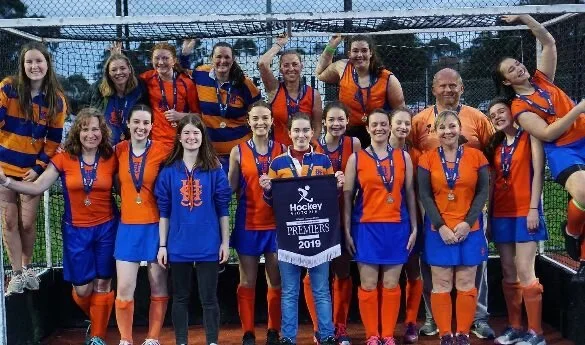
But they’re doing all right. I’m actually quite thankful. I think having primary school aged kids at this time would be especially difficult. And I really feel for all of my friends and acquaintances who are struggling with really young kids at home. But yeah, I’m trying. We’re allowed to exercise in pairs. And I’ve had a few sessions at Hawthorn Hockey Centre with one teammate at a time. And that’s been really fun to get out and stretch the legs and run around. Yeah, lovely. Well, I mean, it’s fantastic that you enjoyed your year so much last year. And can you tell us what that highlight was that you had last year, Julie? Okay, well, so I started off playing in Masters, which is fantastic. It’s a really warm group of welcoming and wise women. And then I decided I’d give my hand to give a try to playing on the weekends. And I ended up in the Metro B team, which won the premiership. Certainly not because of anything I did. I was the worst player on a great team and I felt like a barnacle on the ship, but it was still just a wonderful experience. And we won the grand final in a penalty shootout or hockey shootout at the end. So dramatic, but isn’t it fun? That’s excellent. And what about yourself, Sam?
How are you coping with this year? I’d be first to say that I’ve been pretty disappointed since the hockey got shut down. So I’d made the effort this year to try and get back and play Premier League at Melbourne and I was commuting down for training and things like that. So having it locked down twice was pretty disappointing. And obviously that’s not going to go ahead this season. So I have been trying to motivate myself to stay active, but, you know, it’s a lot harder if you’re not training for something in particular. We’re lucky, obviously, we can still go outside and exercise and gyms and things are still running. So that is helpful.
So, yes, most of my outlet has been getting outside, but also a little bit of Netflix like Adam and, yeah, just trying to take it easy when I’m not at work, which is sometimes easier said than done, I guess. Excellent. And so, Sam, what is your official recommendation on Netflix? Oh, the latest one I was watching was Schitt’s Creek. It’s quite unique, but pretty funny and very easy to watch. Fantastic. Well, that’s a good one where you can sit back and eat your dinner and watch something at the same time. Exactly. I do have to say I share all three of your sentiments about being sad about the hockey season not going ahead. And I think particularly with the false start, it was sort of everyone was gearing up thinking, yes, we are going to get this hockey season. And, you know, we all share that disappointment that it’s not going to go ahead in the end. But I guess we’ll just all have to really look forward to next season and summer season, maybe, and stay nice and fit while we’re waiting for hockey to come back. It would be nice.
It would be lovely. So, Adam, can you explain the benefit of wearing a mask? Because this is obviously a new thing that we’ve all just had to start doing. So can you tell us a bit about why we should be wearing a mask? Yeah, so my understanding, and I’ve been lucky enough to present, sorry, attend a recent presentation by one of the infectious disease doctors at my hospital, there’s fairly robust evidence coming out now that the risk of transmission is lowered quite significantly if you’re wearing a mask and also if the other person that you’re interacting with is wearing a mask. And I think the ideas are pretty basic. Essentially, if you have to cough or sneeze, or aerosolise, as Julie said before, any of the germs you’ve got, if you’ve got something stopping it coming out of your mouth and then someone else has something stopping it going into them, then it’s going to really decrease the risk of transmitting the disease.
And that coupled with hand washing and keeping the 1.5 metre distance and all the other sensible recommendations, I think, have been really shown to drastically decrease the rate of transmission. So my understanding is that if two people are wearing a mask inside, it should decrease your rate of transmission by about 80%. And if you keep at least a metre apart and have windows open as well and don’t touch your face, then the risk of transmission is thought to drop by about 99%. So there’s fairly good numbers there and good reasons that everyone should be keeping up their basic practices.
Fantastic. And can any of you direct us towards any good resources for people who perhaps don’t know how to put on or take off a mask properly, you know, with the risk of transmission if you’re touching the mask and those sorts of things, as you just said, Adam. Do you know of any resources for exactly how to put on a mask and take one off sensibly? I’ve been fortunate enough to have really comprehensive training at my hospital, so I’m not sure of external resources. I imagine there are some government ones.
Sam might know being in GP and interacting with the general public a bit more. I would probably be directing people to the Department of Health website. I’m not sure if there’s anything specific on there about masks, but I would just say as a general thing, if you’re wearing a surgical mask, it’s blue side out, out to the public. And when you’re taking them off, don’t touch the actual part of the mask. Touch the ear bits that you’re tying on or looping around your ears. So you shouldn’t be touching the mask bit at all. Excellent advice.
Can I add just it’s important to, when you take off the mask, if it’s disposable, straight in the bin. If it’s reusable, straight into a plastic bag if you’re not home, or into the washing machine, and wash your hands afterwards. And for those of you who might feel the mask is uncomfortable, I promise you, you get used to it. Like surgeons, we wear them all day, all the time. There’s really strong evidence that the mask does not. You could put six masks on at once and it still won’t affect your gas exchange. So if you might feel that you’re having difficulty breathing, it’s probably psychological and some anxiety and you definitely will get used to it. So please persist. The wearing of the mask is a statement that you care about your friends and family and you’re looking after the people around you.
I like that. Well, that leads us into a fantastic follow up with how do you communicate to patients, family and friends that we should be taking this situation seriously? I think it’s a bit tricky. I’ve definitely had some interesting encounters with family and friends where they’re maybe not taking it as serious and I think being health professionals is our it is our job sometimes to be that awkward person that says hey this is not good enough or you know we need to really socially distance or you know you should be wearing a mask right now or maybe you shouldn’t be going to go catch up with the grandkids, for example, I think. But it is a little bit tricky. I’ve been posting a few things on my Facebook page just to get the message out as well to help educate people, because I know a lot of people go on there for different reasons, but there’s a lot of education there. Some of it’s helpful, some of it’s not. So I think it does help as a health professional, if we’re putting up good, useful, reliable resources. What do you others think?
I think it’s true. I think that to appeal to people’s sense of community, that we will all get through this faster if everyone complies with guidelines. I think we’re lucky compared to some other countries. I think that our leaders really do care about trying to reduce the impact of the pandemic and don’t seem to be going after political point scoring. They are taking advice of public health and healthcare professionals, which is reassuring. Some people are confused because the advice has changed over time, but that’s just a function that this is new, and we’re learning as we go. And as evidence accumulates, then advice might change. But really, we are all in this together. And if we all follow the rules, even though it might be inconvenient, we’ll come out of it stronger and better and faster.
I think that’s really important to remember. Thanks, Julie. And thanks for your input as well, Sam. I think it can actually be really awkward to try and face particularly people you know, family and friends, as you were saying, Sam, that you know some people that have done the wrong thing or thought about doing the wrong thing. And it can be tricky to call them out on it. But I think not only is it the role of health professionals, but everyone should be reminding themselves and people that they’re close with to try and do the right thing. And as you said, Julie, if we all chip in, then everything’s going to go faster. And really, it does appeal to that sense of community. And have people in your medical networks had concerns about PPE supplies? I know Julie mentioned earlier that surgery has been reduced to make sure that we don’t run out, but have you had any concerns in your circles? I think, as Julie mentioned earlier, there’s been a lot of concern within the world of anaesthetics, given the high risk of helping out patients by putting breathing tubes in and taking them out again.
I think especially in the first wave, there was a lot of anxiety about that, with policies being released by the anaesthetics college. It seems like definitely the institutions are working with some good policies in place now to make sure that the appropriate equipment is being used at the appropriate times because there are some more specialized equipment that we have less of and it’s important not to use them willy-nilly and waste them. I think luckily we’ve had a little bit of time to stockpile or get in adequate amounts of just your general PPE. So this time around it seems like the anxiety levels are a bit lower but I assume as cases are rising and as we’ve seen we’re going to have to start decreasing particular areas of the workforce like elective surgeries that tend to use it up a bit. So still a little bit of anxiety there. Yeah, fantastic. I’m just going to pause for a second because my dog has just come in and decided to take a really big drink behind me. You can or you can’t?
No, I didn’t. Okay, I put myself on mute. He’s still going. We went for a big walk before.
Thanks for that answer, Adam.
And I guess the next question I want to ask is how you balance working in a hospital or clinic with hockey and particularly looking around on call or overtime shifts, weekend shifts and those sorts of things. So perhaps starting with you, Sam, how do you balance your work with sometimes unpredictable nature of work and hockey clashes? I’ve actually been quite fortunate, I think, because I’ve worked at Albury-Wodonga Health for the majority of my junior medical training. And because it’s a small health service, they were actually really flexible with me. And I was able to swap shifts around, particularly the weekends and the night shifts a little bit to kind of adjust for hockey. I now do some 24-hour shifts on the birth suite. And I definitely can’t be playing hockey when I’m doing them because I need to be available very quickly, which can be frustrating at times. But it’s part of the job.
And there’s plenty of other days in the week to be able to play hockey. And I think I’ve been lucky this year because I’ve finished my training at the start of the year. I’ve had the flexibility this year to dictate my own schedule to some degree. And that’s allowed me a lot more flexibility, particularly being able to come to Melbourne to play hockey. So, yeah, it’s difficult, particularly, I think, when you’re in training in the early stages and as a registrar. But as you get through training programs, I found that I’ve had a lot more flexibility, which has been nice. That’s great. I mean, particularly in your line of work where birthing is fairly unpredictable as well, or very unpredictable, I should say. If you are working, you really have to have that availability to be able to go in. Yeah. So I have to sleep at the hospital on those shifts so that I’m quickly available.
But even during the day, I don’t have to be on site because there’s other staff there. But I still make sure that, you know, I’m not doing anything where I’m going to be too far away, I guess. So even going for a run can be tricky. You’ve just got to do loops of the hospital. Yeah, pretty much. And what about yourself, Adam? How do you balance hospital and on-call shifts with hockey? Yeah, so I guess part of the anaesthetic role is to be in hospital, or there’s always an anaesthetist in hospital, at least one, 24 hours a day.
So it means there is a fairly large overtime component of my job. And I suppose, luckily, I’ve been with the same group of people playing for a while and they’re quite understanding of those requirements. I do rural rotations, not infrequently as well. So I’ve been lucky enough to be in a team with the same players that understand that and accept when I’m going to be away and still give me a spot when I come back. So that’s really nice. And it’s one of the nice things about having been at Camberwell for a long time. I can definitely remember playing a number of matches, including last year’s grand final after night shifts. Sometimes it works. Last year it worked pretty well after the grand final.
A couple of years back, I played a preliminary final after a night shift. It was diabolical. It was like I was pretty much not there and it would have been better if I wasn’t there. So it can be tricky. I tend to try and not play after night shifts, but during finals, the temptation is there. Yes, absolutely. Fair enough. Well, that’s great. You guys have both had quite a balance as well. And Julie, obviously, you’ve only been playing hockey for just over a year.
Did you have the same experience with other sports when you were younger or how did you manage with hockey last year? I went all right. I’m far enough along in my career that I have a little bit more control over my hours than poor Sam and Adam would have. Benefit of being a bit older and being in a field without many emergencies. So for me, it’s pretty easy. It’s more balancing with the needs of the children. And because my children are teenagers now, it’s manageable much more so than it would have been when they were younger. Yeah, fantastic. They don’t notice if I’m home or not.
They notice there’s not food on the table. Yeah, maybe. Okay, so who are our most at-risk groups during this pandemic and how can we all pull together to protect everyone? Perhaps starting with you, Sam. So I guess the at-risk groups are older people, people with medical conditions. That means that they’re at increased risk if they were to contract coronavirus. So people with immune depression or immune conditions, people with chronic lung conditions, and I guess anyone with chronic disease is at higher risk. As well, pregnant people we think might be higher risk as well.
So yeah, I guess in terms of how we can pull together, we’ve kind of covered a lot of that. It’s individuals doing the right thing, I guess, for the greater good of community and for those that are at risk. There seems to be actually some evidence that high blood pressure is a risk factor of doing worse with COVID. And it’s something about inflammatory response of people with underlying high blood pressure. And it’s not known yet whether it’s the medications that patients with high blood pressure are taking or whether it’s the underlying pathology of the blood pressure itself. But that and age and diabetes seem to be the main predictors of doing poorly. The only thing is it’s unpredictable.
I mean, we have a few young people in ICU at the Melbourne now. So even though you’re less likely to get sick if you’re young, it’s certainly not out of the question. There’s been some young, healthy, fit people get very, very sick. And the other really worrying thing is that it’s, you know, we’ve only, this is a new disease, but we’ve got a number of people, significant percentage of people who had it very early, who might not have got very sick, but still four months later, seem to have ongoing fatigue, headaches and decreased lung capacity. Yes, I have heard that long-term sort of petering of the symptoms is certainly dragging on, which is a shame for those people to have to deal with.
Yeah, it’s not just a flu, as some people are prone to say. How can we pull together to sort of protect everyone? I guess just the things we spoke about earlier, following the government instructions, as was pointed out, we’ve got a government that seems to be taking it seriously, following advice of epidemiologists and infectious disease experts who’ve spent whole careers investigating and planning and researching situations like this and how to best manage it.
So things like the basic hygiene, wearing the masks, social distancing. It’s really tricky, obviously, for everyone to have to change their lives so drastically. But the common thought is the better we do it earlier on, the better that kind of projects to the future in terms of hopefully lifting restrictions earlier and also ensuring the impacts are as minimal as possible. Absolutely. I think that’s great advice.
I would just like to finish with what would your advice be to the Camberwell Hockey Club community at this time? So perhaps starting with Sam? um so I think we’ve covered a lot of the COVID you know spread and advice that’s out there and what people should be doing but I think one of the really nice things about the Camberwell Hockey Club community is the community and supporting each other and I’ve been away from the community for a few years but I still consider it my family and I’ve grown up there and I think that a lot of the effort that the club is putting in with you know the podcasts and the fitness programs and the posts that are going up on social media, I think that that does really help people feel like they’re in this together. And I know it’s a small club, it’s a section of the community, but I think those things do help. And my other advice would just be regarding mental health and checking in with friends and family. We are isolated from each other physically, but there’s no reason why we can’t be checking in and being in touch with people on the phone, on video, social media, because it can be a really tough time for people. And if you don’t check in with them, you don’t know. I’m definitely seeing the effects of that in general practice. So that would be my one thing to emphasize as well, focus on mental health as well. Yep, that’s a fantastic tip. I definitely agree. And Adam, what’s your advice to the CHC community at the time? Yeah, I’d like to echo that from Sam. It’s people for a lot of reasons, being stuck with the same people in the house, there can be financial effects, all matter of things that are coming out of this. So it’s important that you check in with your family and friends and also that people feel empowered to contact support services that are there if they need to. It’s definitely not a weakness to do so. There’s a reason they’re there.
There are people that want to help. So if you are struggling, then it’s important to seek help. And my other piece of advice for the CHC community is to come back to hockey. We want to make sure that the club is as strong, if not stronger, after this pandemic has finished. So we’d like to see everyone down there, maybe if you haven’t played for a few years or have family or friends that have stopped playing, ensure that you’re coming back to hockey afterwards. It’s been great to have this community during a tough time. We’d like to make sure it’s as big as strong as possible and that everyone can get the benefits of being part of it.
Yeah, absolutely. And even bring down people that haven’t played before. Yes, please. Such as Julie, who joined us last year. Julie, did you have anything else that you’d like to add as advice for our community at the moment? I’ve been really grateful for the communication of the club, the way everyone embraced the restrictions on training when we did have those few weeks of training, which were really fun. And I just, it’s good to remember, even though it’s a difficult time, how lucky we are. We’re not being asked to go off to war. We’re not being asked to pick up guns. We’re being asked to stay home in the safety of our homes, where we have the benefit of, you know, the internet, Netflix, and all the conveniences we have now.
And just to try to stay optimistic that we’ll get through this together. Absolutely. Well, that is fantastic. Thank you so much to all three of you, Sam, Julie, and Adam, for joining me this evening. It’s been great to talk to you and I think we’ve had a really valuable conversation.
You’ve been listening to the Camberwell Hockey Podcast. We’d like to send a big thank you to our hosting team, our guests, and you, the listener, for your support. If you enjoy the show, please give us a review on iTunes or wherever you get your podcasts. This show is recorded and produced by Camberwell Hockey Club in Melbourne, Australia. If you have any feedback, comments or questions, Please find us on Twitter at camberwell underscore HC. You’ll see more information on our website at camberwell.hockey.
See you next week.