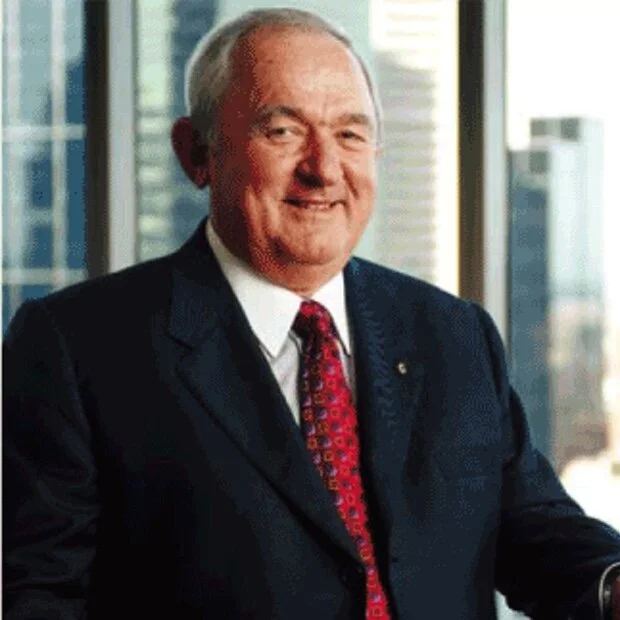
Episode 17 - Don Argus AC
4 August 2020 · Steve Prior
Listen to this episode ·
Subscribe in Apple Podcasts
This week Wansey is back hosting Don Argus AC.
A prominent business leader, as CEO of the National Australia Bank Don created the number one valued Australian business by capitalisation of the time, lifting the company from 5.5 to 37 billion dollars.
Later as chair of BHP, Don oversaw the sale of the steel division and dual listing with Billiton; increasing market cap throughout his tenure by over 200 billion dollars.
Don is also a Camberwell player, supporter, Camberwell Team of the Centurymember and one of our most successful coaches in history. An enduring influence that helped create the culture, processes and succession that underpin our ongoing success today.
Tune in to hear about Don’s arrival at the club and taking on the State League coaching role. Hear about his coaching philosophy, players from that era and balancing his career with love of sports. Learn about the 2011 “Argus Review” into the Australian Cricket Team’s performance and delve into a little business with Don’s recollections from NAB and BHP.
00:01:01: Introduction
00:05:19: Camberwell State League Coach
00:09:23: Players of the Era
00:11:03: Coaching Philosophy
00:16:13: Career Balance
00:20:17: Enduring Influence
00:23:51: National Australia Bank
00:29:17: The 80s Entrepreneurs
00:32:51: BHP
00:41:17: Australian Cricket Review
Episode transcript
⚠️ Automated transcript
This transcript was generated automatically from the episode audio and lightly corrected. It may still contain transcription errors, and individual speakers are not labelled.
What is culture in team sport? How do you develop it, and is it any different, say, to developing a management team in business? Welcome to the Camberwell Hockey Podcast.
To explore this and discuss memories of Camberwell and business, Wansey is back with Don Argus, AC. In business, as CEO of the National Australia Bank, Don created the number one valued Australian business by capitalisation at the time, lifting the company from $5.5 to $37 billion. Later, as chairman of BHP, Don oversaw the sale of the steel division and dual listing with Billiton, increasing market cap by over $200 billion.
Don is also a Camberwell player, supporter, and one of our most successful coaches in history — an enduring influence that helped create the culture, processes and succession planning that underpin our ongoing success today. Here’s Wansey. All right, welcome to this week’s podcast. Really fantastic news to have such an esteemed guest along to the Camberwell Hockey Club podcast in Don Argus. He’s very well known to listeners, but for the younger members of the club and those listening outside, I’ll give some extra information about Don’s background. I guess the simplest way to say it is he’s had an incredible career from a business point of view — certainly a career at National Bank and BHP as well as some other companies — an amazing story in the business world. And of course, he had a great love of sport. And we were lucky enough at the Camberwell Hockey Club to see him come to the Camberwell Hockey Club many years ago, and he had a huge influence.
So welcome, Don. Thank you for making the time. What we’ll do today is explore how you got to the club in the first place, which is quite an interesting story. We’ll talk a bit about the era at the hockey club and the influence you had and the teams you coached, some of the people involved. And then we’ll get into your business career as well, because that is certainly of great interest to all of us. And then we might just finish off at the end talking a bit about post-career and some of the areas you’re still interested in.
But firstly, let’s just have a quick recap. You came down around 1980, as I recall. I know your story pretty well, but you’ll be able to fill in the details. A Queensland boy, Redcliffe — you came down, as I understand, as a National Bank credit manager with three young daughters. Do you want to just fill us in a bit on how that all happened and how you came to Melbourne? Yeah, sure, David. ‘79 it was when I came down. It was in April. It was as cold as charity at the time, and I was posted to a town in Queensland called Gladstone, a tough town.
They were building the coal mines and the Comalco smelter at Gladstone, and it wasn’t a good place to bring up three young girls or three young women. But anyhow, the bank had been trying to get me to relocate out of Queensland for a number of years and I’d rejected that. But they gave me the option — my next move was to Mount Isa or Melbourne — so it didn’t take long for us to make a decision that, well, let’s try Melbourne. It was a tough induction, and I say quite publicly that it was great to have had associations with sporting bodies, including the Camberwell Hockey Club and, in particular, Colin Wansbrough and Alan Carnell and Billy Horman and the late Peter Collins.
And they made, I suppose, the transition from an idyllic lifestyle — where you had mud crabs for lunch and that sort of stuff in central Queensland — to a probably faster environment. And that took the family some time to resettle, and we had to find a home.
But having a club like Camberwell to accept you into was quite an achievement for us, and they were very helpful. How did that happen? How did you get to Camberwell? What was the connection? Well, Colin and the family had been up to Queensland and I’d met Colin up there and I’d played hockey. I hadn’t played hockey against Col at that stage in the interstate section. You wouldn’t be here today to tell the story if you had.
Probably not. But anyhow, we had some good times. So we went out and played a few games of hockey up in Queensland. And he was up there on business at some stage and then he went back to Victoria. But that was the connection. And as I said, they were very helpful in that transition. And when you came down — we’ll get to the NAB side, but on the hockey side — you became the coach of Premier League, or State League, you can explain that. But you were also playing, as I recall, in the twos.
Is that right? No, I played in the veterans. I’d retired by then from playing competitively, but Col again convinced me that I should play in the veterans. And that was also a good outlet. We had quite a bit of fun, and a lot of the old Camberwell guys from the halcyon days of that era were playing in the veterans.
And you’d play a game and you’d have a drink afterwards, and that was quite convivial, so we enjoyed that. But Alan Carnell was the coach of the Camberwell club at the time, and he invited me down to watch a few games. I can remember one infamous day we went out to Manningham Oval to watch the Ones, who were playing in second division. I think they’d been relegated for some time; they went through a bit of a flat period.
And we played — I think it might have been Powerhouse —
and they got thumped 6-0, and that was a ground that I wouldn’t even play on. But if they presented something like that in Queensland, you’d go to the pub and probably toss a coin to see who shared the points. You would have come to Camberwell and seen the red cinders. That would have been a bit of a shock to the system. Was the cinders still down in 1980, or was the pitch down? I’d played on the black cinders in 1964 on the way over to Perth. We went over to the Australian Championships and we had a pretty good side, and we played a trial game.
It may have been against Camberwell — I can’t recall that — but we did play on the black cinders, and then I was quite amazed when I went down to the club and saw this red surface, and I did inquire what happened to the black cinders. So it was quite a transition to play on that sort of surface, as distinct from a bumpy grass ground. Yeah, well, a lot of the young listeners wouldn’t really know what we’re talking about in terms of cinders or even muddy grass grounds at Manningham, but they certainly were different — and very different between the states.
So then how did — was it Alan Carnell that sort of lured you into looking at coaching the Premier League? He invited me down to help at the club with the coaching side of it, and I enjoyed that. There were a lot of younger players, a lot of strong personalities. I can remember Wayne Thornton — he had a very strong personality.
He and I had a bit of a debate about how a set of forwards should play,
and he certainly wasn’t in listening mode, so that was fine.
There were quite a number of younger guys — the Kashmir boys, the Ambrosie boys.
But the team was a soft team. Teams sort of intimidated them.
And I can always remember saying to Ali, I said, you need to get a bit of steel into the backs of some of these guys. Have we got some other juniors coming through? You hadn’t arrived at that stage, David — you were still playing in the juniors. And then there was an influx of about four players, I think, from Moorabbin. There were the two Dalton boys. There was Greg Read and Neil McLean. Yeah, yeah, yeah.
Macca was there. Ali Hart. So, just on — you’re probably going to talk about the two Dalton boys, but they’re worth just highlighting. Rob Dalton, obviously, a lot would still know as the long-time President of Hockey Victoria; he’s had a big impact and was a very good player in his own right. And, of course, Steve Dalton, the younger brother, who was an incredible talent — a bit of a wayward talent — but he certainly won some games of hockey in your time, Don. He was one of those X factors that you’d make sure got the ball at a critical stage, and he was a very skilful ball runner.
In those days, it was very hard to run a ball on some of the bumpy tracks that the teams played on, and this was before the synthetic surfaces. But he had great ball control and he had a magnificent shot at goal. He was hardly ever offline, but he drifted in and out of the game, and trying to develop him to sort of stay in the game when the ball wasn’t near him was quite a task. But he responded, and he won quite a few matches off his own bat for us too. He might have won an ‘86 grand final, I recall, against Altona — he might have hit four of the five goals or something.
He did. But it was great — again, a lot of people this era wouldn’t have had the privilege of seeing him play, but he was certainly an X factor. And Rob, obviously, was almost incredibly different. He was very structured and very organised and meticulous in his preparation. So you talk about the whole different sort of players — some young ones, some experienced ones, some steel — and you had an ability to bring that together. What was your philosophy?
Why were you — if people talk about you as a coach now, all of us, as we reflect, you had a talent that probably did flow across to the business, to mould a group. Yeah, look, it’s really how you put teams of people together. And I’ve often reflected in a business environment that putting a team of sportsmen together is no different from putting a leadership team together in a large organisation. And the first thing you’ve got to do is to get everyone to at least respect each other.
And a team game shouldn’t be a selfish game, because you’re only as good as your weakest link. And it’s how you get everyone involved. I try to get everyone involved. I try to get everyone to see some development for themselves within the group of people that you’re playing with. And once you start to get that sort of mentality developing, then that develops your culture. People and textbooks talk about culture, but culture is all about how peer groups interrelate to each other and how they trust each other. And if you’re honest with yourself as to where you’re contributing — I used to, as you will recall, David, invite everyone to contribute to where they thought they would contribute in a game, and I’d hold them to that. And if they didn’t do the job that they were supposed to do, then I would tell them, and plead with them to try and understand the point of view of the person that was helping them. And that’s been a philosophy I’ve had right through. Now, not everyone wants to fit into that sort of coaching style.
But having said that, you also need the X factors.
And you can go through a range of people. I spoke about Wayne Thornton. Wayne was a centre forward, and his philosophy was he’d get high and you’d have to get the ball to him. And I said, no, no, no, no — we’re all going to try and do our bit of work off the ball too, Wayne. And so when I picked him at one stage to play inside right, that was like the end of the world. And we had quite an interesting debate about how he should play that, even to the extent that he’d come back and take a ball deep in the defensive zone.
And I don’t think he’d ever been in a defensive zone, other than someone else to score a goal. And when we won our first premiership, he actually laid a ball off to David. I can still see the goal. Did David catch me? Under the crossbar? He just hit it on the top of the circle and David whacked it, and it went just under the crossbar. It was just a magnificent piece of hockey to watch. And I reflect on that and I think, well, he may not have been showing signs that he was comprehending the game plan, but at the end of the day, in a tough spot, he did it and it came off.
That was one of the classic games of hockey that I saw, played on not a very good field. But anyhow, it was done and we got the lollies, so that was good. That might have been the ‘84 premiership against Waverley, where I think a Queenslander might have been lining up for the Waverley side at centre-half in Trevor King. He was a pretty handy Queenslander. He wasn’t a cream puff. No, he wasn’t a cream puff.
He was one of the better players at controlling a game of hockey. And I think that was your first year in the first division too, was it? But in ‘84, I can remember saying, David, please hold your position against Kingy, because he’ll draw you out. But I can always remember the first time he got the ball, David went up in his style to attack the player with the ball. Attacked the ball first, of course.
And he learned quickly, and it was quite a seesawing game. That’s one of those memorable games that you don’t forget. Yeah, I think, going back to Wayne Thornton, he was a bit of a childhood hero for me, and then you get to play alongside him and you obviously find out more about the person. But — dare I use a football analogy — I think someone like Jack Riewoldt at Richmond is probably a bit similar: highly talented, and started to learn under different coaches and different methods how you could be more of a role player.
But he was, again, one of the great Camberwell players. I think he might have scored two goals, and he maybe won an only international game against Pakistan back in the day. Now, Argy, you had an incredible span if you go through that decade or so of coaching Premier League, because at the same time you were progressing through the ranks at NAB — and we’ll get to the career part. But it must have been quite tricky at times: coaching a couple of nights a week and weekends, young daughters, and the balance with your National Bank career aspirations? Yeah, it was, David, but Pat’s always been very supportive, and the three girls had joined the Camberwell Hockey Club too, so that made it even more interesting to try and get around and see some of their games too.
But again, hockey was the glue that helped us settle into Victoria and settle into a lifestyle that turned out to be beneficial. And we came to Victoria on the understanding that I would try to be as good as I could in my professional life.
And we had a family discussion about that before we came down, but on the condition that I probably would be more regular in my attendance at home. And so it was quite interesting to match your work environment with your sporting environment. But equally, the sporting environment gave me sort of relaxation away from the things that were going on in the business world at the time — which, of course, around ‘83 was when we floated the Australian dollar and the financial services sector was opened up, and all the entrepreneurs were at their best, telling the bankers that they didn’t understand how a balance sheet worked and all of this sort of thing.
So there was a fair bit of pressure. And, of course, we had the infamous guys outside of sport like the Alan Bonds and the Robert Holmes à Courts, and these sort of people that would demand you work 24 hours to service their needs. So, yeah, it was a great outlet. And at that stage — I think I’ve always believed that in any endeavour in life, succession planning is important. And if you’re not there, if you’ve got a really committed winning team, whether it’s a sporting team or a professional team in business, then having someone to step into your shoes if you’re not there for a particular reason was pretty important.
And I always believe that you set your strategy from within the group of people that you’re working with. And if they take ownership of that strategy, it makes coaching pretty easy. And I found coaching the 80s team at Camberwell a lot easier than coaching the team at Redcliffe, which had similar results, but probably had different approaches to life, rather than the intellectual rigour that the Camberwell team went through in their formative years in Victoria. So it’s quite interesting to make that sort of comparison. Yeah, well, I think the interesting thing, as you make that comment, is that team, that era — a lot of personalities you mentioned, strong ones — and there’s a whole range of careers those guys had off the field. You know, the Andrew Minters and Rob Dowlings, Rob Dalton, as well as some of the youngsters. Jay Stacy was coming to the club then. And it’s a bit like Hawthorn in football, who’ve produced a lot of coaches on the back of a good culture and a good era.
I think, apart from winning premierships, you had a big impact on a lot of people’s careers and lives. And you can still see today — they’re a bit self-driven, they just needed your strength and guidance to get there. And you created that culture. So it is fascinating to look back. Yeah, look, I’m pretty proud of some of the people we helped develop, and I’m proud of all that group of people that we had during the 80s in Camberwell, and to see them go on and achieve the things they want to do.
But equally, back at Redcliffe, there were some brilliant hockey players. There were some really class athletes and strong athletes, not as intellectually rigorous as perhaps the Camberwell group, but again, a lot of them have gone on to achieve some very good things, and that’s good. I’m not sure you’d have always agreed when you saw players throwing other players’ hockey sticks into the zoo on a pre-finals training preparation — no names, Greg Read, Andrew Minter, Rob Dowling — but that was all part of the fun.
The culture — I just want to jump back to that. And there’s lots of different examples and textbooks, as you say. But I remember clearly, and you may or may not remember this story, but Jay and I had actually just been in Europe and played at the Champions Trophy, which Australia had won in Amsterdam, as I remember. And we came back to Matlock Park on a Saturday, probably a bit jet-lagged, but feeling pretty happy with ourselves. And the local crowd and families and friends were down to watch us.
We were going to strut our stuff. But we found ourselves sitting on the bench for the first half, as Coach Argus decided that these two would-be world hockey players needed to understand they were back playing for Camberwell. Do you vaguely remember that? I remember it extremely well. But again, it probably took you a long time to understand what I was trying to achieve, because it’s just more than one or two people. And whilst I never doubted the talent of you or Jay, we’d developed a framework in your absence, and I didn’t want to disappoint those that had contributed in your absence.
And it’s the same in the business world. You’ll find that you’ll have standout individuals that sometimes get recognition that others don’t. Make sure that you recognise everyone’s contribution. I’ve always tried to do that, and that’s worked particularly well for me, both in sport and in the business world. Probably hasn’t worked so well for me when I played, but there it is — that’s the way it goes. Now, one last sort of memory around the Camberwell side — and we could talk for ages — but there was a bit of a theory going around that when you were around in September for finals, we may not always win. The odds and evens years — we won a lot of premierships in the even years for a while.
There’s also a bit of a theory that when you were around, we might not win the grand final; if you were off on business for a grand final, we might win. So there was a story that players were checking with your secretary, just checking what the diary looked like in September in advance, just to see what our chances were like. Off to the business side. So you came down with NAB, and people, unless you’ve been through that, would not really understand. But to come to Melbourne from Queensland — the Melbourne establishment, the Melbourne banking scene — National Bank was the pre-eminent bank for a long time.
And you arrived with the likes of Nobby Clark and others, and you took it to new heights. But to sort of break into Melbourne, you would have had to have proved yourself. You were, as I say, juggling hockey, family and study as well, I think, at the time. Tell us a bit about what those initial years were like and how you made your way. What were the defining things that set you on your path? Yeah, look, it was tough, David. It was very tough. And I can understand that, because over time,
NAB was a Melbourne-based bank, populated with some very smart people. Some of them weren’t that practical, and some of them hadn’t been out in the field and understood how a branch network worked.
And when you’re sort of thrown into an administration area, and you’re creating a framework within which people are comfortable working no matter what stresses they have — if they have no trust for you, and that’s natural. You’ve got to earn their trust. You’ve got to give respect to get respect. And I had to go through that learning period, and they put me in charge of some of the up-and-coming stars of the bank who were working in the Melbourne office, to overview their lending practices, and that didn’t go down particularly well with these highly intellectual superstars.
We had some interesting bouts, and fortunately I’d had the practical experience of having to collect debts in some awful places, and been over the mines, helping with the development of finance for a mine site. And I’d have to say to you, what I learned later in life in BHP indicated to me just how fickle banking can be, because I can tell you the assumptions that we made in the original coal mine exercises in Queensland were so far off reality, it’s scary that we got away with it. So they’re the sort of things that you need to think about — or I think about, as I think back through my professional career — and I was lucky that I was able to get out into the field and have some practical experience and understand how things work, as distinct from just being in a city environment. So, yeah, look, it was tough. So the NAB hierarchy must have identified you early, as you came to Melbourne. You don’t just get through that. I mean, obviously you worked hard and what have you, but somebody, or a group, must have identified you. And you were sort of not fast-tracked, but did you see that path coming?
Was it encouraged? How did that all play out? They’d started about five years earlier to try to get me to go interstate. At one stage there, they were contemplating sending me to Papua New Guinea to be involved with the bank up there. I said I wasn’t taking the girls up there. So I think I might have been a bit difficult to manage as a field operator, David. And I didn’t have a great deal of respect for some in the administration. And I guess if you embarrass people, you don’t get them on side. So I was sent to Gladstone, I’m sure, to teach me a lesson — to wean me off my sporting interests.
Of course, at one stage there, I was contemplating applying to be a coach of the Australian hockey side. I’d picked up an international coaching certificate, so I had the credentials and I had a few wins on the board. And so I’d seriously, really seriously given thought to leaving the bank, because I could see that it was becoming a bureaucracy and personalities were becoming involved. A guy by the name of Jack Booth, who ran the bank, I’d worked for as an analyst in Brisbane. And he tapped me on the shoulder when I was about 28 years of age, and he said, you know, you’re not going to make a lot of money playing hockey, mate. And so that’s when I went back to study and started to get a bit serious about a career.
And that turned out pretty well for me. And so, just into the depth of National Bank — I remember some stories from you at various times, you mentioned earlier about some of the businesses you were lending to and dealing with. Again, people today wouldn’t all remember, but the Alan Bonds and Laurie Connells and these sorts of guys — cases around that time must have been incredibly stressful, incredibly… not sure if the word is exciting as a banker, but that would have taken a lot of your time and intellect and management. When you look back at some of that stuff, it was quite an amazing era, wasn’t it?
Robert Holmes à Court was the smartest guy that I’ve seen in business, even to today. He taught the Australian market all about options and derivatives, and in ‘87 he made his big play for BHP with a $2 paid-up capital company. And he finished up walking away with something like around about $29 billion. So he made a lot of money out of the way he played the BHP game. And I learned a lot from that exercise. I’ve written extensively about it, in case studies with Professor Danny Samson from Melbourne Uni, so that people do understand some of the nuances of when you’re dealing with the really smart cookies like that fellow — you can pass it on.
John Elliott — John was one of the other smart guys. Every Christmas he’d want to take something over, and he’d want an answer by probably the early New Year. And I’d hate to think how many of those Christmas celebrations were interrupted by some major deal that was going around. I think the Brian Gilbertson affair with BHP Billiton, when he and the board parted company, was probably one of the most stressful times of my life. I reckon that took a few years — gave me a few more grey hairs — but that was a tough one where personalities were involved and that sort of stuff.
So you sort of sit back and reflect on that, and just realise how valuable your family can be in that sort of environment. I think the Rio transaction, where the Rio board walked away from 50 bucks a share by being bloody-minded because of one individual, is one of the worst exercises I’ve seen in my life in corporate governance and business judgment. And I’ll go to my grave lamenting that we didn’t pull that one off. But again, it was a pretty gutsy call to walk away from it — we just about had it done, when the commodity markets fell out of bed and our balance sheet would have been really, really labouring with debt.
So you’re referring there to when you were chairman of BHP, and Rio Tinto. As I recall — and you can fill me in here — but it was around ‘98 when you… so you finished at National Bank as CEO, an incredible career. ‘99, I finished it. Finished a bit there, but ‘99.
And one of the proudest things was that I was lucky enough to lead the bank to be number one on the ASX by market capitalisation. And that was a very good effort, given that Australia had been through a recession in the early 90s, and the team were able to pull that through and make it the number one company in Australia. And we were pretty proud of that. And then to see it disintegrate from 2000 on,
that weighs heavy on the hearts of that executive team that were in place at the time — a bit like the Camberwell side of the 80s. Fortunately, they had success in the 90s, and you go through these lulls in cycles, and that was a lull for NAB, but it’s been a lull now for about 20-odd years. So I hope that the new CEO at NAB is able to bring it back to its former glory. It’ll be tough, but it seems to be on the right track. So while we’re on the banks at the moment, Don — in today’s world, it’s a pretty incredible time right now, given the COVID and what have you.
You wouldn’t envy any CEO running a banking business right now, would you? No, they’re doing it tough, but they’ve got to go back to school again, David. Look, when you’re setting a budget — you’ve set budgets yourself — the easiest thing to do is to get rid of the education part of it. And they haven’t been educating and looking after their staff, because it’s the people that make things happen in organisations. And if you can mobilise those people, whether it’s a sporting event or a business event… but they haven’t educated their staff. They’ve brought in a lot of outside people, and there’s nothing wrong with bringing outside people in. But if you lose your corporate memory, then you lose that at your peril. And this is what happened at NAB — they lost their corporate memory.
People were trying to achieve and do their best. But if you’ve got a large footprint and a big staff to talk to, unless they’re with you — and if they get confused — you’re not going to achieve the things you want to achieve. No different from a sporting team, David: if your message isn’t getting across, you won’t win games. So it’s quite amazing, as you go through your career, to take NAB to the largest company in Australia, but then to move into probably the other blue-chip company on the ASX, and a global company, in BHP — a remarkable achievement. Before we talk a little bit about BHP, I would like to tell a little story around when you took on the chairmanship of BHP. You’d only just taken that on, and you came out to watch, as you’ve always done post your coaching career — you came and watched, kept in touch with the team. And I think I might have been captain-coach for a particular grand final against Doncaster, in a game that I was told by a great colleague of ours in Greg Read, who’s doing it tough right now, that we didn’t have a chance of winning — which, of course, tended to get me a little excited.
But cutting a long story short, we managed to get up in a bit of an upset. And with a couple of minutes to go, I might have been behind the net — not for the first time in my career — having a rest. But you were kind enough to come down in your Dunlop Volleys on the muddy slopes of the hockey centre and give me a bit of advice, with Lockie Dreher in the net, I think, and give me some instruction on where I could move certain players. And I had the great privilege of being able to tell the current BHP chairman where he could go — he could nick off. And we were 4-1 up with a minute to go, and we’d be right.
So I said, go and get those beers ready for the change room. So at least you listened to that part — you got the club into the change rooms and got the beers ready, which I thought was a magic moment, that you could still, at the grassroots, come and enjoy the club’s sport. So, the BHP challenge. Your language was a bit more colourful than what you just explained, David. Yes, so it should have been. In BHP — it was an incredible time for you there to take that job on, a completely different set of challenges, I’d imagine. Yeah, well, I joined BHP in 1996 because I was thinking about succession planning in NAB, and my chairman was kind enough. I joined BHP, and BHP was going through a down time, and in 1999, when I became chairman, we’d recruited Paul Anderson, an American from the United States, to resurrect BHP. We were flat out paying a dividend in 1999, and I can always remember Chip Goodyear, another brilliant mind that I’ve worked with,
came to me and he said, how do you feel going to your first AGM and telling them that you can’t pay a dividend? And I said, Chip, you’ve only been in Australia nine months. I said, you must realise just how parochial shareholders can be. And he said, yes, I do. And I said, well, perhaps you should go away and come back and talk to me tomorrow, after you’ve really had a look at what we’ve got in front of us. And anyhow, we were able to pay a dividend — it wasn’t much, but it was something.
And we were able to get our story right as to where we were heading. And, of course, it became the number five company in the world in, I think, 2009 by market capitalisation. And so we were able to take advantage of the China phenomenon and the pricing. And that itself is still topical, as to how you deal with China — I smile when I listen to it. But, yeah, there were some interesting challenges in that period of time. But the biggest challenge I think I’ve ever come across, David — or one of many — was the decision to float off the steel division of BHP, which, of course, was the iconic symbol of Australia, you know, the company of steel.
And that took about 12 months to get through. And I’d have to say, on reflection,
you needed an outsider to change the traditional thinking of a company, or the traditional thinking of a group of people. I’m not sure that I would have had the intestinal fortitude to go to the public and say we’re going to float off the steel division because we’re going to concentrate purely on mining. That was a big move. I think I got tired of looking at numbers and the benefits and those sort of things. So that was one of the unsettling parts of that life. Yeah, look, it is hard for us common folk that are stressing about whether our footy team is going to win, or paying the next bill, but some of the stuff you’re involved in from a business level must have been incredibly intense and difficult.
And I guess that’s why hockey proved to be a wonderful outlet. It was a great outlet. And sport, obviously — I guess the other area I was going to chat about was your love of sport generally. I think each year you’ve been getting to Wimbledon to watch the tennis, and cricket, of course, a great love. And you’re heavily involved in the reviews of Cricket Australia in the last few years. Have you got any thoughts — not around specifics so much, but your reflections around Australian cricket, as a sport that we all love in Australia?
I’d be fascinated in your thoughts on where that was and where it’s heading. Yeah, look — the brief we had in 2011 was to do a review of the poor performance of Australia. I think we dropped down to number five in the test rankings. We were nowhere in the T20, and I think we might have been number two in the one-dayers when we did that review. And it was quite interesting.
You had a team of talented cricketers, but they weren’t all pulling together. They needed a catalyst to pull them all together and start to play as a team. And I think cricket is a mixture of team and individual performance.
Working with guys like Allan Border and Mark Taylor and Steve Waugh was quite incredible. And they all came from different areas, they all had different success levels, and it’s quite interesting — the guys that were able to pull a team together. Like, Allan had to pull a young team together after they had been murdered by the West Indies. You have a look at Mark Taylor, with his different leadership style: he was a quieter individual, wasn’t interested in his own performance, and was pretty much a person that got a lot of value out of a team winning. And then you had Steve Waugh, that seemed to be unflappable.
And he had the courage to drop Shane Warne over in the West Indies at the time. And that was unfortunate. That’s sort of been a bit of an unfortunate event for both of them, because they’ve lost their friendship. But that team was just a fabulous team of individuals. But then, when your succession planning comes along — and this is where I don’t believe sport has got it right, a bit like businesses, you don’t get your succession planning right. So I’d argue in the 80s with Camberwell, I thought we got our succession pretty well right.
When you lost your key players, there was another group coming through. And when I joined Camberwell, they’d been through that down time and they were concentrating a lot on their juniors. And you were the first product of that concentration of juniors to come through. And that held Camberwell together in their playing performances, in my view, right up to the current time — and it’s great to see it continuing. Now, I look at the world post the COVID-19 disease,
and sporting bodies are going to have to go back to their nurseries. They won’t be able to pay the big money that they’ve had from television rights in the past. And some of these guys have got huge expectations. See, I look at my favourite rugby league team, the Broncos. They went through a tremendous era of success, and now they’re second bottom. And they’re losing some of their key players — and they’re losing them because of money.
Now, there’s something wrong — something’s gone amiss in the structure of that. And if you don’t make the working facility, whether it’s sport or whether it’s business — if you don’t make that conducive to being an enjoyable event,
despite all the pressures you might be under, then people become disenchanted and they do other things. And we’re going to go through that, I believe. People are going to gravitate back to the club-type scene, looking for just that outlet, rather than looking for recognition of personal pieces. Now, there’ll still be the Australian representatives and the state representatives, and that’s important. But I think the world’s going to go through that as we come out of this mess we’re in now.
Yeah, I think you’re spot on. I must admit I’m slightly surprised, with your intellect, that you wouldn’t have just worked out that the Melbourne Storm are really the Queensland number one rugby side right now anyway. So I think your comments around community sport are spot on. I think we’re all, at the club level today down at Camberwell and other community clubs, other sports, going through COVID. We’ve had to really think hard about why do we play sport, what time we put into it, is it worth the effort. And I think we all know it is, but it’s been challenging — for coaches, for juniors, for parents, and for clubs to get themselves going has been a heck of a lot of work.
It was quite disappointing recently when everything had to stop again, having already had one crack at it. But I think you’re spot on, though — the professional sports have got their issues, and if the grassroots is not healthy, then sport itself is going to be in for a really tough time. Just to sort of finish up, I also want to talk about your most famous sayings. Because you had some — as the players of that era would reflect back — I mentioned earlier the cream puffs was one of your favourites.
That was the Commercials — the Commercials, your Queensland opponents. And, of course, when you didn’t want players of limited ability trying to be superstars, I think that might have been, you can’t make a silk purse out of a sow’s ear. That’s right. And that still applies. Still applies. It’s fantastic — they’re timeless.
Were there any others that I’ve missed? I’ve got a lot of them, David. A couple of others I probably can’t repeat. Jenny’s probably the one to do that. Yeah, no.
Yes, you mentioned Jenny’s daughter, who again played in the premiership side for the Camberwell women, and had a great time while she was there, and played some great state hockey as well. Look, I guess we’ll finish up around that. But I think, on behalf of the club, and of course lots and lots of people that you influenced, many players — a great chance now to actually just say a big thank you, because you’ve been a huge contributor: in the time you were there coaching, playing, but even since, to still be a support. I think people love the fact that you’re still connected and come down and have an interest.
And it’s been great from a club point of view to have your involvement. And as you talk about succession many times through that chat, it’s still having an impact. Andrew Henderson, who you coached, had a huge impact in the last decade of coaching the Premier League. And he’s creating some great characters from his crop, that have had a very good era. Yeah, good to see. Thank you again. Yeah, and thanks for your time today. And good health with your golf, and hope that we get this world — that we can travel internationally again.
You’ve probably got still a few things to tick off on the bucket list. Oh, yeah — but not probably… well, the first objective is to try to get to Queensland. We’ve tried four times, David, without result. Never mind. Well, I hope you get back there — it’s a great place. But we’ll sign off there. Thanks, Arg, for your time, and we’ll see you down at the club soon. All right, mate. Good to talk to you.
Thank you.
You’ve been listening to the Camberwell Hockey Podcast. We’d like to send a big thank you to our hosting team, our guests, and you, the listener, for your support. If you enjoy the show, please give us a review on iTunes or wherever you get your podcasts. This show is recorded and produced by Camberwell Hockey Club in Melbourne, Australia. If you have any feedback, comments or questions, please find us on Twitter at camberwell.hc or see more information on our website, camberwell.hockey.
See you next week.