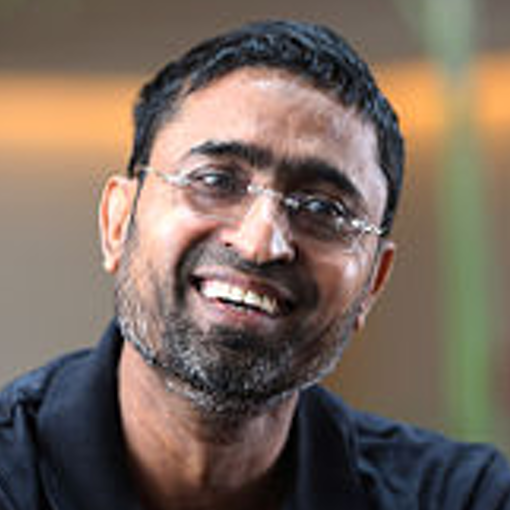
Episode 18 - Shahbaz Ahmed
11 August 2020 · Steve Prior
Listen to this episode ·
Subscribe in Apple Podcasts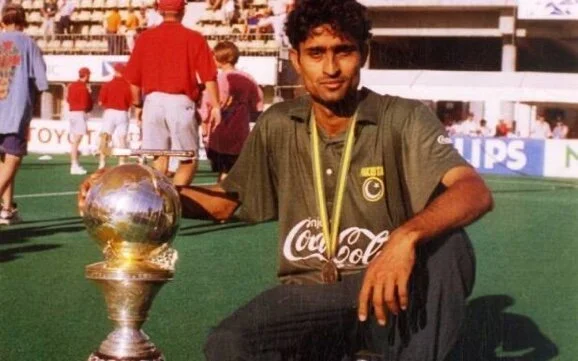
Episode 18: Shahbaz Ahmed
Wansey this week presents Shahbaz Ahmed, whom he calls “The greatest player that’s played the game.”
He’s not alone. Emmad Hameed, writing in the Express Tribunesays:
“But one man arguably ranks higher than any player in the history of the game; his control of the hockey ball, lightening runs from one end of the field to another, razor sharp and accurate passes for the centre forwards made him the ‘Maradona of hockey’.”
Wikipedia adds:
“no player in the history of Field hockey has left so much impact”
We’re grateful for his time and thrilled this week to present Pakistan superstar Shahbaz Ahmed. Learn about hockey in Pakistan and hear Shahbaz’s playing memories and training ethos; playing against multiple taggers and managing the weight of the national support.
304 Caps
3 Time Olympian
Pakistan Captain
00:01:02: Introduction
00:02:44: COVID in Pakistan
00:04:21: Pakistan Airlines
00:06:05: CEO Pakistan Hockey Federation
00:08:18: Hockey in Pakistan
00:10:03: 80,000 at Gaddafi Stadium
00:11:44: Presidential Pride of Performance Award
00:13:18: Early Career
00:17:36: Playing Against Multiple Taggerty
00:19:27: Training Ethos
00:22:53: Weight of National Expectation
00:29:46: Hockey Today
00:32:56: Playing Memories
00:35:07: Modern Pakistan
Episode transcript
⚠️ Automated transcript
This transcript was generated automatically from the episode audio and lightly corrected. It may still contain transcription errors, and individual speakers are not labelled.
This week Wansey’s back hosting. An elite player himself, Wansey says our guest this week is, quote, the greatest player that’s played the game, unquote. He uses adjectives like brilliant, electrifying, fair, and magnificent. Welcome to the Camberwell Hockey Podcast. Wansey’s not alone. Emmad Hameed, writing in the Express Tribune, says, quote, but one man arguably ranks higher than any other player in the history of the game. His control of the hockey ball, lightning runs from one end of the field to another, razor-sharp and accurate passes for the centre forwards, made him the Maradona of hockey. Wikipedia says, quote, no player in the history of field hockey has left so much impact, unquote. Make sure to check the show notes this week for some links to this man in action. We’re grateful for his time and thrilled this week to present Pakistan superstar and world hockey legend Shahbaz Ahmed.
Here’s Wansey. Firstly, it’s just an incredible privilege to have the greatest player that’s played the game. He won’t be embarrassed. He’s heard it many times. But today’s podcast from the Camberwell Hockey Club, I’m really excited to have Shahbaz Ahmed, who, as I mentioned, was a great player in our time for his electrifying pace, his skill. He’s a magnificent player to watch, whether you’re a Pakistan supporter, whether you’re just a hockey fan.
Even his opposition, I’m sure, sometimes just loved playing against him. But thank you, Shahbaz, for making time today. It is indeed a pleasure for me. It is another interview, but I’m happy that the interview is taken by David Wansbrough, who is also one of the best players of Australia and my very good friend. What a nice man. I didn’t even tell him to say that. He just said that. Shahbaz is really quite unique for people of my age and older that watched him. All around the world, he became just someone that you wanted to turn on the television to watch play.
If we played against him in Germany or in England or in Holland, in Australia, Pakistan, nationals would come from everywhere to watch. He was really quite fantastic. A lot has been written about him, and he’s always remained a very modest, lovely person. So it’s quite amazing. Here we are many years later, catching up, having a talk, Shahbaz, from his home in Lahore, or in Karachi… in Lahore? No, I’m in Islamabad. Islamabad. There we go. So tell me about life in Islamabad today. We were talking before this about your work now for Pakistan International Airlines.
I’m just interested to know how you would talk about life in Pakistan. Are things good at the moment in Pakistan, or is it difficult at the moment? Actually, after the lockdown, you know, things were very complicated. People were deeply in trouble. As you know, we are not a very developed country and we don’t have much funds. We don’t have a good tax system that we can facilitate our public. But after the lockdown was over, life is coming back. People starting enjoying their life. Businesses getting open day by day. And I think because of very hot weather, we got help.
We got natural help, you can say, from corona and COVID. And I think people are much safer now. It is not as bad as other countries in the world. And otherwise, life is okay. It’s coming back. People are getting back to normal. And what about hospital systems? You know, in Australia, we’re pretty lucky. We have very good medical systems. You know, they’re very concerned about COVID, but we have good resources in Pakistan.
That would be more challenging? It is indeed. Because from 1947 till today, none of the governments concentrated on schools and colleges, on hospitals, and also on the roads. Because these are the basic needs of a country, I think. None of them could do much. Because of this, I think private hospitals, if people have their own, they made money also, but they helped people also. So we could survive because we have very nice private hospitals in Pakistan. I mentioned you now working for Pakistan International Airlines.
And can you just tell me about what you do? What is your role? What area do you cover? Actually, I joined PIA when I was a hockey player just to advertise PIA, not to work for PIA. As you know, Wasim Akram, he’s also a PIA employee. Sarfraz, the wicketkeeper, also a PIA employee. Moin Khan, many others. You must be knowing all those characters. Likewise, I’m also an employee.
But after working 20 years in PIA, I thought that I’m a graduate. I can also work in a marketing department, because a marketing guy should be known to everybody. And when I joined as a marketing man, I found success. And PIA people, they were also happy with me. They sent me to Saudi Arabia as a country head, because we have more than 500 frequencies for Saudi Arabia from Pakistan. And in a marketing department, you look after the reservations, ticketing, and you look after the people who travel a lot. And then I was the district head of my hometown, and I’ve been serving for the last 12 years as a marketing man.
And my character report is also very fine. When I was in Saudi for four years, they gave me an outstanding performance award. And the civil aviation of Saudi also gave me an award for working well. Because, you know, if I’m working in marketing, I have a vision already. Because hockey is also a marketing sport, you can say. We go to various countries. We meet many people. So this way, I could help Pakistan International Airlines. And then you, of course, recently had three years as the Pakistan chief executive of hockey, which is always, I’m sure, a challenging role. Because Pakistan, it’s a topic we will talk about more, but it was so successful, and obviously in the last decade it’s been much harder to achieve the same success. The sport has obviously got tougher and a lot more competition. You had three years there as the CEO. Did you feel like you made a good contribution there?
No, I really could not do a bit. You know, when I joined as a CEO, first week of my tenure, I did a press conference and I told them, I’m a CEO, but I don’t think I can do anything good. When I said this, the entire press told me, you must quit right now. I said, you must ask me the reasons. Because when I don’t have a base, when I don’t have any astroturfs under Pakistan Hockey Federation, when I don’t have any hostel, when I don’t have a catering system, when I don’t have any talent hunt system, how come? You see, we were in Australia, I remember when I went to a Melbourne fitness centre, you know, you are the world’s second, I think, after America, you can say, because you create an atmosphere that you get sportsmen automatically. We don’t have a system where boys can get expensive shoes for astroturf. You can get good quality hockey sticks.
And after playing on astroturf, the boys can get good food, because a lot of boys we get who come from rural areas, who can’t afford their food, who can’t afford their accommodation outside their city. So unless I get basic needs for the player, where I can keep different tiers of the teams, you know, under 16, 18 and 20, then I get a physical trainer from abroad who knows what sports fitness is.
Sports fitness is really different. And when I saw a Pakistani team playing for the first time when I was a CEO, they don’t play the hockey which is internationally required. They hide themselves to get a ball. So do you think, there’s a couple of questions I have now. One is, when you look back at your era and before your era, back to the 1984 gold medal team, it’s incredible to think what you did achieve. Even then, you had very limited resources, really. You don’t have them now, but back then, you didn’t have fantastic resources.
You had the support of PIA and the government, but what you achieved was quite amazing, given you didn’t have the Holland and Australia setup, did you? David, actually, you know, if you go back to 1984, if you go back to 1994, the passion was there. Hockey was famous, popular in our youth. If you come to Pakistan, I’ll take you to Islamabad, Rawalpindi, Lahore. I’ll take you to 10 outfields. You will find none of the outfields where boys are playing hockey. My two sons, one is 24, one is 19. They say, Papa, you played a boring game in your life. I get the same thing.
I get the same thing. It’s very difficult, isn’t it? David, if my kids play cricket in Pakistan and they are chosen for the national side, they don’t have to do any business. They don’t have to make themselves popular. They will get the popularity automatically. They will get the money automatically and they can survive forever. And in hockey, I still remember, I’ll mention one thing. You remember, in the 1990 World Cup in Lahore, 80,000 people were in the stadium. When the World Cup was over, I was paid, I think, $30, $40. Thank you, Shahbaz.
You played the World Cup. Amazing. Well, that semifinal in Lahore, not in the Gaddafi Stadium, I couldn’t hear the whistle when I pushed the ball back to start the game. It was so noisy, and they’re all cheering for you. I do remember seeing you. You won’t remember this, but the day after you won the final, you were in the same hotel, the Intercontinental in Lahore. Exactly. I was on my floor and the lift door opened and you were in your blazer, your Pakistani blazer, holding the World Cup.
And there were a lot of fans and people outside the hotel. So you were going down to the foyer to see them. I said, gee, I said, today you could be Prime Minister of Pakistan. And you said, maybe not today, maybe in a little while. There you go, $30, incredible. It’s just amazing. I mean, cricket, same in India, I guess cricket took off in India when it was very similar in popularity to hockey. The good news, Shahbaz, is when I get into a taxi here in Melbourne still, maybe after a late dinner with Mr Stacy, Jay Stacy, or one of our other good friends, I can get into a taxi and I might have a Pakistani taxi driver, and I say to him, what’s your favourite sport?
And they always say hockey, which is good. And then I say, who is your favourite player? And they always say, your name. And I’m always… So you mightn’t have the money that cricketers do, but you’ve got the fame. So that’s good. I agree. I agree. I agree with you on this. Because some of the cricketers, they were travelling with me. People did not recognise them.
They recognised me. Because the government of Pakistan gave me Pride of Performance. And I am the only recipient of the biggest civil award, Hilal-i-Imtiaz. So explain to me those awards. The Pride of Performance, I read this. This is a Pakistan award. How many people, and what is it? Can it be for anything? This award is given by the President of Pakistan when you do services in your own area and they recognise your services.
And Hilal-i-Imtiaz, it is the biggest civil award which any civilian can get, when he does something bigger. So I created history for my country, and Benazir Bhutto, the Prime Minister of Pakistan, she awarded me the biggest civil award, Hilal-i-Imtiaz, and I’m the only one, and I feel proud of that. I’m happy if I don’t have that much money, but the respect, the credibility, the image I have, I’m glad with that.
That is incredible, and I feel like I played a good part in this, because I let you get the ball all the time.
No, you did not. Ken Wark, Ken Wark, Ken Wark let me go. Yeah, well, that’s a great story. Again, for people that may not know the history, but there was a famous story in the 1994 World Cup in Sydney. People that were there, or saw it on television, they still talk about the day that Shahbaz took off on the 25-yard defensive line at a speed that is hard to believe. Incredible pace.
And Ken Wark, who was the fastest defender in the world, chased Shahbaz, but as fast as Ken ran, he couldn’t catch Shahbaz. He made a pass and scored a goal. So it’s not much fun to lose to Pakistan, but you have to sometimes just say, well done. So, going back to how you obviously started in your hometown as a junior, tell us a little bit about that. And then I want to get to the, I think it was your debut in 1986 in Karachi, at a Champions Trophy, because I remember this myself, but let’s start. How did you, your father played hockey, and where you grew up? Actually, I belong to a small town, which is called Faisalabad.
And my three elder brothers, they used to play hockey. Then my uncle, nowadays he’s in the United Kingdom, he used to play hockey. And in school, I was physically very fit. And I was equally good at soccer, cricket and hockey. And I think I was 14, 15, I took a decision that I should only play hockey. I should quit cricket and soccer. And when I started playing hockey, when I was 15 years of age, I had a vision of all the games. Wherever I went, whichever field I went to, people got surprised that on natural grass, my ball control, my stoppage, it was amazing. You can say God-gifted, natural.
And when I got this much encouragement, I joined the school hockey team. I was playing for a school and college people came to the school. They came and they said, Shahbaz, when you pass the examination of school, even if you are a poor student, you must come to our college. And then I went to that college. That school became champion. Then that college became champion. Then the Pakistan International Airlines coach saw me playing domestically. He got shocked and surprised, and the national team was going abroad. And he offered me to play for Pakistan International Airlines.
So in 1985, I played my first national championship. And when I performed in that, I became the top scorer. And you can say I became the discovery of that event. And then I could join the national training camp for the first time in Lahore, when Brigadier Atif was the secretary of the Pakistan Hockey Federation. When I started playing in that training camp, all the Pakistani national star defenders like Kazim Zia, like Nasir Ali, you must be knowing, they became so scared of me. They said, oh, go away, go away, because we get a bad name. You have that much ball control. And in the first training camp, the national selection committee chose me for the national team.
And I joined my national team in 1986, somewhere in May, maybe. It was the India-Pakistan Hockey Series. Then I started my career, and after three, four months, I played the first Champions Trophy in Karachi, 1986, where the President of Pakistan, General Zia-ul-Haq, admired me, and he praised me a lot, and he told the Pakistan Hockey Federation President to look after Shahbaz’s health, to support whatever he needs. And then my career started. Well, I remember this very clearly, because it was my first tournament for Australia, 1986 in Karachi.
And a few things I remember. Coming into the airport, there were two customs officers. On one side was Kalimullah, and on the other side was Samiullah. Samiullah. Again, for the people that don’t remember, they were the two fast wingers, famous racehorses for Pakistan. They were so fast. And because of their hockey, they had become obviously important people in the airlines. And I was very disappointed because I didn’t get a stamp on my passport, because they just said, come through.
We didn’t have to wait. You know, get on the bus. You’re a VIP, that’s right. But then I remember when we got to the tournament, of course, your arrival was met with incredible excitement and expectation. They were talking about you, which was great news for Pakistan, but not so good for me. I was playing right half and I think you were left wing. And I don’t think I saw you for the first 10 minutes, but the crowd was excited. It again, I did the right thing, I looked after you, I made you look good. You made me a hero. I made you a hero. Oh, me. Now, this is meant to be about you, this talk. So let’s, you then became, you know, incredible, many, many years watching you play, and I think the signature, or the thing that stood out, was your pace, your decision making. People saw your skill and your goals, but you knew every time that you’d play, as you became more and more established.
The Germans particularly, not so much Holland or Australia, but the Germans would play many big, strong players, more than one, two or three players trying to mark you and tag you. Most of the time you worked out how to deal with that. But I did see sometimes, I could tell that it was difficult for you, and you would have some days where you just found it very hard. Would that be true? Yeah, that’s right. I agree with you. Because when I play against Korea, when I play against the Germans, they invented a double defence for me.
They thought a single person is not sufficient to hold me. But I learned. I tried to find the ways. And, you know, the word you just used, my vision, because before I got the ball, I knew to whom I’d play, where to go. Because I always make my distance short. If you remember that 1994 run down, when Ken Wark was running behind me, I was weaving a bit, you know.
I took a turn like that, that Ken Wark could no way catch me. Even if he tries to catch me, he has to come on my left side. And if he tries to come that side, of course he cannot reach me. And you talked about, at the start, it was a God-given gift. You knew, very young, that you had this rare talent. But I’m sure along the way you had some good coaches and some people that helped you get even better. Did you have particular people that, as brilliant as you were, did you have some people that you could talk to about your game as you were learning?
I think, through you, I would like to tell the entire youth of Australia, nobody was my physical trainer, nobody was my hockey coach. Even when I was in the Pakistan hockey team, I couldn’t say I learned one thing from a coach. No. Most of my hockey skill, and improving my vision, was from seeing Kalimullah, Manzoor Jr., Hassan Sardar. You know, while I got a chance to play with them, what I did, I did not do any training. I kept an eye on them. Whatever good they were doing, I just watched, observed, kept it in my heart.
When they leave the ground, then I go and do the same exercise. One thing, then whenever I see a soccer game of Europe, particularly soccer of the UK, they play very fast. I learned a lot from them. And for the little youth, I have a small message. You know, when you are playing on an astroturf and you want to be very good, you want to improve your stoppage, you want to improve your vision, you want to improve your skill, you must work hard on faster things. Like, you must play hockey on the floor, not on a wooden floor, not a cemented floor, you can play with the cemented wall. And then, when you are younger, you must try to play against two, three opponents at one time, just to improve skill. And when you see two, three hockey sticks trying to control you, you try to go through, you know. If you take stress while you are training yourself, I think you can improve much more. I saw many people, when they do training, they want to take a lighter game, lighter training. I think if you take more stress on yourself, even in Pakistan, before me, after me, I never saw somebody doing man-to-man marking with any of the Pakistani players.
When I used to play hockey, we played very open hockey, like Australia. I always got one person who was given a duty that don’t let Shahbaz receive a ball. When somebody’s just sitting beside me, I have to work really hard to receive a ball. And when I receive a ball, where to go so that I leave him behind? So these sort of things you need when you really want to create history. Well, this is amazing to talk to you, because I was lucky to be coached, where I was from in Melbourne, by Jim Irvine and Mike Craig, and they were huge fans of the Pakistan people you talked about, Hassan Sardar, Mahmood, all the great players before you.
And the fact that we were trying to learn from them, and you were using them as your people to learn from, is incredible. They will listen to this and find it incredibly interesting that you’re talking about these things. I guess then, when you went and played against different countries, you talked about Holland and Germany and even Australia, you would have had to, each time, have almost a preparation for who you were playing. But I guess each time you would play a game, you would know that you would be marked, you would be the focal point. As you got more mature and experienced, did you get better at handling that?
And also the country, you know, every time you played, the country of Pakistan would expect you to do magical things. How did you handle that pressure? I tell you, whenever we go to Australia, Holland, Germany, I tell my colleagues who are of my age, or maybe the younger ones, I tell them, these are big games. I saw some of my players, matches being started, they start shivering. I go to them, I tell them, listen, whenever you get a first ball, play it to me. When you give me the first ball, I will show you the confidence, and with my confidence you can grow your confidence, you people can be back in the game. Otherwise, if you get two, three, four balls, you will get a feeble stoppage, poor confidence, you will not be back in a match. So this way I give them confidence. But as far as my confidence is concerned, what you are trying to ask me is this, I always try to do situational things. I never believe in one thing, I tell you. I see which area of the outfield I am in and accordingly I plan, and there and then I plan. And one more thing I would like to tell the youth of your club, the youth of Australia. Allah gave me the confidence that when I have a ball, my feelings, it’s not today.
I’m telling you from back then. My feeling was like this, that David Wansbrough cannot touch the ball when I’m having the ball. It was my temperament. It was my confidence.
I agree, if there are two, three players, I cannot go anywhere. Maybe I lose the ball. But when I have the ball, it is my confidence level which helps me to run fast. Because when you don’t have confidence, you cannot simply run on the pitch. So if I’m playing Holland tomorrow, I watch them today, I see who is the good defender, then I try to avoid their defender. I go to a weaker defender. So these sort of things you have to do. Absolutely fascinating. And what about the actual pressure of the country, particularly tournaments back in Pakistan, where people in Australia wouldn’t understand, but massive crowds, on television, front page of the paper.
You were a rock star, really. How did you handle that? You know, a lot of people wanted your time, the press, the presidents. Did you just hide away with the team in the hotel? How did you deal with all the adulation? Actually, I was very reserved, I tell you. I don’t talk to foreign teams. I don’t meet public people much. But I love the public. If they ever ask me for any photo, if they ever ask me for any autograph, I never say no to them, because I don’t want to show them that I’m arrogant.
I tell you, it was my commitment with my God. If I become the world’s best, I will always say it’s just because of the support of God. It was not me, because of my religion, or whatever you can say. And otherwise, if the media wants to talk, I choose media people who have more nationalism. I talk to them. I don’t want to promote any media people who are anti-Pakistan, who are anti-national game. And as far as the public is concerned, I never felt pressure, because I know the entire people, they want the ball to be with Shahbaz. When I get a ball, I know everybody will start shouting, and my confidence, you know, it will grow gradually. I still remember, in 1994, we were going from the Novotel Hotel to the pitch. The President of Pakistan Hockey came to me. He said, today the entire Pakistan is saying Shahbaz has to do his magic to win the World Cup.
So this saying could put me under pressure, but I was just relaxed. I said, I’m fully ready for this. After the breakfast I took, I had a nap of one hour, nobody knows which room I was in. I prepared myself physically, I prepared myself mentally, and I consoled the president. I said, I will put in my best on the pitch, you don’t worry. And if the entire world is waiting for me, the entire Pakistan is waiting for me, I will prove today that we can win the World Cup. And one more thing I would like to mention here, maybe before I forget, after winning the World Cup in Sydney, the New Zealand and Australian people, they came to me, because I know a lot of the crowd was there just to see Pakistan, just to see me, so they said, it is only you who knows how to play hockey. So I cannot forget it. Yeah. Oh well, I think, yeah, the way you say it is absolutely spot on, people everywhere wanted to come and watch you play. So now in Pakistan, when you walk down the street, is it quite, you know, normal? How do you get received now? Do you still get the same, you know, Sachin Tendulkar in India I’m sure would still get a lot of people, is it not so bad now, or can you go down the street? I feel really proud, after 30 years, still people can recognise me. They feel very proud, very happy. Actually, sometimes some people, they get a natural image, I am one of those hockey players who the people love.
I don’t know why, what. You know, maybe they expect a lot from me from back then, but they recognise me immediately. Well, I think you carried yourself with such a lovely manner. You weren’t arrogant. You were very modest but inspirational. So I think that’s exactly why. Can I just check something too? I saw on the notes that you were born in 1968, which means you’re around 52 years of age, which means that at the 1986 Champions Trophy, you were 16.
No, no, no. It was some confusion. My date of birth is 10th April, ‘66. I was maybe 19 or 20, yeah. Okay, so that’s why you’re only a little bit faster than me. I’m a year older than you, so that’s why I’m not quite as fast as you. But anyway, one day, I told you when I saw you recently, I said, when we get really old, I’m going to take you to a race over 100 metres. When we’re about 80, I reckon I can get you then. We’ll see how we go.
No, you will be more fit by then, because you still spend time on a pitch and you are busy with your daughter. That’s right. They keep you. Now, tell me about the world game, hockey. I know we’re both now no longer as involved, both of us, but we still love the game. Do you, I worry now with the Olympics. Obviously, they’re going to try to have less cost and fewer people, and there’s talk of maybe five-a-side and these sorts of things.
That would be a shame. What do you think? I mean, hockey needs to stay relevant to, obviously, the Olympics, but just relevant to the young people. What sort of things have you thought about? You know, in Holland, the game still seems very strong, very popular. Argentina seems to be doing a good job. But traditional countries, Pakistan and India, Australia even, you know, we’ve got our challenges too. Have you thought about, do you have some opinions on what we need to do?
Actually, you see, if you talk about Holland, it’s a family game. In each and every family, one or two people play hockey. They take a bicycle, they go and play. And then Argentina, you know, maybe they have less than 10,000 people, but they play frequently. Likewise, in Germany, they have a good club system. Australia, if you talk only about hockey, Australia is a different country, because if you see the Olympic Games, if you see the Commonwealth Games, Australia’s other sports are really, really good. But just to keep hockey more alive in Australia, I think Hockey Five is also not a bad idea. You need a small pitch, you get more touches, you get more goal scoring, you get a little more attraction, and spectators, they can really sit closer to you guys. And the important thing, it should be made professional, like soccer, like cricket a bit. We should bring in some money, because hockey is a wonderful sport to see. I tell you, since it is on astroturf, it’s a beautiful game. You can score a goal in a couple of seconds. If you want to see some good skills, like Teun de Nooijer, like Taco, we still have some people like that. So it can be improved this way, if you bring in some incentives. Yeah, I think it would be a great shame, because it’s a game that families get a lot of enjoyment from. It’s as good as any sport on television, but we don’t seem to have really captured the television audience around the world. In some parts we have, but not enough. That’s enabled, particularly in Asia, you know, that’s the, if we get that where it should be, that would make a big difference, I’m sure. Finally, we’ve been going half an hour, it’s just, I could talk to you all day. Tell me a little bit about your favourite memories. You had many, many highlights, but when you look back, obviously the World Cups were very special.
Would your favourite memory be just the fact that you could play anywhere in the world and always have this excitement, that when you go out to play, you know, you would love playing the game? I mean, when I watched you, there was just this excitement, the way you played, the way your team played. When you look back, what are your most beautiful memories of the game as a player? I personally think, although I have played for two decades, the World Cup I played in Lahore, I miss it a lot, because that was the biggest crowd I got a chance to perform in front of. And when we lost the final to Holland, I still remember, the whole night I was on the road, in a street, sitting in a car, feeling strange.
I thought, if we won today, I’d be declared the best player of the tournament, and I’m the fittest in this tournament and could create history. I was really, really broken. And I was not mature enough, because I had hardly started hockey five years back, in 1986. And I think my physical fitness level was amazing in 1990. In 1994, as you know, I got a hamstring problem. And whenever I look back, I miss the 1990 World Cup. Because for a sportsman, for a hero, it is the biggest thing that he’s being acknowledged by the public. And I still remember, in that match, my father was outside the hockey stadium. He couldn’t even make it in to watch the game.
We hardly got into the hockey stadium, because it was so damn full. It’s been a lovely talk with you. But that little last bit left me a little bit upset, because you told me that in 1994 you had a bit of a hamstring injury. And I still think you were running about 140 kilometres an hour. So, and I couldn’t get near you, let alone Ken Wark. So Ken Wark’s going to be upset too, to hear that you actually had a bad hamstring. Imagine how fast if the hamstring had been good. You know, the Australian team management, they should give a motorbike to Ken Wark to catch me on. We used to say that.
We need a motorbike to keep up with Shahbaz. But look, it’s been fantastic. I’m sure there’s other areas to talk to you about. It’s just been wonderful. It’s really nice to always talk to you. I wish you, your family, your country all the best. It’s an incredible place, Pakistan. I think I’m very lucky that I got to travel there and understand a lot more about it. It’s probably misunderstood, you know, really, by the rest of the world. Could you just comment, to finish off, and talk about Pakistan, you know, as a country, what you see as the sort of future, and what you hope it might become?
I think I want to tell you two things. First of all, I want to tell you this, that I played against the world, but whenever I play against Australia, I really feel good. I enjoy hockey. My feelings. Secondly, as far as Pakistan is concerned, if tomorrow an Australian team comes, a cricket team comes, a hockey team comes, you know, the people of Pakistan, they will love you guys. You will get the hospitality which you cannot get even in your own country. Pakistan is a safe, peaceful country. Because of some intrigue, because of some negative media, the message is given wrong. You know, if an Australian team comes to us, a lot of characters, they will start playing cricket. A lot of people, they will start playing hockey. I still remember, whenever you guys come and you play in yellow shirts, the Pakistani people, they feel proud, they celebrate, they enjoy it.
These are their feelings. And we love Australia as well. I tell you, I know my public, I know my government. I myself, I also love Australia. I love Australians. That’s a lovely way to finish, Shahbaz. Thank you so much. It’s been incredibly special. I feel very lucky to have played against you.
I count you as a friend, and I’m lucky today that you’ve spoken to us. I think, just to finish, to tell the audience, this is the greatest hockey player that’s played on the planet. He was fair and brilliant and just magnificent to watch. So we just feel very privileged again to have had you today. All the very best, my good friend, for the rest of your life, and to your family. Thank you. Thank you, Wansey.
You’ve been listening to the Camberwell Hockey Podcast. We’d like to send a big thank you to our hosting team, our guests, and you, the listener, for your support. If you enjoy the show, please give us a review on iTunes, or wherever you get your podcasts. This show is recorded and produced by Camberwell Hockey Club in Melbourne, Australia. If you have any feedback, comments or questions, please find us on Twitter at camberwell underscore HC, or see more information on our website, camberwell.hockey.
See you next week.