Episode 20 - Remote & Flexible
25 August 2020 · Steve Prior
Listen to this episode ·
Subscribe in Apple Podcasts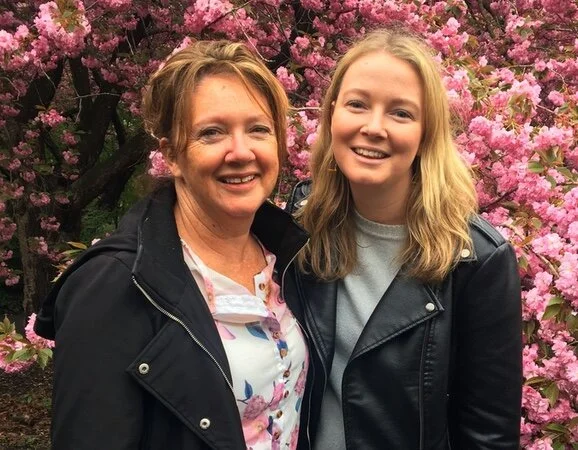
Kelli Simmons with daughter Britt
With Melbourne in hard lockdown many businesses are closed, outdoor movement is restricted and an evening curfew is in force. This has caused our schools to substantially close and moved the great majority of students to remote and flexible learning from home.
This week we asked three of our members, all education professionals, how this was working and to share their experiences and insights during this most unusual year.
Caitlin Smith, WPL Goal Keeper and Kindergarten Teacher is joined by Lena Perriman, WPA player, club Mental Health First Aider and Primary School Teacher; and Lachie Hunter returns, MPA player and Secondary School Teacher.
We’re excited to introduce Kelli Simmons to the hosting team. Kelli has been a member of the club since about 2002, when her daughter Britt started playing. Kelli has coordinated the Minkey program, now known as HookIn2Hockey, served on Junior Committees, dabbled in playing Masters and alongside Lena has recently trained to be one of our 25 strong Mental Health First Aiders.
Throughout her career, Kelli has taught in all three Victorian education sectors within Melbourne and rural Victoria. She has worked in classrooms, school leadership teams and system leadership teams. Currently, Kelli works as a Learning Leader & Co-Designer with Ed Partnerships International. Her role entails the co-design, co-facilitation and evaluation of professional learning programs, research, curriculum and Department of Education initiatives. Kelli is also a mentor to a number of teachers at different stages of their careers.
00:01:30: Introduction
00:02:14: Lachie Hunter
00:19:47: Caitlin Smith
00:30:47: Lena Perriman
Episode transcript
⚠️ Automated transcript
This transcript was generated automatically from the episode audio and lightly corrected. It may still contain transcription errors, and individual speakers are not labelled.
With Melbourne in hard lockdown, many businesses are closed, outdoor movement is restricted, and an evening curfew is enforced. This has caused our schools to substantially close and moved the great majority of students to working from home in what’s termed remote and flexible learning. This week we asked three of our members how this was working and asked them to share their experiences and insights during this most unusual year. Welcome to the Camberwell
Lachie Hunter, famous from episode 15 on our men’s Pennant A, returns to talk about the impact to secondary school teaching. He’s followed by women’s Premier League goalkeeper Caitlin Smith, who is a kinder teacher, doing some amazing work managing our youngest group of school kids remotely. We then speak with primary teacher Lena Perriman, who plays in our women’s Pennant A team and is one of the club’s newly trained mental health first aiders. Presenting the guests, we welcome Kelli Simmons to our hosting team. Kelli has been a member of the club for almost 20 years when her daughter Britt started playing. She’s coordinated the Minkey or Hook into Hockey program, served on the junior committees, dabbled a little in playing Masters, and has also recently trained to be one of our 25-strong mental health first aid team.
Kelli is an educational professional herself, previously teaching at all levels, and now working on research and evaluation of curriculum and department initiatives. Here’s Kelli. Thank you. I’m very fortunate to be invited to host a podcast with an educational focus and very fortunate to be with three teacher colleagues across three areas of the education system. We’re going to share their experiences, perspectives and tips around remote and flexible learning. And our first guest today is Lachie Hunter and we’ve got a few questions and the questions sort of sit around Lachie’s role, his response to the remote and flexible learning, what it’s meant for partnering with young learners and parents and also where to next with this experience. So Lachie I’ll let you just begin with giving us a bit of an idea of what your role is and what you do within education. Thanks Kelli I am a teacher. I’ve been teaching for six years now. I teach at Heathmont College, which is out near Ringwood. It is my first school. I really love teaching at Heathmont College. I predominantly teach science, including Year 12 biology. I have taught maths as well. And I’m actually a part of a team that has established a special Year 9 program called Nine Life. It’s been running at the school for four years so we might get into that a little bit later on. In my time at the school I’ve been lucky to be given or provided some really great opportunities as a leader early on in my career. So I’ve been a learning specialist in curriculum and pedagogy which is a leading teacher role. I’ve been a year level coordinator for a few years at year nine year level and my current role at the school is as the head of science. I love getting involved in the extracurricular components of the school, one of the reasons why I became a teacher, so the hockey, obviously in other sports, going on overseas trips, Indonesia, going to Central Australia, school camps, and organising students to attend. The Alpine School for Student Leadership has also been a highlight for me whilst working at Heathmont. Wow, that’s amazing. In six years, they’ve obviously identified some wonderful leadership qualities and your passion, they’re lucky. So a lot of those things would have come to a halt since March, April, when we had to respond as teachers and schools to the remote and flexible learning. So how did you or your school approach the remote and flexible learning and I’m guessing that the camps and the hockey has all come to a halt.
Yes, unfortunately, which is one of the big downsides and I guess it’s been felt across all society. We have had to adapt in a wide range of ways. In terms of our approach, we have been a school-wide approach and it is kind of the way that I like to teach and lead some of my teams, that collaborative approach. So we do have a school-wide approach to this remote and flexible learning as we have decided that all students should have access to the same curriculum within the individual subjects. As their peers and as a teaching team, we like to share the load and work collaboratively to develop our teaching plans. So the way we’ve done it at our school is that lesson plans are posted each day on our online platform, Compass. And these are the same across all the year seven science classes or all the year eight science classes.
So within this lesson plan, we’d like to put a learning intention for the lesson so students are clear what they are going to be achieving in that lesson. Some success criteria. So these are I can statements. So by the end of this 40 minutes of work, they should be able to do this. So, for example, I can describe the process of photosynthesis would be one for my year 12 biology class, just sort of to make it really clear to the students what they’re going to be achieving, which I think is really important. And then in that lesson, each task was clearly highlighted and then a reflection stage as well, where students were asked to message the teacher with a reflection question they have based on the lesson to help us plan for future lessons. In terms of the online aspect of it, in our first lockdown, we had probably a WebEx lesson, so an online lesson every second or third lesson with the class, so not every lesson. This was different for the VCE classes because they kind of needed greater support through all the content.
But, yeah, we did have WebEx lessons, and it wasn’t for the whole time. It was more probably setting up the class or setting up a unit of work for 10, 15 minutes. And I guess from a science point of view, we kind of made the decision to get the theory-based topics out of the way in this time. We weren’t expecting it to be so long, the lockdown, but our plan was to do some of the content of the theory-based topics such as classification for Year 7 or geology for Year 8 in this time. So then when you get back to school, we could do a lot more experiments because I guess our philosophy as a science team at Heathmont is to have a lot of hands-on opportunities just based on the cohort of students that we have.
So, yeah, we brought forward the theory-based topics this time. So what did you do in that little snippet that we had where we reopened in May and June? Did you run straight back into the non-theory-based ones or did you just hold on to those theory-based topics? We did do a lot of experiments. We’ve got, as science teachers, we have lots of activities up our sleeves, so we kind of did bring, I guess, the fun into it in that period of time. So, for example, one activity we have, we’ve got a lot of straws and connectors and we had competitions with the students to build the tallest tower or the most stable bridge, things like that in that period of time.
What did you think the students were missing in that time? Was that hands-on? Was that the part that they were missing or the equipment that you have that they wouldn’t have had at home? Yeah, definitely. And I guess that makes it tricky or challenging teaching science in that time, the access to the special equipment, the Bunsen burners and beakers, conical flasks, et cetera, and, you know, explosions, I guess. But the thing that they miss most and what I miss most about teaching in the classroom was those connections and relationships with both students and other staff at the school as well, so that’s including teachers, ES staff, lab tech, yeah, so those, you know, relationships.
Yeah. So what’s your new learning here around partnerships and young people and parents? Like can you give us an example of maybe where it worked really well for a particular family and there might be some little tips there for our listeners to grab onto. I guess I don’t have a specific example, but I think there’s been countless students that have had an increased work ethic whilst at home and focus at home, maybe because they haven’t had the distractions of their peers whilst they’re working through the lesson.
I think it’s worked really well when parents or guardians have helped set up their working space. So it is free of distractions from games from, you know, other family members. They’ve got that quiet working space where they can sit down and go through the work without those distractions. And it has, I guess, helped for a lot that parents have been working from home as well. I know it has obviously been really tricky because parents have their own work to do.
But I guess it increases that accountability of you can’t just sit on a gaming device all day or watch movies all day, you do have your work to do. It’s just going to be at home. So I’m not sure if it would have been as successful in some of the cases if parents weren’t at home to help provide that guidance. And again, I know there is difference between secondary and primary school as well. Another big thing that has helped some students is setting up a plan at the start of the day.
So we at our school, we have a mentor group program where I’m in charge of 20 students across year 7 to 12 and we meet each day and we help set up their plans. And one of my recommendations and a lot of them have taken this up is at the start of the day, write a list of things they need to do in that day and specific timings. So let’s say period one, you have 9am, you’re going to start that class, you’re finishing at 9.40. If you don’t get that done past that time, that’s okay. You can message your teacher, that’s what I got done. And then period two, let’s give yourself a 10-minute break. So schedule in those breaks and then from 9.50, move on to lesson two and then throughout the day schedule it just to, you know, track how you’re going to go about the day rather than some students may just see themselves in front of the computer from 9 till 5 all day because they’re struggling, they want to get through all this work, but they haven’t had that time to step away.
And I guess having these breaks for these students that have worked well, these breaks have been effective and they’ve probably been more productive throughout the day. Yeah. What sort of things might they do in those breaks? Any suggestions? Or is it just up to each individual of what they wanted to do that could be checking their phone? Yeah. I guess from chats with someone, a couple of them had a really good idea where they went on a walk, but they really, I guess the thing they really missed was the connection with their friends.
So they were able to have their phone in their pocket, connect to their headphones and set up an online chat with, you know, three or four of them, and they actually talked to each other whilst they were going on that walk, whether that be at school work or just the chats that they would normally have in the classroom or at lunchtime or recess. So that’s one thing they did in those breaks. Yeah. So I suppose it would be synchronising that with your friends too. Like if you are designing your plan, setting up your plan for the day, well, at 9.40 I’m having a 10-minute break after 40 minutes of learning.
Yeah, as a school we did put up a recommendation of timings as a whole, so breaks could be at this time. So they didn’t have to, but a lot found that was good for us to provide a solid structure for them to work through. And the research across the world really is that need for connection and the sense of belonging and with the remote and flexible learning, that needs to be a critical part of it. So it’s great that your school has ensured that there is that in the day. So the vision, and this is sort of now we know this, where might we go? So, Lachie, can you give us a little bit of an idea of if this is some new patterns have sort of emerged and we’ve become more aware of what really matters in education?
What do you see as learning looking like in schools in the near future? I’ve jotted down a few thoughts and this exercise of being on this podcast has allowed me to reflect because I guess like many people we’ve been caught up with this whole transition and the workload is high at the moment trying to get all the content out for students in advance.
But I think one of the big things is the scope for more independent learning tasks in that inquiry style because as teachers we struggle like giving away control within our classes We’ve got things we want to get through or tick off. But I think we have given some more project-style tasks in this time and it has been really successful and parents and students have said that these style of tasks have worked for them and they have been learning as a result. So that’s one thing I think I personally will try and implement more when back in the classroom because studies have shown that students learn best when they’re looking at things that interest them and they have a say in what they’re studying and learning about.
So that’s one thing. I think another one is that the use of technology has been really successful. So we have fast-tracked as a school the use of Office 365 and Microsoft Teams. I’m sure many listeners would have, that will have students or children that use this platform, especially at high school. So we’ve set up class pages where, so I have a Year 7 science page where they can ask questions of me as the teacher or other students about the work or pose questions for themselves. So I think using online software like that could be used in the future. So it doesn’t require them being in the actual classroom to seek that support.
I found that students that do the best at school, those that actually do ask questions when they don’t know what’s happening. And I think this has provided a platform for them to not have to physically be there or verbalise it. They can post online for the teacher or other students to answer the questions. So I guess my hope is that these pages continue for my classes in the future to provide that platform. And I guess just the use of IT as a whole. They’ve learned how to use WebEx and record themselves for a project. So using these technologies would be great. It’s interesting because some of my colleagues who are in the IT area who we work closely with, they sort of said that, wow, finally, you know, we promised we didn’t set this pandemic but, you know, life of them that they’ve been sort of encouraging over the last 10 years, all of a sudden in two months it’s all just come to fruition so they’re very excited and they are assuring us that they didn’t set it up for that.
Yeah, so maybe just to finish off, Lachie, just what are some key takeaways for parents or for teachers or the young people, and some things that they can focus on sure so i think one of the big things is what this has shown is that when parents become more involved in their children’s education we do gain lots of benefits. So knowing what the students are learning at school
allows the students, I guess, to grow and learn to greater effect, I guess. Multiple exposures to content is something that we talk a lot about at school as educators. So providing the information in a variety of ways and on multiple occasions. So the fact that we do it in the classroom, So before this pandemic, we would talk about it in the classroom and then reflect on it in the next lesson and maybe it ends there. But the fact that parents or those parents that are showing some interest in what they’re learning at home, and then I talk about it again in the lesson, just allows that to be taken up to a great extent by the students. And even just the communication, I think, has increased between the parents and students and teachers throughout this process.
I’ve had more emails than I’ve ever had from parents asking, you know, what does this mean or how can we help in this situation, et cetera. So I hope that this, you know, this style thing continues and parents continue to ask questions at the dinner table about what they’re learning because of the long run. Yeah, and I’m sure parents are really noticing the differences to their education in terms of, like what you were saying, project-based learning, constructing their own learning rather than being told this is what you do. So it would be opening their eyes to some new ways of learning for their young people.
Amazing, amazing again to hear stories of teachers being adaptable and unflappable both through the remote and flexible learning and on site. So sometimes you had to have some students on site and you were also working with students who were remote and then it sort of came down to mainly remote now. It was funny that there was that period of time we only had VCE students and they did say to us, oh, we love not having the junior or the year sevens or 10s here. We’re happy, it’s a lot quieter and the teachers are happier as well at the moment because of the 7th to 10s not being there, which is interesting.
Yeah, it is. And I don’t know about you, but when I got to being in those old classes, your teachers were your friends and it would be like being on site with all the people that you like hanging out with. So, oh, that’s great. Well, this is terrific because I think as a profession, we’ve got this collective inquiry about us looking at what are the essential conditions and supports for our children and families so that they can learn and thrive in the remote and learning circumstances.
And I think you’ve done a terrific job in making sense of that and we’re all on the little wheel, you know, trying to make sense of it and then we’re fortunate enough that we had that experience to make this second round just as successful. So good on you, Lachie. Caitlin Smith is here with us, another one of our wonderful colleagues in the teaching profession. Just get a little bit of a context around what your role is in education. I’m a kindergarten teacher in an early childhood setting in an early learning centre, sorry.
So I’m still working with my on-site learners as well as online learners because we’re considered childcare as well. We still have remained open essentially the whole entire time through COVID. Great. And how has your early learning centre approached the remote and flexible learning in terms of technology or synchronised, asynchronised, independent sort of options? So we’ve just sort of started off with a basic sort of outline of what we’re going to do and just working on a day-by-day basis, trying to figure out what’s going to work, what’s not going to work. Because we have such young children, some days may work brilliantly whilst others may not work really well. In both sort of lockdown settings, we’ve sent home little care packs for the children and for their parents, just with some little fun craft activities, some suggestions of what their parents can do at home, just to kind of have that little bit of excitement and spark into their learning whilst they’re remaining at home.
And when it did, I’m guessing you also, over May and June, it opened up that everybody came back again? Yes. So you just had everybody back on the side. What did that look like? With our centre, what happened, we went from about a 30% occupancy level right the way up to 90%, so it was a very big jump and it was quite hard to sort of go back from having a small amount of children back up to essentially being really full. So then adapting back into normal life. The thing that we did find is that our learners adapted really well to coming back. So having that time at home with their parents really helps them. They’ve come back even more confident than they were initially prior to their first lockdown. What’s interesting is that we’re talking about the teachers being very adaptable and unflappable, but it sounds like our young people in the kinder setting are also very adaptable. I was talking to one young girl who’s in prep, who told me the other day that last year, when she was in prep, which was really term one, she was in prep, so she talks about it in those terms, which is very cute. What are you noticing, other than your learners being adaptable? What are you noticing about your parents through this experience? So the parents are sort of in that unknown category at the moment. They’re sort of not sure what they should be doing at home, what they shouldn’t be doing, and their expectations of what it should look like. I mean, in my sort of setting it’s a lot easier for the parents, and I need to relax the parents, I think, that they’ve got to do all of these things, like teach them to read, teach them to write, when in actual fact just sitting with them, playing with them, doing normal household tasks like cooking and gardening and cleaning are all going to help their children learn and develop. And they don’t really need to be focusing on these sort of sit-down tasks at a table. Making that time and just having fun with their children is the most important part, really. Yeah, and you know, quite often, I have three children, but it was always so funny, I could have more time with my kids. Well, now’s the time that we can have some more time with them. What are you noticing here as some new patterns that are emerging in relation to the relationships, in relation to schooling or for learning?
So one thing, it’s not really a new pattern, but one thing that has become more important now more than ever is that parents are really paramount to their children’s learning and just having them there is helping these learners so much more than they think. So like we’ve always thought about that in the past, about how parents are really important in their children’s learning and they’re their first teachers. But now more than ever, these parents are able to essentially stay home with their children and spend that time with them that we wouldn’t normally be able to get. And that’s seen such an improvement.
I’ve had children who prior to the first lockdown were very nervous, anxious. They would always be quite upset when their parents left. and then once they came back from their first lockdown they were like a whole new child they were this happy bubbly their real personality was shining through because they had all that time with their parents that they wouldn’t normally get during the week. Wow that’s amazing that you can see that transformation and that confidence has grown. Definitely and it’s not just in one or two it’s in a lot of the children so which is great. So that obviously is an area that really matters especially readiness for moving away from your parents and that confidence but also having that trust that they’ll still be there. Exactly.
Yeah. So where next? What do you think that your centre or yourself have sort of learnt through this experience and your vision for the education when we do, I don’t want to say go back, but when we move into our new normal? Well, I really hope that we can go back to some form of normality with our face-to-face learning and having all of the learners back. Just one thing sort of that I’ve learned through this process is just to keep evolving and keep changing with whatever’s thrown at you, essentially, and just change the way you’re doing some things. One day something may work, the next it may not. So just always being adaptable. And even in the future, we’ve quite enjoyed sort of our little online sessions where we can catch up with all of our friends. It’s kind of fun. The children can show us their home and their pets that they have at home and their siblings, which has been really good. So maybe keeping some form of online aspect involved somehow in the future.
But all in all, I’d really love for it to go back to normal. It’s not quite the same when you have five children out of 22. Yeah. And you’re also a mum with a young kinder girl. So that would be the similar sort of messaging that you’d be offering as a mum? Definitely as a mum would be the same sort of thing. I haven’t had the luxury of having her home with me because I haven’t been home, but just sort of getting back into that sense of normal. I know she’s struggled a bit with hers because she also learns Auslan, not having the ability to sort of do that from home.
Yes, I can do some basic signs and things at home, but not having people signing with her at all times during the day and she’s sort of missing out on those aspects that I can’t necessarily help her with, whereas normal sort of kindergarten things, that’s not so much an issue, but that sort of aspect, I can’t really help her as much as I’d like to. Yeah. So you sort of, I think the full idea here is that having the resourcing around particular kids, being responsive to the students, learning with and from them are really critical here and to be innovative and move beyond and be responsive through the innovation. Yeah, exactly. what about connections with your colleagues like do you plan or do you have some time where you get together as a centre? Yeah, definitely, so we do a lot of sort of teamwork between sort of our rooms and whatnot and different teachers and then educators as well so we just kind of have like little informal chats where we talk about what we’re going to do what ideas we have and we sort of brainstorm what we think whether we think it’s going to work um whether we think it’s not going to and sort of brainstorm on what can we do next time to make it a little bit better.
So definitely spending that time having those sort of informal chats has been good. And what are you noticing around the young people’s attention span and ability to concentrate? If you do offer them a synchronised online conference or connection, do you put them all in the room together or is it a one-to-one? So we put them all in the room together, which is a lot of fun. The first few days of doing it, it was challenging because they’re all talking over the top. They don’t realise they can mute themselves.
So the first few days were a bit of a hit and miss. But now the children sort of get through. They understand that once they’re finished talking, they put themselves on mute or their parents help them. But one task we always do to start off every single session is we read one of our favourite funny books and all of the books that are our favourite at the moment is actually Andy Lee’s Do Not Open This Book. So I have all of them and it doesn’t matter what day it is, we’ll read one of them and the kids will be laughing both on site and on the computer and we’re all laughing, having the best time. So that’s really been able to sort of keep that connection because I absolutely love the books. So had you already sort of introduced those books in term one? Is that why they’ve got these connections with Edward or is it because Andy Lee has got something to do with Camberwell Hockey Club that… No, I’ve had his books since they came out and every time I pop into Kmart and there’s a new book, I’m there and I buy it. But the children, I have a section of just funny books. Look, I have all of Andy Lee’s, I have a few other ones, but the kids always choose those books over any other normal typical story. They always choose those books. They ask based on the colour of the book. They either want the black one, the yellow one, the pink one. So yes.
Perfect. So they’re learning their colours too along the way. Oh, definitely.
And have you got an example, Caitlin, of a family that actually are doing some good stuff? Yeah, definitely. So we’ve had, I mean, this particular parent, she’s a primary school teacher. So I had her in one of our sessions on Friday. It wasn’t, it was just a little informal, using natural resources, we’re going to make the letters of the alphabet. So she was just able to set that up for her daughter and we had the children on site and we just had an absolutely lovely time just like setting that up all together and showing each other our work and obviously it was really handy that she was there, she had everything with her and she knew sort of what was expected, it was a very easy task but it was just fantastic to see her involved in it and not just, we’ve had a few parents that just leave their children with the screen and then they’re off doing whatever they need to be doing but she was involved in the session sort of helping out and whatnot which was great to see. Thanks Caitlin for joining us today. Our next guest is Lena Perriman who comes from the primary school sector and she’s another one of our teacher colleagues that’s offering us her experience and perspective and some tips around remote and flexible learning.
Thanks, Lena, for joining us. Do you want to just tell us a little bit about your role within education? Thanks, Kelli. So I’m a primary school teacher. I teach in the public school system. I teach three, four, but mainly my experience has been early years. So I’ve taught here in Melbourne, back home in Tasmania, and I’ve also taught overseas in the UK. So I’ve had some varying experiences along with some early childhood experience with daycare and kindergarten teaching.
So, yeah, kind of seen a cross-section of education. Right. Wow. And you’ve probably seen very, if you’re keeping connected with any of your colleagues, they’re probably all experiencing very different things across those three areas, Tasmania, Melbourne and overseas. Was it UK that you were in? Yeah, I was in London for two years. So I’ve been able to keep in touch with some friends over there and hear their experience with lockdown.
I also had some friends who work and live in Dubai and they’ve had a different experience as well. And then, yeah, my friends back home in Tasmania, again, varying experiences. It’s been very interesting to hear the support they’ve had from their schools, support they’ve had from families and support they’ve given. It’s been, yeah, there’s been a lot of similarities and then, of course, so many differences, which has been, yeah, very interesting.
So tell us about what’s happened for you. So I suppose just like everybody else, back in March, I think we were approaching this at the end of Term 1, thrown straight in the deep end. We had one staff meeting where we were given all our Google codes and were told, go, have a go, create your Google Classroom, just see what you can do, have a play around, and we were all very much like, oh, my goodness. You know, we were trying to figure out how best to present learning, how to record things, how to come across on recordings.
Very interesting. I, you know, like many other people, spend a lot of time watching YouTube and Instagram and things like that. And I was like, oh, my goodness, I’m going to have to start, you know, this kind of online persona. But I think that very quickly was, you know, it’s just so much easier just to be yourself. But, yeah, I think keeping an open mind was something, you know, we all kept on coming back to just like this is just going to have to be an evolution.
You know, what we do this week is not what we’re going to do next week. Like with that was kind of us both trying to get the parents on board that things this week are not going to be the same as next week in that first initial few weeks. I think as well the volume of emails was something that I wasn’t necessarily ready for. So that was also something that I had to develop skills in, you know, knowing how to triage an inbox hasn’t been something as a teacher I was normally, you know, day to day, I was, you know, you get a couple emails in the morning, maybe send an email once or twice a week to a parent, but mostly phone calls and playground chats is how we normally communicated.
So that was definitely a new set of skills I had to develop. I suppose the main thing that myself and my team really focused on was trying to create realistic and manageable workload for ourselves, for the kids, and just trying to reiterate that all the time with the parents and the children that, you know, what we got done today, you can’t compare to what you might get done tomorrow. Or if you didn’t get much done earlier in the week, you could try and catch up. But if you didn’t, that was okay. So those kind of things were really important to our approach.
And I think a big take-home has been something that I’ve had to remind myself every day and remind the children every day. And even in emails now, the other week I sent an email to a parent and it’s that pre-COVID expectations versus the COVID expectations. And so I think that’s been a really important thing to like keep coming back to when we approach online learning is what we could get done in pre-COVID is very different to what we can get done now. And that expectation needs to really be on par with what we’re experiencing every day. So can you give an example of that? That sounds interesting. So I suppose in terms of academic achievement and progress, even down to little things like, oh, we didn’t get this. I’ve got two other children in the home and we’ve got to get all this work done.
We’ve got this schedule you’ve given me and we’ve got to get through it all. And I keep trying to remind parents that, you know, the schedule’s there if you want it. But if you want to make your own schedule, you’ve got the flexibility to do that. If you didn’t get every task done today, well, that’s okay because guess what? We’re at home and locked down in a global pandemic. And yes, we would have got so much more done in a day in a classroom, but we’re in a completely different environment and we’re all dealing with the stresses in different ways. And the kids, some children have, you know, really adapted well to, you know, being at home, others not so much, and that is completely okay. So, yeah, and then also myself as a teacher, I’m thinking, oh, you know, I need to be creating all these different learning experiences and I need to be checking up and maybe if this child needs a little bit of extra help, I should be developing more things or this and that.
and all these different things that if I was in the classroom, completely achievable, completely manageable. But again, I’ve got my own stress and my own mental health and my own dealings with COVID to factor in as well. And I think that’s been something you have to remind yourself every day as you approach online learning that, you know, what I got done yesterday, maybe I was in a really great mood and I was like getting things done, getting them ticked off, but that doesn’t mean that’s going to happen today. It could happen, which would be fantastic.
If it doesn’t, that’s okay. Each day is a new day. And that’s been a really important lesson to really hammer home, I think, to colleagues, parents and the children. Just so I’m going to take advantage of plugging that you’re one of our, you and I, one of the mental health first aiders. So, of course, the need for connection and to be able to manage yourself and being able to flag when you aren’t falling down and needing some support, just a little plug there for the first day is that that’s what we’re here for. But that idea of a routine and then scheduling it themselves, That’s interesting because you sort of what I’m hearing from our people today and also my teacher colleagues that I work with every day is that there’s this need for doing what the teacher tells us to do.
Yeah.
Not that. It’s actually these are suggestions. Yeah. You need to be aware of your own. like at the moment in education, there’s a big push for the amplifier, which is the learner agency, and encouraging the kids to be in the position to be willing and a desire to control and manage their learning and seek support. Yeah, I think as educators, we have this real focus on that children need routine and I you know definitely agree with that to a point but at the same time where we’ve got a large focus on schools developing children and people that are ready for the world and the world doesn’t have routine and I think that’s something I really try in my classroom I have a routine but if the routine is thrown out or if I decide to change my mind I don’t like to mollycoddle the children around it I just go guys we’ve got something different happening today let’s go rather than like being like it’s it will it be okay can we change it and I think that’s something parents have forgotten is they can use their own problem-solving skills and so can the children and if something isn’t working um instead of trying to you know push up push their way through this schedule that the teacher has said that here it is you know you can can think outside the box you can you know have a go at something else at a different time in the day just because literacy is scheduled for the first half of the day it’s not working try it the second half of the day it’s not working then hey let’s just do something else that’s slightly relatable like if we’re you know reading about habitats and you know at the moment my inquiry topic is you know life cycles and habitats some food webs and stuff, if that reading hasn’t been completed, jump on ABC iView and find something about the Australian Outback or, you know, I think we’re all forgetting that we’re kind of the master of our own destiny and we can change things up a bit. And, you know, if you shoot your teacher a quick email and say, hey, we couldn’t get this done today, but we did this instead, you’re going to get a response saying, hey, that’s awesome. Thank you so much for letting us know. That’s a great I might share that as well with other people because, you know, if they’re having troubles getting that done too, then you can have a go at doing this instead.
So I think it’s really important that, yeah, we all start thinking that our schedules aren’t, you know, set in stone. Yeah, there’s some flexibility and that the kids have got some voicing around this. Yeah, it’s not about… Yeah, exactly. To be just like we’re trying to be innovators and developers, not compliance. Yeah. encouraging young people to be doing the same.
Yeah. Well, this sounds great, Lena. You’ve obviously got some wonderful things that are happening for your learners, but it sounds like you’ve got a real passion here for being in the classroom with the kids. Is there something here that you’re really missing about that? Yeah, I mean the classroom and the environment, the physical environment of the classroom is something that I’m really missing.
So for starters, I like to pull from my early childhood experience and use the environment as that third educator, as we sometimes say, that you can create physical environments that inspire and create conversation and investigation and curiosity. So I really miss having that physical space for the kids to develop their learning and ask more questions uh for example I really love using like creating like story tables where the children can come and you know you look at the physical items that I’ve got to then develop stories around or you know the displays that you use to interact with writing or reading um the different strategies and they can use those things when they they’re in their learning and they can refer back to So perhaps learning they’ve done, like, you know, when I create displays in the classroom, they’re normally developing displays.
So every time I start a new unit of writing, for example, if we’re exploring a genre of narrative, then I start with a blank display. And while we learn together, I love to put the children’s work up there that shows each part of how to write a narrative. And by the end of the unit, you’ve got this rich learning board that, you know, shows them exactly how to write a narrative and gives them inspiration to then, you know, when they sit down and write, they can look up at that and go, oh, so-and-so put that up there. And they had a really good idea for like a plot or so-and-so put that up there. They had a great idea for an environment for a narrative or how is my narrative structured? oh, look, we did this work where we all drew beautiful story mountains and now Miss Lena is like, you know, displayed them up here and I know how a narrative works and how, you know, I have to have a beginning, middle and end.
So that physical environment that you create where celebrating children’s work and you’re building together that knowledge is something I really miss along with obviously the children themselves. Like this year I have a really incredible group of humans in my class. Like they’re just so diverse. They’re so thoughtful, insightful. And I’m missing those relationships and those connections that you get to build with a classroom of children. And, you know, missing all those tiny little milestones, you know, missing celebrating their birthdays or, you know, having those incidental conversations in the playground with their parents And, you know, there’s so much, all those little intricacies to teaching that, you know, is why you, at the end of the day, love your job.
You know, when you’re sitting there after school at five o’clock marking test papers or inputting data or, like, you know, trying to, you know, grade things and put progression points for reports, you’re just like, hey, now this job, ah. but then you’re like oh why do I do this this is ridiculous and then the next day you’ll come into school and one of the kids will tell you some silly story from the night before or they’ll you know they’ll do something they’ll come up to you know like oh I remembered how we did this or that and they you know put their learning together and you’re like this is this is the job where you’re not getting that here with the online learning we yeah we try to like have as many interactions as we can a day with the children but it’s just yeah it’s not the same as being in the classroom with them and developing this you know community. So there was something that you mentioned at one of our mental health first aid meetings that your school’s doing some great things in the area of well-being through this time. Do you want to share some of those? Yeah so our school is one of the one of the first schools to implement the 4Rs program, and you’re going to ask me what the 4Rs stand for: Resilience, Rights, Respectful Relationships. We use that program in the classroom, and obviously, and it’s a program that’s been going for a few years now in Victoria, but we were one of the first schools to implement it. It really relies heavily on looking at what children what qualities and values children need to be those types of people that that have respect for one another that have resilience that you know know how to develop respectful relationships um and we so this time you know the first round of online learning we had obviously our allocated time for the four Rs each week and we had you know some you know each week we also had some well-being that and one of the teachers would develop some lessons but this time around we’ve really stepped it up and every day there is a well-being session and that is either, you know, doing some mindfulness or, you know, the other day the children went outside and scavenged for different leaves and garden bits and pieces and made a beautiful smiley face and shared those and thinking about an affirmation every day, like I’m strong, I’m a good person and giving that allocated time in the day that the children can either do the said activity or they can do something that they are also passionate about.
So that’s the other thing that we have also scheduled is a passion project. So the children choosing an area that they’re super interested in, that’s something that they want to share their knowledge about. And there’s been some really wonderful examples. So I had one child in my class, her and her grandfather build a billy cart together. and you know and then she shared this lovely story that recently her grandmother had passed away and um her grandfather was very lonely and that building the billy cart together was bringing him that joy and that happiness that he was missing and she said you know spending time he said spending time with me has been really great because it’s been really helping him you know with his grief and you know sharing those lovely stories of things that they’re passionate about but then also how bringing their family into it has also been really wonderful.
So the children are getting to be able to express and have that downtime and then also share with the rest of the class, which is really important. And as like a whole school as well, we’re implementing different initiatives to try and create a more community connection. Where we’re situated in Melbourne, we have majority of the children live around the school. So normally we have really strong community connection. And so we’re starting an initiative this week is send a picture of you and your pet.
So we’re putting those things into the newsletter. So we’ve got each week a different way of sharing what’s going on in our family homes with the wider school community. because I think one thing that’s really become quite clear to me with talking to different parents is people and families aren’t understanding that what they’re experiencing is also what other people are experiencing. And sometimes I think we’re getting stuck in that headspace that my child’s not engaging, my child isn’t focused, I’m not being able to support my child with their learning, But I think a lot of parents are experiencing that and hearing that they’re not the only ones and hearing that other things are going on in their family, like good things like, you know, the passion projects and the different bits and pieces the children are doing needs to be shared more so that we can bring that community back, feeling back into schools because they are the first community children really get to experience.
and it’s really important to bring those ties back together. Which is interesting. I’ve just noticed you talked earlier what you miss is this celebration in the classroom of creating knowledge together and relationships and so you’re trying to bring that through in this wider community of a celebration of the passion projects or some things that are going on for you that affirm you and make you get through the day. Yeah. Which is great. So, Lena, before you talked a little bit about what you loved about and what you’re missing, and you also said that you’re not missing those evenings where you’re sitting and inputting data and looking at a standardised test to make a judgement about kids.
Do you want to elaborate a little bit about what that means for you and maybe what that might mean when we are in our schools with our kids? Yeah, I think we have this curriculum that we all as educators, we constantly say is very crowded. And we’re expected to develop children and people that are ready for this world that’s, as I said, it’s changing. And, you know, the children that I have in my class right now, by the time they finish university, there’s going to be a job that wasn’t invented right now. So I think thinking about how we send our children to school and whether they’re ready in terms of socially and emotionally ready because then delivering those academics
and teachers being able to assess progress and learning on more than a NAPLAN result. So this year we didn’t have NAPLAN and I think Australia-wide, you could hear every teacher in year three, seven and 11, just nine, sorry, just like cheering because it is this test that, you know, some schools place a really large expectation on. Some schools don’t. Other schools, you know, have a medium ground to it. and I think it’s not a measure of how a child is going and we say that all the time it’s one day out of the year but you know the fact that we haven’t got NAPLAN this year and the fact that in terms of formal assessment we haven’t really had a lot of time with the children to be able to do that and so I think for the first time in a very long time teacher judgment is really very important and believing that teachers know how to assess a child and their progress and their ability without a test, without sitting down and scrolling out reams and reams of different things that just say they can do this.
I think also it’s really important that moderation between year groups and, you know, above and below whatever year group you’re at is really important to have a rich conversation with those teachers saying, you know, this is the expectation for this year group. Do you believe what you’ve seen from this child and you know their abilities and what they’re capable of? Do you think that this child is going to be able to succeed and be healthy and happy in the next year level? because you know this, this and this about them.
Like, do you know that they’re a resilient learner? Do you know that they will ask questions? Do you know that they will have a good go at something before coming to ask you for help? You know, are they self-starters? Will they focus? I think all of those things are lost sometimes in this, you know, testing world. And those things are really important. And we talk about children having a growth mindset and how that changes their ability to succeed.
You know, you may not be, you know, classically academic, but if you have a growth mindset and you’re able to recognise when something hasn’t gone right, but you can try and have a go at it again, you can use your own help seeking skills, you can use your problems, problem-solving skills to go, I’ve tried it this way, maybe I could try it that way. Those things are so important. And I think those, if you know those things about the students in your class, then you’re able to really make a good assessment on what kind of learner they are and whether or not they’re going to succeed or whether or not they’re going to need extra support. And I think that’s something that has been, I feel, lost a little bit in education, that we’re not trusting our teachers to make judgment calls. Yeah.
And I think that’s also something that has become apparent with online learning is the conversations I’ve had with parents about providing their child with extra support. Or have you noticed this, you know, have you noticed this about your child? I think we need to explore this a little bit more. And sometimes as a teacher, yes, I don’t have the skills to assess a child in terms of extra support, but I do pick up on those things that I’ve just spoken about, resilience and self-help and things like that. And if children aren’t displaying those at a certain developmental age, then they need some extra support and they need to be explored outside of the school.
And I think that’s been a very interesting thing is parents coming back to teachers and saying hold up something’s not something’s not adding up here you and saying oh so you know how we had that conversation about my child needing a little extra help hey yeah look I’m noticing that now and this is why we’re fortunate that our Victorian curriculum offers a framework where we have the knowledge and understanding we also have the skills and capabilities but a really strong part of it which is sort of new is the general capabilities and the proficiencies which is about that reasoning that problem solving that the the day-to-day what you notice them as being as a learner as is the really critical parts and that’s one of the great things that I agree with you we’re missing out on seeing that daily but families can also be partners in those things. Yeah and I think definitely online learning has exemplified families noticing those needs and I’ve had you know a couple of families that have now come back to me and said oh yeah we’re going to start exploring things with you know we’re going to seek advice outside the school community so I think that’s only a positive thing um sometimes I think there’s this feeling that it once you start exploring those different ways that children need support it perhaps provides a label and disadvantage but I think it only provides an opportunity for children to gain extra support you know gives them the ability to have the language to seek help for themselves as well um which is so important if the child doesn’t know why they’re struggling um they’re not given the tools and the power to say hey i’m i’m not i’m not coping you know if a child knows that perhaps they’re struggling with their audio processing they can come to someone you know if they know that they can say you know what actually i’m i need my teacher to know that i can’t sit in that part of the classroom or I need my teacher to know that I can’t sit next to that person or I’m going to need to be, you know, can my teacher write that down for me? So I’ve got a list of instructions. And children, once they know those things, they’re so great at communicating them. They’re so wonderful at being their own advocates. They want you to know how to help them.
They want to be helped. Which comes back, yeah, what you were talking about right at the earlier stage of organizing their time and not you know then there’s a schedule there’s a suggestion of a schedule but let’s modify it and and bring it to what you’re noticing about yourself as a learner and what helps you yeah yeah and that’s I think that noticing what is important for you as a learner that’s the other thing that I really noticed with online learning is the way that families have adapted their learning and have changed things so that it really suits what their children need um and thinking yeah thinking how can we how can we make this activity more suitable to what my child needs
You’ve been listening to the Camberwell Hockey Podcast. We’d like to send a big thank you to our hosting team, our guests, and you the listener for your support. If you enjoy the show, please give us a review on iTunes, wherever you get your podcasts. This show is recorded and produced by Camberwell Hockey Club in Melbourne, Australia. If you have any feedback, comments or questions, please find us on Twitter at camberwell underscore HC or see more information on our website camberwell.hockey. See you next week.