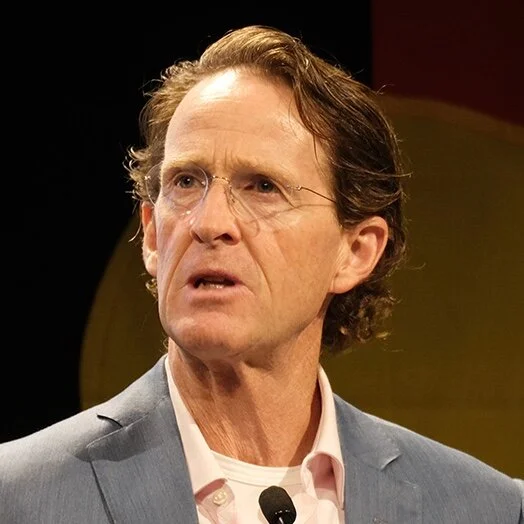
Episode 21 - Rob Dalton
1 September 2020 · Steve Prior
Listen to this episode ·
Subscribe in Apple Podcasts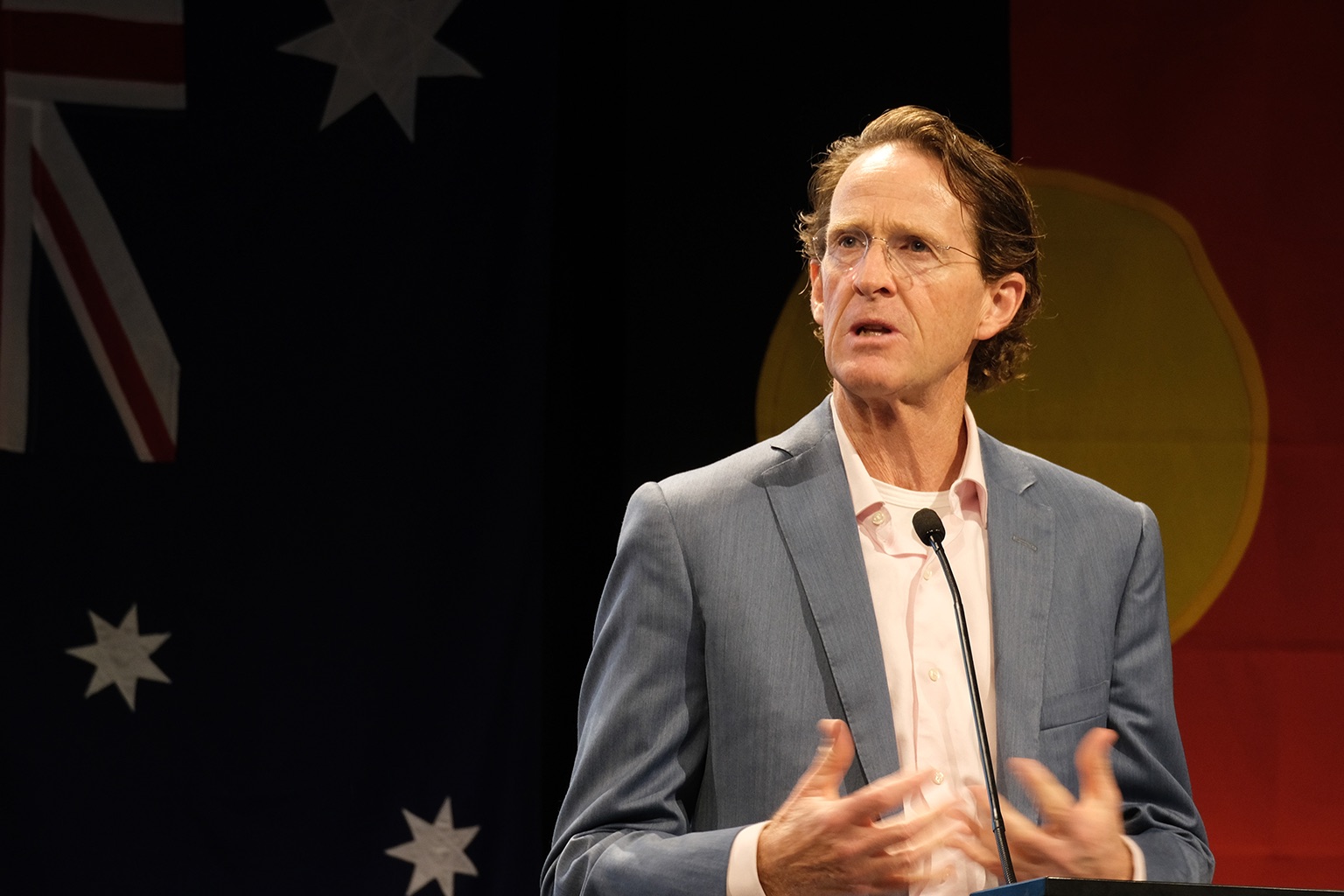
Sport Australia is a peak government body managing a $400m budget and overseeing around 100 national sporting associations with a brief covering everything from grass roots participation to elite performance programs. This week Wansey is back presenting Sport Australia CEO Rob Dalton.
Before his Sport Australia role, Rob of-course will be familiar to many listeners for his 10 year tenure as chair of Hockey Victoria. He should also be well know to Tigers fans as a board member who inherited a $6m debt in 2004 and oversaw a program that revitalised the finances, developed alternative revenue streams and now sees the club with some $35m in the bank - and a couple of premierships along the way.
Closer to our hearts though you’ll hear how in 1979 Tony Thornton & Al Carnell had a chat with a young Rob Dalton and encouraged a move over to Camberwell Hockey Club.
Rob became a premiership player, a member of our Team of the Century and with coach Argus and superstar players like Wayne Thornton and Wansey himself ushered in the golden era of the 80s and laid the foundations of our continued success today.
00:00:00: Introduction
00:00:46: Coming to Camberwell
00:07:39: A New Era of Success
00:13:58: Career Mentors
00:18:14: Sports Australia
00:22:44: Alternate Revenue Streams
00:26:39: Richmond Football Club
00:34:08: Mentors & Volunteers
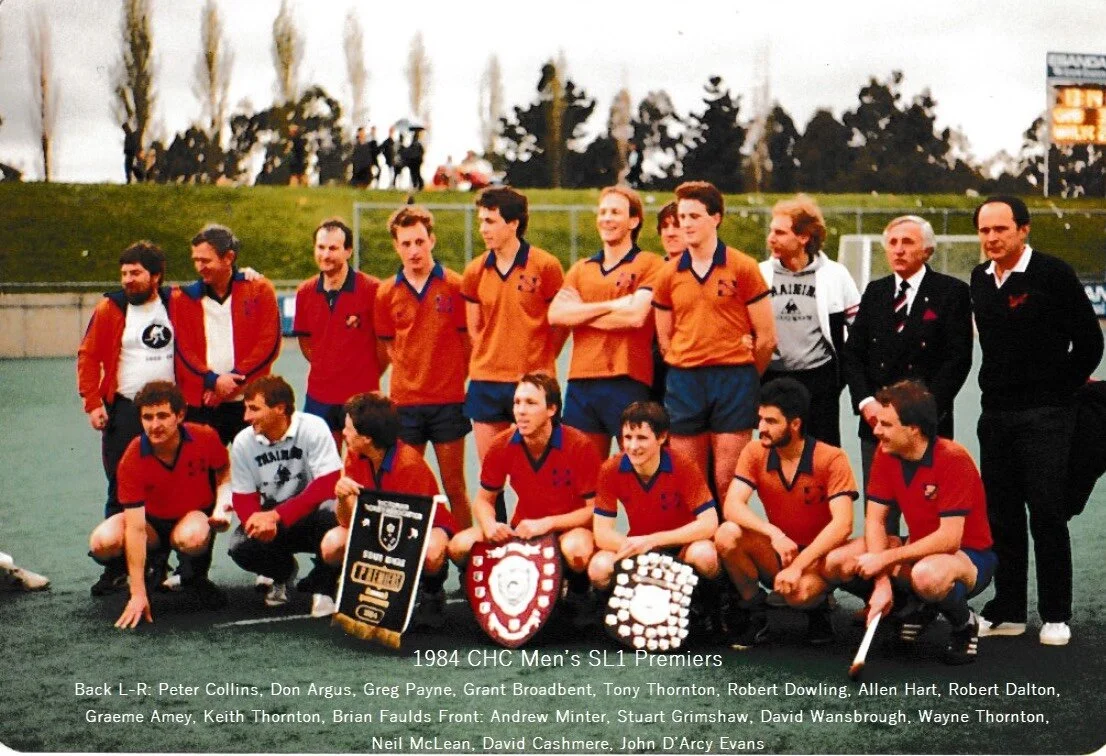
1984 SL1 Premiership Team featuring Rob Dalton
Episode transcript
⚠️ Automated transcript
This transcript was generated automatically from the episode audio and lightly corrected. It may still contain transcription errors, and individual speakers are not labelled.
Sport Australia is a peak government body managing a $400 million budget and overseeing around 100 national sporting associations, with a brief covering everything from grassroots participation to elite performance programs. This week, Wansey is back, presenting Sport Australia CEO Rob Dalton. Welcome to the Camberwell Hockey Podcast. Before his Sport Australia role, Rob will of course be familiar to many listeners for his 10-year tenure as chair of Hockey Victoria. He should be well known to Tigers fans as a board member who inherited a $6 million debt in 2004 and oversaw a program that revitalised the finances, developed alternate revenue streams, and now sees the club with some $35 million in the bank. Oh, and a couple of premierships along the way. Closer to our hearts, though, you’ll hear how in 1979, Tony Thornton and Al Carnell had a chat with a young Rob Dalton and encouraged a move over to Camberwell Hockey Club. At that time, our men hadn’t even made the finals for 25 years. Rob became a premiership player, a member of our team of the century, and, with coach Argus and superstar players like Wayne Thornton and Wansey himself, ushered in the golden era of the 1980s and laid the foundations for our continued success today.
A treat this episode for Camberwell history buffs. Thanks, Rob, for your time. Here’s Wansey. Welcome to the Camberwell Hockey Podcast this week, and we are very privileged indeed to have Rob Dalton, who wears many hats, always has. He’s been a very busy man. I originally got to know Rob as a player at Camberwell, a premiership player, a very fine player at the club with a great history.
But since then, he’s had a really interesting story, which we’ll get to. It’s included involvement at the Richmond Football Club, a successful career in accounting at Ernst & Young and Arthur Andersen, and, of course, now he sits as the CEO of Sport Australia. So it’s an amazing resume. Everything that Rob’s attacked, he’s done with great intensity, great diligence and great success. So it’s really fantastic to have you on board. Welcome, Rob.
Yeah, thanks, Wansey. Appreciate it. I guess we’ll start with — I’ll come back to the Sport Australia; it’s quite a fascinating role now for you, and a challenging role. But let’s get to how you came to Camberwell, because that in itself is a great story. My recollection is a number of players came across from Moorabbin, which I guess we liken to Southern — it’s where Moorabbin evolved to — and not dissimilar, a lot of talented juniors when you came across. Do you want to give us some background as to what prompted that move, how it all happened and who came with you?
Yeah, thanks. Look, it was a great story, because I was playing at Moorabbin and had a lot of success as a junior, as you know. We were an incredibly strong club. In fact, I was very blessed in my junior career to have played in A-grade premierships in juniors every year that I played. That was just an amazing thing — many people miss out on playing in premierships at all. And I also played first grade for Moorabbin when I was 14 years of age.
So I had some really good opportunity and played state hockey. I remember I played in an exhibition game out at Albert Park, at the old soccer stadium, where — I think it was the under-16s played the under-14s. It was stinking hot, and I’ve never been that great in the heat, and I played an absolute cow of a game. Well, the following day I get a phone call from Tony Thornton, who I knew and knew of — I’d never actually met him — an amazing player, son of Keith Thornton and brother of Wayne.
And he said, “Oh, we’d like to come around and have a chat to you about hockey.” I was quite surprised. And they came around and asked me if I would contemplate going to Camberwell. It was a bit of a shock, to be honest, because they said they’d been out to watch me play in this exhibition game, and I said, “Well, I really had a pretty bad game at that stage.” And they said, “No, we think you could fit into our team.” And, amazingly, at that time — that was late in 1979.
And Camberwell, I tell people this story, hadn’t actually played in the finals for 25 years. This is this club with this amazing record of premierships under Charlie Morley, and yet they hadn’t played in the finals for 25 years. It was really interesting. Al Carnell and Tony were the two that came. And I still remember to this day — and Tony would remember as well — at the time I’d just finished my year 12 and I was working in a bank as a bank clerk.
And Tony came and had lunch with me and sat outside the bank. He was a really terrific fellow; I always had a great deal of time for Tony. And the two of those guys actually convinced me to come across, and my parents did it all the right way. And what a moment — meeting those two guys changed my life. Quite amazing. Amazing. I didn’t know all the detail behind that story, except I just remember, because you’re a couple of years older, this big six-foot-four strapping fullback.
And all of a sudden — not just yourself, but your talented younger brother and other players who you might mention — it was an influx of players. And when you mentioned that 25 years, that’s quite a bit of a risk in a lot of ways, to move. Yeah, well, and Camberwell just kept finishing, and I knew — everyone knew Wayne Thornton and what an amazing player. And I was just so fortunate to have had the experience to play with a genius, and in fact to play with a couple of geniuses, because I’m talking to one.
But it was really amazing. In fact, I came across in 1980, and my brother, Stephen — or Wally, as he’s known — and Greg Read didn’t come across until the following year. And I actually had to play — Moorabbin actually got promoted, and I had to play against them, which wasn’t particularly good, down at Shipston Oval, against my good friend Julian Jones and all those guys. But what happened, actually, was two years later that my brother came across, Greg Read — as everyone would know, Rito — Neil McLean, who also played with Moorabbin, and another guy, Alan Hart; they all came across.
We had this influx of Moorabbin players, and it was a special time, because it was exactly the same time — in fact, I arrived on the first night of training, and that was Argy’s first night of training as well. And I will never forget, it was the old change rooms. In fact, the old change rooms had just been built, because the old ones were still over the other side of the ground — that really old one, one of you’d remember, over the other side of the ground. And I remember walking around. We parked in the car park and walked around, and my dad was there, because he’d driven me over.
I was only 17. And standing there, almost like this was supposed to happen, was Keith Thornton, done up in a suit and tie. And of course he just put his hand out and said, “Hello, handsome.” I was just taken aback by this guy that called me handsome. Well, it wasn’t too long before I knew that he called everyone handsome — or princess — because he couldn’t remember anyone’s name. And I’ll never forget, it was like yesterday, he said, “Okay, what team would you like?”
And I said, “Well, thanks, Keith, I’m actually hoping to get a game in the firsts, if I could.” And he said, “Oh, of course, that’s a given. But it’s mandatory that you coach a team. Which one would you like?”
And that was the very first moment I was exposed to the Camberwell Hockey Club. And I said, “Well, look, I don’t mind.” And I ended up coaching the under-10s, and in the under-10s was a whole bunch of guys that most people might know — Grant Treloar and Dougal Jolly and Richard Friend and Matthew Franks and all these guys — who I ended up coaching for their entire junior career, and gave speeches at all of their 21sts. Incredible. So it really was a life-changing experience. Yeah, look, these are great parts of the story. A lot of people listening to this who are recent to the club wouldn’t know Keith Thornton so well, or Tony or Wayne, but they were incredibly influential and big influences as the club started to succeed.
And of course Don Argus, you mentioned. And just the fact that you were coaching at a young age, and for a number of years, and obviously did it with such passion and had an impact on those young people. I’ll come back to your ability to be a mentor — I know you’ve done it in your work role, and you continue to do it in sport, and we’ll talk to that. So you came to Camberwell, and at the same time there were some other players, Don Argus, arriving. Did you get the sense that things were starting to happen in that first couple of years, or what sort of time frame did it take to get moving?
Yeah, it was a real blur to me, because the club had some amazing talent and, even back then, were incredibly strong, but just really didn’t quite get it done in the seniors. And it coincided at the time, as you know, with guys like Dave Cashmere and Brian Ambrosius and his brother, and we got a young guy across called Grant Broadbent from Doncaster — again, only 16 or 17 years of age, but quite talented. And we got a couple of guys, Peter Beaumont, who was a very long-standing player at the club, sort of got this second wind and was a very talented player, and a guy called Greg Payne, and Mintz came back from overseas.
So we weren’t overly loaded with a whole heap of really good players. But the great thing was, when I look back at it, it wasn’t too long — I mean, I started coaching, and Rosie was one of the young boys that I coached, and there were some signs, there were some really good players: the young Ambrosius, Rodney, and Matty Dipnell and these sort of guys. There was an enormous amount of talent, and I’d played against them in juniors, and I just thought, this is really happening. And in the first year of Don, just his discipline at being able to get us focused.
It was a very different game back then, and we were playing on the cinders at Camberwell. But his discipline was just amazing, and it allowed Wayne to be the focal point. And I’ll never forget the first time I met Wayne — and it was literally the first time I met him — he was just such a freak player, totally different in so many ways. He walked up to me and said, “You know what this is?” And I said, “Yeah, it’s a hockey stick, Wayne.”
And he said, “If you can see it, you hit it to my stick, okay? If you can’t see it, you don’t hit it.” And he said, “And if you don’t hit it to me and you can see it, I’m going to kill you.” And so we started this relationship between the two of us. He was playing for Australia at the time, at centre forward. And just this young kid from Meraven, he got me down to train with him, and I did the Australian training session, and I’ve never thrown up more in my life. It was just ridiculous, as you would know.
But we had such a great bond, and the guy was a freak. He was just simply a freak. I think, too, for people that didn’t see him and don’t remember him, the best way to compare him to, say, a footballer might be someone like Dermot Brereton. He had that — not necessarily that he was physical with people, but he had that presence and showmanship and talent and a bit of that. That’s probably the closest example I can think of. And a big personality.
And then, Rob, the era, of course — I think in previous podcasts we’ve had Don Argus on, and had Jay Stacy on, who talked about his time when he came to Camberwell. Really a golden era in a lot of ways. Obviously won some premierships, but it was more than that off the field, wasn’t it? These people were going through their careers as well — a lot of influential people, whether they were accountants or plumbers or whatever they were doing. We all shared that journey, didn’t we? Yeah, it was amazing.
And I can still — even how long ago it was, that was some 30, 40 years ago — I still remember Argy was just such a figure, but he surrounded himself with other people. Training session at Camberwell was always so inspiring, because we had a lot of people come down. And I wanted to mention at the start of the podcast: my thoughts go out to everybody at the club for the passing of Pete Collins, who was just an instrumental part of my life. He arrived around the same time, and the barbecues — he used to cook; my dad, who was a butcher, would bring the meat over every Thursday night, and they would cook it all up. And we had such an amazing time. I know the barbecues have sort of continued. But Pete made my wife’s wedding ring and engagement rings. It was just an amazing place.
And I grew up enormously in that time, because I was surrounded by successful people. And even in the coaching — no disrespect to bankers at the time, but I didn’t do particularly well at school, simply because I was so focused on the hockey, and there are many, many aspiring hockey players out there that would do the same thing. But by doing the coaching, I met these amazing parents, and the amazing parents all became really supportive of me and trying to get me to become something, because they entrusted me with their children.
And so people like Barry Treloar, who many will remember — a very successful businessman — and there were many others, really encouraged me to go back to university and study, which I ended up doing. And they changed my life. They really did. They put me on a different path, and I was so lucky. Because in 1984 we won the premiership, and I think it was in 1986 — unfortunately, I had a horrible injury; I think it might have been over in Perth — I had a hockey incident in which I ruptured two discs in my back, and that was the end of my career.
And so, if I hadn’t had that encouragement and all the people around the club — it was just such a successful vibe — it just turned into: I’m only sitting here now because of the Camberwell Hockey Club. Yeah, well, I think it’s a great story. But you clearly — those parents identified, and the club identified, somebody, and very quickly they knew your passion and your enthusiasm, whatever you’ve attacked. And you’ve made a lot of your own luck, as they say, because you went back and studied, and then became a significant partner, a significant career at a major Australian or global accounting firm. To take a senior role there was an incredible journey in itself. The sporting part has been terrific. But do you want to just talk a bit about that?
You managed to combine, at the same time, following your sporting passions. You had an injury, but you did throw yourself into your career at the same time, didn’t you? Yeah. Look — and I’m sure there are lots of people listening that have had injuries — I really struggled, I’d have to say. I was vice-captain of the club in ‘86 when I got injured. We’d won a premiership in ‘84, and in ‘85 we got stiffed by Waverley — unfortunately, 1-0 — and that was really disappointing. And the following year, in the preseason, I had the injury.
And so I really struggled. Argy really tried to keep me involved, which was just an incredible thing. I’m just so grateful for his involvement in my life, and it’s great that I still communicate with him, as do you. But when I — success was just something that oozed at that club. And every day I went in there and I just thought, wow. And I really just took that same rigour that I was taught at the club, and did the best that I could possibly do.
And despite the fact that I did very poorly in my year 12, I was able to throw myself into university, and I ended up graduating in the top 5% of my year, which was quite staggering. In fact, Wansey and I did a bit of study together. I remember one time, Wans — you may not remember it — I was at Caulfield Monash, and I got a phone call from you saying, “The races are on tomorrow. Are you interested in going?” And I said, “Well, yeah, I’m sure I can.” He said, “Well, listen, my mum’s locked me in my room, but I can get out through the window and come over and go to the races.” Well, it’s a bit sad — it’s sad that we’re both obsessive personalities — but I remember that day Lord of Camelot was back from threes into six-to-four, and got up and won by a couple of lengths, if I’m right.
Lord of Camelot. That rings a bell. It rings a bell big time. And you had to get a ladder to be able to get back into the house. Very good. So, EY, Arthur Andersen — you got to that, and that was in itself a whole other story as well. But you got to the top of the tree as a partner there, and then it basically folded, effectively, didn’t it, globally. But then you restarted again.
And that must have been a pretty challenging time. Yeah, look, I’m very fortunate. I worked incredibly hard. Arthur Andersen was 14, 16 hours a day, I think, for 10 years. I mean, I was really lucky — I made partner after eight. And then in 2002, with the Enron disaster, Andersen’s exploded, and Ernst & Young very generously enabled us to merge with them.
And at that point I was the head of the auto practice in Australia, and I was given a lot of opportunity through Ernst & Young, and I ended up spending more time at Ernst & Young than I did at Arthur Andersen. So I ended up being a partner for 25 years. I retired — we had a mandatory retirement age at 60 in the firm, and I didn’t really want to wait that extra year until I turned 60, and I always wanted to push myself to do something else. And so I retired, and seven days after finishing, I was offered the opportunity to be the chief executive of the Australian Sports Commission — which probably couldn’t have been a worse time to do it, when COVID strikes.
But anyway, in the last seven months I don’t think I’ve ever worked harder. I’ve worked every weekend. My wife kindly reminds me that I haven’t had a weekend off since I started. So, just to explain for listeners: as the CEO now of Sport Australia, which is effectively the government’s entity to control or manage sport — do you want to just explain what Sport Australia is and what your role as CEO is? Because not many people out there would actually understand that.
Yeah, so it’s a massive role.
We’re obviously a public entity — we’re a government agency. I report to the Minister for Sport. My appointment is ratified by the Prime Minister, so it’s a fairly senior bureaucrat position. We have a private entity board with its own constitution, and we run all national sporting organisations in Australia. So any funding that goes — to take hockey, for instance, we provide all of the funding from a high-performance perspective. We measure their performances, and we also provide funding for participation as well.
So, some of the clinics and those sorts of things, we provide all that funding. In total, we provide about $200 million in funding a year to sport. As I said, we’ve got 99 sports that report to me. It’s been a challenge getting to meet with all 99 of them, particularly in lockdown. And on the other side, we have a budget of about $200 million, which we spend on running programs — participation programs, Indigenous programs, all sorts of development programs, women in sport, girls in sport, all those sorts of things. And this is probably a very hard question to answer with 100 sports, but how do you work with them?
Obviously they’re their own sport. Are you there to give guidance and principles, or are they allowed to — is there criteria they must meet? How does it really operate? Yeah, no, there is criteria. So we work on participation numbers. If I take a sport that I think is one of the 2020s’ up-and-coming sports — touch rugby — I’m really working with them to try and really grow their numbers in participation, because it just works.
The more people you get in, the more money you’ve got to spend on development and actually develop a sport. I think touch football will perhaps be a Commonwealth Games sport at some point, maybe even an Olympic sport. But we take those sports and try to not only help them with participation but help them with capability. So I would talk to most CEOs around diversification of income, which is something that I’ve done at the Richmond Footy Club — being able to build another income stream, and being able to capitalise on some of the intellectual property that the sport has. And that just gives them more impetus to put more investment into the sports and participation and development. So one of the things that I’m working on — I’ve had a lot of experience in startup organisations, and I found a few really, really good emerging technologies in augmented reality and virtual reality. And I’m trying to develop some coaching platforms that can be used through virtual reality and augmented reality, so we can take some of our superstars of the past like yourself and Dave and Jamie Dwyer, and actually take virtual reality to the masses rather than take them physically.
And trying to do that actually with the Richmond Football Club as well, by taking Dustin Martin and taking that visual up to the top end, and being able to get young Indigenous players trained by Dusty as if they were on the MCG. So some of those sorts of things, which then just creates a global opportunity to be able to use that technology. So, just back to — and that is related to this question — around the diversification of income: clearly, thinking hockey, and you’ve had a massive involvement we haven’t mentioned yet, as the Hockey Victoria chairman, more than 10 years, I’m sure, now, and we’ll talk to that in a minute. But this diversification of revenue is so critical at the moment. In Australia, we’ve got a lot of sports. We’re not a two- or three-sport country. We’ve got 20 or 30 — you’d probably tell me more — mainstream sports that are all trying to do their participation better. They’re all trying to do their pathways programs. And of course lots of them want to have national leagues and be on the television in front of us, an audience every day.
So how do they — I heard John Wiley talk about this a while ago — diversify revenue? How does hockey find revenue streams? Is it still television? Is it the internet? Is it the technologies you just talked about? Yeah, look, I think the thing with hockey is that we’re not really going to get a contract from a television studio or a network that’s going to give us a whole lot of money like the AFL, and I think we’ve got to be really smart. And the thing about hockey is that the times are changing. And this is the challenge that all sports have, which is why I identified touch football, because it’s a relatively new social sport — but it is a social sport. What we’ve been trying to do at Hockey Victoria is — we have such a big churn of people in our game. It’s really quite sad how many people we have coming in and how many people we have going out. A lot of the reasons for people not continuing in the sport are not because they don’t love the sport or they don’t want to play the sport.
It’s just their personal circumstances. It may be because they’ve had a family. They might have got a new job, or whatever. And unfortunately, in hockey and all sports — which I’ve now realised — is that we have this “you must train twice a week and you must play on the weekend and you must go and play at Altona, because that’s where the game’s going to be.” And people don’t really want that whole weekend tied up with those sorts of things. So we’ve got to be a lot better at being able to keep people in the game. And an alternate revenue source is just that social game itself. There are just as many people outside of playing hockey who have actually played hockey as there are playing now.
And so, for us to tap into them, it’s just a completely brand-new source of income. For those that travel through Europe, you see the soccer cages that are all over the place, and you see young kids just playing soccer in these cages. It’s sort of that — we want to get hockey to be that game where you pay your five bucks, you come along, you have a game against your mates, and you go home and have a beer afterwards and a sausage, and everything’s fine. That’s the thing: we’ve got to get away from just being this official game which requires 11 a side on a 100-by-50-metre pitch. We need to be able to find other ways. And Andrew and his team — Andrew Skillen and his team, who have been trying to do that — getting it en masse really does require a fair investment. If you can imagine taking an artificial pitch and things into the city so that people can just come along and play, it does take a bit of effort. But they’re the sort of things — we don’t want people to detract too much from what they’re doing, because that then runs a risk, right? And we don’t want to introduce risk into the sport.
We don’t want someone coming out and becoming a sunglass manufacturer, right, because it requires cash and investment. We’re looking at where we can invest our time and our IP, and we can actually create new revenue streams. So that’s really where I’m trying to encourage sports to go down that path, and just create those extra opportunities. I have to say, Hockey Victoria — and all credit to you and Andrew Skillen — in the last 10 years, the way you’ve attacked that challenge… It’s an ongoing process and a bit of a slow burn. But, gee, as a hockey person, you can clearly see that you’ve made some big investments and some big time commitments to getting that, being sympathetic to that change.
So, well done. What I hate to think — if you hadn’t been involved in the administration side in hockey these last 10 years, where we’d be… we’d be a long, long way behind. So I think the sport owes you a great debt of gratitude. I was going to change topics a little bit and go to one of our favourite topics, the Richmond Football Club. So, sorry for those out there that haven’t yet converted, the cross to the black and yellow — but there’s still time. The Tiger story is: you talked about Camberwell in 1980 being 25 years out. Well, Richmond’s far worse than that. It was a basket case the day that, on the back of the Herald Sun, there was a headline saying — Brendan Gale, on behalf of the board — we’re going to have 100,000 members and three premierships in five years, and all that stuff that was ridiculed.
Laughed at. It did get to the absolute bottom, didn’t it, and you were there sticking to your strategic plan? I always remember talking to you — you were always calm, confident; you believed that it would happen. Incredible, incredible story. Yeah, look, I joined in 2004, and I was asked… we were in a horrible, horrible state. I forgot to mention, Rob — you’ve been on the board, involved, all that time. I didn’t introduce you to people that didn’t know: Rob has been a long-time board member. So, sorry to interrupt, but keep going. Yeah, so I got involved in 2004, and we were horrible. I think when I joined, we had 25,000 members, and we certainly had six and a half million dollars’ worth of debt. The first meeting that I had with anybody was with our insurer, who told me that they were no longer going to insure us, which — I just scratched my head and thought, what the hell have I done?
I think, certainly for the first five years, I reckon I worked 40 hours a week. I was getting to Richmond at about 6 in the morning and working until about 8, and then on my way home as well, just trying to navigate through. If you can imagine — and the Camberwell Hockey Club has always been just such an immaculately run organisation. For those that haven’t ever been outside of the Camberwell Hockey Club, do yourself a favour: go and visit another club and see how poorly things are run, or how much differently things are run. But Richmond — it was like a community club. I couldn’t believe it. This is a club that I’ve barracked for all my life; I’ve been a follower, as is Wansey — we love the Tigers. It was just an old… it was really just a committee, and it was really tough to actually navigate the way through. And the board members were doing the best that they could, but they were fans.
And there was a big difference between the corporate role that we needed to take in this organisation, the responsibility we had. And we were able to — I think in the first year — we were able to stem the tide, just make sure that we didn’t… The year that I got involved — I actually got involved at the end of the year — but they lost $2.5 million that year, which was a pretty bloody good effort, actually, because I don’t know how you lose that much money in a footy club.
I really don’t. But it was about getting good people on, and finding the poison. In any organisation, there’s poison. Had to find the poison. And we had to stick the course. And so I put a lot of… as the finance person, I was responsible for turning that around. We never made another loss in my term. In the next 14 years, we broke even or better.
And then Brendan Gale came involved in about 2010, I think it was. Ten? Yeah, nine. And he was a ray of sunshine. He came out with the 75,000 members, three appearances and a grand final. Everyone did laugh at him. But I knew at that time we were on the right path, and he was just such a warrior.
And the great thing was that he felt some responsibility, for being a player at Richmond, for being able to turn it around. And they’ve certainly been able to do that. And I think, fast forward to 2019, when I left — we again had compulsory retirement after nine years as a director, and I had 15, so I think I’d probably overstayed the policy. But in handing over — again, Chatham House rules — we ended up with something like $35 million in the bank, and two premierships, and a pretty good facility at Richmond.
And we’d created another business. We created a business called Align Leisure, that I helped create, which gave us another source of income. So even though it’s COVID and all the clubs are struggling, we’ve got an income coming in from Align Leisure. So, amazing journey. I had the great fortune — Wansey, I really wanted to embed myself.
And in 2007, I asked my family whether they would be interested in taking on a host-family role for a player. And of course the kids were only very young, and they really wanted to do it. And I had no choice in who it was, but this was going to be an interstate draftee. And anyway, we were very fortunate to have had Jack Riewoldt as the player we were the host family of. And Jack essentially became part of our family.
And in fact he was only supposed to stay for six months, and after six months he got his girlfriend, Carly, to come over and live with us. And they lived with us for five years. And then he wanted to buy a house, and he wanted to buy a house within a kilometre of our house. And so we ended up finding something 100 metres away.
And, you know, still, Jack and Carly and their beautiful daughter Poppy are a big part of our family. It’s been an amazing journey. It has, too, because he’s been the real face of Richmond in a lot of ways — the ups and downs. And he’s hung in, and the part you’ve told me about the amount of operations… we wouldn’t really understand the medical side, how difficult it is. But even to see him this year, where there are weeks where he’s looked pretty tired and you can understand him being worn out, and then he comes back the last couple of weeks and bounces around. So I think he actually is a pretty good poster boy of how difficult the struggle is. It’s not all high-flying marks and premiership medals. It’s a journey, isn’t it?
Look, I can tell you — and Jack won’t mind me saying it — in the early days, as a dad (and I’ve got three sons of my own, three athletes, all done pretty well for themselves), I’ve got to tell you, in the early days I spent more time parenting Jack than I did my boys. Just the pressure of AFL football — we really don’t understand it. Jack is just an incredible human being and a great learner. He’s a sponge. He used to get up early in the morning and talk to me about different things that happened overnight in the world. He really has set himself up, and he’s a very, very intelligent football person.
So it’s hard work, and I got to see that firsthand, and we got to see him win best and fairest and premierships, and sing on the stage with the Killers, and Coleman medals and all that sort of stuff. We saw his first game, and we’ll see his last. Yeah, no, he’s been incredible. I would like to get him down the park, though, and just fix up that two-step run-up sometimes when he sprays them right. But I think I’ll leave him to it.
He’s kicked more goals than I have, so I’ll let him do that. That probably gets to another point I want to talk a little bit about, which is your interest and your capacity. You’ve been exceptional at mentoring, and I learned of that at the firm when you were at EY — listening to, bumping into, friends that had come across you — and then I’ve seen you do it at the hockey side of things, and of course the Richmond Footy Club. How’s that sort of happened? And, funny enough, when you mentioned coaching the Camberwell juniors when you first walked in, I guess it was perhaps sparked there, but you seem to be pretty good at it.
Have you got any thoughts and views and tips for how much you get out of doing that? Yeah, look, the spark, I suppose, definitely came from getting involved with Camberwell Hockey Club and seeing people like Al Carnell. Everyone will know Al, Bill Horman, and Pete Collins, and these sort of people who were just there, and they knew that they could come up and have a chat and help you out. And I think, from that, the experience that I had coaching the kids — I mean, I coached Lockie Dreher’s sister, Trina.
And Trina was the first female to actually be involved in a boys’ team. That’s how long ago it was. And I think that seeing people respond, and just that care — I really found that I loved that. And I suppose it became something that I did in work as well. I took on the recruiting role — I was head of recruiting for 35 years, as a matter of fact — and just the pleasure that I got out of that, and seeing people develop. I remember sitting at my last partners’ meeting and looking around the table.
We had 30 partners in my area, and I looked around the table, and eight of them I recruited and trained. And there is just nothing better than that feeling that you have had an influence on someone’s life. And it really does help. And I suppose I’ve carried that forward, both in my career and at hockey — my involvement with Andrew Skillen and others that I’ve really had an interest in. And seeing people just perform is just so good. It really is. And I would really encourage everybody. It’s interesting, Dave — we’re in a really challenging period in life now.
The one thing that I’m working really hard at is to get people back to playing sport. Hard as that may be to believe, but that is our biggest challenge. But the interesting thing is that the numbers at the moment around the country for getting people back — they’re not bad, right? I mean, they’re actually not bad. But the big drop-off is that we’ve seen about a 30% drop-off in volunteers, and that really hurts, because if we don’t have volunteers, we don’t have a game. And I think being a volunteer — we’ve all done it, and I take my hat off to everyone, but give it a go. For me, when I looked at CVs when I was recruiting people, if I saw somebody who was a coach of the Altona Hockey Club, I put them to the top of the pile, because the traits that I’m looking for in a person are that I want those people who are loyal and I want those people that are caring.
Because if you get caring people, well, then that just creates a culture. And so the benefits of being a volunteer and mentor and all of those sort of things are far greater than we’ve ever thought about them. And I’m really looking to start to get corporates to join with me to acknowledge volunteers, coaches and mentors, to actually give them some sort of benefit in their career — give them a standard, like an AIS standard, of “this person has done this coaching,” and that makes them a member of society that we want to encourage to do better. So, for me, I love it. I love helping people, probably to a fault, but it’s such a great feeling. And I know, Dave — I was talking to my wife, Lisa, before, about the things that you’ve got involved with.
I mean, you know the answer. Helping people is just such a great thing. Yeah, well, look, it is, Rob. And I think community sport — as we’ve missed it in this last while — I think we’re all missing that, the connection and the involvement, the buzz that it gives, for a whole range of reasons. So hopefully we’re all back out there on sporting fields. There’s certainly lots of people out there exercising, but they all want to go crash and bash and hit some goals and get their animal spirits going.
But look, I think we’ll finish off on that note. It’s a great note to finish on. You’ve been an incredible influence in sport, Rob, already. From all range tonight, we’ve looked at the Camberwell Hockey Club — we’ve been fortunate to have your input — Hockey Victoria, clearly, Richmond Football Club, and now Sport Australia is the beneficiary of your passion, your expertise, your smarts. So it’s fantastic. It’s great to see that you’ve found something that’s going to keep your fire burning.
I think it also speaks — you must have a wife there who, she deserves a few bronze or gold medals, I’d say, given how much time you’ve spent. So we’d better give her a plug. And we also should say g’day to your great old mate, Greg Read, stuck up at the moment with his terrible injury. And we’re all — I think all those Moorabbin guys that came across, as we talked tonight about that — we’re all hoping, praying and sending best wishes for him. Yeah, if I can give a big shout-out to Greg — it’s been really difficult during COVID.
We’re great mates. I could tell lots of stories on another podcast, if anyone wanted to hear stories about Greg, and he’d be cringing at the moment thinking about the stories of him waking up on my doorstep every Saturday morning, because we used to have training on a Saturday morning with Argy. But, Greg, if you are listening, a big shout-out. My thoughts are with you. My dad also gave his thoughts — just unfortunately, before he got COVID. He’s battling away, and hopefully he pulls through.
But life is an amazing thing. You never know what it’s going to serve up. But I do want to thank you, Dave. It’s been terrific. I want to thank the members of the Camberwell Hockey Club. I will say, I got a wonderful note from Simon and the board of Camberwell, congratulating me on my career as president of Hockey Victoria. You don’t know how much that meant to me, because of the place that Camberwell has in my heart, my family’s heart. And it’s great to do these things.
And it really gives me a shiver up the back to think back to those days, that I was a part of what is, I think, the greatest hockey club in Australia.
You’ve been listening to the Camberwell Hockey Podcast. We’d like to send a big thank you to our hosting team, our guests, and you, the listener, for your support. If you enjoy the show, please give us a review on iTunes or wherever you get your podcasts. This show is recorded and produced by Camberwell Hockey Club in Melbourne, Australia. If you have any feedback, comments or questions, please find us on Twitter at camberwell_hc. You’ll find more information on our website at camberwell.com.
See you next week.