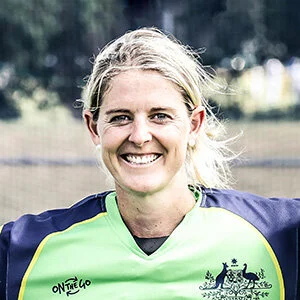
Episode 24 - Rachael Lynch
22 September 2020 · Steve Prior
Listen to this episode ·
Subscribe in Apple Podcasts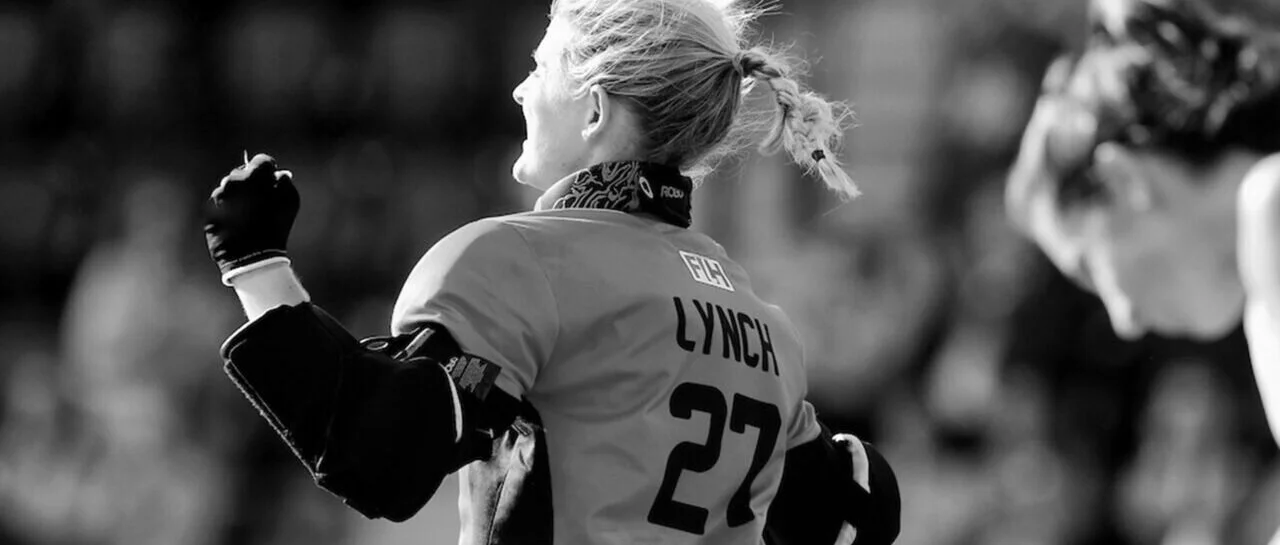
Episode 24 - Rachael Lynch
This week Tom Winter returns to present Victorian and Hockeyroos superstar, 2019 FIH Goalkeeper of the Year, Rachael Lynch.
In this candid chat you’ll learn about Rachael’s early sports mad childhood in Warrandyte and reflections on her selection progression and challenges through her representative debut, move to Perth and selection for the Rio Olympics.
You’ll about Rachael’s shootout preparation, Stomp Goalkeeping coaching initiative, advice for young goalkeepers and her career highlight; and also learn about her ambassadorial role with RUOK ? and balancing her fulfilling nursing career with hockey commitments.

RUOK work in the area of suicide prevention. Their vision is a world where we’re all connected and are protected from suicide.
Their mission is to inspire and empower everyone to meaningfully connect with people around them and support anyone struggling with life.
You can read more on the website at RUOK.org.au
You can find out more about Rachael on her site rachaellynch.com.au and follow her on twitter @RachLynch27
00:01:14: Introduction
00:02:43: Nursing Flexibility with COVID
00:07:59: Olympic Reset
00:09:30: Balancing Work & Hockey
00:13:08: RUOK ?
00:18:45: Stomp Goalkeeping
00:23:01: Early Hockey Career
00:28:28: Selection Progression
00:35:05: Supportive Families
00:38:54: Hockeyroos Debut
00:43:08: Perth Commitment
00:47:53: Rio
00:56:10: Shootout Pressure
00:58:52: Advice for Young Keepers
01:00:03: Highlight
Episode transcript
⚠️ Automated transcript
This transcript was generated automatically from the episode audio and lightly corrected. It may still contain transcription errors, and individual speakers are not labelled.
In 2019, Rachael Lynch was announced as the FIH Goalkeeper of the Year. A just reward after some fantastic performances and a growing reputation as one of the very best in the game in a shootout situation. It’s not been a smooth ascendancy though, and in this candid chat with Tom Winter, you’ll learn about some selection and coaching challenges Rachael’s had to manage. Welcome to the Camberwell Hockey Podcast. Outside hockey, you’ll hear about Rachael’s long-standing work as an ambassador with the R U OK? charity, working in the area of suicide prevention. R U OK?’s vision is a world where we’re all connected and are protected from suicide. Their mission is to inspire and empower everyone to meaningfully connect with people around them and support anyone struggling with life. You can read more on the website at ruok.org.au. You can follow Rachael on Twitter at rachlynch27 and find out more about her and her new Stomp goalkeeping training initiative on her site, rachlynch.com.au.
Thanks, Rachael, for your time and best of luck for Tokyo 2021. Here’s Tom. Okay, Tom Winter here with another episode of the Camberwell Hockey Podcast. Today’s guest is a registered nurse who’s been working through the COVID-19 pandemic. She’s a strong mental health advocate, having done a power of work with R U OK? Day, a small business owner who’s also giving back to the grassroots of hockey, and she happens to be a two-time Commonwealth Games gold medalist, an Olympian, the most capped Hockeyroos goalkeeper in history, and the current reigning FIH Women’s Goalkeeper of the Year. Rachael Lynch, welcome and thanks for giving us some time. Hey Tom, how’s it going?
Going pretty well. As we were just saying offline, things are probably a little bit better for you over in Perth. Sunny and going for endless activities outside than there are here in Melbourne. But hopefully an hour of chatting will just be able to pass a little bit of time.
Yeah, actually, you’re holding up my day because I’d like to be outside. It’s quite hot today. So I was going to go to the beach for a few hours and then I’m heading out for lunch.
Well, we’ll make it quick so you can get back to life outside.
No, no, it’s all good. I’m happy to be here. As I did just touch on, obviously your hockey credentials speak for themselves, and we’ll definitely get into that, being that this is a hockey podcast. But I thought we’d also touch on all of the stuff that you’ve achieved and done outside of the field of play. Probably most prevalent just at the moment this year is your work as a nurse. Do you want to tell us what type of nursing you do and how that’s looked over the last six to 12 months? Yeah, I mean, it’s actually changed quite a lot.
My situation has evolved reasonably rapidly during COVID, which, I’m not alone. A lot of people have put themselves into different situations, some by choice, others not. So I’ve worked as a neuro rehab nurse for the last 10 years. I’ve been on the same ward that whole time. I studied in Melbourne, but then got a job over here as a graduate. I was moving over anyway for hockey. So I guess essentially started my nursing career in Perth. And I love it. I absolutely love it. So neuro rehab is mostly stroke and MS, so we have longer term patients.
They’ll have a stroke, go to the acute ward and then come to us for rehab. So it’s worked in really well. I only work one day a week normally. And being rehab, I think I really enjoy the patient interaction and the fact that I can go away for a couple of weeks and come back and still have the same people there. So, yeah, I really love it, but things have changed a lot. So when COVID happened, we stopped hockey, as everyone did. And I had a few weeks where I was trying to get extra shifts. I wasn’t doing anything else.
And I had, I guess, this deep desire to help out. So I went in to offer my services, if you like. I also applied for a COVID clinic at my hospital and at another one. But the way our health system reacted was in such a way that we had to close wards. We were anticipating the greater need in our intensive care departments. And all of these sort of changes meant that there was actually a lot of nurses who were looking for work. So I thought my ward would snap me up, but everyone sort of stepped up and took on their role, which meant that I couldn’t get any shifts. So I had a few weeks just enjoying myself, walking, riding, enjoying the ISO life and then just working a couple of days a week. And then eventually I decided that I felt like I was wasting my time a little bit.
So I ended up applying for a job with a mining company doing their COVID testing and I’ve been working full time ever since. So smashing out sort of 50 to 60 hour weeks doing that. And yeah, basically just COVID testing all of our mine site workers so we can keep the mines open in WA. Amazing. Wow, that’s obviously a pretty massive shift. And again, this is something we’ll definitely touch on later, but a huge shift from what you would have hoped to be doing right about now compared to what you are doing and what you have been doing. But do you think that your nursing and your ability to balance these things has helped this year?
Obviously having the mental health work to fall back on as well as the nursing to keep you going, do you think that’s helped you once obviously COVID hit, the Olympics got postponed and so did the hockey program? Do you think having those things has helped you kind of keep going this year where others might have stalled a little bit? 100%. I mean, I guess there’s certain skills involved in that that I pride myself on and have spent a lot of time building around the life balance and mental health and self-care and all of those things. But I think the main thing that I’ve noticed is when the Olympics got postponed and sport got cancelled, the people that really struggled were the ones that only did sport. So we’ve known for many years, and something that I’m really passionate about, is having that balance is so important for your perspective. But also, sport is a finite thing.
Like eventually, either an injury, retirement, it’s going to stop. And for everyone, it stopped very abruptly. And I noticed that all we saw in the media was the footballers and the high-profile athletes that are just whinging about it all and can’t cope and they’ve lost their money and all of this sort of stuff. Whereas the Olympic athletes were just like, right, carry on. I’ll pick up some extra units at uni or I’ll grab another job or I’ll work more hours. It was just like, no worries, we can cope with this.
And obviously there was disappointment around, but the majority of athletes, certainly in our hockey program, said yep, okay, we just do what we need to do. And in fact, for most they’ve just been able to fall back into their other life, if you like. And we almost lost all of our money and our funding for a little period there. But it’s like, all right, we’ll just go and get a job and use the skills you have. So it was really interesting to see, but certainly I felt really proud of the Olympic sports and how they handled themselves throughout that time.
Obviously, knowing some of the hockey athletes that a lot of the hockey players around do, I completely agree with you, and the way that you all responded has been so impressive. And for yourself, obviously, falling back on nursing has been quite good because it’s kept you going. And one of the things I left out of the intro was obviously you’re a keen cyclist, and those who are on Strava have seen you’ve just been rolling out the miles pretty consistently. So obviously you would have kind of prepared yourself for this year to be quite a big year in your hockey life.
Have you had a bit of a mental break from the game and do you think that’s helped you to kind of reload for what will now be Tokyo 2021? Yeah, that was pretty key for me. It was the break I was anticipating having after the Olympics, but instead we had it before. And yeah, being an older athlete, I was planning for maybe making a pretty key decision. And not that I’ve really wanted to retire or anything like that. I haven’t felt that for, well, ever. But I think having that mental break maybe refreshed me a little bit in a sense that I stepped away from the challenging parts of elite sport.
And they’re the thing. Like I don’t miss, it’s not the hockey, the training, the playing, the girls, they’re not the things that force you into retirement. Usually it can be your body or the lifestyle or sometimes the politics, as you would know, Tom. So to be removed from that a little bit was great. Just focus on my riding. I loved riding. That was the main form of exercise for me for a little bit there.
Basically training on a schedule that I got to dictate, which we never get to do. So yeah, that was really refreshing. You touched on schedule there, and it was probably one of the other points I was interested in. You’ve obviously had quite a long career now as a Hockeyroo. How did you balance, or did you find it harder at the start of your working life as a nurse, to balance being a nurse and being a hockey player? And how did you do that over such a long time? To be perfectly honest, the balance part of it is fine. I’m a pretty organised person and I am choosing to do that. So you kind of take it on as, well, literally as a personal challenge.
How can I manage to fit all of those things into my day? The most challenging part of it all has been the conversations with coaches.
My whole career, when I first started, Frank Murray was our coach and he was all about having the life balance. So we trained outside of work hours. When I first moved here, I was a full-time nurse. I was a graduate and I was working full-time.
So other than COVID, that’s the only time I’ve done that in my career. And over time, I had to drop my hours because I was pretty exhausted. And as a young nurse as well, you’ve just got a lot going through your head. You’re trying to learn so many things. And I remember when I was actually nursing, it was fine because I was on my feet. I was doing physical work. But because I was new, I had a lot of time where I’d be pulled aside by our staff development nurse and we’d sit down and talk through stuff. And I couldn’t keep my eyes open as soon as I sat down because I’d probably been up since 4.30 that morning and then still doing a full shift.
So it was hard. But later on in my career, I dropped my hours right down. But I’ve always had, I guess, my commitment questioned because I wanted to do other things and not just fully focus on hockey. And it’s probably been one of my biggest frustrations in my whole career that I felt like I’ve always had to try and prove that it actually makes me a better hockey player. Like, I’m not even going to enter the discussion of making me a better person and a better citizen and trying to do the right thing and actually earn a living and all of those realities too. I don’t even touch on that, which should be the topics of conversation, but they’re not. It’s purely like I honestly believe it makes me play better. And it’s been a painful journey to try and prove that. But, well, I’m there now.
I’m definitely there now. I think I’ve proven it with the Olympic years. The two Olympics that I missed out on were both years where we weren’t allowed to work or study. And then when Rio came around, I said, well, I’m not doing that again. It doesn’t work for me. And I begged the coach at the time to let me work just one day a week. And I honestly believe that’s the reason I got picked, because I had those eight hours every week where I could go and think about someone other than myself and not get caught up in all the things that come along with being an elite athlete and selection and Olympics. I could actually go and look after people who are going through something that is so much more important than sport. So I need that and it makes me perform at my best.
So I think finally people actually believe me. That’s an awesome point. And it was actually something I was going to ask you, and it was probably in a light-hearted conversation going to be one of the harder things to touch on: how did you get past the disappointment of obviously missing out twice? But I think that shows incredible maturity as an athlete and a person to kind of make that stand and say, well, no, I want to give it my best shot of becoming an Olympian, and my best shot is to have a focus outside of hockey, because obviously it does become pretty all-encompassing, particularly as the big events near.
And I think that also leads in, I imagine, to the other work you do with R U OK? and being able to be mentally healthy as well as physically healthy. Just for those who are not completely across R U OK?, do you want to give us a bit of a rundown of what that is and then how you got involved with them? Yeah, I’d love to. I hadn’t heard of R U OK? when I first joined them, maybe seven or eight years ago, I think it was. I had a friend that was working there and he introduced me to the company and they were looking for an ambassador and I love the concept so jumped on board naturally straight away.
R U OK? is a suicide prevention strategy. They’re a charity that began many, many years ago. The story, and you can actually watch it online on Australian Story, I think I’d highly recommend people search it and watch it. It’s about a half an hour episode of the story of this guy who lost his father to suicide, and he admits that his dad was not very good at talking about things. So him and his wife started R U OK? and a few others involved, and they put this strategy together where it’s basically just getting people to talk to each other and hopefully prevent something small becoming something big and becoming a mental illness or suicide. And then, yeah, I mean, I don’t want to spoil the story because I’d love for people to have a look, but they then went through some really serious challenges as a family. So, ironically enough, for the wife and the kids R U OK? became a bit of a legacy and something that they could hold on to while they were going through these challenges. So yeah, I think it’s applicable to anyone, any setting. You don’t need to be qualified to implement what R U OK? do. It’s just about asking people if they’re okay, checking in on each other, looking after yourself, referring if you need and following up.
So it’s simple messaging and that’s why I like it. Yeah, amazing. And I know that you’ve obviously been working pretty closely with them since you started and you’ve done a few fairly big events. I know that one of them was a big bike ride that was with yourself and a couple of other Hockeyroos and some other footy players, I think. What have been some of your highlights with them, and is there anything, or was there anything planned for this year that maybe has been pushed back a little bit? My R U OK? activity this morning was, R U OK? this year have had Kit Kat branded Kit Kats. So it says Kit Kat for a chit chat. So I just walked into the city and dropped off some R U OK? Kit Kats to Laura Barden, Kristina Bates, Sophie Taylor and Nicola Hammond, because they’re all staying in the mandatory quarantine in the city in Perth here. So I thought, oh, they might need a little bit of a pick me up.
So I went and visited, well, I didn’t visit them, I dropped it off. Getting sidetracked. Look, so many events. I’ve absolutely loved representing R U OK? and then also including their messaging in some of my own sort of personal talks and things. Kokoda Trail was the first one that I did with Ash Nelson, a teammate and a good friend of mine. We raised about 30 grand and then the two of us walked to Kokoda just in a private group. So we had our guides and our porters and us. That was it. Really incredible experience. We did absolutely no training whatsoever because we went two weeks after returning from the Comm Games.
So we couldn’t, but a really good challenge. Then we did the bike ride, which, Tom, I’m sure you would have loved to come on. Yeah, would have loved that. We’ll plan another one. But yeah, the bike ride was awesome. But the reason we do them, it’s obviously raising money is fantastic, but it’s about spreading a message. So when we rode to Albany, you can get there reasonably directly, but we actually went town to town to town. We ran clinics.
We did talks. We went to farming communities and spoke about the importance of R U OK? So it’s more around the messaging and the awareness. And yeah, even more recently, I’ve done a lot of work up on mine sites. So now I work in the mining world, it’s fallen into place nicely. But Ash and I used to go up to various mine sites, Rio Tinto and BHP and some of those companies. And we literally would just get put on a truck or a digger, those massive machines. And you just spend half an hour with that person. And they spend 12 hours of their day for two weeks straight, usually, sitting on a truck by themselves.
So it’s a pretty isolating job and a tough environment. And we just sit there and talk to them. And we’re not there as a counsellor, but it’s amazing how quickly people would open up to you. And some of the stories we heard were just incredible, and building that connection with a stranger purely by just being there and listening to them. And that’s what I love about R U OK? Yeah, and I think some of those things are particularly relevant this year with everyone going through pretty hard times, and we would always encourage people just to reach out for a chat with anyone really. And I know that at Camberwell we’ve recently started mental health groups and we’ve done training and stuff, and I think it’s something that as a club we’re striving to get better at. And I can say with confidence that a lot more people are comfortable talking now than what they probably were a few years ago, which is fantastic.
Some of the work that people like yourself are doing, it’ll never go unnoticed because it just helps so much in such a wide variety of places. I think that string to your bow is a really great one. Then you’ve obviously just started a business, Stomp Goalkeeping. What sort of prompted that? Was that just to give back or was there a bit more to it? I’ve always loved coaching goalies. Funnily enough, I’ve played hockey nearly my whole life. I’ve never umpired a single game and I’ve never coached a team before. So I feel I probably need to give back in another area, which is the goalies.
I just really enjoy the specialist side of it. So I started coaching years and years ago. I’ve always done it alongside my playing career. But it’s really challenging to find the time. And obviously I’m in Perth, so that makes it even harder. So always love the face-to-face coaching. Goalkeeping is such a niche. And around Australia, you could probably count on one hand the amount of really qualified coaches we have. So there’s a huge need for it. And in fact, it was actually my brother who gave me the idea to go online.
And he’s the brains of the business and also all of the tech. So he’s built my website for me. He helped come up with, I guess, the strategy behind the company. And the idea being that, well, I can’t get out to all of these keepers and a lot of them are in more rural and remote parts of Australia. We know that hockey is really strong in the country towns of Australia. So this was a way to be able to get out to them, provide, I guess, content, skills, drills, information, all the things that are in my head and I’ve learned across my career. I wanted to be able to share that. So we started filming these videos.
We’d film them at the start of the year and then put packages together where you, as a young goalkeeper, or it doesn’t matter any age, we have all ages, you can watch these videos. You can learn about a particular skill. I provide a drill. Most of the drills you can either do by yourself or with mum, dad, brother, sister, teammate, anyone, or your coach ideally. But they’re simple enough that you can do them as a sort of, I suppose, a self-directed learning. So it’s a reality.
You’re not going to have a coach. Your team coach is probably not going to have time to look after you, so you’ve got to go and do it yourself. So I give them all the tools and it allows them to go and do that. And it’s been really successful. I’m really happy. And certainly at a time like this, it’s gone pretty crazy because there’s all these people either in isolation or hockey stopped, so I can at least look after the goalies during this time. Yeah, terrific.
And I think that obviously people with profile, goalkeepers with profiles like yourself, to then be so accessible to younger goalkeepers or older goalkeepers, right? Like for you to be able to provide tips to that goalkeeper who’s 23, 24 and wants to take the next step in their hockey, are you having much cut through with those sorts of goalkeepers, the older ones, or are you finding that it’s predominantly the young kids who want to sort of tap into your knowledge? Actually, my most engaged audience are the older ones. I did a Zoom chat, or a couple of Facebook Lives and Zoom chats and that during COVID with all the Stomp crew. And it’s really nice. So the kids will jump on, but they get a little bit nervous and maybe mum or dad’s sitting next to them giving them a little bit of a nudge to ask a question.
But the older goalkeepers, from I guess 20 all the way up to 70 and older, I’ve done a lot of coaching with the veterans and they’re really engaged. They want to ask questions. Their training is modified. But as we know, hockey is such a wonderful sport like that, that any age can do it. Usually at the older age group, they have to go a little bit slower and ice for a little bit longer after the game. That’s probably you and me still now, Tom. But the older goalies, they love it. And I’m more than happy to be a resource for them and help them adapt their training. Maybe they can’t do the same diving but they could do something else, and I’ll help them work through that. So I really, really enjoy engaging with that crew.
Yeah, awesome. Well, hopefully, and I’m sure it will, continue to grow as the word gets out a little bit more. And then I guess going to the playing side a little bit more for you, where did your hockey start? And I mean, it might seem a silly question, but why goalkeeping? How did you end up in cards? It wasn’t really my choice, actually. I’ll answer both questions at once. As a kid, I played heaps of sports. I was your typical tomboy. I grew up with an older brother in Warrandyte, so we had a couple of acres. And down the front on a pretty quiet street, and also our property, was our sporting field for any sport. It didn’t matter what it was. I think tennis was probably the first sort of organized sport that I did, but basketball, baseball, softball, soccer, football, anything you can think of I played it. Actually I never played netball, funnily enough, probably because my brother never played it so why would I. But my PE teacher, or my sports teacher in grade six, encouraged me to get into different sports and we played heaps at school. But I tried out for the state team, so the VPSSA, the primary schools, as a 12 year old. Basketball, tried out for basketball, which was my sport at the time. I was playing for the Warrandyte Redbacks. So tried out for the basketball, soccer, rugby and hockey.
So they were the four. The basketball, I wasn’t tall enough. So I mean, I’m nearly six foot, but even now I’d probably only be a point guard. But at the time I was pretty short and there was like these massive girls that weren’t even that good, but obviously they got picked because they were tall, so I never got picked in that. Absolutely devastated. The next one was the soccer. I got all the way to the last round, but then they had this rule where you had to play for a club and I didn’t play, I just played for my school. And so that fizzled out as well. Didn’t make it into the soccer. The rugby, this was selected from a school tournament, so we played like these mixed tournaments against other schools and stuff, and the head coach was there and he sort of went around and hand-selected people to try out. And he picked myself, another girl, and another guy from our team.
But the problem was my school had a rule that you had to wear those padded helmet things. And so we all ran over to meet this coach who’d picked us out and me and my friend took our helmets off and he’s like, oh, you’re girls. We don’t want any girls.
So that was the end of the rugby career. And then hockey. I went to the hockey trial. I’d never played before, but my school had some goalie gear, so I tried out as a goalie and a field player, and they picked me as a goalie. So that was it. That was the start of my hockey career. And funnily enough, Colin Reardon, who some people would know, he’s part of the furniture down at Greensborough.
He was there because Steph, his daughter, was trialing as well. And I don’t even know how it happened, but he went up and introduced himself to mum and asked about me. And at the time, I didn’t play or anything. So he said, well, does Rach want to join Greensborough? And I did. So I played my first ever state team with Steffi Reardon, who’s still one of my good friends. And I’ve played the majority of my club career and also some state stuff with her. And Colin, of course, is still kicking along at Greensborough.
So, yeah, that’s my hockey story. Well, I’ll tell you, Rach, I thought I’d need some answers to some of these questions, but I definitely didn’t think that now the most capped goalkeeper in Australian history fell into being a goalkeeper on her fourth trial in grade six. I mean, that’s pretty crazy. I mean, imagine if you had have just made the basketball team. We might not be sitting here talking about how good your hockey career is. Well, I mean, I will admit, if I got the opportunity right now to transfer across to the WNBL, I would absolutely do it.
I love basketball so much. And yeah, watch out when I retire, even though I’ll probably be 36 or something ridiculous and they’ll be like, go away.
But I do reflect sometimes on the two coaches we had for that state team who, I’ve seen a little bit over my career, not any time recently, but they could have picked me as a field player as well. And I definitely don’t think I’d be in this position. I think the reason I was a reasonable goalkeeper back then was because I played so many different sports. So I had reasonable hand-eye coordination, but I also didn’t have any fear. I was happy to dive and slide because I played softball and baseball. And I was actually a catcher at softball and baseball. So again, using my hands.
But I guess that was sort of what they saw in me. And even now when I’m at training or the gym watching the girls do their yo-yo or their beep test, I’m just like, thank you for picking me as a goalie.
Yeah, probably fair enough. Even when I’m watching the boys at Camberwell do fitness stuff and I have to do it, I am not particularly thrilled at the concept. So yeah, not a bad trade-off, although I don’t think I would like standing in the goal when people are running in and trying to hit it at you, because I’ve said to Jim, my housemate, a few times that I know how hard I try and hit the ball at the goals. Like, to be on the other end of that, and you face it coming a lot harder than what I can do. But I mean, when you started in the state team or the VPSSA team and made it as goalie, it’s always a question I’m interested in: were you just a gun straight away or did you have to grow into it? I mean, I can’t remember, like back then it’s more just what your parents tell you or what people tell you, and I guess at that trial they saw something in me, which is why I got picked. But then I didn’t get picked in anything into under 16. So yeah, a lot of kids sort of ask me about my journey and it’s like, oh well, I missed out on this team, so how am I ever going to play for Australia? And it’s like, every single one of us follows a different path. And yeah, from under 12 to under 16 I made nothing. Like I tried out for the under 14s I think two, maybe three times, and just didn’t get selected. So it’s not like I was just this goalkeeping god from age 12. Absolutely not. And then you can look at my career later on. For sure, from 16s I made the 18s, 21s and Victoria, and then on to play for Australia. So that was a little bit smoother. But then I’m now 14 years into the Australian team and the only games we played at the start of this year, I couldn’t even get a full game. They’ll still sit me on the bench. I got announced as international goalkeeper of the year and they’re playing me for half a game. So there is absolutely no sort of clear path for any athlete. I’d say there’s a few freak athletes for sure that have had a reasonably successful career, and I think about someone like Madonna Blyth who had an amazing career playing for the Hockeyroos, rarely missed a game, almost never, and that was injuries because she looked after her body, but also non-selection.
She got picked in everything, and that’s a credit to her. Rachel Imison, another one who was my idol growing up. Actually, she was Camberwell, wasn’t she? I feel like she might have been. Anyway, I mean, she hasn’t been in Melbourne for a long time, but she was 10 years in the Australian team as the number one the whole time, and it is so rare in sport and especially in hockey. But I have no regrets. As much as I’d love to be playing full games for Australia, that’s where all the learning comes in. I hope that’s sort of where I’ve built my resilience and my patience and the skills that help me to be a better person and help me get through challenges, like COVID and different things, because of those little setbacks that I’ve had and that most athletes will have at some point.
Yeah, and I was going to ask, obviously, I think not following the perceived linear progression, right, from you playing around the 13s and then the 15s and 17s and all the way through, but I guess for you there would have come a moment where you thought, this could be my career. At some point that must have come across your mind to go, okay, I’m going to be a hockey player. What point did that happen and when did you think, yeah, I can actually make it? I actually don’t know.
It’s funny the things that stand out to you, because I remember one of my first Aussie tours. So not for the Hockeyroos, a junior one. It was like an underage. And I went on a few, but there’s only a few things I can remember. So Kari Chow did a lot of the junior Aussie stuff with me. I remember the day we were in New Zealand, I think it was. And we walked into a Travelex, you know, the old places where you get your money exchange. And we’re about to go onwards overseas. It was before the Junior World Cup. So we had New Zealand.
I think we were going to China. And then the Junior World Cup was in South America, in Chile. And we went into this Travelex. And I’m pretty sure we just asked them for those passport wallet things. We just wanted one. So they gave us both a free passport wallet. And we then went on and did a bit of international travel and we had these passport wallets. So, stupidly enough, that’s one thing I remember. The other thing I remember, again, I think it was in New Zealand, my mum and dad flew over to watch, and I’m pretty sure it was under 18s. And we played a game and after the game mum and dad were there and we got off the pitch and we were leaving and all the team were leaving and I was there with the girls and mum obviously wanted to talk to me and I was like, oh, bye, and just left.
I’m clearly still traumatised by this, but we obviously then had an argument over the phone because I think I was still trying to find my way and who am I and all of those sorts of things, and it was like I was a bit embarrassed that my parents were there and the team were leaving so I had to leave, and just didn’t give mum and dad that time. And they’d flown all this way and they’ve supported me my whole career, like the amount of hours mum spent in the state hockey centre car park sleeping in the car while I was training because she had to do that run. My dad’s lived overseas since I was 12, so mum looked after every aspect of my training and drove me everywhere without a second thought.
They paid for me to go on state trips. And in that moment, I look back and I’m just so embarrassed that I didn’t show that sort of care back to mum and dad who had come all this way to support me. And obviously we worked through it. And I’m now fortunate that mum and dad have seen me play. They came to Rio, and my brother, they came to Rio. They’ve been to the Commonwealth Games in Glasgow. They came to the World Cup in South America and have been able to see some really big events.
And I love that they’ve come along to that. But yeah, I sort of look back on that moment and I’m just like, damn it, after everything they did for me, on my first Aussie tournament, I just let them down. And I think it just shows that sometimes we forget the amount of support our parents give us and the sacrifice and all of those things they do to help us get to the top level. And it’s certainly something I think about now, that it would be easy for me to walk away. I’ve got a great job now. I suppose I’ve reached all the things I’ve wanted to achieve in my career. But the thought of being able to go to Tokyo or beyond maybe and have mum there, my dad, my brother, my little nephew now and my sister-in-law, I know how much of a part they’ve played in the journey and I also want them to be able to share that experience too.
Yeah. Well, I’m really glad that was sort of one of your answers there actually, because something that I, like I’ve kind of obviously through my job, I’ve been lucky enough to watch the Hockeyroos and the Kookaburras a little bit over the last four or five years. And one of the staple audience members that I often see is your mum sitting in the grandstand. So I think being able to have that level of support, and she sort of always seems to be there, is unreal. She loves it.
By the looks of it, she’s probably forgiven you for snubbing her when you were 17, because you’ve probably paid it back a few times over since then. But yeah, I think that, I mean, when you do get to go to watch these sorts of events, you do see how many family members are in the crowd and they always tend to sit together, which is pretty cool. And I think that part of it must have played such a big role in everybody, all yourself and all your teammates. Having a supportive family must be such an important contribution.
Oh, it is. And I think when we go away as well, like I had another tournament early on, one of my first, probably a couple of tournaments playing for Australia, where we played in Sydney. So I was pretty young, new to the team, playing alongside Rachel Imison. And Sydney, I’ve got a lot of family there. So we flew to Sydney. It was a Champions Trophy, so a two-week tournament. Mum, Dad, my brother, aunty, uncle, all my cousins, everyone came. And they didn’t come to every game, but they were there for most of the games.
First few games, didn’t get a run. I was the younger keeper, all of this. Kept going. Then we got to a game that didn’t really matter, and I was like, okay, now’s my chance. Didn’t get picked. Ended up going the whole two-week tournament and I didn’t step onto the pitch for a single minute. And I had my family there every day.
And obviously I can cop the disappointment of not being selected. That’s just part of it. But the guilt I felt that my family had spent all this money, they’d travelled, they’d committed, they’d come out to all of these games and didn’t even get, like they were there obviously to support, but they were there to see me. Like that’s why they’re there. My dad had flown from overseas, mum from Melbourne, all this, and it’s like you can’t say anything. Like I can’t say to the coach, can I play because my family have spent like five grand getting here? Like it’s not a thing. But eventually it got to a point where they didn’t come because they didn’t know if I was going to play. So my family didn’t see me play until I’d played over 50 games for Australia, because they never knew if I was going to be there. So it’s probably a bit nicer for them now that they can lock in a tournament and know that hopefully I’m going to be there. But we’ve worked through that, and I think it changes the dynamic a little bit. Like my nan, she’s another big supporter of mine and always comes to watch, but she’s getting a bit older and the travel’s quite hard for her, she has to have oxygen on the plane and things like that. So it was really nice this year, even though the thought of my last game for Australia against Argentina where we lost, at least I flew mum and nan over and I know that my nan got to see me play one more time for Australia. And they’re the sort of things that are actually really special and memorable for all of us athletes. Yeah, and that is amazing, and all those stories are so good, and I think it adds such a human element to what people think is, you know, just everyone’s so intent on the game, but there is so much that goes on behind the scenes.
And every player probably has similar stories when they’re starting out, albeit it would be unlikely for a player to be at a tournament and not get on the field for two weeks if they’re not a goalkeeper, unfortunately. Probably just a lot in life on that one. Yeah, it’s pretty unfortunate. Now, I want you to rewind right back, Lynchie. For those of us who are not going anywhere with our hockey careers beyond just the enjoyment of getting out on a Saturday, you played at a Junior World Cup and then you were in the senior squad in 2006, I think you debuted.
What’s that experience like? How do you find out you’re going to play and then, like, how do you go calling your mum who’s been sleeping in the car at the State Hockey Centre for all those years and say, like, mum, this is actually happening now? It was, again, actually thinking back, quite a traumatic experience, the way that all played out. Because in ‘06, I played for Northern Territory in the AHL. I had played a couple of years for Victoria, but Rachel Imison was the goalie for Vic.
So I spent those two years learning from her, getting a few minutes here and there, and absolutely loved it. But then it got to a point where my coach knew that I needed to be getting more minutes. So I played for Northern Territory. Had an absolute ball with them. I loved it, but we got smashed every game, which for a goalie is a good thing because you get lots of work and at the time more exposure. So that was good, but after the tournament, the national squad was selected and I wasn’t in it.
So some people sort of said, oh, that’s rubbish, you played well, you should have got in. But it is what it is. And then I don’t know how long after it was, it was leading into the June-July holidays. So I was at uni at the time. So you get that two months or whatever it is, ridiculous break.
And I got this phone call from Frank Murray, that head coach. And he rang me and he said, oh, do you know you’re going to debut for Australia? And I was like, no, how would I know that? Back then we didn’t have social media and gossip channels like we do now. But anyway, so he told me that. He’s like, yep, we need you over in the UK in two weeks and you’re going to make your debut at the Champions Trophy in Holland. So hung up the phone and I burst into tears. Like, naturally, you’d think, happiest day of my life. No, no. I had so many plans for those holidays.
So I’d been training with the under-21s and I’m such a proud Victorian, and some of my best mates in that team, Stack, Brooksy, Soxie, Messi, all of that crew. So I’d been training with them and I wasn’t going to go. We’d had a big build up and it meant I wouldn’t get to go. I had my birthday coming up, another friend’s 21st that I was speaking at, and my other good mate, her and I were going to Thailand for two weeks. So I was just like, oh, this is a disaster.
And don’t get me wrong, absolutely stoked that I was going to make my debut. But I had to have some really challenging conversations with a few people because, all my mates support me, of course. I’ve got wonderful friends and family. But in that moment, I had to tell them that for me to go and fulfill my dream and something that I’ve been working towards, I had to let them down. Like I had to let the girls down that I trained with for months. I had to let my mate down who we’d spent a lot of money on this holiday and she was looking forward to it, as was I. And we had to cancel it. So those sort of things, it was probably the beginning of many of those conversations that I’ve had to have throughout my career where you’re choosing to pursue something yourself that you have this deep desire for. But in the meantime, you end up missing out on a lot of things. So, I mean, yeah, look, no regrets, but it’s certainly been a journey.
And there’s been lots of things along the way that I’ve missed out on, which you choose to do. But I’ve got some really great friends and family that have allowed me to do that and still supported me to do that. Yeah, wow. That is a different story to what I thought it might be like. I thought I was going to get like, oh, it’s the best day of my life. They called me up. I was so happy. Fairytale. Yeah, lots going on. So I suppose that all just feeds back into that balance conversation really, doesn’t it?
Of being able to juggle your hockey life and then your life outside of hockey. When did you move across to Perth and then did that sort of sway a lot of your decisions back towards, well, hockey’s sort of number one now, and when did you become a more permanent fixture in the team to be able to plan in advance? Because I imagine at the start it was a little bit trickier to plan everything around, like am I going, am I not going? I don’t know exactly when that was, but even still, I don’t know. Like now, you never know. Like coaches do weird things.
They do crazy things. That’s why I’m not a coach. They like to play with your mind. And I think probably one of the biggest learnings I’ve had from my sport is the most valuable thing that a coach can give a player is their belief in them. This is probably a bit controversial, but I’ve not felt that throughout my career. I’ve felt that I’ve had to prove myself all the time.
And there’s always been the games of, we’re going to sit you out just to keep you on your toes and all of that sort of stuff. And it is what it is. Like I’ve just copped it, and I guess there’s been occasions where I’ve been knocked to the ground by decisions which I didn’t agree with, but then I’ve stepped up and performed, and then that sort of, in my head it’s like, well, I’m doing it because I believe I’m good enough and I want to help us win and all of those sort of reasons. But then I wonder if the coach goes, yes, see, that worked, what I did there worked, as in we need to keep not selecting her for her to play well and just play her half games because she doesn’t like it and she’ll step up and all of that sort of stuff.
And I’ve tried my whole career to just be like, if you want me to play well, just believe in me. That’s all you’ve got to do. Give me time. Give me minutes. I’ve been given full tournaments occasionally, the Olympics, Comm Games, and they’ve been my best tournaments. It’s like, well, doesn’t that say something to you? But then I’ve also had, Stacey Joseph, she’s one of my best friends and also been a wonderful mentor for me.
And she told me really early on that you have to have that belief in yourself because you can’t use coaches to get that, because they won’t give it to you. And if you, I suppose, are always seeking that out, it’s going to make it really hard. And I sort of really had to learn to just find that inner belief in myself in order to play well, because it’s going to be a roller coaster no matter what. And I think that constant search for reassurance from them just makes it such a mind game. So I’ve spent many years working on that. And to go back to your question, when did I actually know that I was going? I always planned like I was going because that was the only way I could manage my life.
I had to tell my boss that I was going on every tournament for the whole year. So she’d roster me off. And then if I didn’t get picked, no worries, pick up some extra shifts. But then also, even for the Olympics, my first Olympics in Rio, I spent the whole year working on that belief in myself. I worked with someone to put together a bit of a list that I had and I guess positive affirmations that I read to myself. First thing as soon as I woke up and last thing at night. But still in that moment when the email came through from the team, from our coach with the list, I’ve never felt more nervous or more sick or more uncomfortable in my whole life than that 30-second experience opening that email, and, thankfully, my name was on there. But it just shows the mind games involved in selection and elite sport.
Yeah, that’s crazy and I think particularly that moment, particularly you’d gone through it twice before, and I don’t know what the process was, but I imagine you saw the email come through and thought, oh, God, I’ve been here twice before and I’ve read the list and no R Lynch on the team sheet. I mean, again, this is an experience that people like myself just can’t really understand completely, because it’s such a big life event, really, becoming an Olympian. I hope this is a slightly happier story than the debut story, but when you did read it and you saw your name on the list, what does that feel like and what does that mean to kind of reach the goal, I guess?
I mean, the pure emotion in that was relief. I always, despite missing out twice, my goal was never to get picked for the Olympics. My goal was to win a gold medal. So that was only part of the journey. And it’s probably the biggest challenge, I’d say, in a team sport, is how do you manage those people who are just really happy and content to get picked. So, but as you said, because I missed out twice, it had been such a long journey. Like it’s 10 years it took me to go to the Olympics. And people always are like, they found out I was a Hockeyroo, it’s like, oh, you’ve been to the Olympics?
It’s like, no, but I’ve done some other cool things.
But I remember the moment vividly. It was actually my birthday. So we went out for breakfast. My mum, my boyfriend at the time, Benjo, and went for brekkie. Then there was, like, we knew exactly when the email was coming. So we just sort of went for a wander in the shops, went into this gift shop. And mum was very kind and said, oh, I’m going to go to the bathroom. So removed herself so that it could just be me and Ben. And we were just wandering around the store.
Ben and I pretending like it wasn’t about to happen. And, yeah, I just went over into the corner. I probably refreshed my phone email at least 80 times because, classic, it didn’t come through. I think it was 11 o’clock. It didn’t come through at 11. It was probably 11.02. Yeah. And refreshed the email. Like, my heart is actually racing while I tell you the story.
But my heart was going so fast and, you know, shivers all over my body. Opened the email. Checked the list. Saw Lynch. Like, it’s alphabetical order. You don’t read a single other name. You just scan. I know exactly, I’m usually in the middle, exactly the spot on the list. Saw Lynch and I just burst into tears.
And Ben came over and gave me a hug. The poor lady working in the store was like, what’s going on? And then went out, and mum sort of just standing around the corner. She saw me and she saw us crying and, of course, was like, I don’t know, that could be either thing. So I ran over and hugged her. And then, of course, it’s embargoed, so you’re not allowed to tell anyone. But I told a few people.
I rang my mates, Stack and Brooksy and Chow, and I think Dooch was there as well. They were all out for Brookie, and I was just so happy to tell them. And they kept it a secret. But it was a pretty cool moment. It was all so nice. It was on my birthday. But, oh, and I remember ringing my brother, who my brother doesn’t say a lot, but we’re pretty close, and he was just so happy for me. And you can see that they don’t want to put the pressure on and they really want you to be there.
And I think that relief came out for him as well because he knew what I’d been through and was just super happy for me. So a much more memorable moment than the debut phone call. Yeah, that’s a serious story. And like you said, your heart was racing. My heart’s racing listening to you tell the story, even though I knew the result of the story. I think that’s the beauty of sport, that it’s such an emotional game. And I obviously knew, watching from the position I was in, both from just a hockey fan but then working in the business side of it, it’s always so exciting.
And I know that for all the athletes who have made it previously and will make it since in the future, it’s such a huge moment. And obviously, hopefully, you’ll have another moment like that. You guys ride the wave as well, though. Oh, big time, yeah. I was going to say, I mean, that tournament possibly didn’t go exactly how well, you want to win a gold medal and obviously didn’t quite achieve that.
But personally, for you, it was a pretty good tournament. And there’s obviously a fairly pinnacle moment in all of that that most people remember. And that wicked photo of you saving the penalty stroke, I think, against Argentina. How does your Olympic experience, and it’s not over yet because Tokyo 2021 now is just on the horizon again, but how does that experience of being an Olympian the first time around, how does that sit with you now? Because I imagine it’s been a little bit of a roller coaster even in and of itself. Yeah, I mean, I’m super grateful that I got to have that experience. I’m also really grateful I did it at an older age because I think I was able to handle the pressures much better. The experience itself, really wanting to immerse yourself in the Olympics and all that comes along with that, but still being able to keep a level head and good perspective, which I think I did pretty well.
And I went to the Olympics as one of the senior players, even though I’d never been before.
There’s a couple of key things for me. I remember, I mean, we lost a few games early on, but I can remember really clearly that after each game we’d go in, have a quick chat, do our ice bath and then go out and see our family. And it was really obvious to me that despite the disappointment of what was happening for us, there’s all our family having an absolute ball and just so proud of us no matter what. So that was nice to be able to go out and get a hug from my family and Benjo who was there and see all the other family. So they were just happy for you that you were there and enjoying it.
So there was that.
The day I saved a stroke, funnily enough, was a pretty crazy day. I had went to put my gear on after I’d warmed up and my smock had been stolen. So someone had gotten into the room and taken both of my smocks. So I rushed out and we had a spare one luckily, so I wore that for the game, played the game, and then, yeah, saved the stroke, which was pretty cool. I remember running off the pitch and everyone was cheering my name, chanting my name. And then I got back into the goalie room and they’ve stolen all my clothes. So I had no shorts, no singlet. Thank God, my fancy Garmin watch, which is my absolute baby, I’d hidden it in my shoe. So they didn’t steal my watch, which would have been way more valuable than the uniform, but all they wanted was our uniform.
So it was pretty memorable day. And then lastly from the Olympics, I’ll never forget. So the Olympics was really a disaster for us, finishing a week early, losing the quarterfinal to New Zealand. A whole lot of stuff went down with our coaches, which was not particularly memorable. But after all of that, came back super disappointed. I remember landing in Sydney, got off the plane. I was connecting on a connecting flight, I think, to Melbourne or Perth. Can’t remember.
I walked through the airport by myself, full kit, so I had my full Aussie uniform on, and no joke, I reckon six different people, randoms, came up to me and just said how proud they were. They’re just like, we’re so proud of you, thank you for everything. And they had no idea who I was or what sport I did. One of them was one of the security guys that do the, put your bag through the machine. He literally stopped what he was doing and ran over and he just said, I just want to let you know how proud I am. And it’s like, that’s what it’s about. But yeah, we came sixth, but people don’t care. Australians are so passionate about sport and they were just happy for us. So that sort of summed up my Olympic experience, I think. Oh, big time, and I think, well, obviously, like the fact that I love hockey but also working in hockey, like it was always that, as a business and as people that work for it, we just love riding the wave with you guys. And when you go well, it’s so fantastic, and then when you don’t go so well, it’s hard on everyone too because we just want to see you guys go as well. And very much looking forward to Tokyo 2021 where the Hockeyroos just get back on that top step of the podium.
But I suppose, I guess, I look at that penalty stroke as an example, but since then you’ve now, I think, developed a reputation as a goalkeeper that really tends to stand up when the heat is on. And there’s been a lot of shootouts, weirdly enough, that I’ve watched that you go into and you’ve been pretty successful. Is that a mindset from your end? I’m sure it is. But do you also do research on opposition players, or how do you prepare for when it comes down to the moment where it’s you versus them and you have to win?
Yeah, the pressure for me is the best part. I love the pressure.
I really look forward to it. I’ll never forget I played in a club final in Melbourne one year many, many years ago, because I haven’t done that for a long time. And Sue McGill, who was one of my coaches, she’s famous at Essendon Hockey Club, she walked behind the net and she yelled out to me, she said, put on a show, Lynchie.
And I’m not one who tries to be very emotional or vocal or any of those things when I went. Even in the shootouts, I would never show any emotion until we win. I won’t celebrate any of my saves ever. That’s just something that I just like to do, just keep it really low-key. Just get in there, do your job, and then you celebrate when you win. That’s the only time. So I would say I’m not a very showy keeper, but I do think back to that moment from Sue where it was just like she was right behind me.
She felt that, she put that belief in me and knew that I could do a good job. And sometimes I think back to that moment. But, yeah, the pressure, absolutely love that part of it. I want the girls to relax knowing that I’m going to do my job so they can sort of clear their head and take a bit of pressure off themselves. But to answer the question about the research, yeah, 100%, I do a lot of research. Any game that could go to shootouts, I’ll have a list. I put it in my phone and I send it to our physio who’s on the bench so I can have a quick look over it on their phone after the game.
I put the five or four that I think will take one, and usually you can pick it at key tournaments. It’ll obviously be their best four. And then out of that, I usually try and remember a couple of key things. But at the end of the day, I just watch the ball. That is all I do, is just watch the ball and have a fierce desire to not let it go in the goal. That’s my secret, everyone. I’m just giving it away. It seems for all the success, not letting the ball go in the goal seems to be a fairly good starting point for any goalkeeper, I would imagine.
Now, you’ve been super generous with your time. I’ve just got a couple more questions. So the first one, or the last one really, to finish off on is, I suppose, what advice would you give a young goalkeeper? So whether they be 8 or 10 or 12 or 15, who either want to play for the Hockeyroos or the Kookaburras one day, or maybe they just want to play as high as they can achieve. Like what would you, if you had to give them one bit of advice now, what would that be? I’ve given plenty, but the main one I think is, and someone, I don’t remember who, told me this many years ago, but you need to be a sponge. So soak in every single bit of information.
You’ll get so much advice from different people throughout your career, coaches, fans, teammates, all of that. Soak it all in, listen to everyone, but then you have to squeeze out the bits that you don’t want, that don’t apply to you, because everyone’s different. Everyone follows a different journey. No one is ever going to play for Australia as a goalkeeper the same as me because I don’t play the same as anyone else. So it’s going to be your own journey. So soak it all in, but then find what works for you. Yeah, very, very good advice, I reckon. And along your roller coaster that’s gone up and down, and we’ve obviously visited quite a few of those spots over the last hour, what has been the highlight to now?
Clearly the highlight will be in 12 months or so when you’re in Tokyo. But to this point, what’s been the highlight of your hockey journey?
There’s been a couple of really memorable moments, as you said, a few that I’ve shared. One will forever be the most memorable moment for me, where the Comm Games final in Glasgow, we’re losing 1-0 to England or GB. We scored a goal off a PC with 14 seconds to go to equalise, which meant we then went on to, well, we did go on to win in shootouts. But that one moment, funnily enough, the most memorable for me, I had no involvement in. So it wasn’t a save I made, anything like that. It was standing up the other end of the pitch, watching the girls who had busted their bums for the last hour, trying to score and pepper this goal.
And we scored with 14 seconds to go, and we ripped that gold medal out of England’s hand. And then that then gave me the opportunity to contribute and go and help with the shootouts. But I watch that video regularly because of the emotion I feel and the joy and the happiness. And, of course, I had my family there. But it was with the girls I played the majority of my career with. And I absolutely love that moment and thinking about it. Well, Rach, people would have known that you were a superstar keeper before the podcast. Hopefully, they will now know that you’re a superstar person too.
And before we finish at the Camberwell Hockey Podcast, it would be remiss of me not to just say to you, when you do finish up in Perth and with the Hockeyroos, don’t draw a line through coming back and joining Camberwell, maybe in Melbourne and reuniting with a few mates. We’ve got a nice new clubhouse now and I can’t recommend it highly enough. But thanks so much for your time and I’m sure everyone got something out of it. Thanks, Tom. Absolute pleasure, and I think for me, really proud of Victoria and our club hockey community, because I think we all stick together and I know everyone’s going through a tough time.
So more than happy to support Camberwell. My heart will remain with Greensborough, but it’s been an absolute pleasure chatting to you, Tom.
You’ve been listening to the Camberwell Hockey Podcast. We’d like to send a big thank you to our hosting team, our guests, and you, the listener, for your support. If you enjoy the show, please give us a review on iTunes or wherever you get your podcasts. This show is recorded and produced by Camberwell Hockey Club in Melbourne, Australia. If you have any feedback, comments or questions, please find us on Twitter at camberwell_hc or see more information on our website, camberwell.hockey. See you next week.