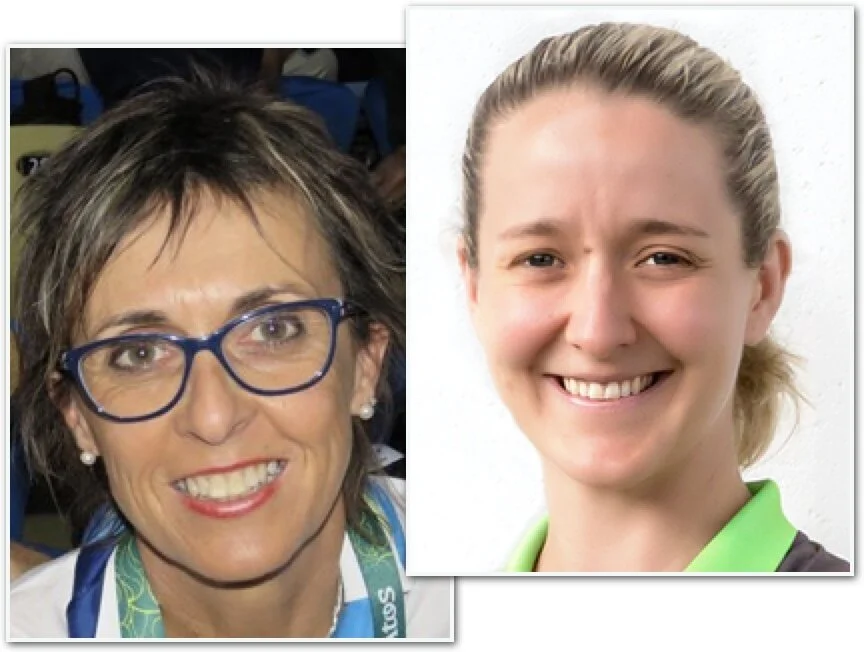
Episode 25 - Minka Woolley & Aleisha Neumann
29 September 2020 · Steve Prior
Listen to this episode ·
Subscribe in Apple Podcasts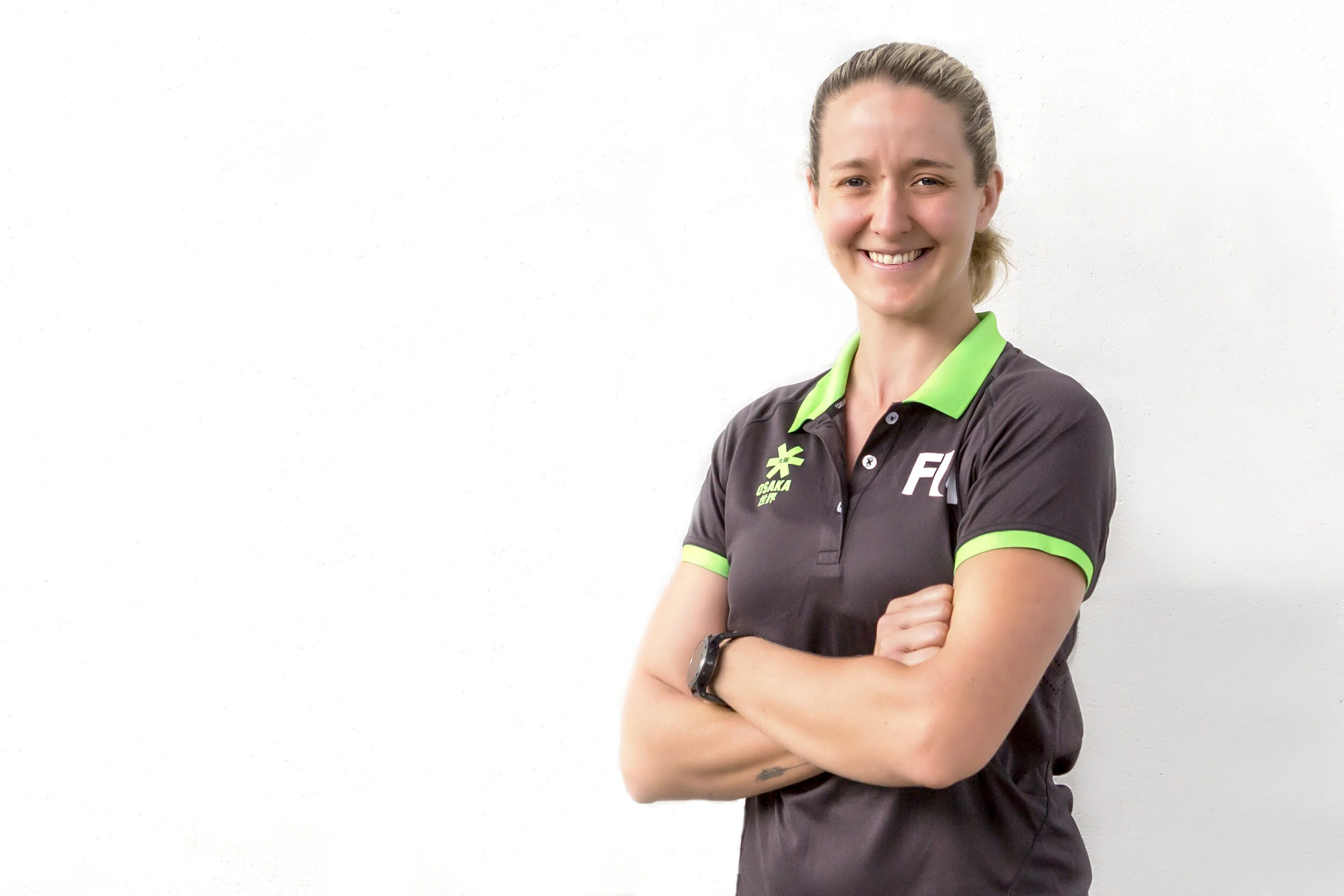
Jim Unkles hosts Tasmania’s Minka Woolley, the Umpire Manager for Tokyo, her fifth Olympic event and Queensland’s Aleisha Neumann, officiating at her first games in Tokyo.
Back in episode 5, Soph Sheahan hosted Camberwell’s Jim Unkles, Sherie Patterson and Vanessa Ponza to discuss all things umpiring. In this episode Jim takes the hosting chair to present legendary Australian Umpire and Umpire Manager Minka Woolley and Queensland international umpire Aleisha Neumann.
Minka Woolley is the Umpire Manager for Tokyo, her fifth Olympic event while Aleisha Neumann will be officiating at her first games in Tokyo.
You’ll hear about their journey into umpiring, their memories of Olympic selection and get an insight into the onerous physical and mental preparation required by a modern official at this level.
Just this week Minka received an Award of Merit from Hockey Australia with awards committee member Peri Buckley saying
“Minka Woolley is highly respected at all levels of hockey for her honest, dedicated, compassionate and professional approach not only as an Umpires Manager but also for her overall coaching, encouragement and development of umpires.”
Peri continues
“She is an outstanding role model for the sport.”
Congratulations Minka!
Aleisha obtained her FIH international badge in 2014 and Tokyo will be her first games. Aleisha also plays hockey at AHL level with the Brisbane Blaze and has had to choose to concentrate on her umpiring.
Thanks for both for your time and best of luck in Tokyo.
Episode transcript
⚠️ Automated transcript
This transcript was generated automatically from the episode audio and lightly corrected. It may still contain transcription errors, and individual speakers are not labelled.
Back in episode 5, Soph Sheahan hosted Camberwell’s Jim Unkles, Sherie Patterson and Vanessa Ponza to discuss all things umpiring. In this episode, Jim takes over the hosting chair to present legendary Australian umpire and tournament umpire manager Minka Woolley, and Queensland’s international umpire Aleisha Neumann. Welcome to the Camberwell Hockey Podcast. Minka has been appointed the umpire manager for Tokyo, her fifth Olympics. And just this week, Minka received an award of merit from Hockey Australia, with awards committee member Peri Buckley saying, quote, “Minka Woolley is highly respected at all levels of hockey for her honest, dedicated, compassionate and professional approach, not only as an umpire manager, but also for her overall coaching, encouragement and development of umpires.” Peri continues, quote, “she is an outstanding role model for the sport.” Congratulations, Minka. Aleisha obtained her FIH international badge in 2014, and Tokyo will be her first Games. Aleisha also plays hockey at AHL level with the Brisbane Blaze and had to choose to concentrate on her umpiring.
Thanks both for your time and best of luck in Tokyo. Here’s Jim. So it’s my absolute pleasure today to welcome two absolute dynamite females in the Hockey Australia officiating panels to the Camberwell Hockey Podcast. Firstly, Minka Woolley from Devonport in Tasmania. Welcome. Thank you. And Aleisha Neumann from Queensland, one of our Hockey Australia umpires. Thanks for joining us. No worries. How are you going?
Very well, thanks. So today’s a bit of a different flavour. This is part two of our officiating podcast for the Camberwell club. And we thought it’d be nice to chat to a couple of Australian officials that have already been selected for Tokyo 2020 and both sit within their respective Pro League panels. And we want to have a quick discussion about how their life has been impacted with the delay in the Olympic cycle, and how they’ve got to their levels in both umpiring and umpire managing.
So as a quick introduction, Minka Woolley got her Australia badge back in 1991. She umpired AHL from its inception in 1993, a quick rise to her international badge in 1995. From there, she umpired at the 2004 and 2008 Olympics. She’s been an umpire manager at London 2012, Rio 2016, and Tokyo 2020 will make her fifth Olympics overall, as well as a couple of Commonwealth Games as an umpire manager in Glasgow and in Gold Coast. She was the umpire manager of the Men’s World Cup.
She’s currently an FIH Pro League umpire manager and a life member of Hockey Tasmania. That is an absolute mouthful, Minka. How do you have time for anything else in your life? Well, I hate to say it, but this has happened over a long time. So, yeah, hockey’s been incredibly good to me over the years, but I’ve had a lot of fun along the way, that’s for sure. And when you sort of lay it out like that, I think, wow, it’s been a long time, but it doesn’t feel like that. So it’s been good fun. Yeah. That’s the beauty of hockey, though, is the fact that it just becomes a passion that you don’t even have to think about.
It just becomes something that you do. Well, look, it’s been a part of my life since I was in primary school. And so it’s just continued this whole… you know, played seriously for a long time. And then the umpiring sort of evolved from that, and then umpire managing after that. And really, if I think about why, it’s not really the job and keeping it going. It’s still that contact with people, which I’ve always enjoyed from playing. So sometimes when I think about what on earth am I doing this for, it’s the people, definitely. And so I’ve certainly had a wonderful journey, that’s for sure. And how did you start in umpiring?
Well, back in the day, we used to read the newspaper on a Friday, and if your name was put down, you had to turn up. Nobody asked you whether you wanted to umpire. You just read your name in the paper. And somehow you learnt by osmosis, I think. You just came down and nobody ever said this is how you umpire. You bought a whistle and you just umpired. That was mostly schoolgirls when I was playing at that level. And then it just went from there.
I had a couple of people who were encouraging me, but no feedback and mentoring like you have these days. It was really just, oh, well, you can umpire this level now. And, oh, okay, we’re going to give you your state B badge and you can umpire this level. And so there was no plan like there is now. It just sort of seemed to happen. And certainly I never considered that umpiring was going to be any sort of career. Hockey was my focus and my passion. Umpiring was just something I really enjoyed, but not where my focus was.
Where I think today it’s changed a bit. I think umpires can start their career as an umpire and stay as an umpire without having to be a player as well. So it’s a bit different for sure. Which leads very nicely into introducing Aleisha, who is currently an FIH Pro League umpire. This will be her first Olympic expedition, to Tokyo. She’s a member of the umpire panel at Gold Coast 2018, the London World Cup in 2018 as well, the Junior World Cup in South America in 2016, after gaining her Australia badge in 2012. She’s been umpiring AHL since 2013, and made her international debut in 2014.
Aleisha, it’s well documented as well that you are a Hockey One player for the Brisbane Blaze. Obviously, being so involved with both playing and umpiring, how did you get started in hockey, and how did you find yourself both playing and umpiring at the elite level? Well, not too dissimilar to Minka, to be honest. At a club level, we needed volunteers to fill in the junior fixtures each weekend, and my parents kind of encouraged me to have a go to learn the rules better as a player, but also to give back to the club and the local community.
So I did some junior levels. Like, when I was playing under 13s or 16s, I was umpiring the age group below. Similarly, when the Toowoomba teams travelled to a state championship, they needed to take an umpire to fulfil those duties. So I would travel with the age group lower than I was playing. And, yeah, one day I got an email from Hockey Australia saying, hey, do you want to come along to a national under-15 tournament? So that was kind of the first time that I thought about representing my state, at that stage as an umpire, and jumped through a few age groups.
I was still playing the age group older and umpiring the age group underneath, and got to a point where the question was put to me: hey, you can go to the Australian Hockey League in the Northern Territory team as a player, or you can come as an umpire. And that was the first time I really had to make a decision and think about which one I’d prefer to do. I chose umpiring, and the rest, as they say, is history. I took the opportunity and within six months I was in South Africa with the Australian team. And, yeah, a few years later, some pretty big international tournaments. It’s such an incredible journey as well. It’s also just the beginning, which is the beautiful part.
And for those out there that don’t know, there is a retirement age of officiating at 47 years old, which is, I would say, considerably higher than as a player. So, I mean, all credit out there if there is a 47-year-old international player. But there’s certainly a couple of incredible umpires, both male and female, in their 40s that can have a continued life in hockey beyond their playing years. So, I mean, I’m also very biased, so I think you made a great choice there. Yeah, it was getting back into the— sorry, going back into the playing group, I didn’t really expect any of that to fall out from last year. I went to our state championships just to have fun. I played and umpired, so I think I did seven games within two and a half days as a player and/or umpire. And, yeah, all of a sudden they were like, hey, you’re in this Blaze squad, and I sort of was like, is that a printing error?
Did you accidentally include that? And, yeah, the fallout from there meant that I got an opportunity to play again at a national level, which was a really good enjoyment. Absolutely. But I’m guessing that feeds quite nicely one to the other as well. And I know that’s something that we quite often talk about in our Victorian and our Australian umpiring groups: if you do have the ability to play, it does feed off one another. How do you find being both an elite player and an umpire? Do you think the two roles help each other, or can they also hinder your performance?
Oh, I think they very much help. When you understand the player’s intent and what they’re trying to achieve and the purpose of what they’re doing, it allows you to make better decisions, to play advantage or to give a quick free hit. You can predict where the ball might end up, so you can be in a better position earlier on the pitch to make sure that you can see what’s coming. And I definitely think it helps at a club level.
It probably is a hindrance as a player, to be a bit frustrated at times with errors that potentially occur on the field, where you’re like, if you just stood over there, you’d see it better. But, no, definitely at that elite level, it’s a real advantage. I really agree with what Aleisha was saying. I think you don’t have to be a player to be a good umpire, but I think our best umpires usually are people who have come through the system, that really understand the game and, as Aleisha said, can predict where they need to be and have a feel for what players want.
And there’s a difference between being a player’s umpire, I think, and somebody who just goes and is not able to step up, because I think there’s a difference there. You have to be able to step up and step out of that playing part to be an umpire. But I think the best people do make that transition, and I think Aleisha’s a great example of that. And when she had that chance last year, I really encouraged her to take the playing chance, because your playing years are limited, I think, and she was already well established as an umpire.
It wasn’t going to impact on her ability to do international work, and I think it’s fantastic for her to be able to have that opportunity. I couldn’t agree more. I’m also very jealous, but that’s a different story. I don’t think my body could handle playing at a proper level, so that’s fine. I’m happy in the twos and threes down at Camberwell, that’s for sure. Now, Minka, talk about your role as an umpire manager. It might come as a surprise to some of our listeners to hear these words, but can you talk about what it entails and how you see your role as part of the third team?
Look, it’s interesting. When I first started in the role, I really had not much of an idea, but it’s definitely not as much fun as being part of the umpiring team, that’s for sure. There’s a whole lot more work that goes into it. Pre-tournament, you know, lots of admin work and things like that. But I guess our role is really to support, to ensure our umpires get to a tournament, making sure they’re well prepared in terms of not just physically, but mentally, and also in terms of game briefing, game strategy, rules, etc. So there’s a lot of pre-tournament work that goes on. Once you’re at the tournament, we are certainly the link between the coaches and the teams, to a degree, and the umpires. And that can be a buffer for some of the stuff that comes from coaches.
You know, I really think it’s a very different role now. It’s much more about support and mentoring. Like, when Aleisha gets to Tokyo next year, our expectation is that she’s got to be an Olympic umpire. We can’t actually do much in terms of changing that during a tournament, but we can certainly reinforce things that are going well, or get them to have a look at other things that may be on video clips that could be a point of difference. I think one of the big things that we have to do as umpire managers at this top level is to manage expectations. And if anything’s going to bring a team down in the end, it’s the expectations.
Everything’s all rosy up until you get to the final section. And when you’ve got the best 14 umpires in the world who are so used to umpiring finals, it’s like having the brightest 14 kids in the school in one class. There’s still going to be a number one brightest person and a number 14 brightest person in that class. Doesn’t mean they’re not super bright. They’re just still not as bright as the brightest. And I think managing those expectations is the toughest role we have. And I’ll just give you one example.
After Rio, we had post-tournament discussions with all the umpires, and there were a couple of new umpires there who said they were really pleased with what they got to. They didn’t get to the quarterfinals, but they were pleased with the games that they got. But when they go to Tokyo next time, their aim is to do a semifinal. And I just remember saying, whoa, okay, you need to manage that, because there’s no guarantee that you’ll be getting anything come Tokyo. And that very person who had that conversation with me isn’t even going to Tokyo.
So I just really would encourage those umpires to treat every tournament as their first, and treat it as your last, because in this current environment, who knows what. So managing those expectations, I think, is a big role that we play, and also making sure that all those little things are looked after so that umpires can get on and do what they need to do. And I’m very lucky myself, in the fact that we got to work together for the first time last year at the under-21s up in Lisbon. And the way that you’ve crafted that conversation, I can actually start to reflect on some of those moments in team meetings last year and how you’ve approached that. And it makes a lot of sense when you talk about it like that. But from an umpiring point of view, it is absolutely right. There is that need, there is that desire to, just like the players, be in the final-day games or the final couple of days’ games. And it can rip a team apart, the appointments on the last day. And some umpire managers will just drop the appointments on the table, or say they’re online, and run away, and you don’t see them until the next day.
But I felt the way that was dealt with last year, which was all of us sitting in a room and congratulating one another on the games, I felt that was a really nice way to do it. And also the managing of expectations was, I felt, done really nicely. So it’s always interesting to hear the science behind what your thoughts were at the time as well. I’m not sure there’s much of a science, but I suppose having been a teacher, and you’re managing students and personalities… and I certainly don’t get it right all the time, don’t think like that. But one of the things that I would always encourage umpires to do is that, in that environment where you’re announcing finals umpires, you celebrate and you be clapping when it’s somebody else’s turn. So that when it’s your turn, make sure that the room is clapping for you. And I’ve certainly been in teams of umpires, and certainly with an umpire manager, with umpires when nobody was happy for them to get a final, even though they were perhaps the best person to do it. But, you know, it’s the way that they had conducted themselves perhaps previously.
People remember that. So I just think you need to be remembered. Look after those umpires on the way up so that when you get there, they’re all cheering for you as well. Now, a key focus of today’s podcast is looking into Tokyo 2021, and hopefully an event which will bring the world together after a rather tumultuous 2020 to celebrate unity through the movement of sport. Both Aleisha and Minka are part of Australia’s officials contingent that have been appointed to next year’s Olympic Games. With Aleisha in a role, of course, as an umpire, and Minka as an umpire manager for the women’s tournament, as well as Tammy Stanley from WA, who has been appointed as the tournament director for the women’s competition. Josh Burt from Melbourne has been appointed as a technical official. And Adam Kearns, another Queenslander, has been appointed as one of the men’s umpires. As part of every Olympic preparation, the local hosting staff and the FIH aim to produce a high-quality spectacle to host a test event, usually a year or two out from the Olympics, to make sure the facility, the staff and all the athletes and everything can run smoothly.
Both of you were at the test event in your respective roles last year. Aleisha, how did the tournament go, and what do you foresee some of the exciting moments or the challenges to be next year as a result of the test event? I think it went quite well. We had a variety of nationalities represented in the teams that came, so it made for some really great hockey. And a few nations who’ve been sort of top 10 but never towards the top five brought some really high-quality hockey and were really challenging the likes of Australia and China that are often in that top five. So in regards to the hockey quality, it was really exciting to see. It was quite warm at times. As a Queenslander, though, I think I’m more acclimatised than others potentially to deal with that heat. So it wasn’t too much of an issue. And, yeah, I don’t think that there are major challenges that I see coming out of that test event.
The food was great, that we were able to get a hold of sort of each night. Transport on the ground… um, everything in Japan runs on time and is perfectly organised, you know, in a routine, so there was never any challenges there with the bus being late. In fact, the challenge was us being late down to the bus. The pitches were a little bit apart, but, you know, it’s a two-minute walk, so it’s a good time to have a conversation with your colleague as you’re walking over to prepare for the game. And the stand, and the video umpiring setup that they had, was really good. We were in control of our own screens as a video umpire. We could see the pitch, which also helps to sort of keep yourself within the game.
And, yeah, it was at that time really exciting to see how it was going to look in 10 months’ time, with extra stands and people and, you know, all those sorts of things. Absolutely. And what kind of temperature is it looking like at that time of the year in Tokyo? I’ve heard it’s going to be quite toasty. Yeah, I think for Aussies at least you could compare it to like Cairns-type climate. It was quite humid, mid-30s. They ran a triathlon test event when we were there, and I think they shortened all the distances and still had athletes not finishing. So your world-class triathletes still not finishing. There was talk about the marathon starting at 11pm, 12pm at night to have a condition where it was able to be run in a little bit cooler conditions.
But in saying that, they had fans on the table, cold water was always on hand, air conditioning in the change rooms and facilities. So it’s just a bit about managing your hydration before you get out there, and then making sure that you’re being smart during your breaks as well. And particularly with the heat challenges, Minka, how do you imagine your role may change in respect of managing your team? I think a lot of the preparation for them to manage the heat will happen beforehand.
You know, certainly hydrating and learning how to really hydrate well will be something that we’ll be working with them, but well beforehand. And most of these umpires have experienced tournaments in places like Argentina or India, or, you know, where it’s very, very warm, and so it’s going to be no different, I don’t think, to that. They will have to manage that. I think one of the things that we might have to manage, which probably Aleisha won’t like as much, is that we’re going to have to say to our umpires that they’re really going to have to watch what they do on their free days. When I was umpiring in Athens, we had one day on, one day off, and a co-umpire and I, we used to just go to every event we could. We went shopping, we did absolutely every touristy thing we could possibly do, and then the next day we’re back to umpiring again. And of course sometimes you weren’t umpiring, you’re just reserving, and so there were breaks, and so we just went all out. And I think times have changed, and I don’t think our umpires can do that. Now, having said that, I really want them to have the experience.
There’s no point going to an Olympics if you don’t go to some events and you just don’t experience what it is. So finding that balance will be part of our role for sure. And, look, we’ll have ice vests and the aircon available and, you know, lots of things. I think for me one of the issues, certainly from the test event, was the fitness facilities available in the hotel. Everything is on a pay basis. And Tokyo is very, very expensive. So how we sort that out beforehand to ensure that people have access to good fitness facilities to maintain that will be part of our, I guess, our brief before we get there, for sure.
Absolutely. And particularly, I guess it’s even more important, with only a couple of games being scheduled per day and a panel of 14 umpires, being able to ensure that they can keep that fitness ticking over and keep that momentum will be really important, not only from a mental point of view, but from that physical preparation point of view. Obviously, being there quite recently, Minka, what are you looking forward to about Tokyo now? I think I’m looking forward to just the whole Olympic experience. Tokyo is going to turn it on very, very differently to Rio, to anyone else, I’m sure. They’re going to make sure that this is going to be special. So things like the opening ceremony will be amazing, I’m sure.
You know, I just love the good hockey and the good sport you see at these events, so I’m really looking forward to that. I think that we’ve got a fabulous team of umpires in terms of both men and women and the umpire managers. We all get on very, very well, so I’m really hoping it’s going to be a great team, a real sense of team, not just the men and the women, but a real sense of team. Yeah, I just, you know, I’m realistic about it. It won’t all be smooth riding, but I just think it’s hard to explain what an Olympics is unless you’ve been to one, but it is just an amazing event. And I just hope Aleisha just gets to immerse herself in the whole thing and umpire fabulously well, but enjoy everything that it involves, for sure.
Absolutely. And, Aleisha, it’s your first Olympic campaign. What are you looking forward to? How are you feeling about it? Oh, you know, sort of sitting here and listening to Minka try and describe it just makes the anticipation and excitement… you know, just, yeah, listening to that right now, it’s like, oh, I want to be there now and be experiencing it. So all those big multi-sport events, I think, have something special about them. As Minka said, the ceremonies at the start and end. We didn’t get tickets to the Commonwealth Games opening ceremony, which was quite disappointing. But to be able to go to the closing ceremony, to be a part of that multi-sport aspect and see the athletes celebrating and the atmosphere that was created, was really unique. So really excited to be involved with that, to be able to get out and see some other high-class international sports events that I haven’t seen before.
So, yeah, athletics and gymnastics and things, anything that you can sort of get to is going to be the best of the best. So sport lovers will love whatever it is that they get to see. But above those two, just hanging out and doing what we do with the friends who’ve become family. We’ve got really close connections within the females group particularly, and starting to get those closer connections with the men through Pro League and being at more tournaments together. And, you know, some of these people are my best friends and I haven’t seen them now for 12 months, 18 months. And to be able to get together and hang out and do what we do with such good friends is half of the enjoyment, other than being on the pitch and running around.
So, yeah, a whole variety of things that I’m excited for, but, yeah, I couldn’t really put one above the other. And how did it feel when you found out that you were appointed? Yeah, pretty surreal. We’d come home from the test event, and Adam and I flew on the same flight because we’re obviously both from Brisbane, and we were talking about things. And I think maybe two or three days later, I woke up to take the dog for a walk and I had a text message on my phone from Adam saying, “email?” question mark. And before I had even done anything else, I knew exactly what email he was talking about and what that sort of meant.
So I got the goosebumps and was quickly trying to log into my email account, and then to see, you know, the sender sitting there is FIH and “congratulations” in the subject line. And I think it was a Tuesday morning. I got to work and was just buzzing. But on the hindsight of that, the bottom line in the email was, this is not public, please don’t tell anyone yet. So whilst you’re super excited and you’re happy, you also can’t celebrate that too publicly.
Lots of messages backwards and forwards within the 30-odd people that were within the email. But, yeah, I had to wait. Maybe, I think it was another 24 or 48 hours, before FIH posted it to the world. It would have been incredibly exciting.
Certainly something— even just hearing about it, it fills the fire and makes it something that I will obviously want to strive for in the future, but that would be absolutely incredible. And Minka, can you remember back to prior to 2004, can you remember being appointed to your first Olympics? Absolutely. We were in New Zealand at the Olympic qualifier and we had three Australians there. They’d already chosen half the umpires, so out of the qualifiers there were only going to be five, and there were three Australians there, all who were ranked… or two of them, they were ranked higher than I, and so I knew I wasn’t going anywhere.
And then I had a good tournament. It was great, and on the last night the two umpire managers came into our room with my roomie, Sarah, from New Zealand. They said, “Sarah, you can pack your bags. You’re going to Athens.” And I was just thrilled for her because, you know, this is fantastic. And I reckon it was about five minutes later before Jan Hadfield and Peter Von Reith, who were the umpire managers there, and they said, “and Minka, you can pack your bags too.” And it was unbelievable because I was at that stage— I was old.
This was 2004. I was 43 at that time. I was 42 when I found out, 43 by the time I got to Athens. So I was very old for my first Olympics, and I will never forget that. And I rang home, rang my parents who had always been a support, and by the time I got home the next morning, 10 o’clock, back to school, my parents had rung the world, because I had three newspapers ring me, I had the TV ring me, I had the radio ring me, and I was sort of like— my five minutes of fame as soon as I got home.
So, you know, it was an incredible highlight. And I think for every umpire, that first notification is amazing. And everyone else since, but, you know, that one is something very special. That’s torture, to make you wait an extra five minutes in the same room as someone. Well, I wasn’t expecting it either, so it wasn’t really too bad. We were celebrating with Sarah and, you know… I can totally imagine Jan just leaving you hanging and turning around. I can picture the moment in my head. Yeah, it was incredibly special, that’s for sure.
It’s funny, Jim, that you talk about appointments, because this time around, you know, again, I certainly wasn’t expecting this. I went to Rio and I would have thought it was somebody else’s turn, but we were appointed well before the umpires. Again, we couldn’t tell anybody, so of course I told my family. And then about three or four weeks later, we were told we were unappointed.
And that was a bit of a challenge as well, because someone at FIH had perhaps— I don’t know, there’d been some review on process. So we were unappointed. So we had to wait until the day before we went to the Tokyo test event. We still didn’t know. So we’d been waiting six weeks to hear whether we were going or whether we were not going. And in the end, the same four were appointed. But that sort of took the edge off a little bit, I can tell you, to get appointed and then get unappointed.
So I’m going to enjoy this, that’s for sure. Yeah, absolutely. It makes it even sweeter, that’s for sure. And now back to you, Aleisha. What does your preparation look like leading into next year? At this stage, it’s sort of going through the motions and playing club hockey, umpiring club hockey. I train on two mornings a week at the Queensland Academy of Sport in the gym with the high-performance crew. And then we have our on-field conditioning and skills on two evenings a week. So four sessions with that group.
And then, yeah, we just roll through the end of the year. We’ll see what preseason looks like. But probably about 10 to 12 weeks out, I’ll narrow the focus a little bit more, make sure that I really look after the body, any sort of niggling injuries that pop up get fixed and treated and maintained, and make sure that the footwork’s there, agility’s there, mindset’s there. So I’m umpiring some club hockey. We’ll probably do some Zooms or some online video chats with the group before we get there.
I don’t know what Minka’s got planned, but normally some form of video preparation discussions, to make sure that when we arrive we’re all sort of interpreting that grey area of hockey in a similar shade, and not, you know, one person looking at it and thinking a different thing to another, so that when we get on the pitch, we’re ready to go. So a little bit physical, a little bit mental. I’ll be working through to the day I fly out, at school, but I’ve got a super supportive boss and network at Marsden, and, yeah, they’re so proud of having someone on staff doing what I do.
So any sort of tournaments or matches that pop up, I’m sure I’ll be able to get to those and get as much game prep as I can. And Minka, what does preparation look like from an umpire-managing point of view? From an umpire-managing point of view, well, certainly if all the umpires had that attitude and ability that Aleisha has in terms of fitness and that preparation, my job would be very easy. It’s not quite the same with everyone. They don’t necessarily have the knowledge and understanding that Aleisha has about training, or perhaps access to the same facilities. So we have to sort of try and work with all of those umpires in terms of making sure their fitness is at a level, their mental preparation is at a level. Interestingly enough, I have to make sure that I’m fit as well. It’s a very long tournament and it’s a very, very tiring tournament, and I personally work very, very hard on my own fitness to make sure that, in that role-modelling type thing, you know, the expectation that I have on the team, I have the same expectation on myself. So that’s really important for me, that people understand that as well.
You know, in a normal tournament we have a lead-in that we can plan. At the moment it’s very difficult to know what sort of preparation we will have with our team. I was expecting that they would all have plenty of Pro League games; I’m not sure that’s going to be the case. So preparation in terms of teams and games umpired will be quite different, so how umpires get to manage that will be something that we have to work on. And some umpires may come with very few international games under their belts from 2021, at the start of 2021, so it’s a bit of an unknown at the moment. But certainly, while umpires have to be looking after their physical, I think the mental side of things is going to be the really big issue. We have to make sure that people are mentally absolutely firing, because this is a different world and these are different times, so we can’t apply the same-same-same that we have in the past. And those different challenges as well, I guess, from a glass-half-full approach, have the ability to make your team of umpires stronger as well. Because if you can get through the shock of having the biggest event in the world postponed for a year, and everything that you’ve been working towards to be postponed for a year, if you can see it from the glass-half-full approach, hopefully they come out stronger and actually more rearing to go. But I guess at the same time, you’ve got to make sure that you are not allowing them to overfill the cup, and that those emotions are in check, that they can still perform at the highest level.
Look, I totally agree. You know, I think if I look at this break that umpires have had, this is probably the first break that many have had for years. And I don’t think that’s necessarily a bad thing. I think it’s a chance to regrow that real hunger for what you really want to do, and to recognise that you’ve really got to get fitter and prepare well. I think we can look at this really quite positively, that this has been a chance to regroup, refresh and really get going. And I think when we get to Tokyo— and I hope it’s a when, not an if— when we get to Tokyo, I think the team will be amazing because they will know how lucky they are to be there. We’ll all know how lucky we are to be there. And one thing I don’t think that we will change, though, is that teams will be expecting us to be right on top of our game. There’ll be no leeway for us in that; we have to be on top of our game. So there can be no excuses. And so, you know, I’m certainly looking at it from a glass-half-full. I think this break will be good for some of our umpires, and we will be coming there really fresh and looking forward to it. Absolutely.
I haven’t picked up a whistle since Hockey One in November. It’s incredible. I feel amazed. I can’t wait to get back out there. Unlike you— not like these other states that are continuing these local competitions. At the Olympics, is there anything that you would just love to see? Like, if you get the opportunity to structure your downtime well, is there anything that you’d be really wanting to see, Aleisha? Look, to be honest, I’m a lover of all sports.
So anything that I could get to that’s a high-level competition, I would love to see. There’s the new sports of surfing and rock climbing that would be, you know, fascinating to go and see. But if it’s gymnastics, I don’t care. It’s, you know, the best of the best in the world. So whatever you see is going to be done at a really high level. And the atmosphere and the entertainment aspect— getting out into the athletics would be really good. Swimming probably is a little lower on my list.
I don’t think it’s quite as exciting, I suppose, as some of the other events. But, yeah, nothing in particular that I would say I’d love to see, that person or that thing. The one athlete, if she goes, that I really wanted to see at the Gold Coast and didn’t, would be Tia-Clair Toomey, who’s an Australian weightlifter and CrossFit champion. So she’s probably the one person in the group that I’d love to see do her thing, because she’s got some incredible mental capacity and mindset there that’s quite inspirational. But anything and everything that’s available would be really fun, I think. I can actually completely vouch for the new sports. In Buenos Aires for the Youth Olympics, the closest cluster of sports to our hotel was the Urban Park.
We watched some of the sport climbing and the BMX, and in person it was absolutely incredible. And these were under-18 athletes, so I can only imagine what the open athletes would be able to achieve. And Minka, I guess your tournament looks a little bit different as well, in the fact that if there’s going to be morning and night matches and constant videos to actually go through— if there is downtime at all, would you just be spending it sleeping, or exploring, or would you be wanting to get to some events as well? There’s time to sleep when you come home. No, definitely there’s a lot less time for us, but the good thing is that usually the umpiring and officials team get about five VIP passes, and what that means is that we share those around all the officials, and you can get into any event, into the VIP lounge, and that means you get to sit in the best seats in the stadium, and for free. So, you know, you can go anywhere, and certainly, as Aleisha has indicated, you know, whatever we’re close to— and I’m not sure what will be close to us at this stage, but, you know, make the most of whatever you can see. And sometimes those events that you think are not going to be amazing turn out to be quite amazing. And, Aleisha, you said about the swimming not being so exciting— that’s the one I’ve really, really enjoyed. It’s the hardest one to get into, but, you know, it’s sort of short and sharp, and it’s always very, very exciting, as is the athletics. If you get to go to the athletics and see— certainly we saw Usain Bolt run, and, you know, people like that— it’s just like, wow, we might have been way up in the clouds watching, but still, to be there and enjoy that, it’s something that you’ll take with you. So anything and everything, and certainly try and make the most of any chances we get, for sure. Fingers crossed. I think I said that with the swimming— it’s so overexposed in what gets broadcast at home. So when you watch the Olympics at home, you watch so much swimming, so to see some of those sports that don’t necessarily get the airtime at home would be quite cool. Absolutely. To any potential broadcasters listening out there, from our Australian broadcasting teams: please stop showing the swimming.
Show us the highlights. It’s fine. We’ll get over it. Okay, back into… Yeah, yeah, yeah. You just lost all this swimming thing. You know, it’s a hockey podcast. We’ve got to look after what’s nearest and dearest to us.
So fitness is a key part of modern hockey, and very much so for the modern umpire. And it might come as a surprise to some listeners out there, but there are quite regimented fitness tests prior to attending any tournaments that we have to run: both the yo-yo intermittent recovery test and a 45-metre sprint. And as you progress through the levels, the expectations increase to the international level, and then once you move through the international panels, the level you need to achieve and the time for a 45-metre sprint decreases.
Aleisha, how do you find the current testing standards? The yo-yo test has only been in for a couple of years compared to the beep test. And do you think they’re appropriate for the modern game?
A hundred percent. Prior to the yo-yo, we actually did a 12-minute time trial. So just pretty much run as many laps of a 400-metre track or a field or a flat running path, as far as you can in 12 minutes, which isn’t really reflective of how we umpire. We don’t run consistently for 12 minutes with no breaks at one speed and then get an extended rest. We’re more up and down the pitch, where you’re standing still for five to ten seconds and then you’re off again and standing still. So it’s much more reflective of a yo-yo-style test, I think. In regards to the standards, it’s a good topic that we’ve been discussing closely. We ran a yo-yo test a week ago at the Queensland Academy of Sport training, and we had three athletes pass what the FIH said is the minimum standard for an elite women’s umpire. So in a high-performance team environment, you’ve only got three players that are meeting those standards. So potentially a little bit high, which might lead to some lack of validity in results. But I think it’s definitely something that we have to have. The players are quicker, they’re throwing more overheads, the game is speeding up with quarters and self-pass and all of those sorts of things.
So if we’re not also increasing our own standards to make sure we’re doing the best we can, then we’re just letting the team down and the game down, and it will impact the quality of hockey that we’re able to present. Considering everything that happens out there in front of you, I guess what you do at home and what you do with your fitness, that’s one of the major things that you can control yourself. And so I guess everything will pay off— the hard work that you do put in. Yeah, and, you know, anyone who’s done anything that’s put them into some level of fatigue has probably experienced slower mental processing after that.
So, you know, if you’re running up and down the field and you’ve got a split second to make a decision, the fitter you can be physically, the less that impacts on your mental conditions of processing what’s happening in front of you. And Minka, you’re a huge advocate for fitness— and we’ve already heard it talking today— and for speed in umpires in training. Was this a key feature of your training when you were an elite umpire? Yeah, I would say definitely, because I was so much older— not than everybody, but quite a bit older. I was certainly the mother of the team rather than a sister of the team. I needed to make sure that I gave… there was no excuse, that my age wasn’t going to be an excuse for not being at a fitness level.
In those days, FIH— the older you got, the slower you’re allowed to get on the beep test. Well, I never used that myself, because I thought, you know, I really want to make sure that my fitness is as good as anybody younger than me in the team. So that has always been a bit of my bandwagon, and certainly anybody, any team that I’ve been umpire manager with, would know that, that I really expect a high level of fitness. And I don’t expect— I think it’s the lack of understanding about how to get fit that is the real issue, you know, the sort of stuff that Aleisha’s talking about. The high-intensity training now is what hockey’s about.
It’s not about running five kilometres at a nice, even pace and, you know, feeling good at the end. It’s really about that horrible, hurty stuff that you don’t feel good at the end of, that really builds that hockey fitness. So, yes, always been part of my umpire preparation, and still is part of my umpire manager preparation. It’s a bit harder now that I’m older, but certainly definitely part of it. And, you know, one of the things I reinforce to Pro League umpires, and anyone that’s umpiring where you come on TV— as an umpire manager sitting at home watching these games, which is where we watch our Pro League games from, I’m getting constant communication from all over the world from people writing. And the biggest messages I get would be, “that umpire looks unfit,” “that umpire looks overweight.” If they make a mistake, they’re going to blame their fitness, they’re going to blame that they’re overweight, they’re going to blame that they’re not in position and therefore blame their fitness.
So I just say to umpires, be as fit as you can so nobody has an excuse as to why you might be making an incorrect decision. And I think we have to understand that TV has exposed some people a little more than others perhaps. And to work with that— a key part of officiating at the highest level is our mental preparedness and our psychology in sport, and not only being able to perform under pressure but to communicate with the players and be able to elicit the best out of the working group and to actually produce the best product. Aleisha, how do you prepare for a match to ensure you’re mentally and physically switched on? At the moment, I’m actually starting some work with the QAS sports psychologist, just to sort of hone in on those things. Not that I’ve ever really found a massive issue or something that’s really thrown me, but just to work through a few strategies. I think a really good conversation with the person you’re umpiring with before the match is really important, just to make sure that you can support them the best that you can in areas where they may feel they need it, and likewise when you might have an area of the field or an interpretation or a decision that just doesn’t feel 100% at that moment, you can let them know so that they can support you through that as well. So a good chat in the morning of the game. In the past, we used to have a 20-minute discussion. We’d have the same discussion with the same questions and the same things going on.
We’ve now, I think, become much more comfortable with that being informal, over a coffee just before the game, and having an understanding of what’s expected, which is a reflection of the pre-tournament preparation that we’re doing now— it eliminates the need for that big, long discussion. Physically, it’s just a normal warm-up routine that you’d have as a player: going for a jog, stretch, make sure you hit some high-speed intervals before you walk out on the pitch, so that if on pushback someone throws a 60-metre overhead, or there’s a breakaway and a turnover, you’re ready to go and you’re not using the first five minutes of the game to get yourself up and going. Couldn’t agree more. And Minka, how do you see your role as an umpire manager to help your team deal with the stresses of elite sport and performing at the highest level?
Look, I think, you know, what Aleisha’s describing there is really important, is that we recognise that every umpire has a different pre-game program, and it’s not up to us to prescribe what that pre-game preparation might look like, because, you know, some people like listening to music, some people like going for a 20-mile run. You know, whatever they do that best suits them. So I think that pre-game stuff is really what the umpires want. I think our role is to keep, to a degree in those hot-spot times, the coaches away from our umpires.
I’m all for coaches discussing and chatting with the umpires at an appropriate time. An appropriate time is not during the game, and is not just at the end of the game, because everybody is, you know, hot-spotting at that time and emotions are high, clarity is not there for either the umpires or the coaches necessarily. So I think, you know, if we can certainly try and remove those stresses, then that’s something to assist our umpires. But, you know, basically once they’re there, they’ve got to be their own managers of that.
And I guess, as I said earlier on, managing expectations and all those things is something that is a continuous thing for us to do— managing, you know, what do you expect? What do you want from this tournament? Is that realistic? Are you going to get it?
And, you know, I use the example of Laurine Delforge from Rio. I had never seen her umpire before when I went to Rio as an umpire manager. She was 26 at the time. She was the baby of the team. She only got her international badge when she was 23. So it was only three years prior. And so there was no expectation on my part as to how she would or wouldn’t go. And then she ends up doing the final. Now, that really impacted our team big time at that stage, because, you know, people’s expectations weren’t that she was going to get there.
But she was— she umpired amazingly well. And so I always say to my team beforehand, the first two games count. And I believe that the first two games count. If you’re going to ease your way into a tournament, then you might not find yourself at the end of the tournament umpiring the big games. So I try and be as honest and upfront as possible, but that doesn’t always work. And particularly these days, where at the Olympics there’s no classification games. It is a knockout from the first opportunity, to try and make it more exciting for the program as well. It does heighten that intensity of being able to perform right from the word go.
So I guess it’s harder to make sure that you’re ready for that in all capabilities— will be all the more important. I think Pro League has done a lot to prepare the top level for a tournament like this. Often, as Minka said earlier, we don’t actually have umpire managers on the ground in country with us. So managing ourselves is like— we have to do it. There’s no one else there to hold our hand and walk us through it. Likewise, you fly into a country maybe 12 to 18 hours beforehand, you umpire one game and then you’re flying out the next day, or you umpire two games and you’re flying out.
So there is no room to warm up or, you know, take a game to get yourself organised. So I really feel that the Pro League tournament style will really assist the group in making sure that day one we are all ready to go, because we’re a little bit more used to now having a shorter turnaround and to be ready to go on very short notice. Absolutely. And I guess that’s been a big thing that’s changed since you were an umpire, Minka, with this Pro League structure— and definitely less tournaments where you can actually mould and shape, and umpires can actually hopefully continue to get better all the way through a tournament. It is a lot more about being able to— you might have one game, then you might not have another international game for six months, and it could just be one or two matches, and it could be another break. I think if there’s a negative to come out of Pro League, and, you know, even in Hockey One in Australia, it’s that we’ve got less tournament opportunities for umpires to learn their craft and do exactly what Aleisha was talking about— establish those friendship groups, that trust within the group.
So, you know, there’s no Champions Trophy, there’s no World League, there’s no KT Cups— all of these tournaments that were such good tournaments when you were learning your craft to come through. Now, I’m not actually sure, you know— there’s so few tournaments, I don’t know how it’s going to work. So we have to have our umpires prepare in a different way, and they have to be more independent and be able to cope, get off the plane, umpire, get going, as Aleisha has indicated. So, you know, it’s not all positive, but that’s the way the world is, so we have to learn to cope and deal with that, that’s for sure.
And fingers crossed for all three of us as well that there are more tournament opportunities in the new world, with everything that’s changing, that’s going on, which will not only boost the quality of our incredible Australian umpiring culture, but will hopefully get a bit more longevity as well. And we’ve come to the end of our time today, but I just feel like it’s a great opportunity, having two incredible umpires on the podcast today. I’d love to hear about your favourite memories in officiating. If there is a favourite game or a tournament or an experience— Aleisha, is there something that springs to mind when I ask this question?
Oh, so many. So many opportunities and moments. Three probably that jump to the top of the list. My second AHL, I was lucky enough to do the gold medal match with the retiring legend that is Lisa Roach. So being involved at, A, such a high match, but also with such a true professional and someone who’s really helped me develop my hockey— that was a special moment to see her out, to be a part of her last national game. But in a bigger tournament, international standard, the Gold Coast Games were so enjoyable, to be umpiring in front of friends and family who would normally never see you on the pitch internationally, and have people in the crowd yelling out my name as opposed to the two teams that were playing on the pitch— that was pretty special. And the third and final one would be the opening day of the World Cup in London. I umpired England’s first game, and they had extended the stadium up the top so they had a capacity crowd of 10,000 people. The Red Arrows, which is a flyover group, with the cannons on and the smoke coming out the back.
There was a marching band on the field that played God Save the Queen live, and just an absolute spectacle of sport, and something that we don’t get so often in hockey is those really big crowds that really build the atmosphere, and quite close proximity to the edge of the field, so you really feel that anticipation from the people. And it was really a special moment to be a part of. And, yeah, so many more I could list, but those are definitely three that popped to mind as some favourite memories. Tough act to follow, but, being a five-time Olympian, Minka Woolley, a favourite memory for us? I’ve probably given you one— my most favourite was when I was certainly appointed to Athens and actually going to Athens and sitting in the stand at the opening ceremony, and I rang my parents, and I can still remember the emotion of that, just how important that was for me and for them.
Let me think. I think every Olympic experience has been amazing. I can hardly remember a game I umpired. The games— I can remember doing a Comm Games in Melbourne when my family were there. I can remember creating controversy during one game and the Indian crowd yelling, “bully, bully, you go home.” I can remember those sorts of things. But in terms of games, the games really haven’t— they haven’t perhaps been the highlight, the atmosphere that Aleisha describes, you know, when you’ve got a full stadium. I think for me an amazing opportunity was to be the first female umpire manager at a Men’s World Cup. It was an amazing honour, but an amazing experience. I can remember when I was appointed at the end of December— 19th of December, I can still remember— I woke up and I felt sick. I thought, oh my God, I can’t do this. I just never even vaguely thought I would be appointed to a men’s tournament. And it took me three days to decide whether I could or couldn’t do it. But the whole Indian experience was something that I doubt I will see again, in terms of how the Indians love their hockey and how you are treated like royalty over there.
If I had a dollar for every photo that they took with us in that tournament, I would be a wealthy woman. It was a very, very special time. And I think it cemented my desire to create hockey as one, in terms of like we did for under-21s last year. It’s a tournament for one group, not men and not women. We are there as a group. And certainly if we can do that in Tokyo, I’ll be really pleased for that next year. So lots and lots of memories, but most of them— some of them I can’t even tell you here, because they’re funny things that happen at tournaments that really should stay in tournaments.
But they’re all about the people, not so much about the hockey. Is it bad to say? I’m not sure. You’d better cut that bit out, I reckon.
No, not at all. I mean, that’s why we still do it. We love the people that you meet.
And I know I’m certainly very lucky to have been able to travel just a little bit compared to the both of you, but the friends that you make all around the world are just absolutely incredible, and certainly I couldn’t agree more.
Hockey brings us together, but being able to have friends, and those friendships, are what you really truly treasure.
And thank you so much for both joining us today. It was incredible to hear about your preparation and life from an officiating point of view at the highest level, and in this next time of uncertainty, I wish you all the very best in your preparations, and hopefully we see some more international hockey on our screens very shortly, and wish you all the very best, particularly for Tokyo next year.
So thank you very much for joining us.
You’ve been listening to the Camberwell Hockey Podcast. We’d like to send a big thank you to our hosting team, our guests, and you, the listener, for your support. If you enjoyed the show, please give us a review on iTunes or wherever you get your podcasts. This show is recorded and produced by Camberwell Hockey Club in Melbourne, Australia. If you have any feedback, comments or questions, please find us on Twitter at camberwell_hc, or see more information on our website, camberwell.hockey.
See you next week.