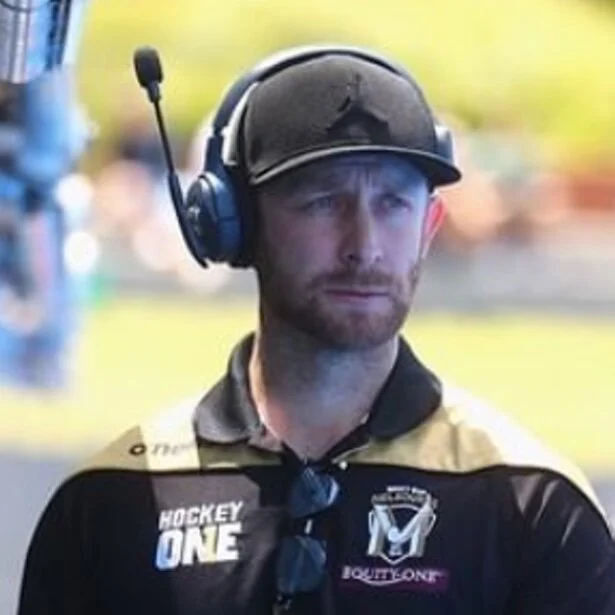
Episode 27 - Lachlan Anderson
20 October 2020 · Steve Prior
Listen to this episode ·
Subscribe in Apple Podcasts
Jimmy Webster returns to introduce Camberwell Men’s Premier League coach Lachlan Anderson.
Around this time last year our Men’s Premier League program were looking to appoint a new head coach; and after some discussions were delighted to secure top candidate in Lachlan Anderson. A strong start to the pre-season ensued with renewed purpose and determination. As you’ll hear a terrific off-site camp focusing on conditioning, trust and teamwork led into training and practice matches featuring some very encouraging passages.
The COVID pandemic then arrived and ultimately cancelled the season; denying many of our supporters and members the opportunity to see the group’s progress and meet new coach Ando.
Listen to hear about Ando’s early career; playing with the Vikings and Junior Australian teams, his move into coaching at club and representative level and insight into coaching both men’s and women’s groups at Premier League. You’ll hear Ando’s thoughts on Hockey One, challenges dealing with the interrupted season and impressions coming across to the club.
00:01:10: COVID Interrupted Year
00:05:20: Coming to Camberwell
00:08:18: Preseason Positives
00:13:04: Where can Group Improve
00:15:48: Playing Career
00:26:23: Thoughts on Selection
00:39:09: Coaching Career
00:40:55: Coaching Highlights
00:47:28: Coaching Men & Women
00:53:05: Hockey One Reflections
00:59:16: Quick Hands
Episode transcript
⚠️ Automated transcript
This transcript was generated automatically from the episode audio and lightly corrected. It may still contain transcription errors, and individual speakers are not labelled.
Around this time last year, our men’s Premier League program was looking to appoint a new head coach. We prepared a short list of candidates, and after some discussions were delighted to secure our number one candidate, a person whom we believed was the best available coach for our group in Victorian hockey. A strong start to the pre-season ensued, as you’ll hear, with a terrific off-site camp and some very encouraging passages in our training and practice matches. Then, COVID arrived. Welcome to the Camberwell Hockey Podcast.
The one-two punch of the double lockdown ultimately cancelled the season without a match being played. To everyone’s frustration, our group were unable to demonstrate their progress on the field, and our supporters and members didn’t really have a chance to meet our new coach. In this episode, Jimmy Webster returns to remedy that and introduce Camberwell Men’s Premier League coach, Lachlan Anderson. Here’s Jimmy. Alrighty, thank you to all tuning in for another edition of this Camberwell Hockey Club podcast. We’re joined by Men’s Premier League coach, Lachlan Anderson today. Ando, thank you for joining us. Thanks, Webby. Looking forward to it. Just to give a bit of an overview of what we’ll touch on today.
So we’re going to discuss the year that’s been, a bit of a depleted year in 2020 in regards to hockey. We’ll touch on this year, then we’ll go into a bit of Ando’s playing career, and then we’ll finish off with some of Ando’s coaching accolades. So, mate, this year obviously has been a pretty shocking year for a lot of people. And when we reflect back on it, we had a great preseason at the club, and then we were cut short, and then we came back again, and then we were told that the season wasn’t going to go ahead. I know that you personally obviously work at Hockey Victoria and pretty much your day-to-day and your life revolves around hockey. So without having hockey, what have you been up to this year and what have you been doing in the background to keep yourself busy?
Lots of little jobs around the house, mate. No excuses anymore to put off the little things that haven’t been done over the journey. Probably bitten off a bit more than I can chew at times. But anyway, that’s been a good learning curve. Yeah, it was a pretty tough couple of days, actually, because by the time the hockey season got cancelled, all of the national championships, all of the things that we sort of work towards, our big projects, national championships, Hockey One, all of our academy programs, club season, basically, you know, that consumes the best part of sort of five to six days a week of my role as a club coach and as the high performance manager at Hockey Victoria, just disappeared.
I mean, like, it was — I’m used to being really busy, and there was a period of time there for a short time that I wasn’t. You know, I wrote you guys a pretty frank and open and honest sort of letter about how that made me feel for a period of time. It was really, really hard, having so much structure in my day-to-day that wasn’t there. So once I got that fixed and got back into some exercise and re-engaged with all the stuff with the family, I mean, that part of it’s been just invaluable. My daughter is 15 months old, and for half of her life, essentially, I’ve been at home, which has been really good. She wakes up in the afternoon, I go pick her up out of the cot, and happy days. It’s impossible not to be smiling and happy with all that. And having the young fellow who’s just about to turn six homeschooled wasn’t as pleasurable, but all done now.
He’s back to school. And I know that we spoke a while ago and you hadn’t done any running for a good period of time. And then during this lockdown, you started running again and clocking up some good Ks as well. And when we had the Camberwell Hockey Club, you know, the number of hours that you’re putting into the Strava camp, you were always featuring in that top little bit for a while there. So how is the body, and are you still getting some Ks into the legs? Yeah.
Well, I mean, it’s a — I reckon even in the last couple of years when I was playing, which was sort of very part-time with Essendon, like, I was still coaching at Footscray Women’s Group and playing six or seven games a year, training for 50 minutes a week on a Thursday night and then going from there to the other venue, and not ideal at all, but sort of trying to keep everybody happy, trying to keep the group that I’ve been a part of for so long at Essendon happy and have some sort of ongoing transition there, and then obviously still trying to move across into coaching.
I don’t think I have actually run consistently for the best part of four or five years now. Yeah, a bit of running here and there, but nothing like, obviously, as you mentioned, where it was well-structured and doing sort of five or so sessions a week. And as you said, getting the kilometres up, getting out there was really good. Listening to this Camberwell Hockey Podcast has actually been a good part of that. Like, I mean, it was some of those little jogs, getting out there and listening to Wansey interview people, to yourself, you know, the one with KA I really liked. Yeah, it was really good. So, yeah, there’s been some really good ones.
The pretty candid one with Batchy and Pottsie was really good too. So, yeah, I’ve listened to more podcasts in the last three months than I reckon I’ve ever listened to in my life. Yeah, nice. And I guess probably around this time last year when the initial discussions started to occur and you were made aware that there was a potential opportunity for you to come across and coach the men’s Premier League at Camberwell. I mean, what firstly attracted you, and why did you take up the opportunity to come across and coach this group?
That’s a really good question. I mean, I had a really talented group of young women at Footscray who, when I started, were sort of between 6th and 8th on the ladder.
They had been reasonably sort of hard workers and so forth. I took on a group that needed a lot of remedial work. We had to basically drill a lot of stuff back down to a real basic level and then build it from there.
As a hockey coach coming in and as a young hockey coach at that particular point,
I didn’t think that it would take as long as it did for us to actually get to the level of success that I was reasonably confident we could.
Internally, in conversations with my wife and so forth, like, I was reasonably confident we’d be able to do what we did in five years in two. But it just took a bit longer, you know, grappling with a group of girls who went from being, you know, young teenagers to young women. Yeah, there was a lot of different challenges with that. Yeah, but it was a really positive experience. But then obviously when I got the contact from Camberwell, it was more about having a look at a group of guys that most of that cohort I’d actually had something to do with, whether it be at an under 18, under 21 or a Hockey One level as a player or coach. You and I played together way back, and then you were a young little whippersnapper at the time.
Whereas I coached the under 15 boys team two years ago, and in that team I coached Liam Henderson, Gus Hendry and so forth as well. So, like, completely bookending that group. So it was really encouraging because I sort of know a lot about the players. I see the way that the group goes about its business. I like the professionalism of the club and the cohort of athletes. I think a lot of what I offer as a coach lends really well to the group. So yeah, from that point of view, it was a pretty good opportunity. And as you said, I was still employed at that particular point when those conversations started. But I was, and I have been all the way along, very open and honest about being a coach. And if I’m entertaining something else, I’ll communicate that with the group that I’m currently with.
And I think our relationship with Footscray certainly continued to stay strong, even though as a result, I ended up moving on. Yep. And I guess from, I mean, as long as I’ve been playing at Camberwell, I’ve never had a coach that’s come from outside of the club traditionally. Now, KA, yes, but KA was involved as an assistant coach for two years before she took on the head role. So it kind of leads into my next question that, you know, I think that preseason camp that we had was a great camp because it really kind of gave you an insight into the players. And, you know, we all opened up to each other and, you know, there were tears in one of the sessions that we had, which really showed a bit of vulnerability from a few people, but it really gave you a great insight to some of the personalities in the group, but also gave, I think, the playing group a great insight into you as a person and what you were going to bring to the year that we were meant to have and obviously moving forward. But, you know, you can always look at the negatives that have come from the year, but from my point of view, there’s a lot of positives that come from the year as well, and I’d be interested to know from your point of view the positives from that preseason but also getting at least two to three months of training under our belt as well in the start to the year.
Yeah, I mean, that was really good. I mean, I really enjoyed that lead up to the camp. So the training block that we did prior to going to camp, the actual camp itself in terms of obviously Richie Callaghan hopped on and helped do the physical component of that camp, and then obviously sort of helped us facilitate some of the other off-pitch or sort of, you know, off-conditioning stuff. And obviously the hero hardship highlight component that you referenced before was really valuable.
Yeah, big on — I’m an emotional person and, you know, I get wound up with stuff.
I’m happy to admit that, you know, there are things that can make me sad and things like that. So from that point of view, it was really good to see a group of young men be honest. I mean, I don’t think it’s something that collectively, as a cohort, we do well. You know, it’s sort of like a point of weakness to show any form of emotion as an Australian culture. And I think that’s something that when we go into sport, and not trying to tie too much of it towards too serious an issue, but when we get to conflict or battle or anything like that, you need to be able to rely on your teammates, and that’s one of the things that I think, you know, from my point of view is that open, honest, frank conversations that need to happen, you know, they’ll continue to happen, and from that point of view, I think at least we all understand where they’re coming from as well.
So, you know, when a young player is off or upset, I mean, you and I have had some of these conversations already just in this year, like, you know, how’s such and such going, and, you know, it’s very clear to tell that they’re not going all that well at this particular point just based on how they act. So from that point of view I think it’s super valuable to get a bit of a baseline on everybody. Yeah, and I mean, the year that’s been, and, you know, being in lockdown and being isolated for so long, I get this feeling that everyone just can’t wait for hockey to come back and for life to return to normal, but the way that we communicate with people I think will improve off the back of what’s happened, and that need to look out for each other.
So that was one thing that I definitely got out of, you know, the camp was the, you know, showing — a few people showing their vulnerability and getting to know people and things that have happened in their lives that, you know, might not have known, but now a lot of people are aware of what’s happening in people’s lives, which is really good for that contact and that connection with everyone in the group. Well, yeah, I’m pretty big on the relationship stuff. So we just need to make sure that as a collective, you know, we understand each other and we don’t always have to agree.
I mean, that’s one of the things that’s probably starting to disappear out of, you know, sporting teams or out of, you know, corporate environments and so forth. You can disagree with someone, but it doesn’t mean you dislike them. You know, you can have a disagreement about something or, yeah, whether it’s a philosophical view on something, you don’t have to walk the ground. I mean, like, political parties, a classic example, right? You don’t have to see eye to eye on it, but you can still be friends. From what you saw from a hockey point of view at the start of the year, but also some thoughts that might have come into your head away from the hockey and listening to podcasts, whatever it’s been during your own time.
Is there anything that you can think of going into pre-season next year, but also leading into the season, that are areas that the group can improve, so improvement areas, but also as a club as well, some good insights that you’ve come across that the club can take on and our group can take on moving into next year? Yeah, I think the, you know, I made it pretty clear to the playing group. So anyone listening, this isn’t going to be a surprise, but I think the group is very nice, and using that as a collective term, to say that it’s not traditionally dogged and hard and sort of rough. And that’s something that I think we actually started to get a little bit, even internally, with some of our standards and expectations around training and some of the standards and expectations around how we play, is that we can’t… And that’s whether it comes down to how you umpire in a training session.
I mean, to be fair, we only got a couple of weeks of actual competitive stuff in, really, before we ended up getting pushed back. But I was really looking forward to watching that group evolve over the next sort of two or three months. A couple of really high-quality practice matches, put together some good minutes of performance there. So I was looking really forward to all of that.
So where can we improve, or how do we improve? Obviously, a new goalkeeper on board this year in Scotty Boucher, taking over from George, who’s been a part of the furniture there for a long period of time. So there’s going to be an adaption there where he needs to figure out how the people play in front of him, and the people playing in front of him also need to figure out what’s going on behind them. So that’s going to take a bit of work. And, you know, George is a very vocal goalkeeper and very demanding. So, you know, Scotty, not quite the same.
So there’s going to be a learning period there. But, you know, we also need to be mindful. Maybe not as much of an abuse coming out of the net as well. Yeah, possibly, possibly. So making sure that we’ve got a bit of clarity around what our sort of defensive aims are, which obviously gets to free us up and have a bit more of a go going forward. Yeah, nice. And we’ll move off this year and we’ll move into a bit of your playing days because, I mean, a lot of people know what you have done during your playing career, but it’s a bit of an insight to those that may not have an idea because it is quite an extensive playing career.
And so we’ll just go through. From an early days point of view, you started your juniors at Essendon, moved to Waverley, then back to Essendon again. You had a few premierships with Waverley when you were at a young age and had just started there in a very strong team back in the day. How did you get started with hockey first of all? And talk us through the transition in clubs and why those transitions happened at an early age. Yeah, absolutely. I started playing as a seven-year-old.
It wasn’t Minkey at the time. It was just under nines hockey and quarter pitch, grass.
Most clubs, or in some instances, they weren’t even at the venues of hockey clubs. They were sort of thrown out. Like at Hawthorn, for example, we used to play in the middle of that velodrome there, which is beside the hockey pitch. My dad played hockey, played for SA for part of the time in Adelaide. Obviously, they moved over here. They bought a business, started a family and all that sort of stuff. As a result, I got into it.
Probably like most kids whose parents play hockey, they spend enough time around it. It’s a really family-focused sport. I got into it, started to get reasonably good at it. Like a lot of kids, when you start to get a bit of success in something, you like doing it a bit more. So, yeah, I played at Essendon up until under-15s, and I basically hadn’t been getting the coaching previously that I was sort of seeking in an effort to try and play for Victoria. Yeah, that was a goal, and that was a stepping stone to obviously playing, you know, potentially for Australia down the track, which, as we’ve talked about before, a lot of young kids want to do, whether it’s play for the Hockeyroos or Kookaburras. So I moved to Waverley, actually went for a training session, and Brett and Tim Thompson were my two coaches for that particular session. They were coaching the under-15s at the time, and I mean, a lot of the Camberwell crew and everyone, a lot of people listening to this, would know Brett and Tim reasonably well as really rough-and-tumble competitors but also, you know, really talented hockey players and certainly appropriate trash talkers. So they took me for my first session, and I learned more in an hour with those two guys than I did over the previous two years. Yeah, at that particular time the tomahawk had basically just been introduced into hockey, and I remember going home from a training session the first night and sort of turning to the old man and saying, I want to play here. And for them, yeah, they ran their own business in a sort of industrial estate in Airport West, and it basically was going to be a 45-, 50-minute trip in either direction three times a week.
So they were very supportive of that, to which I’m still thankful and continue to talk about to this day. But yeah, moved to Waverley, had some really good success, had some good friends there as to why I went. I mean, I trained at Kew before that, was really close with a couple of young guys from there, had a session at Hawthorn and then obviously finished up with Waverley and made the decision pretty quickly to move clubs. At that particular point, the state under-18 coach was involved in the club and had that sort of really precarious meeting that right now we sort of try to steer all of our coaches away from in terms of recruiting players to your club.
So, yeah, moved to clubs, had a great time. As you said, we were very successful.
Lost, unfortunately, the first two grand finals ever played in to Essendon, which I still hear about, and then proceeded to win two, and then left in my top age, under-21s, to go back to Essendon. Al McLennan and David Langer, who are really good friends of mine, had spent probably two or so years before that trying to get me back to come and play at the club, and it just got to a stage where I had a meeting with the club coach at the time, and I wasn’t looking for any promises or guarantees, but just wanted to know what the plan was, structurally and position-wise, for the next year as a new coach coming in.
And I didn’t think that I was going to get what I needed at that particular point. I had a really good cohort of players.
I would argue, I mean, it was a really strong, passionate group, but it was really selfish. There were some really talented guys in that group, but it was a real selfish group. And one of the things that I think to this day still that, you know, that the club wrestles with as well is, you know, that individual versus team performance. Whereas I think, you know, going back to Essendon was really tough. I think it immediately put me in a position, you know, Waverley won the grand final that year.
So the year I left. And then the following year, that made it three in a row, I think from memory. And went back to Essendon, got relegated twice, played two seasons of State League Two at the time.
I’m pretty confident we didn’t make a final series over that journey. Enjoyed my hockey, played with some friends, took on coaching roles.
Obviously, played in and out of the Vikings group over that period of time as well. Yes, it was a long journey, but my only hockey regret is probably not moving back to Essendon a little bit sooner. And I guess during your whole career, you’ve obviously played and been a representative of the state throughout your juniors, under-18s, under-21s. I believe you were part of the Junior World Cup squad, obviously the Vikings AHL group for many, many years. I think you went and played for NTSA.
Is that correct? Yeah, both of those. So we had Matt Higgins, who’s just, like, for those of you who don’t know, Higgins is just a ripping guy and an excellent hockey player and worker. And, yeah, he was just a stalwart in that group, and then it was Luke Doerner, Chris Ciriello and then myself, and I just wasn’t going to play as a defender or not play often or much and certainly, as you mentioned there, being in and around that Junior World Cup program in 2005,
I obviously needed to play at that level to continually press for selection, and at that point, Jason Butcher was involved in that Junior World Cup lead up and he was the coach of Northern Territory at the time. And so Ian Rowe and myself had a conversation about playing there and we took off and played for Northern Territory, which was, like — I know Frosty and Mitts in our group have played for different states.
It’s a terrific experience and one that if people are on the edge and not playing, I do recommend because there’s no easy games when you play for one of those smaller franchises or states. Victoria against Northern Territory can be an arm wrestle for a period of time, but eventually the dam breaks. And when you’re playing for Northern Territory, you’re on the ropes time and time again. But that particular year, we had a lot of good players. I mean, Alistair Park, who captained the Thundersticks and coached the Thundersticks this year, or last Hockey One — he played at that particular point.
We had a really good group of imports, if you like, come in and play. Michael Brennan came and played with me. We talked him into coming and playing, which was good. Really good fun hanging around with him for a period of time. It was a really good experience. I’m disappointed at different parts of how things went and so forth, but I look back on playing really fondly with the relationships that were gained. As you know, you win something like a national championships and that’s a bond you’ve got with a group of people that you can’t break forever.
And we won under 21s together as a playing group. And that was — we still see each other and tell stories about that particular night. From a team sport perspective, you just come through those eras where certain teams just in certain spots are just going to be filled with either national representatives or high-quality Victorian players or state players that have been there for a long period in time. And you’ve got to take your opportunity when you get it more than anything.
Well, that’s the thing. I mean, I’m certainly not sitting back looking at my hockey career and saying that I was better than — because all of those players that we’re talking about at those particular points were all better than I was. It wasn’t a case of me being better than them at those periods of time. They were better. And that’s one of the things that I really like to reinforce with the players coming through now in my role at Hockey Vic is that sometimes
selection has to happen at some point and it has to be a cutoff, and you don’t have to agree. There were times when I was going up against some of those names that we’re talking about where I was playing better, but I wasn’t a better hockey player collectively. I wasn’t as fit as, I wasn’t as prepared, like, you know, from those things. I mean, they’re things that I look back at and wish you could have your time again in some of that stuff.
Like, I don’t think I got the best out of my body in that time in terms of preparation. But yeah, from those sorts of things,
there’s not a lot of regrets. It’s just about making sure that you do the best. And that’s what we sort of continue to try and tell these kids coming through, mate, is that you only get one go at it, so make the most of it. Correct. I know it’s something that you speak very openly about. I’ve heard you speak about it before when I know that at a young age, you were obviously nationally identified, you know, around what we just spoke about before, junior World Cup age, but it didn’t transition into that senior national representation.
And I’ve heard you speak very openly about this before when there are people who have that talent and have the opportunity to grab it and go over to Perth and have a crack, but they don’t, you know, it becomes quite frustrating at times. I mean, what’s the overall message from you in terms of the experience here and what you went through with the hurdles and difficulties to take that next step? It’s a really good point. I mean, I’ve done a series of podcasts for our Hockey Vic crew with the national players and coaches and so forth over the last couple of weeks.
And one of the questions I’ve asked them is like, what would you tell your 16-year-old self? Like, what would you change? And for me, it would be just about — you have to enjoy training and you have to enjoy the grind. And if you don’t, you’re not going to get the positive result or the sunshine of rainbows at the end because training is the part that now as a coach I love. I love planning training sessions and X equaling Y when we put time into a particular skill set and then seeing that thing develop over a period of time.
I mean, I really enjoy that. And it’s part of coaching teams and starting at a journey and then ending up with a positive result at the end. But as a player, Josh Simmons was really excellent last week when I spoke with him and he said about taking more ownership as the individual and player on your own development. It was really good to hear someone say that that’s gone through our program because I think I was looking for a bit more direction and still to this day, I think. So John Mott was my VIS coach and coached me for under-21s, VAS Vikings for a period of time.
So I reckon for probably six to eight years, I had three to five sessions a week with John. And I mean, I really like John and he provides a really crucial piece to hockey in Victoria’s history over that period of time. But would it have been beneficial to have had a different voice, or would it have been beneficial to have someone else give you the kick in the arse and not be the same person?
Possibly, I don’t know. I mean, I can’t tell you the answer to that. But certainly from my point of view, I can categorically say now with how I push our players to be that I didn’t do everything that needed to be done. So from that point of view, I mean, it’s preparation, as we said before, whether it’s physically in terms of being as fit as possible, as strong as possible. I was always really lean. I wasn’t ever really strong until the latter part of playing.
A lot of people don’t know, but Chris Ciriello and myself, we were both involved in this 3D drag flicking study that was done that was commissioned by the Institute of Sport. Obviously, Chris went on to flick three goals in a World Cup final and I didn’t. But so, yeah, from that point of view, I mean, there’s things about playing that you can look back on and reflect on now. But at the time, I didn’t think that I was not training hard. I thought I was training hard. I thought I was preparing and I thought I was doing all those things, but I wasn’t. And that’s easy to reflect on as a 36-year-old man now.
But it was a tough environment as well. I mean, we used to, like you remember, I used to train at 5.45 on a Friday morning. It’s not a particularly enticing time to get out of bed and go down and train. And then go to uni or go to school with your studies as well. Yeah, or work or whatever it was. Yeah, I mean, that’s that part. But that’s the — I mean, if you’re a swimmer, that’s just every day. So, yeah, some of that stuff’s changed and some of that’s evolved.
Part of my coaching part and philosophy, if you like, and things is about making sure that I’m a bit more to more people. I’m not just this one-stop shop of being one way and everyone hops on board and we’re a bit cookie cutter. I provide a bit more rigid with someone who needs that. And then I might be a little bit more open with someone else who needs that. And as you’ve heard me say before, it’s not going to be a one-size-fits-all, but it’s going to be fair, making sure that it’s not a case of Jimmy Webster, who’s played Premier League for 15 years, having to do everything exactly the same as the kid who’s busting his chops to actually play his first game.
I think there’s some runs on the board, some credibility there that lend to that. But yeah, nationally identified young players transitioning. It’s very hard. I mean, I was a player of the tournament in under 15 nationals and then obviously progressing from that point onwards, was the captain of the under 18 Vic team, under 21s, captain as well, and then just couldn’t step up at another level from there. And certainly now, I mean, I look at the game now and I have this conversation, Jay Stacy and I were reasonably close and we joke about now and I had a chat with Batchy last week about the game progressing physically and said, well, how do you reckon you’d go?
And obviously those two being the personalities, I’d go, yeah, I’d go, right? But like, I would physically have to have adapted significantly to play the game at the level that I got to previously. Yeah, I would have had to have been fitter and stronger and faster. Yeah, and just the natural adaptions of the game and the way that it’s moved over many, many years. But I mean, also the other point on that is that for many, many years, Victoria finished third, fourth, constantly for years and years. And it wasn’t really from my memory until we probably won that first or got into a final and then won a gold medal when a lot of Victorians started to get noticed.
And that’s just the way that it’s been for years, that you make that final, you get noticed, you get more players into the squad. So, I mean, coming through those years where you were part of the Victorian side, it probably didn’t help either, you know, finishing third and fourth for years and years. Well, finishing third and fourth and not playing certainly wouldn’t have helped. We had this conversation. I mean, it’s frank and it might not be politically correct at times, but if you’re the best kid growing up in Tasmania or South Australia or ACT, you might get more of a look-in than the fifth best player in Victoria.
And that’s just the nature of sport the way that it is and how it’s funded across the country and so forth. And it’s very good to have people from a variety of different environments. And it’s very hard to compare apples and apples if they’re not put into that environment. So it’s very hard to compare the best kid from South Australia with the rest of the country if you don’t put them in. So, yeah, from that point of view, growing up in Victoria had huge benefits from a performance perspective but might not have helped from a selection perspective.
And that’s still to this day something that, you know, some of our players have to wrestle with. There’s, like, you know, do I play as the sixth, seventh best player in Victoria, or can I go be in the top couple in another state? And, yeah, as you said before, the number of players selected versus finishing position, they just don’t — and in my time as a high-performance manager and so forth, they just don’t even correlate. Like, it’s, yeah, if you were to put on, you know, New South Wales might have seven and finish in the top two and ACT might have four and finish fifth.
Yeah, the numbers don’t add up. But, you know, I 100% believe that the best talent should be selected irrespective of where they’re from. Throughout your career, you found yourself playing in multiple different roles, multiple different positions. I think you started your playing career as a striker and then actually made your way back, came into the midfield, then finished, obviously, as we’ve talked about already, as a defender, which naturally happens with quite a few people, that you find yourself when you are younger, you do start maybe forward and you end your career playing a little bit more defensive.
But can you recall these movements and, I guess, why they occurred through your career? Yeah, I mean, there’s a couple of them that are really pivotal points and I remember them so well. Is that I remember being at a Junior World Cup camp in Adelaide and it was like 1,000 degrees in February. It was unbelievable.
And there were two-a-day sessions. So we trained in the morning and then trained in the afternoon. We were staying just off at Glenelg. And I was playing as a defender and had played for Victoria as a defender and free defender for a period of time in the under 21 group and go to the camp. And as mentioned before, I was probably as fit as I had been leading into that in terms of preparation and so forth. And I’d always struggled in really hot weather with cramp. I’d always end up with a — and it was odd. It was a quad cramp as well.
It wasn’t any — so I was reasonably fierce.
And so I actually managed to deal with that weather reasonably well and got prepared and did everything that I could to be ready for this particular camp. And there were a lot of guys went down over the three or four days and played some matches. And I think it might have even been Des Abbott at the time, you know, cramped up. And Batchy turned to the side and sort of said, you know, I need someone to go in. And I was sitting on the bench of my rotation, which wasn’t quite as prolific as it is now. Like if you came off, you’d usually come off and have, you know, a five or six-minute rest until the coach told you to go back on.
It wasn’t really a case of, you know, in two minutes you’re going back on for somebody else and it was sort of predetermined. So, Batchy turned and said, you know, you can go in, Ando. And I said, yeah, sure, where? And he goes, right wing.
And so, I hopped on at right wing and run at the half line and ball came to me at exactly that same period of time and I took off, beat a couple of guys and passed it to the back post for a tip-in or for a goal. From that moment onwards, as far as the national junior program were concerned, I was a striker.
I then had to play. We played in Melbourne in the under-21s the year after. I played as a centre-forward. I think I hit four or five goals in the tournament, nowhere near enough to be outright selected based purely on output. And then played, negotiated my way back basically the next year in Perth in my top age with John to play in the midfield group because I just wasn’t — it was like a bit of robbing Peter to pay Paul type scenario. I could play up front, but we weren’t able to produce what we needed to do.
And as a result, I went back and played in the midfield and free defender and so forth and didn’t get picked. But, you know, still around that squad, had a couple of little niggly injuries with an ankle that took a long time to rehab. But, yeah, from that point of view, I mean, Declan Garrity, who obviously you guys know real well, good friend of mine. I remember walking back to the car from the hockey centre one night and he sort of turned — we’re talking about positions and so forth, and he said to me, he goes, Ando, you’re like a homeless guy.
He goes, I don’t know where to send your mail. And he was referring to like, where do I play? Where’s my best position?
And certainly as I got older, I would say it was definitely playing, you know, at the back and reading play and fixing things up and so forth. But, you know, like it was always a bit of a joke at Essendon that, yeah, if we needed a goal, I’d push forward.
And then actually I negotiated with the coach when I came back, as I said before, and played in those sort of six or seven games a year for the last couple of years that I was only playing if I played up front. Very, very good. We will jump into your coaching career, which obviously took off post-playing career. And, yeah, you’ve had a lot of success so far as a coach and an assistant coach and under-21s coach, I believe, three titles. Was it three in a row as well, under-21s? That’s a good question.
I probably should know that off the top of my head. But no, I think we went back to back and then lost. Lost one that we shouldn’t have lost. We won under 18s in that group from Camberwell. Jacko was in that.
I can’t remember who else was in it. But yeah, we had a really good group of kids coming through from that under 18 cohort through. So I coached that under-18 win with Marty Demand. And your boy Daisy was the team manager. And then moved up to the under-21s with Jay as his assistant for at least one, maybe two years. And then obviously with all of the Viking staff, it sort of made sense that there would be a gap between him coaching players between 21 and AHL.
So I took over. Jay assisted and Greg Reid was our sort of like coaching mentor slash chairman of selectors. Being involved with the AHL and the Vikings group as an assistant coach for many years where the group went back to back. You’re now the current Hockey One head coach. You’ve been involved with the women’s program at the Footscray Hockey Club for multiple years. When you look back at, I guess, what you’ve been involved in so far from what I’ve just mentioned, is there anything that stands out to you
and what have you got the most out of your early, I would say your early days in coaching?
It’s a good question because, I mean, the thing that stands out really is that sort of AHL win, you know, was our first win in 18 years. And having been a part of that team as a player, you know, albeit at times on the periphery, we had some really good teams over the journey there. And, you know, some of those teams would have beaten the team that we won with, you know, in terms of the players and the list and so forth. But, you know, things aligned really well that year. You know, we had a really strong year with the 21s. That cohort was really good.
It got along well. It was a real cohesive unit. And as you know, as a player, like there’s a group of players that have been involved in that team or that group, you know, for sort of, you know, 10 years. Like by the time they sort of progress out as a under 21 player and, you know, dip their toe in the AHL water and now being Hockey One, you know, they’re around till their, you know, late 20s, early 30s. And so it’s a really strong social group as well.
You know, like Russell Ford has been an integral component of that group for the last couple of years. You know, moving backwards through his playing career from being an ex-Kookaburra to being an on-field mentor and leader and so forth. And, you know, he’s got a real just go-and-do-it type attitude versus, you know, he’s not a really explicit out-there open leader at times, but, you know, people fall behind him because he’s got that sort of level of respect. So that was really important.
I mean, winning the under 21s in my first year as the head coach was a really good experience. I mean, my dad flew up and had some time off work and he flew up for the final. And so that was pretty cool to share that with him, you know, to catch up with him after the game. And it was funny, we got beaten in the 21s final the year before and I ran into John Mott in Sydney who we mentioned before had coached me for a long period of time and he turned and said, he goes, as he does, Ando, Ando, Ando.
He goes, you haven’t coached until you’ve won a final and you’ve been flogged in a final.
So I said, thanks for that, John, I appreciate it. And, you know, his sort of candid humour. And, you know, it was a really good time to be involved. And coaching’s a difficult caper. And, you know, I heard someone the other day say that, you know, success has many parents but failure is an orphan. Is that, you know, that’s sort of really how coaching feels at times, is that, you know, when things are going well, a lot of people on the sideline want to come up and have a chat and, you know, talk about players and so forth.
I feel and have tried over the journey to make sure that my relationships with the players are well and truly above all else inside the club. I mean, I will fight and scrap and claw to get what we need for our playing group versus being a person from the club who’s just speaking on behalf of the club. Like, I mean, I feel although I’m employed by the club, the playing group is where my allegiance is. And certainly that was something that got tested at times at Footscray, certainly from a resourcing and board perspective, but also had to draw a line at times about some expectations and requests.
So from that point of view, those two things were really good. Getting that Footscray women’s team into the grand final was a really fun experience, like taking over a group of girls who were 16, 17, talented junior hockey players and five years later playing off on grand final day against a team of ex-Hockeyroos and Vipers National League quality players. We got beaten and we got beaten convincingly and it was always going to be a tough day. But I was very proud of the team and the club and so forth for the amount of time, effort and resource that had gone into that.
in terms of where we got to from where we’d been. I think most clubs would take a five-year plan to get you to a grand final if you were starting that far back.
That’s not an expectation that Camberwell has and as a group that’s quite strong for a longer period of time. But they were really fond experiences. I mean, are there things that I would do differently with the benefit of hindsight? Absolutely.
Touching on the Footscray women’s job was the first time I’d coached females outside of a school environment, having been a teacher for 12 years. And it was the first time I’d actually coached a women’s team or even a team of girls, for that matter, of females. And so, you know, it was a reasonably steep learning curve in that first month or so. I mean, you touched on it earlier on. It did take that Vikings group years and years to first of all make a final, then win one. And I’ll always remember that feeling of when we knew that we’d won that first gold medal. And I always remember looking over to Glenn Simpson and he was in a state of absolute shock.
But then also looking over to yourself and we also had Smitty who was involved and you two had been pivotal in that environment and group for years and years. And it was a really strange feeling to see the emotion on a lot of people’s faces that had gone through hard times for years and years but had wanted to be around that group for so long because they knew that success was there and it was going to happen at some stage. And I will never forget that moment of seeing those guys that had been involved in the group for a long time.
I do want to come back to you — you just touched on it before about obviously coaching women’s hockey and being involved with that Footscray group. I wanted to get a bit of an idea of how it’s developed you as a coach from coaching the women’s hockey but also the differences between women’s and men’s coaching and how you go about it.
I mean, I suppose the really politically correct answer is that there’s no difference, but the reality is it’s not no difference in the actual coaching. There’s some differences in expectations with a variety of different things. So, for example, like if players internally in a team aren’t getting along, you know, and two young guys who we can call in together and go, all right, Webby, you and, you know, Foz, you guys need to have a chat and sort yourself out, right? Like that conversation might happen really quickly and frankly and openly and we move past that. With a group of, in particular, at the starting phase of that group, the young women that I was dealing with, like some of those conversations evolved over longer periods of time because sometimes the issue or the niggle wasn’t so glaringly obvious until like a breakout or a bursting moment.
So it might have been simmering away for a fortnight before there was something that happened. And then we had another two weeks or so of dealing with it. So some of them could have got out to a little bit longer in terms of how the — from the onset of the issue to solving of issue was probably a little bit longer.
That’s not a negative by any stretch. It’s just a case of it was just different. And it was different to what I was used to. And we spent a lot of time, early days, on trying to open up that communication channel. And they’d had a coach before me who wasn’t really open to them talking about stuff. But also, we’re still talking about juniors, really. Like, the majority of that team were under 18. We set a plan in place pretty quickly. If you’re playing senior women’s hockey at Footscray, that you needed to communicate all of your training misses or whatever it was directly as the athlete.
So I didn’t want to hear from mum or dad. It wasn’t a junior team. You’re playing senior women’s hockey. And that took a little bit of time to establish, but I didn’t want the mouthpiece of that particular athlete to be mum or dad. And I wanted them to take greater ownership of all of those decisions. And again, as I said, that took a bit more time. And it’s just a case of dealing with younger players.
That’s still the same now. When the young guys don’t send me a text until 15 minutes before a training session, but they’ve had all day and they’ve been on their phone almost the entirety of it. That still happens.
But it’s made me a more understanding and empathetic coach. I mean, I had some really good coaches, I’ve had some really good across the journey. I had some really good communicators. I had some pretty poor communicators. I had some really good tacticians, some really good technical advisors and things across the journey.
But, you know, one for me, I mean, Jay’s been integral in my development as a coach as well. You know, Greg Reid and Jay are certainly two of my mentors that I talk to regularly about a bunch of different things. And one that sort of most people wouldn’t know or doesn’t sit highly in a lot of people’s view, but like Rob Whitehouse coached me at Waverley for a period of time and unfortunately not for long enough due to some of his own personal stuff and work-related things. But he was a really good balance between being a hard guy and being really empathetic and understanding and terribly highly respected because he was just, like, a real, real good hockey player as well. So yeah, he dealt with that really well in my view. So
coaching women, it’s easy just to say there’s no difference, but the reality is there’s some differences and it’s probably not as easy just to articulate two or three, but yeah, it’s not any different than coaching juniors to seniors or whatever it is. You treat everybody as they come, whether they’re male, female or whatever. And the end result is that you’re looking after the individual and knowing more about them, which was really important. I mean, one of the young girls that I coached has just — she was one of our top goal scorers for the last couple of years, but a complete role player, like a really good kid, played on the wing, super quick, and would always be on the post, tip in goal.
And she just had her first baby the other week. So I flicked her a text and they’re relationships that I’ve got forever and I really do appreciate all of that time. They grew with me and I grew with them. It was really important. Obviously last year, first year of the Hockey One tournament and competition as it got started and you obviously took over as the head coach of that group. And I mean, from my personal point of view, from watching it, I got a lot out of it. And it was great to be able to, you know, tune in and watch that, watch every game.
But from that first season of Hockey One, are there any improvements or changes that you think need to be made moving forward or that will be implemented that you might already know?
Well, there was a real issue immediately that was purely funding related from all of the teams, was the number of players. So we got down to 14 players listed, and that basically meant that you had one spare player on each line. So you had a defender, a midfielder, and a striker, which for a lot of people listening to this go, what’s your problem? But at the speed and intensity of which that game is played, you’re only one knock or niggle or little injury away. And they can be innocuous.
They can be a bang on the hand and that person’s off the pitch for five or six minutes. That means that the three or four people that are playing that line don’t get a rest. And with the duration and intensity of the game being what it is now, that’s too long. I mean, there’s, you know, the high-speed metres and everything that people are covering now is, as I said to you before earlier in the conversation, it’s just staggering.
I mean, it’s a really — it’s an athletic game now. And so from that point of view, that needed to be addressed. And I think we’ve pushed it to 15. I mean, there were other issues. Like, you know, you’d fly to Perth to play one game. And if someone happened to get injured in a training run or a captain’s call or whatever it was during that period of time, you’re stuck on the other side of the country and you need to get another player to you, which happened to our women’s team.
We needed to get a player to them real quick. So that part needed to be fixed. I’m not sure the result of wanting more goals actually was achieved. I think that was, you know, I talk with Wansey regularly about adaption of rules and stuff. And if we want more goals, we need less people in that space. Like you need to go nine on nine.
What I really would have liked for those was that captain’s call or coach’s call nine-on-nine periods, rather than being just at the end of a half or end of the match. Someone might get sent off and you go, well, hang on a second, captain’s call, we’re going to play nine now, and you’re playing nine-v-eight, you know, some of that sort of stuff. So look, hockey’s a game that definitely needs to evolve if we want to stay relevant. You know, I had a conversation in my interview with Batch the other day and said, you know, if offside was still in hockey, what do you think would happen? And in my view, to create smarter players — like, people, you know, and you’ve been a part of those conversations before, where a John Mott will talk about, you know, Colin Batch and Jim Irvine and so forth being really smart players, but that was also forced based on the way that the game was being played.
So, you know, now where we can play in the entirety of the pitch all of the time, any period of time, yeah, it’s probably forced people to look back at the ball a lot rather than look forward in the space. And as a result, I think that’s something that could, you know, potentially be looked at. But yeah, we need more goals. I mean, you know, I watch a lot of golf and people don’t want to see our professional golfers hit scores of plus four, five, and six. They want to see birdies. Yeah, that’s the nature of the environment we live in.
So you want to see people do well and you want to see the best players do well. And whether it’s competition or event, I think we’d always want to be setting up the event to be exposing or putting forth the best spectacle and giving the best teams and best players the most opportunity to be successful. And that’s not about getting to a quarterfinal to a team that’s won not a single game for the tournament and then them scratching their way through with a shootout win going into a semifinal. That’s not the best for hockey.
I think definitely from looking from the outside and watching majority of the games that were on TV for a first season, it definitely looked like it had been put together quite well and was professional. And also, I think there’s, yeah, obviously there’s those little tweaks and improvements as you might have talked about. But for a first season of putting it together, I think it all came together quite well. So I think we just need, I mean, hockey, Victorian hockey patrons are really apathetic to actually attending. We all like to be involved and know that it’s on, but we need people to come to the games and watch. I mean, the State Netball and Hockey Centre is a reasonably soulless environment. There’s not a lot of history there. You go back to the old hockey centre with the hill and all that sort of stuff, there’s a lot of history and memories, and it’s a bit more of your generic stadium now.
But we need more people in that venue. I mean, 500 people in the State Netball and Hockey Centre doesn’t look busy. But if you stuck 500 people at Matlock or 500 people at Doncaster Hockey Club or whatever it is, the place looks like it’s got plenty in there. So, yeah, we need more people to come down. First year, I think we did really well. There was a lot of off-field, like operational details that just based on my role that I sort of had to cover off and it was a really interesting experience and launching a new team into that type of competition was some really good professional development.
But, yeah, you said before it’s really going to be crucial to getting more players coming through that grade, we need to have more numbers. I mean, one extra player doesn’t sound like a lot, but that’s one every week, which means you might be giving seven different players exposure to playing at that level. And across the country, that adds up real quick. We’ll move into the last segment, which is — I’ve named it Trap Bang or Quick Hands or Quick Answers, whichever way you want to take it.
So these are going to be quick responses from you. So the first question, will Essendon Football Club play finals in 2021? Not likely.
Which young Victorian male player is most likely to play for Australia next? Next one. Without putting any pressure on them, of course. Yeah, without putting any pressure on them. I think Craig Murray is probably one of our shining lights in that next group. Yeah, he’s a ripping kid. Got a real good goal shot on him, so he knows where the goals are. But he’s also a really tough competitor. I mean, I think he treads the balance there real well. Exactly the same question, but young women coming through.
We’ve got a lot of good ones. I mean, Amy stepped up and did real well into her opportunity earlier in the year. Her younger sister, Josie, is really good. Will she be the next one? Hopefully not because she’s a little bit younger. But then the one in between there, I mean, there’s a couple of girls and they probably don’t want to put too much pressure on them. But Josie is someone who has enough of an opportunity to step up into that environment.
Carly James, who I coached for a long period of time at Footscray, a really tough, hard competitor. And I think it would be extremely beneficial to have a Carly James playing for the Hockeyroos at some point in the near future. And then obviously she’s a very similar player to Sophie Taylor, for example, just hard, good deliverer of the ball
and someone that you’d rather have on your team than not. In the Men’s Premier League next year, who do you think will make the biggest movement in terms of improvements in the competition? Well, it’s a really tricky question because you just don’t know what the hell’s gone on this year. I think there were some teams that improved rapidly last year. Like, I mean, Footscray men making the grand final was a big improvement from that point of view. MCC men, you know, managed to sort of fight it out and hang around a lot longer than they probably traditionally have.
Yeah, then there’s a reasonably strong cohort of, you know, Southern, Camberwell, Waverley, who have been around that period. But, you know, there’s eight bloody teams in the finals now, mate. So, you know, one of the Essendon guys sent a text out that was the first time that Essendon made the finals in, I think it was 12 or 15 years or something like that. And I sort of cheekily wrote back, said, but yeah, when it was only 10 teams in the comp, you were third bottom at eighth. I said, now you’re in the finals.
Well, funny enough, I think they are a team. I think Essendon are a team that I don’t know that you obviously got history with them, but they are a young team and a team that I think will make moves in the next couple of years. Yeah. Oscar Wookey taking over as a playing coach. Oscar’s a really good, really dedicated kid, whether it’s with his own academia or whether it’s through hockey and so forth. He’s got a very strong more is better mentality as well. So train more is going to equal us being better.
They’ve got some good kids coming through.
They’ve lost a couple of really experienced players as well, and there’s going to be a bit of a void there, whether it’s 2021, it might be 2022 or 2023, but it’s going to happen. Yeah, they’re going to creep up. Now, this next question, Ando, it’s a bit of a controversial question, and I don’t want you to go on for too long here, but who do you think is a better goalkeeper during their prime, George Bazeley or Lachlan Dreher?
Oh, man. Yeah, it’s a really true… I mean, as a kid growing up, I saw a lot of Lockie as the national goalkeeper, and I saw a lot of George, and George and I are really close friends. So I probably have to say George, but Lockie’s bloody — I mean, you can’t argue with either of their careers. I mean, being a goalkeeper is tough. There’s only one of them on the pitch, and if you’re not number one in that team for a period of time, there’s a lot of watching hockey.
and both of those guys have done a lot of that. So, yeah, I mean, in their prime, I don’t think I can speak on behalf of Lockie all that well.
I just remember getting cleaned up by Lockie a lot of times over the journey, meeting me at about 12 yards when I wasn’t ready for him, you know, dribbling into the top. But I think George’s competitive drive and everything like that has helped facilitate Camberwell’s success in this last eight or nine years really well. But you can’t discount the fact that having Lockie there as your second keeper or so forth doesn’t provide such a strong opportunity for one guy to be more cavalier because the opportunity is that someone else steps in. I know that you’re a big sports doco person. Favourite sports doco that you might have been watching this year or just over time?
Yeah, your favourite sports doco. The two most recent ones, funnily enough, have been really good. So The Last Dance, the Michael Jordan sort of Chicago Bulls one was really good. I find them more engaging because there’s some tiny little details and things that are so pivotal to the way decisions or things happen that from an outside looking in, you just don’t know. I mean, talking about how that team operated with a general manager who just didn’t get along with any of the players, but managed to put together a pretty successful team.
And then the current one that I’ve just finished watching, which I loved, was the All or Nothing Tottenham Hotspur one, when Jose Mourinho had just taken over. Again, I think we share… I mean, I share a lot of similarities in terms of how I go about it. He seems to be way less technical and tactical than I actually thought I was going to see in terms of the actual coaching and more about personnel management. And when you think about what some of those guys are getting paid, it’s astronomical. So, yeah, those two are really good. And for any young coach or anything coming through, yeah, that one’s — that sort of Tottenham Hotspur one at the moment is really good. I would encourage anyone to watch that.
And then that same series, the New Zealand All Blacks one, again, equally amazing because just going through all of the team standards and so forth and talk about a particular player for a period of time there and then how he’s had to make adjustments to the environment. So, yeah, I love them. There’s so many of them, but those three will do, Webb. In no more than three words, please describe Liam Henderson.
Um, hard.
Um, haircut. I like that one. I definitely like that one. Um, and very talented. Yep. I’ll make this easy if you want one word to describe the old boy, Tom Davies. Uh, hard. Best player you’ve ever played against. Uh, that’s a really good one.
I think the guy probably didn’t get as much credit over his journey, but he’s still an Olympic gold medallist and so forth. But I’ve always found Nathan Eglinton more difficult to play against than like a Jamie Dwyer, for example. I mean, Jamie’s extremely talented, but Nathan would make the drag over sort of two or three metres and it’d take you out of the contest really quickly.
You know, you’re always confident that Jamie, provided he didn’t toast you for speed, was always going to come back through sort of, you know, either a foot either side of you.
And, yeah, you just had to compete with his stick speed. But, yeah, Eggie was very hard to play against.
And last question to finish off, mate. What are you looking forward to the most about coaching the Camberwell group next year? Just getting back and seeing the guys again to start with. I mean, I can’t wait till our first training session back. I mean, it’s a long time, and I mentioned this to the group, it’s a long time since I haven’t been involved in a team competing in some level of elite sport for a long period. Like, pretty much, I think I go back to, like, 11, 12 years old, you know, where we’ve been on a tour, played a season, played in a tournament.
Yeah, none of that this year. So, yeah, I’m looking forward to getting back and seeing the group, and then seeing what we can do. I mean, I’ve got pretty high hopes for us and as do the group for us as well, but I think I’m looking forward to most of just getting back and seeing everyone.
You’ve been listening to the Camberwell Hockey Podcast. We’d like to send a big thank you to our hosting team, our guests, and you, the listener, for your support. If you enjoy the show, please give us a review on iTunes or wherever you get your podcasts. This show is recorded and produced by Camberwell Hockey Club in Melbourne, Australia. If you have any feedback, comments or questions, please find us on Twitter at camberwell underscore HC or see more information on our website at camberwell.hockey. See you next week.