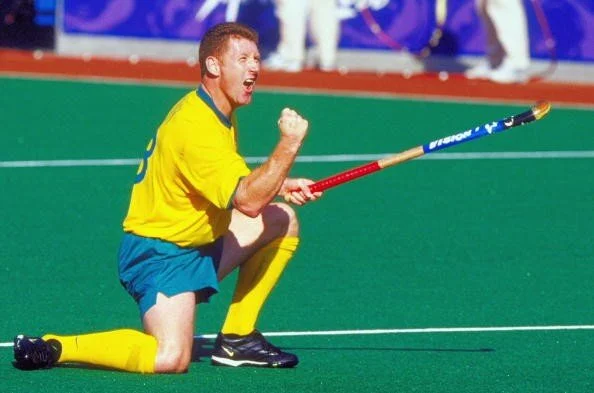
Episode 3 - Jay Stacy
27 April 2020 · Steve Prior
Listen to this episode ·
Subscribe in Apple PodcastsDavid Wansbrough speaks with 4 times Olympian, 1999 FIH Player of the Year and Camberwell Hockey Club legend Jay Stacy.
Wansey and Jay speak about Jay’s early career beginning at Reservoir through to his arrival at Camberwell and his recollections of the characters there, bonding training at Albert Park during installation of the club’s first synthetic pitch and legendary head coach Don Argus.
Hear Jay describe his Olympic journey through Seoul, Barcelona, Atlanta and Sydney; and the boys exploring the additional challenges of tournament play extending through the entire games period.
Jay speaks about his move into coaching in the southern Dutch city of Eindhoven, Belgium and India and his local work with Hawthorn Hockey Club’s Womens Premier League and the High Performance Victorian Institute of Sport program.
Oranje_Zwart Hockey Club
KHC Dragons
Dabang Mumbai
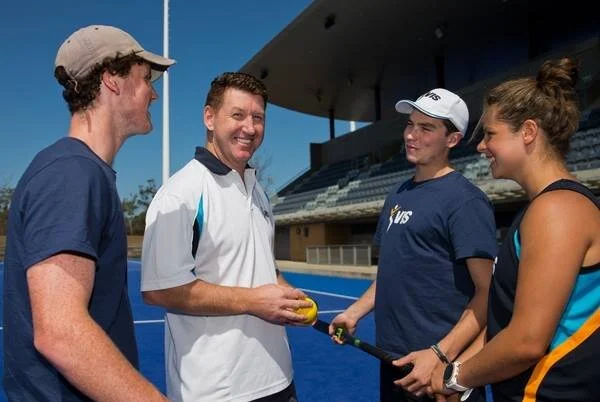
Jay Stacy at the VIS
Jay muses over great players he’s encountered and offers not to be missed insights into player career development and match play traits, technical coaching and the art of the penalty corner.
Episode transcript
⚠️ Automated transcript
This transcript was generated automatically from the episode audio and lightly corrected. It may still contain transcription errors, and individual speakers are not labelled.
I’m very humbled to present two Camberwell legends who have six Olympic Games and over 500 Australian caps between them. Welcome to the Camberwell Hockey Podcast. This week we’re excited to bring you David Wansbrough speaking with Jay Stacy. Alright, well, it’s my great privilege tonight to welcome to our third Camberwell Podcast the great Jay Stacy, one of Australia’s greatest ever hockey players, one of Camberwell’s greatest ever players. And so much to talk about with Jay tonight. I’m going to talk a bit about his career, his incredible record. We’re going to pick his brains around his current role, what he does coaching-wise at the moment. We’re also going to look back to his early days, how he started the game, and, of course, we’ll touch on his Australian representation, some of the memories there.
And we’ll also dig a bit deeper into his coaching, what he’s actually coaching young players, and things that we might be able to draw on as players ourselves. So really looking forward to tonight’s chat. But first of all, welcome, Jay, to the podcast tonight. Thanks, Wanny. It’s a really, really great privilege and honour to be talking to you, actually, on this podcast. Obviously, a significant part of my journey and my hockey was at Camberwell, so I’m really, really pleased to join you.
Fantastic. Well, let’s just get your stats right first, because I wouldn’t do it justice. I shared a lot of it with you, but when I do hear them, it always just blows me away. But let’s go through your major stats, and you don’t get a chance to tell anybody this, so don’t be shy. Let’s go through them. Yeah, well, I’m not really one for talking about these, but seeing you’ve asked, I played 321 games for the country and scored 160 goals.
I went to 14 Champions Trophies, three World Cups, four Olympic Games, Commonwealth Games, Junior World Cup, and were successful through some of those tournaments, winning a Commonwealth gold medal. Obviously, together we lost the final in the 92 Olympics, got a silver medal there, and a couple of bronze medals from the other Olympics as well. So, yeah, it’s been a really long journey and I thoroughly enjoyed the whole lot of it, the ups and the downs, right through my career.
Yeah, well, one thing, look, it is fantastic. When you hear those stats, they’re quite remarkable. There wouldn’t be many better in the country. In fact, there’s probably only one or two players now in Dwyer and Ockenden that would have more games. But to go to four Olympics, to play 14 Champions Trophies — this is all at the top level. This is all when Australia was winning a lot. Yeah, it’s quite a fantastic record, one to be proud of. I think the other part of it is the stats don’t tell all the stories, and you certainly had an amazing journey, alongside watching a lot of it.
You certainly rode the highs and the lows, and you had a great time, and you certainly made great friends. You’re a character that people loved playing with, and I think crowds loved. They were drawn to you, and most people would know of you. As hockey players aren’t that well known, you had the personality and the presence that really made you a big character in the game in Australia and around the world. But let’s quickly start off and have a look at how you started and got into the game, because there was a young boy from Reservoir.
I remember you, a couple of years younger, and there was this big red-headed lad out at Reservoir. You know, probably not what you’d call the ideal place to grow up for hockey when you look at, say, young kids that come down to Camberwell or in Holland on a Saturday morning. So you had to come through the muddy old grass grounds out at Reservoir there, and then to be strutting the world stage with the record you’ve got. There must be an interesting tale behind that. How did that happen?
Yeah, well, it is an interesting journey. The president of the local club was a teacher at our local primary school. My brother took up the sport. I went along to watch him and immediately fell in love with the sport. I played the next season in the under-8s when I was five, and spent all of my time at Reservoir. It was really a football… You would have been bigger than most of the under-8s when you were five, weren’t you?
You would have been bigger than that. Well, I probably thought it, but I don’t think I was. I was a bit short and round back in those days. But, yeah, it was really a football heartland out that way, in the old zoning system, and one main road sort of divided the two zones of Carlton and Collingwood. All my mates played footy and things like that, but yeah, once I sort of started playing hockey, there was really no turning back from that point. And I spent all my junior days at the club.
We didn’t have that many teams, but it came to a point, really, when I started playing senior hockey and junior hockey at the same time, as many kids do even today, that I just sort of came to a point where the coaching level at Reservoir wasn’t really going to take me where I really had a passion to go, and that was to play for Australia. And our coach of the under-17s at the time was Brad Laurie, and he was playing State League One at Doncaster. And I was playing under-17s and second grade at Reservoir. So I was offered an opportunity to go to Doncaster to play senior hockey, but I always remained in my underage team at Reservoir and played throughout, and then went to Doncaster for a couple of years seeking better coaching, and that was Ric Purser.
And I played the remainder of 1984 in State League One. We were relegated that year at Doncaster. And then the next year we were in State League Two. We won the premiership that year to be promoted back to State League One. And that brings on 1986. And that was when I made my move. Ric Purser was the USA national coach at the time, and he was going back to the US. So I was really searching for further and higher-level coaching. And Camberwell, with the sort of staff that they had playing, and coaching staff, I thought that would be somewhere where I would look.
I ended up in Camberwell in 1986. Well, that was a huge move, though, to do it. Before I go into that change of what it was like, you know, a couple of key points there. You mentioned Carlton, Collingwood. Well, you had — you can explain to me — the family relative, a related uncle in Bert Deacon, who was a Carlton Brownlow medallist, so you had a connection there. Could easily have been a footy player, by your build. So it’s quite remarkable, as you hear this, that there’s a young lad out at Reservoir that ends up coming across to Camberwell and then going on to Australian representation.
But also Ric Purser, who was one of the legends of the Camberwell Hockey Club. So he actually went out to Greensborough and helped that club, and there he ends up coaching you at Doncaster. But I think the interesting part — you came to Camberwell a 16, 17-year-old, you’ve already been to Doncaster. That must have been a brave move. Tell us, what are your memories of when you walked into Matlock Park as a sort of 16, 17-year-old? While we were playing at Reservoir, another sort of long-time mentor and coach through my junior days, Bill Fuller — we sometimes used to go and watch the State League One team of Camberwell train on a Thursday night, and that was some of our education.
So we’d miss the actual training or the pie night or whatever it might be, and we’d ferry over to Matlock to either watch a game or to watch a training session, which was funny in terms that I’d end up going back to that club many years later to start off my own sort of senior career. But it was a challenging time. I knew that I wanted to be a sponge. I wanted to get better. And I knew that I’d have to challenge myself. And I spoke to some people at Camberwell. Wayne Thornton was one of them, and some of the other guys around the place, Greg Read and those types of guys.
But I went down and had a chat to Don Argus, who was the coach at the time, and we had a brief chat about, you know, what sort of my opportunities would be and things like that. And he said that you need to make your own opportunities, and you’re more than welcome to come down, but there’s no promises here and you’ll have to find your own way. I really appreciated that honest assessment of where I was at, and I really sort of thrived on that challenge, and I thought there’s a lot of good players here, but if I’m going to make it, then I really want to take this challenge on.
And I put in a clearance at Doncaster and went to Camberwell, and I managed to play some practice games and things, and did a pre-season at the Wattle Park hill and all those types of things from back in those days. Ended up getting a starting spot in the midfield for Camberwell State League One. Yeah, I was really, really thrilled to do that. Well, you know, it’s interesting, a whole lot of interesting points out of that. But the Don Argus one about, you know, a young player coming along as a talented state player, and for him to sort of say, well, yep, we’d love to have you, but you’re going to have to earn your spot.
You know, in contrast today, I must say, it disappoints me often when I see young players change clubs, either because of themselves or parents, when a kid hasn’t got a game straightaway or been guaranteed a spot and they feel like they own one. I think that Argus trait, and any of the old-fashioned coaches that are here, I think there’s still a lot to say for that. It teaches resilience, and you’ve got to learn things. And I think that was certainly, you know, you could see why culturally that team under Argus’ leadership certainly knew the right way to go about things, and it paid off in spades.
Now, you came to the 86 team. That obviously was a team full of characters, and I think you had some immediate success in that 86 year. Yeah, we did. Tell us what that year was like. I had a very good year with Wally and with Greg Read playing on the right-hand side. Brian Ambrosius was playing on the right wing at those times, and I had a really good connection with those sort of players around me. But really, we had some very young players in that group, but also some older, more experienced ones — John D’Arcy-Evans and Duck in the net, some of their experience as well. So not only sort of the coaching staff were providing education and coaching, but also on the field in training sessions. But also there was always a reminder to enjoy yourself away from the game as well. And they did that very well also. Now, you told me the story — the pitch that year was the En-tout-cas, the old red shale, which some people listening to this wouldn’t remember, but the story you tell where the new synthetic pitch was going down, so you had to train elsewhere.
Exactly right. Obviously, there’s just the one pitch there. It was the old En-tout-cas surface. The club had invested in getting the first synthetic pitch down. So we were relocated to Albert Park Lake in the middle of winter. You can imagine how good that was, the breeze blowing off the lake. And the warm-up session was just one lap around the lake. That’s five kilometres. So everyone was pretty fit. And then most of the sessions were very always based around sort of competitiveness and connecting with players and that type of stuff.
So once all the hard work was done, you know, after training, it was a social environment. And I think that really led to a great bond with that team for many, many years, in many battles with our sort of arch-rival Waverley at those times. But we were successful through that period. And I think that move actually inadvertently sort of helped the team bond together, because we’re all sort of training in a foreign place, we’re training on buffalo grass and then playing on different surfaces on the weekend. So I really think that away from sort of the club, and going into a social thing afterwards, really, really made that team stick together. Yeah, it is interesting, because you contrast these days. We have such structured sport, whether it’s hockey or other sports, and everything is generally good facilities. You think back to some of those old days — we sound very old now, but, you know, the roughness of it and the way you had to improvise and innovate in the end created some interesting experiences.
I guess, you know, back to Don Argus as coach — he had an incredible influence on so many people at the time he was there, and still gets down to the club. But, you know, I guess what he managed to do with the club team, where you had Australian players, promising young stars, and you had older guys there whose life was all based around one game a week and different, I guess, different motivations potentially, different attitudes and different approaches to the game — his ability to meld a unit, to sort of cater for everybody’s differences, was quite unique in all the coaches I had.
I think I only had one or two others that could do it as well as him. He didn’t bother probably trying to teach yourself and other Australian players, perhaps not myself at the time, about how to hit a hockey ball — that was about what were the important basics and competitiveness, as you say. Clearly, one day when we came back from overseas — I think we may have just won a Champions Trophy in Holland, and the next week we were excited to come back to Matlock to play — you and I didn’t manage to get off the bench in the first half. Do you remember that, though?
I do, indeed, and I think I warmed up quite a few times, and he said, OK, sit down, young fella, you might get a turn, or something to that effect. So, yeah, I think he was really good. He managed you in a way that would bring the best out in you. And if you brought the best out in you, he allowed you to sort of explore and play the position how you wanted to, but he was managing that so that you would play in a way that he wanted you to play. And once he had sort of 10, 12, 14 people playing with that mindset, I think the team was always bound for success.
Yeah, no, look, it was fantastic. I think we all still — we gradually understood it. We might not have always at the time, but we learnt lots without even knowing it sometimes. You obviously then accelerated quickly across to Perth, started to start at the club level very quickly — your physical capacity and then your mental strength to be able to cope with anything thrown at you. You identified pretty quickly, and it went across to the AIS and then virtually into the Australian team.
So we jumped from sort of 86. All of a sudden, if it’s right, you land in the Seoul Olympics in 1988, which — when you think at the moment of all these kids training and the programs — was that quite an incredible… when you look back at it, the fact that you one minute were playing Premiership in 86 in Camberwell, and 88 you get to Seoul? Tell us that story. Yeah, well, it did happen quickly. 1986 was also my first senior nationals in Darwin, and then I was sort of finding my way at a state level, sort of not playing full games but certainly participating in games.
And slowly being introduced to that level. 87 was a bit better and I had a bit more time on the pitch. Also, that was the first year that, after 86, I was sort of told to apply for the Institute of Sport. 87, the January of 87, I went to Perth and played at the Nationals that year, and then I was selected in the National squad in 87 with a fairly consistent sort of Nationals performance without being brilliant. And I was totally thrilled.
It was my lifelong goal and ambition to play for the national team. Middle of the year, sort of out of — sort of not really unexpected, really — Ric Charlesworth withdrew from the Champions Trophy in 1987 in Amsterdam, and I was his replacement. He withdrew from the team because of the election, and that was when I got my first trip, and that’s when I made my debut at the Champions Trophy in 1987 against Argentina. And then 88, there’s an injury before the Games, is that right? Yeah, that’s another little story in itself. I was more than thrilled to be sort of getting a chance and making my debut, and deep down knowing that I wasn’t at the level to go to an Olympic Games at this point in time.
I was really thrilled to be doing Olympic preparation and, you know, to see what it was all about and training with the best players in the land and all of those types of things. And I was going pretty well. I was fit and strong and, you know, I’m a bigger type of lad at those times. You know, sort of my body was a bit more mature than your normal sort of 18 or 19-year-old, so I could handle the physical demands of it. Yeah, and I was lucky enough — well, unlucky — the first injury in the Olympic team was Dean Evans.
He went out and Michael York was called in. And then the second injury was Peter Hazlehurst injured his hamstring. And fortunately, I was called into the Olympic team very, very shortly — I can’t even remember the time, but I’m talking sort of two weeks before the game or three weeks before the Olympic Games departure. And it was a whirlwind moment, but one I’ll never forget. So I went to Seoul with your good self. And the team obviously was a little bit depleted with two young guys coming in, but still a very, very good hockey team. And as it turned out, it was a bit of a disappointing result in the end, coming fourth.
Yeah, well, it’s still a very hard one. Every Olympics has got its own story. But we lost the semi-final to Great Britain 3-2, having beaten them, I think, 11 of the previous 12 meetings. So, as many times it’s proven, it’s all about getting it right in the Olympic finals. Now, so from there we go — jump ahead to Barcelona. That was one, obviously, we were both out and got very close, and got to the final, only to be beaten by the Germans. How do you think about that as you reflect back on that result?
People, when they ask me, they think there must be huge disappointment, and in the end, in your own mind, you have to reconcile things. How do you look back at that one? Before I get to there, do you mind if I touch on a point just for any young Camberwell players out there, sort of with this in mind and this journey in mind? After the 88 Olympics, when I was in the team, a new coach took over the national team. In 1989, I was still based in Perth at the AIS and training well, and not really much had changed in my hockey life.
In my personal life, with parents separating and things like that, it was a little bit different. But in 89, I didn’t play for Australia the whole year. I was in a squad but sort of fairly long way down the squad. So I didn’t play at all in 1989. And I just thought I’d mention that, because young players out there think that you have to have it here and now. And if you don’t get it when you think you should get your opportunity, then unfortunately today some people think that that’s the end of their journey.
Being an international player and being selected and trying to have a career at that level is just such a long, long journey, and there’s so many hiccups and so many little bumps along the way that you have to learn from and build from. So I just think that some young guys out there, or girls, think that if you get in the Australian team one year, it doesn’t mean that you’re going to remain in that team. You have to continue to set goals, have objectives along the way, and if there’s a setback, then you need to review that, reassess, and then focus on the areas you need to get better at.
Then you may be able to have a long career in the national team. But as you say, from there, I got back in the national senior team for the World Cup in February 1990, and I remained in the team from that point. It was a hard fight to get back in there, but it was a challenge that I really was strongly passionate about. I really wanted to play for Australia and I was prepared to do anything to make that happen again, which brings me to the 1990 World Cup in Pakistan, where it was fantastic. And then obviously 91, and then all preparation leading into Barcelona, which I felt more, because I’d trained there. I’d been in the squad for three years leading into Barcelona. I felt far more part of that journey, part of that Olympic team, and I felt that I could have more influence than I did the previous Olympics, being a youngster coming in at the last minute.
So 92 was — yeah, I thought we were very well prepared. I thought we had a good young team, possibly a little bit less experienced than some of the senior European teams, but all the same, I thought we had a really, really good chance of doing something special there, which we did, and we played some really good hockey, and we managed to knock over Holland in the semi-final to reach our Olympic final. And unfortunately, I think that that experience of the Germans in that Olympic final in Barcelona came to fruition, and I thought that was probably the difference on the night.
We probably didn’t play our best hockey. We were missing our best striker, Mark Hager, who went out injured a couple of days prior to the games with a stress fracture of the foot. That’s not an excuse. That’s just a reality — that we would have been a better team with him in the team. But we made the final and, unfortunately, we conceded a goal early, and doing that against Germany plays into their hands, and unfortunately, couldn’t rein it back in and lost 2-1.
But when you look back on it now, I’m really proud of that effort and that group of players, and I’m still close to a lot of those guys in the team from that particular Olympic campaign, but obviously others too — but that one was pretty special. Losing was disappointing, but all the same it was a tremendous effort by that group for the lead-up in that Olympic campaign. I guess one of the observations about Germany is they don’t often let you play to the best of your ability; sometimes they don’t give you any easy hits, and it was always going to be tight. Quite a bit of an aside to that story, I guess, is that you may remember, every morning in that village, you had 20,000 athletes would go for a run, and invariably we would bump into the German team jogging at 7 or 8 in the morning, doing their loosening up and stretching, and we’d eye each other off, knowing full well that, you know, a big chance to meet two weeks later.
That’s one of the things about hockey at the Olympics. You start the day after the opening ceremony and you finish the day before the closing, which is, you know, an interesting point on that. I might just get your view on that, Jay. It’s different to any other event. You’ve got to watch all the other events and the medal presentations, and it’s very hard for the mind not to wander and dream about what might be, and keep yourself at the task. Is that something you found always a challenge in the excitement of being in the village?
It is a challenge, but I think the staff around us do a pretty good job trying to prepare us for that. You can’t simulate that at home, but certainly trying to prepare for it. I think you’re far better prepared for that if you’d been to an Olympics before. For first-time Olympians, I think it’s difficult. But in and around the village, your mind does wander a little bit, as you say, with swimming or athletics — people coming in and medals, and showing you their medal, and their job’s done and they’ve been successful and their campaign has paid dividends. But we’re still playing five games and trying to qualify for the finals, knowing that the competition’s really stiff. And then getting to the finals and trying to be at your best in those big games — that’s the real key to being successful at those major tournaments, and trying to build your form through those preliminary rounds to make sure that you’re at your best in the finals, and fresh mentally and physically.
That’s a good segue to the Sydney Olympics 2000, your fourth Olympics, obviously the excitement of a home Olympics. The build-up would have been huge, even being there, lots of friends and relatives. How did you handle that distraction, whilst at the same time you’re really there as an Australian hockey player, desperate to win a gold medal? As I recall — you know, the stats are slightly out here — but the last nine Olympics, 124 countries play hockey on the men’s side, 12 get to go to the Olympics, and the last nine Olympics, Australia’s made the last four. And yet they’ve won one gold medal.
So Sydney was another chance. We got very close. How did you look back at the Sydney Olympics? The Sydney Olympics was really good. But I think — I suppose I had a bit of an advantage in some ways, that I’d been to three previous to that and I knew what to expect. I didn’t really have sort of the FOMO, you know, the fear of missing out on what else was going on around the Olympic village and in Sydney and all those types of things. So I was able to stay pretty focused on what I was doing. In the back of my mind, it also — at my age, I was 32 then, or turning 32 — that could well be my, well, it was going to be my last Olympic Games. So I was really focused, with the team that we had, with the coaching staff that we had, and the game styles and our preparation years and games all led to a good performance in Sydney.
I felt that we didn’t play our best matches or our best hockey early on, but — I wasn’t really getting results, but without playing brilliantly. And I was happy with that, knowing that we were building something for the big games. It was a real twist of events towards the end of the tournament, because all along we thought that we would probably be playing Germany, because Pakistan had beaten Holland. And, you know, listeners can go back through the stats and have a look at those sort of games. But Germany were playing Great Britain, and they hadn’t beaten them for I don’t know how long.
But by Pakistan beating Holland, they were out of the tournament as long as Germany beat Great Britain. And I thought that was sort of a lay-down there, for that to happen based on history. But as it turns out, Great Britain scored two penalty corners, beat Germany. Suddenly Germany were out of the tournament, then Holland were back into the tournament with a second life, and then we had to meet them in the semi-final. They’re uncontrollables, of course, but certainly there was a real twist at the end of the tournament there, and we had to get ready and get prepared to play Holland, who had been one of our main rivals in the lead-up to the Sydney Games. And there was a talk that Holland had actually got the slabs of beer in the village and were starting to check out — they’d given up as well.
So quite remarkable, that story. It’s completely true. I’m not sure that’s what I did here. So, your career — incredible, four Olympics and, you know, always in the mix for finals, and put yourself on the line so many times. You finished that. Logically, a lot of players have moved into the coaching world. There were plenty of jobs around, seemingly, for players with your record.
But it wasn’t that straightforward, was it? Even though you went on — now, if you look back, you’ve coached in India, you’ve coached the Hawthorn women to great success, you’re coaching Victoria — but it wasn’t a lay-down misère, was it? Or you didn’t find it as easy as you expected? You know, I find that, you know, if you’ve been an elite athlete or a high-performance athlete in any sort of discipline for, you know, 14, 15 years, the easy thing to do would be to just think that you would just go straight into coaching. I spent, after my international career, after Sydney, another five years in Holland, in Eindhoven, at Oranje Zwart, which is now called Oranje-Rood — orange-black in English and orange-red in English. I spent some time there and I ended up being captain of the club. That wasn’t just because you had red hair? No — well, it could have been, I didn’t ask; I’d like to think that I had some inbuilt leadership skills, and I was the oldest. So yeah, I spent some time over there, and part of my role there was to be a coach of the club’s hockey academy. So I coached that academy on an off night from our training nights — that was once a week — and that was also selecting some talent from all the smaller clubs around the Eindhoven centre. There’s all small little villages that have hockey clubs, so the talents from those little clubs would be feeder clubs into Oranje as well. So I was part of the sort of identification part of it, as well as the coach of it. We used to have sort of 20 girls and 20 guys, and I used to coach both of them on different nights, which was really my first sort of step into — I had coached some other teams and things, but that was my real sort of first go at coaching at a reasonable level.
And then I was still playing and things, and obviously while you’re still playing and you’re playing in a different environment, you’re replenishing, you’re topping up your knowledge tank, just of a different way of play and different skill sets and different mindsets. So I was always building that sort of knowledge and that resource for later on. In 2005, I was captain of the club. We won the Dutch championship for the first time in the club’s history. It was a massive big thing in the city, let alone the club. So I was really privileged to be part of that. And I’m glad I was able to be part of that team, let alone be captain of their first-ever winning team. So that was great.
Once my playing career was finished after that championship, I was offered a position as head coach at Royal Dragons in Antwerp, which is 85km down the road from where I lived in Eindhoven. And I coached — it was a one-year contract. My first coaching stint, Royal Dragons only wanted to give me one year, because it was a bit of wait-and-see if you’re any good. And I also wasn’t sure if I was going to remain in Europe for much longer. So I agreed to one year. And they weren’t expecting too much. They hadn’t really spent much on players, or they hadn’t really recruited many players. So they were hoping sort of for a top-six finish. At the halfway mark, at winter stop, we were sitting on top of the ladder with, I think, 10 wins and two losses or something like that.
And they were thrilled. And I said — I’m in winter stop, when it’s freezing cold and snowing there, I always headed back home for summer and went back when play resumed. But I told him, in that time, I met my lovely partner, Danielle, on that trip. And I went back and then I thought, no, I think I want to move back to Australia. And in the end, Royal Dragons got a little bit dirty with me because I was going home. I suspect if we were two wins and 10 losses, they would have given me the arse at halfway anyway. So I guess that’s the way head coaches and coaches in general play out. If you’re getting some results, then they want to keep you.
And if not, then they want to move you on. So that was really my first taste of sort of coaching over there. I want to get a couple of stories or thoughts on India. You went across in more recent times — the Indian League — and you told me a couple of funny stories there with the team. You had a few owners that liked to get their relatives into the side. Is that correct, when you coached in India? What was that like? Yeah, it was interesting. It was a fantastic experience, and I sort of inherited a list.
I didn’t participate in the auction to purchase players. That was a German guy, and he was elevated to national coach of Germany. So he was no longer able to coach the Dabang Mumbai franchise out of Mumbai. So I inherited a list, and I tried to do some quick research on who was in the playing list. And then I started to look at how much money they were getting paid and who they purchased them for. And I thought, oh, based on these salaries, they must be a pretty good team and things. Then I looked at their playing record.
They only won one game per season for the previous three seasons. So that didn’t give me a lot of confidence. But I also thought, well, if I could just get them to win two or three games, it’ll look like I’m doing a terrific job. And then I might be offered an extension or something after one year. But, yeah, with those players, the first two weeks — sorry, first 10 days I went over — only the European or the foreign players hadn’t arrived yet. And I was only working with the local Indian players, and they come from all over India. And when I say all over, I mean from small, tiny villages where sometimes they don’t even play on AstroTurf and things like that.
And it was real interesting that I’d set up a couple of basic drills and my interpreter by my side, and one of the players back at the hotel after one training session told me that the interpreter was only interpreting about 20% of everything that I was saying. All these little challenges along the way. But I think that’s sort of — that’s given me great experience in dealing with those things, and trying to — it has its own rules within the league as well, but trying to marry up sort of different cultures in hockey. We had some Australians, we had some Dutch, we had Germans, we had a guy from Sweden who plays field hockey in Germany, eight Indians — sorry, we had 12 Indians and eight foreigners, and a list of 20.
So to try and manage all those people — I suppose when you think about it and talking about it now, I probably did draw back on some of Argy’s type of things, to get the best out of people and making them feel good about themselves, and that they’re important to the group and they’ve got a role to play within this team and they’re required, and all those types of things which brings out the best in a lot of athletes. Fantastic.
You could talk all day on those things. What I might just throw to you now is to get your thoughts on a couple of the best players you played with and against. Who were the ones that stood out, say, in your Australian career and also overseas? Who were the ones you just think — once-a-generation type players — that, given you’re in the midfield a lot, you would have played against these guys a lot of the time? It’s difficult. You play with a lot of good players, but I think Mark Hager was a fantastic competitor and goal scorer.
I think Craig Davies was a good defender, leader, and a great tackler, those types of things. You went pretty well yourself, Wanny. Well, that’s — yeah, clearly we’ve organised this before the talk. That’s why I went with the other guys first. I didn’t want you to put your — it was a bit obvious if I put you ranked at number one, you know.
But no, it was always a good rapport playing alongside yourself. When you played at centre-half and I was in the midfield, I always felt I had — and obviously you play at Camberwell, you play in Victoria, you play in Australia — you obviously have a good connection, but obviously in that type of style of play, that’s where a lot of the ball supply comes to, and I felt it quite easy to get the ball from you when you weren’t hogging it yourself. I think Dean Evans was a talented player as well. Ric Charlesworth was a super competitive man.
He taught me a lot. We go back to the 88 Olympics — and I think, were you rooming with him there? Yes, and I might have played a right half alongside him, and basically my job was to give him the ball. Yeah, yeah, yeah. But as a young guy coming in, I was in that room as well.
So I did learn a fair bit from Ric, and I’ve got a fairly good rapport with Ric,
although we’re totally different types of people socially and things like that, but I think we have a pretty good rapport and I like talking to him about hockey. It’s a little bit — sometimes a little bit confusing for me, with his intellect, but he’s very good to talk to. And what about overseas? Some of the players you’ve played against, some of the greats — obviously we saw a few handy ones from some of those countries. Yeah, so the one that comes to mind is Shahbaz Ahmed, and I was lucky enough to play with him at Oranje Zwart in Holland as well.
He was an absolutely game-changing maestro. He was unbelievable for Pakistan. And that — he was, you know, all credit goes to him for the success they had through the 80s there and 90s, 94 World Cup. Taco van den Honert was an outstanding technical, skilful type player. He was, for Holland, a very, very good player. Germany had some pretty talented players, but in a different type of style. They were very disciplined in their roles, and as long as they executed those roles, they were good.
Stephan Veen was another top player. Teun de Nooijer from Holland. Some direct opponents of mine — some of the best that I’ve seen. Of recent times, and coaching — Florian Fuchs from Germany, who I coached at the Dabang Mumbai, he’s a terrific bloke, but he is one talented hockey player. If you saw him walking around on the pitch, and the way, his mannerisms, you wouldn’t think that he was a high-performing athlete at all, but he is such a smart, intelligent hockey player, and skilled as well.
Did I leave anybody out? No, you did very well there. But what I’d also just very quickly finish on — which I think is where some players listening, young, old, or whatever, can get some insights — there’s all different ways we can analyse going about the game, but if you think about what’s important for a player, whatever ability they’re at, and if I broke it into the physical side, mental, technical — and then I’ll finish on the part of technical and penalty corners, because it’s an area of the game a lot of clubs and countries aren’t as good as they should be in, and you were clearly right in the thick of it for many years. Let’s start with the physical. You’re a guy who — big fellow — and had to run in the midfield. So quite a remarkable effort to not only play that sport, where it’s good to be nimble and it’s good to have strength, but you were able to do it for a long, long time. And I knew, but not everybody would, how hard you worked. So how did you do that, to play for so long at such an intense level in the midfield, given the fact that you were such a big guy? Well, yeah, you’re right. I didn’t have a natural type of hockey player’s physique. I, you know, I wasn’t blessed with speed, that was clear. But when I sort of did get wound up, I could run. I think over the journey that I became a smarter player, to use my, you know, my energy levels and things like that. I got smarter about how to get the ball, where to position myself, how to defend. Your decision-making, as you obviously get more experience, becomes clearer, so that you can read situations and you can react earlier. But training-wise, I just loved training. I just always wanted to be an Australian hockey player — that’s what it comes down to. And I just wanted to train when it was time to train. I really was focused and determined to be the fittest and the best and the strongest I could be. When it was downtime from hockey, I really liked to let my hair down and have a good time, but I had a good sense of timing and when that should be done and when it shouldn’t be. You know, I’d like to think now, looking back on it, I got that pretty — I think I got that pretty right. There might be a couple of blips on the radar, but I think I got that pretty right over the journey. And I think that was key to the longevity of my, you know, my career, sort of 14, 15 years, whatever it was. Well, I think the West Aussie system, or the AIS over there, certainly taught players — club level, state level — to play and train at intensity.
Charlesworth clearly drove it, and he rubbed off on his own teammates. But training at intensity, I still think, even at club level, is what can separate teams. I’ve seen it locally. Your girls have all thought — when you coached them, they just had an intensity, a hunger about them — that it wasn’t all about ability and organisation. It was also training with the right attitude, that you’re actually there for a purpose rather than just going through the motions. And a lot of people don’t actually get that or understand that.
Mentally, you know, again, so important to be able to cope with the fact that you have setbacks and the fact that things aren’t always easy — the ability to deal with that, I think, is, again, it’s not just for elite players, it’s actually for club players as well. Any particular things that the club players should be, you know, mentally… is it about approaching every session with a goal? Is that part of the mental approach? Yeah, I think that is correct, but it’s not easy being an elite athlete. It’s not easy being a State League One player. So you have to actually know where you want to go and what you want to do with your hockey.
From that point, if you say, yep, I want to play State League — sorry, Premier League at Camberwell — and this is sort of the position, and these are the skill sets I need to push my way or cement a spot in the team in that position. I think there’s, in clubs right around Melbourne, but particularly Camberwell, there’s more than enough people around to help you set those small goals and identify areas where you need to get better at. And certainly you need to have those, but it’s not just for game day. I think it’s every session that you do, whether it be — you know, for some people listening it might be even school hockey, even though the competition’s not great — you can sometimes still practise your focus areas at that particular time. And when you go through those, when you reassess those and review those, once you sort of start to get hold of some sort of skills, then you need to challenge yourself for the next bit.
And I think it’s about challenging yourself to get better at those areas that you identify. But you can’t identify 27 areas and expect to spread yourself so thin and cover those. I think you really need to narrow your focus on, you know, two or three significant areas that’s going to, you know, sort of rapidly improve your game when you pay attention to them, you know, at all training sessions, in games, and then reviewing them. If I make an observation there — what you did in your game, and thanks partly, I’m sure, well, largely to the help from the likes of Mike Craig and Jim Irvine — as a midfielder, they made it clear, or helped you get the ball more.
How do you get the ball more as a midfielder? You talked before about supply. That’s a critical skill or thing you need to get better at, and you definitely did that. When you first came through, you’d just get the ball because you were strong and powerful. Then you started to get marked by players, and had to work out ways to get the ball. And once you do that, you can just keep moving ahead and going higher, and I think that’s part of it.
Can I jump just to, at the moment, some of the technical things that you’re coaching your Victorian players? What are some of the common things? Is it receiving the ball? Is it, you know, from an attacking point of view, maybe defensive — just one or two things that you think are critical things at the moment for young players coming through? They should be also on the same path. Well, it’s a fair point about getting the ball and receiving the ball, but I think it’s about — it’s still about identifying space and having a plan about what you’re going to do once you receive that ball.
To be able to do something with it, prior to getting the ball, you need to be connected to where you’re going to go and have a contingency plan if that doesn’t unfold how you thought it was going to unfold before you got the ball. So your receiving position is really — sometimes you need to be able to post up and receive the ball closed. Other times you need to have an awareness around you to be able to receive the ball open, facing your goal and ready to accelerate through a gap or accelerate through an elimination of an opponent to create a numbers advantage. But certainly the awareness, the pre-planning and the pre-scanning prior to getting the ball is still relevant today. I think that our ability to play the ball in the air — so you’ll hear “3D skills”, but certainly aerial play, not only throwing just a big bomb out of defence, but actually a pass in the air, but also on the other end of that, receiving the ball in a way where you can make your next action.
So bringing the ball to ground in a position ready to play the next pass or run, or receive it in a way where you can manipulate the opposition. I think that’s an important part of the game. The first part is even probably more important these days. There’s not that many teams in Melbourne playing a zonal-type defence at the moment, but throughout international hockey, other states, those types of things — zonal-type defence, whether it’s a zonal full press or whether it’s a half-court zonal-type defence — actually the opposition encourage you to receive the ball. So they want you to receive it and then take it off you and form a counter from there, because if you’re in possession of the ball, the defence is more spread, so you can counter quite quickly. So I think that the receiving skills, the preparation and the prior connections are vital in that form of hockey as well, or that structured hockey.
All right, well, just technically, the last one I want to touch on quickly is penalty corners. You’re obviously — a hitter for a long time for Australia, but you get involved in everything. So what are the one or two key things that teams could get a better conversion rate with their penalty corners? Well, the speed of the — you’ll notice most teams try to have a drag flicker, and of course you need more than one, and it also helps if those drag flickers are on different lines on the pitch — striker, midfielder and defender. As it turns out, most drag flickers play at the back, but it’s a real advantage if you can have one on another line just for rotation purposes; it just allows you to have more on the park. The actual speed of the push-out is — we found for the Victorian Vikings a significant difference in our success rate compared to if we had someone… so, with Russell Ford, pushing out is consistently 85 kilometres an hour to the top. So obviously pushing out at that speed doesn’t give the runner out enough time to actually run out and smother the ball with their body line.
So it gives you more of the goal to shoot at. So that’s why we were quite successful when we had Chris Ciriello flicking at the top and Rusty was pushing out — our success rate with those two on. Of course, the trapping is critical as well, but it’s a closed skill. So there’s no reason why you shouldn’t be able to trap, you know, nine out of 10 in that area. But for the flicker, the footwork is important, because you can also injure yourself a little bit as well if you don’t have the correct technique. And there’s plenty of footage online, on YouTube and things. The best man to watch is a Dutchman called Toon Siepman. He’s sort of the drag-flicking specialist coach to the stars. Any big-name drag flicker you’ve heard of in the last sort of 10 years have all sort of come through him, all different countries.
He doesn’t travel out of Holland. The athletes have to go to him in a little town in Vught, in the south of Holland. But anything online with him coaching will give you a really good grounding in drag flicking. Look, it’s been wonderful to cover so many different areas. It’s been a wealth of interesting stories, current modern-day hockey tips, as well as hearing some of the stories of a career that is second to none. And, you know, I think the club still remains incredibly proud of your achievements — proud that you can still come into the club as a member and you’re warmly welcome.
So we thank you tonight, Jay. I thank you for the number of times you saved me in bars, but more importantly, we thank you tonight for your contribution. It’s been fantastic to have you on as a guest, and I’m sure it’ll be really well received. Thank you. Yeah, thanks a lot, Wanny. Yeah, really, really glad I could be part of this podcast for the club, and no doubt, hopefully, play resumes at some time this year and I’ll see everyone down at Matlock Park.
It’s a great venue.