Episode 4 - Rich Callaghan
6 May 2020 · Steve Prior
Listen to this episode ·
Subscribe in Apple Podcasts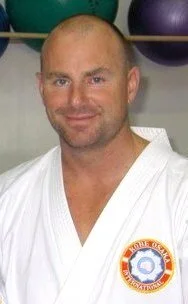
In episode 4 Hamish Ridland joins the hosting team to chat with Rich Callaghan
April 25th is ANZAC Day. This year it fell on a Saturday which should have been our round 3 Premier League home game against Footscray Hockey Club. The club were working on some special activities to commemorate our servicemen and women; but of-course that wasn’t able to happen this season due to COVID19 restrictions.
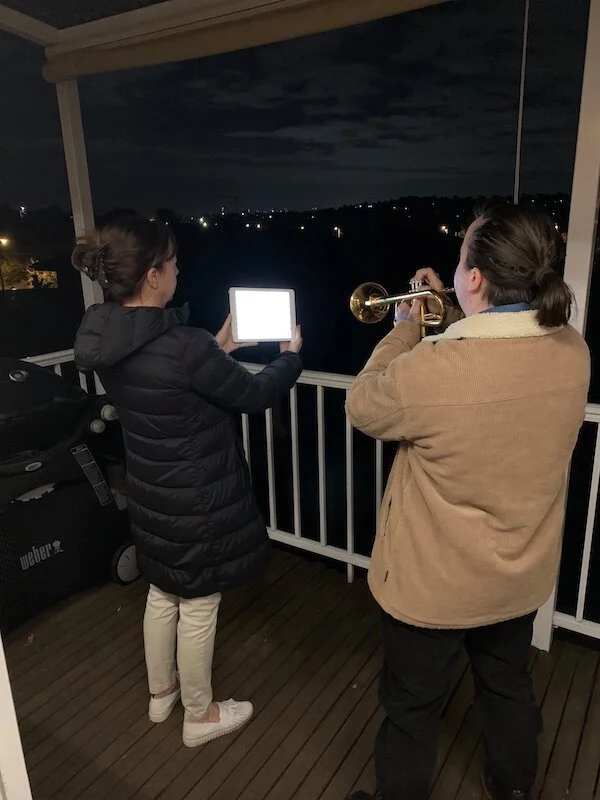
The Last Post in Lockdown 2020
Rich is a proud serviceman who served on 3 overseas deployments to areas including Afghanistan. Rich was an intimidating goalkeeper with many premierships in the seconds and a State League 1 title in 2000. He also happens to have 2 Karate World Cup titles and is the 6 dan black belt founder and Chief Instructor of Blackburn Karate Club here in Melbourne.
Hear Mish and Rich talk ANZAC Days past and in lockdown, Rich’s army career, overseas deployments and the importance of mate-ship & culture in both the service and sport. Listen to Rich’s Camberwell memories, goal-keeping mentors and delve into his Strength and Conditioning work with Camberwell and Hawthorn Football Club - is there much difference between our players and the professional AFL players…
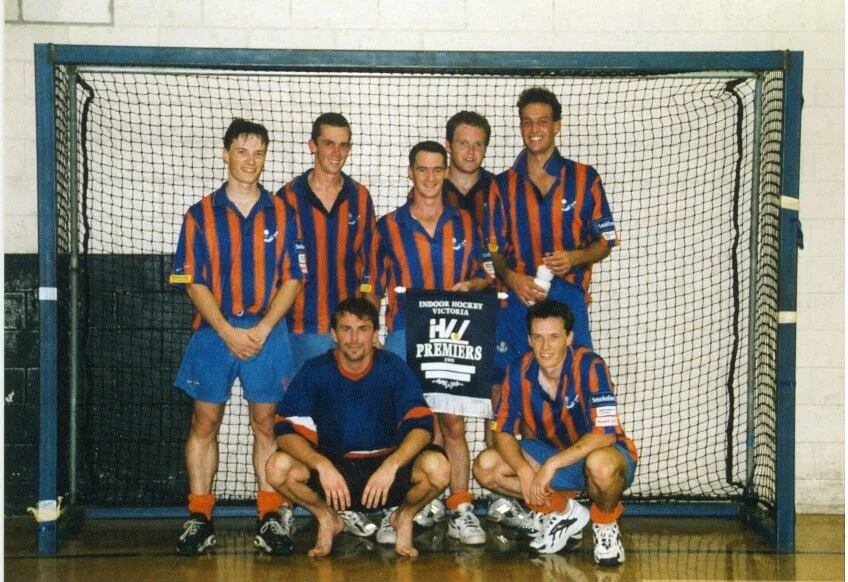
*Camberwell was the powerhouse (no pun intended) of Indoor hockey for many years. Every player in this 1998/99 premiership side played indoor for Victoria Seniors at some stage as listed (as per HV records)
LR at Back
Hamish Ridland (1999), Ben Ryan (1999), Martin Cashmere (1987, 1989, 1993-96, 1998-2000), Luke Kilmartin (1997), Jason Reilly (1998)
LR at Front
Richie Callaghan (1997-2000), Cameron Ridland (2001, 2004, 2006)*
Episode transcript
⚠️ Automated transcript
This transcript was generated automatically from the episode audio and lightly corrected. It may still contain transcription errors, and individual speakers are not labelled.
April 25 is Anzac Day. This year it should have been round three for the Premier League, with a home match against Footscray. The club were working on some special activities to commemorate our servicemen and women, but of course that wasn’t able to happen this year. Today, though, we’re proud to present a Camberwell member, an Australian commando, who served on three overseas deployments in areas including Afghanistan. Welcome to the Camberwell Hockey Podcast. Hamish Ridland joins the hosting team to chat with Rich Callaghan. A proud serviceman, Rich was an intimidating goalkeeper with many premierships in the seconds and a State League One title in 2000. He also happens to have two karate World Cup titles and is the six-dan black-belt founder and chief instructor of Blackburn Karate Club here in Melbourne.
A great listen this week. Here’s Mish with Rich Callaghan.
Well, I’d like to welcome Richie Callaghan to this week’s edition of the Camberwell Hockey Podcast. With Anzac Day just gone, I thought it would be good to talk to a member of the Camberwell Hockey Club with experience of service to Australia. Richie’s been a Camberwell member for many years — a player, coach and parent. Welcome to the show, Rich.
Thanks for having me, Mish. Good to be on.
So it was a week or so ago now, but how did you spend your Anzac Day this year?
It was certainly a different one with lockdown, but it was still pretty special. Lou — my wife, Lou — and daughter Mia were out on the balcony, and Mia plays the trumpet.
So she played the Last Post. It was quite different, but it was still pretty special. It was funny watching the neighbours’ lights coming on as she started blasting away — woke a few of them up. So it was a good day. Good fun.
Fantastic. Did you have the medals on?
I didn’t, no. I considered it, and I went, no, I’m only going to be out on the balcony for a little bit, so I couldn’t be bothered.
And you mentioned it’s obviously a bit different this year, but it sounds like almost a little more special in some ways. How would you normally do an Anzac Day?
Anzac Day when I was serving was always a massive sort of day. You’d be down at the unit, my army depot down there, at the crack of dawn, or a couple of hours beforehand, especially if you’re in one of the ceremonial parties and stuff like that. So it’d be a huge day, good fun. You’d have bacon and egg rolls down there, you’d be on your first beers at about eight o’clock in the morning, and then into the city, in a Young and Jackson’s until about eight or nine at night. So it was always a good day.
Once I got out and, being a bit older, I’ve been a bit more sensible now. Normally on Anzac Day, I’d go to a dawn service with Lou and Mia, then go to breakfast somewhere, and go home and watch the march on TV. So I’ve got a bit more sensible as I’ve got older.
And you’re always pretty humble about your service. Can you just explain to the people who are listening what your role was, and your rank, and what your army career consisted of?
Yeah, so I joined the Reserves in 2001. One of my mates from karate said, let’s go down and join this commando unit down in Williamstown — they’ve got a fitness day or something like that.
And I thought, okay, that sounds like a pretty good idea. So I rocked up down there. He was nowhere in sight, which was pretty funny.
So he left you high and dry.
He left me high and dry, yeah, that’s right. And I did the fitness stuff, and they said, oh yeah, that was good, you’ve done well.
Head off to Kapooka and do your basic recruit course and go from there. The Reserves are a bit different to the full-time army. When you join the Reserves, you actually join a unit, and you can stay attached to that unit for your whole career. Whereas if you join the full-time army, you basically go where they want you to go. You get moved around every couple of years. So it was never really an option for me to do full-time stuff. Part-time was the way to go, because I could stay in Melbourne, as I was running the karate club and stuff like that as well. So, yeah, I just joined the commandos, spent a couple of years getting qualified down there, and then once you were qualified, you could put your hand up for jobs overseas and stuff like that.
So I was lucky to go overseas and deploy to Afghanistan a few times. And then I got out — I think it was about 2014 when I decided enough was enough. Being a bit longer in the tooth and a bit older, I went, well, probably time to leave it to the young guys. And yeah, that was it. I didn’t get any rank down there. I was lucky enough to stay a private my whole career, which was pretty good. They kept trying to push me up for promotion courses, but I liked the fact that I could have all the fun stuff without the responsibility.
So I managed to be lucky and stay a private my whole career, which was good.
So after private would be sergeant, would it?
No, no — corporal. First you’re a private, then you go to lance corporal, then corporal, then sergeant, then warrant officer. That’s all the army ranks as a soldier. But yeah, I wasn’t interested in any of that stuff. Just do all the fun stuff.
Very good. Well, I must admit, I hadn’t realised — I knew you were in the army for a while, but I didn’t realise you were there for the best part of 13 years, was it? Time gets away, doesn’t it?
Time flies when you’re having fun, they say. That’s right, yeah.
And I’ve known you for well over 25 years, so some of the Camberwell listeners would know you pretty well, but others wouldn’t, because it is a pretty big club these days. So you started as a junior up the road, up from Matlock. Tell us about your time. What got you to Camberwell?
Well, I went to Camberwell High School, so it was just across Prospect Hill Road there. But I was a late starter to hockey. It was under 17 — my first year, under 17 Bs, under Ronnie Yates, the late Ronnie Yates — playing with Dave Pratt and, I think, the Yule brothers. Maybe Bowie was in there.
A guy, Andrew Collier, I remember. It was a pretty rough and ready sort of team. We probably could have played footy instead of hockey. It was a bit of a laugh. Collier, one of the guys who played, I think he used to drive his parents’ car there sometimes to games — that was under-17s — and we thought he was a bit of a scary man. But yeah, that was my first year, and I just remember it being a lot of fun, an introduction to hockey. The second year was under 17 As, and that was a bit of a different setup. Still a lot of fun. And that was under Stewie Grimshaw, who was a New Zealand international.
And it was a very, very different team. We had, I think, Rosie in the team, Marty Cash. And we managed to win it that year. So that was my second year of hockey, and I thought, this is a pretty good, fun thing. And from there it was playing seniors as a junior, and then senior events and stuff like that. But yeah, I was a late starter. Played footy and then fell into hockey, and loved every minute of it.
Always a goalkeeper?
Yeah, always a goalkeeper. I didn’t want to run around on the field. I was always attracted to the different positions in sport. I never wanted the run-of-the-mill stuff. I liked the idea of putting the pads on and doing stuff that other people didn’t do. And when I found out you could run and slide-tackle people, well, that was me in.
That was for you.
That was for you.
I certainly do remember David McKinsley from Waverley running down the right wing, and you shepherding the ball over the sideline, and he thought he might just give you a bit of a pushover. And he found himself over the fence pretty quickly, which I do remember fondly.
That story just keeps going around. That’s right. Good old Waverley, yep.
You played with a lot of great keepers through that time. Duck was the keeper in the ones at that point. And Lockie Dreher was obviously aspiring and pushing up through the ranks, a similar age to you. Tim Gibney as well, obviously, was still very involved there at the club. You obviously had some natural gifts that translated across from karate. Who had a hand in shaping you in terms of keeping?
I think probably all three of them did, the three guys you mentioned there. So Tim Gibney was probably the first guy that took a bit of interest. I still remember him giving me a few tips and pointers when we won that under-17A grand final and stuff.
He’d always been in the background with a bit of advice. Tim was probably the first guy to coach me in goalkeeping, I suppose. Not formal coaching, but just giving me the tips and tricks of the trade. Duck, I used to love going down and watching. I remember as a junior, as an under-17 or aspiring junior sort of playing seniors, down on the old cinders at Matlock there — him and his cricket pads, watching him run out and slide people to the top of the circle and stuff. I thought, wow, this is awesome stuff.
I want to be able to do that as well. And then Lockie Dreher, who came along a bit later. He was obviously down there, and then went to Thames — with Camberwell’s blessing — when he couldn’t get a game, with Duck being there. But he was a guy that, when he came back, you’d watch him in awe: the way he prepared himself, the way he went about things, he hated people scoring against him, whether it was training or playing. So, yeah, he was a guy you really looked up to.
Still to this day, he’s still running around doing it at the highest level. So you look at him and go, really, really lucky to have played some hockey with him and stuff like that. So, yeah, probably all three of them have had an influence, which I think is the way to go. You look to people who have done it before you, and you take the best they’ve got and move on from there. But yeah, all three have been a good influence, I think.
Yeah, I think the 80s and 90s was a great time to be a keeper too. Obviously the pads started getting a bit better in the 90s compared to the 80s. But there was no flicking then.
And penalty corners — you’d run out at the top of the circle and slide, and with the offside rule you’d have the centre forward sneaking through, and it was those one-on-one battles at the top of the circle between the keeper and the forward who snuck through the defence. It was pretty entertaining stuff.
Yeah, definitely. Always good fun to crunch a forward when they’d come in. So, yeah, that was the battle, and it was always good.
And so we crossed paths in the 90s, in a very successful Pennant A team. It was a great team. I was sort of coming through the juniors. There were many Camberwell names, like the Treloar brothers, and Jellies and Ridlands as older and younger siblings coming through. And then there was a whole bunch of players who came through the 80s and 90s, the golden era, with people like Dave Cash and Phil Pryor and Dars Mintz. And Mintz obviously took the harder notes out of the Argus book and applied them to that team. But what are your memories of the team? I’ve got fond memories — we had a lot of success and it was a good team.
Yeah, look, I’m the same. They were great days. I think it might have been five out of six that we won for a while there, or something. It was pretty good. I just remember it being great fun times. We’d win the flag and we’d go to the G-Bung and stuff on the Saturday night.
And that was just the way every year seemed to pan out. I don’t think we ever expected it — but maybe we did a little bit. I don’t think we took it for granted, but it was a successful team. And I think Camberwell still does that really well. They have the older guys in the team and the young guys coming through, and the old ones show the young ones the way. I do remember that. I remember guys like Dars Mintz, who you mentioned, and Dougie Watson, always helping you out, always giving you advice.
And these were guys who had a wealth of knowledge. So I think that’s a really good system. I think we still do that really well today. But again, like you, I remember them as fantastic days — great fun stuff, really awesome, and I feel really lucky to be part of it, I think.
Well, it was always nice to have you in the team, particularly when we were at the G-Bung. Obviously hockey was part of your thing, but it was always nice to have a six-dan black-belt karate World Cup champion in your team.
So obviously karate was your main sport. You sort of fit hockey in around a lot of your karate at that point, and you’d fill in for the ones when required, but that was obviously dependent on when you went away yourself with stuff. So you’re a six-dan black-belt rank, and you’ve run the Blackburn Karate Club for, what, 30 years? 25 years?
35 now. It’s been a while. I ran it with another guy, or under a guy, a bit before that. But yeah, it’s been 35-plus years. So it’s been a long time.
And you’re a very humble guy. You represented Australia for a good while, and Victoria for even longer than that, and you’ve got two World Cup championships to your name. So I guess, what drew you to karate?
Oh, I think I believe in the ability to look after myself. That was probably something that drew me to it. I’m certainly not someone who likes fighting, but I just think it’s a good skill to have, to be able to look after yourself.
So that was probably the main reason to get into it. I played footy, like I said before, and maybe I got a bit sick of that, and got sick of all the fighting that footy was becoming. And, yeah, go figure — I started doing karate. I thought I’d better learn how to fight properly.
And when did it start? Obviously it became not only your sporting endeavour, but also your career. When did that transpire for you?
It was in the late 80s. I was training at the Box Hill Karate Club. That was the guy I was training under, Kurt Klinkate. I sort of just fell into it. He didn’t really enjoy teaching the kids, and one day he came to me and said, do you want to take the kids on, on a Friday and a Saturday? And I went, oh, yeah — I was working as a delivery driver at the time for a pool company, delivering pool chemicals, and I went, well, okay, this sounds like a better gig. So that was how I got into it.
And it just sort of fell into place. Then in the early 90s I had a bit of a falling out with him and opened up my own place. And the rest, as they say, is history.
And that was the place just on the roundabout?
Yeah, it was. We were in a scout hall for about a year before that, just trying to find a full-time place. And then we moved into the roundabout there. I think 1992 was when I opened that one up.
Back then, we all knew you in the 80s and 90s as the grasshopper at Camberwell, because you were a pretty lean, mean fighting machine. What was your fighting weight back then?
I used to compete under 70 kilos, which is pretty funny for me now. I was always about 72 kilos, and I’d spend a couple of hours in the sauna to get my weight down, and do a bit of dieting. So, yeah, but I’m well over 90 now, so those are long-gone days. 70 kilos — God, yeah, I was a skinny little thing.
You obviously trained particularly hard, so you would have burnt a lot of calories, but did you have to pay much attention to your diet?
I didn’t really. I’ve got better at that as I’ve got older, but I was probably young and silly, and diet was one of those things I could have done better. But it didn’t really affect me. I’d diet leading up to a championship.
But it wasn’t something I was over the top with — probably something I could have done better.
One of the things we always noticed on the hockey field was your reflexes and how fast you were. What were the characteristics as a fighter that enabled you to reach the highest level of the sport and to win two World Cups?
The trainings — your basic karate training and stuff. It’s a lot of agility and a lot of reaction stuff. My footwork was always pretty good, and my punching and stuff — that was probably my main gig. I had a good defence, had good footwork, and tried to stay out of trouble, get a couple of points and stay ahead of them.
Yeah, that was probably my forte. I’m sure running around with the old-style hockey pads gave me good strong legs, and that probably helped me as well. So both sports complemented each other to a certain extent.
The old cane pads and box kickers.
Yeah, that’s it.
And so, talk us through what a World Cup looks like. How long does the championship go for, and how many bouts would it take you through? Was it a knockout style?
Yeah, it is. It’s all elimination, so you’ve got to keep winning to go through each round. For my style, when we’d have a World Cup event, we’d have a four-day training block leading up to it as well. So all the countries would turn up, and we’d train for four days. That was pretty good — you’d see all the competition and you’d suss a few guys out and stuff like that.
And that would normally be Monday through to Thursday. Then the championship would be Friday, Saturday, Sunday, so it’d be a three-day event. You’d normally have kids’ things on the first day, individual events on the second day, and then on the Sunday you’d have a half day and they’d do all the team events and open events and things like that. And depending on how many in the division, you might get six or seven fights. So you might have a final in the evening, or you might just go straight through from when your event starts, straight through to the finals.
So there are different setups, but you’d train hard for the week leading up to it, then have a couple of days of watching things, and then one day of competing. So, yeah, six or seven fights. Not incredibly strenuous, but you’d have to be on your toes that whole time, because it was elimination. You’d have to be sharp, right?
And how long would a bout go for?
Three-minute bouts, with a minute of extra time if it’s tied up and stuff like that.
I suppose during that week, you just don’t show your best stuff?
Yeah, that was always the thing. Did you go, well, I’ll show them everything, just to try and scare them off, or I’ll keep it in the bank so they don’t know it? That was always the dilemma.
What was your style? Did you keep your cards close to your chest, or did you play your cards face up?
No, I’d just go out. I’d just be my usual self, nice and relaxed, do what needed to be done, enjoy the training side of things, and then go out and fight my best. Lucky enough to come away with it a couple of times, so, yeah.
Tell me, is this true? There’s this urban legend that you could have been a three-time winner, but you were disqualified in one of the finals for an illegal contact. Any substance to that? Is there any truth to it?
We wouldn’t want the truth to stand in the way of a good urban legend, but no. I won two. I don’t think I got disqualified in the third one. I got a silver one year, I got a couple of bronzes in open weight and stuff like that, so maybe that’s where it came from.
I think I like the other version, where you threw an illegal contact and got disqualified as a bit of a bad guy.
Yeah — woulda, coulda, shoulda. That’s right, yes.
So, from a hockey perspective then, we come into the 2000 premiership. You’re a very important cog in that, because that was an Olympic year, and with Lockie away for the whole year, you played the whole season. At that stage you’d stopped some of your competitive karate. Up until then, like we mentioned before, you often played in the ones when Lockie was away, but it was wholly dependent on your karate. So what’s your memory of that year? Because it’s a bit of a different take on your normal sporting life.
Yeah, look, even after 20 years it still brings a smile to my face. It was great fun stuff. I made a bit of a conscious decision — I knew Lockie was going to be away that year, and I knew that was probably my only chance to play at the top level. So I look back on it and I think it just panned out perfectly. Again, I think I’m incredibly lucky. I can still see the spectators, the Camberwell faithful, hanging off the fence at Donny and just going absolutely feral. And I look back and I just think I was very lucky. It makes me smile. It was a great year — it’s certainly up there in the highlight reel.
There’s been a long subculture of the back five in the men’s ones team — people like Tom Davies and stuff. But it all started with you, and some founding members like Ben Ryan, Hugh and Jason Riley. And as a forward at the time, I was pretty jealous that we weren’t included in this clique. But there was a bit of psychology to it. What do you think you were trying to achieve with it?
Actually, I think it started as the back three. It was me and Ben and Cam, and it was always about the back three — the back three this, the back three that. Then it was the back three plus Lockie. Then it was the back three, you know, the back five. Lockie could get down there — I think it was on corners he’d run out, so just to try and become a part of it. So everyone wanted to hang with the cool kids. But, look, I think we were pretty tight in the way that we knew we had each other’s back.
So there was definitely a bit of — I don’t know if it was a conscious mentality to make us better, but it was all about the back three. We were pretty tight. We knew we had each other’s back. If someone missed the ball, the next guy — you knew he was going to be there. So it was good fun stuff. We’d all get pretty annoyed when a goal went in, whether it was Cam’s fault, Ben’s fault or my fault. We all took it together, and we were all a bit hard-nosed about trying to keep them out.
So, yeah, the back three, back five, whatever you want to call it, was pretty special. You see the game now, it’s all about defensive units and stuff like that. I think it’s a pretty important part. You can’t win a team event on your own — you’ve got to work in your little groups and your little units. And, yeah, it was good fun stuff.
It was. And I think we didn’t hit too many goals that year.
So you guys needed to be on your game, that’s for sure.
And certainly the back three clique took after the game as well. I think Benny Ryan profited from some of your back three shouting of drinks after the game and things. I used to hear from you a lot: train hard, play hard. And you guys certainly did that as the back three.
Yes, we did. Much to Wansey’s displeasure, I think, that year and stuff like that. But there were quite a few nights out at the Palace, at Cheers, the Mercury Lounge, Frosties — you name it, we were there.
And the back three was always there. So, yeah — hockey carnivals and things like that. I think it’s just part of that. You play sport with a bunch of guys, and you socialise together and you have a bit of fun together. And that’s just the way it is. But, yeah, we certainly partied well. I think living in Hawthorn was a mistake — Ben Ryan would come and bang on the door at all hours, expecting a lift home when he’d been out somewhere.
So he maybe pushed it a bit too far. That’s it, Ryan.
And so, looking back, you’ve got quite a number of sporting achievements. Given a team sport, and a lot of your karate — there’s a team aspect to it where you’re on tour, but as you say, having to rely on others is less so. So looking back, how does that sporting achievement sit with you now, after all the other things you’ve achieved?
Oh, look, I love it. I still tell the guys, whenever we talk about stuff, even down the hockey club, I’ll say the 2000 premiership is right up there.
Like, you win an individual event in karate and stuff, and it’s great — you’ve won it off your own bat and all that sort of stuff. But then when you’ve been through a set of circumstances with a bunch of guys — the highs and the lows — and you’ve achieved that ultimate success together, I think that’s fantastic. That still sits — I reckon I’d put that higher than an individual achievement. The euphoria that I felt after that, and we all felt as a group — that’s really what you play team sport for.
And I don’t even know if individual achievement can really be as good as that.
As you said, you made a conscious effort to play in that 2000 year, with the opportunity of Lachie being away at the Olympics, which gave you a chance to hold the spot down. And as luck would have it, our premiership came with it. And we just spoke about how in 2001 you joined as a reservist. And then, obviously, September 11 happened in 2001. So there are two events there that at the time you didn’t realise would see yourself in Afghanistan. But can you remember where you were when the World Trade Center attacks happened?
Yeah, I can exactly remember. It was a Tuesday night, so I was down at Two Company, down at the army unit, and I just jumped in the car. I was heading home, going to Mum and Dad’s for some reason, and I dropped in there on the way home. And they’re sitting on the couch, and we watched the second plane hit the towers, and I just went, holy dooley. So it was — I can still see it. And then I got a call later on that night, and I was walking the perimeter fence down at Two Company the next day, because they were worried about terrorist attacks on Australian Army bases.
So it was quite a surreal moment, but yeah, I can still see it now.
And so obviously at that point you’re in the army and you’re in training. Do you think your background in sport, and particularly karate, and some of the team sport through hockey, helped you prepare for what was coming?
Oh, yeah, I think it definitely did. In karate, you work a fair bit on your mental strength and mental toughness and stuff like that. Getting a black belt and all that, you get pushed pretty hard. So that was definitely a help to get through training and deployment and stuff. I think team sport probably plays a part too. When you go away with commandos or special forces, you work in small groups and small units, so you need to get along well — you’ve got to respect each other’s opinions, whether you agree with them or not.
So all those things that I learnt from team sport and from karate, I definitely used when I was overseas. So, yeah, again, I was lucky to have that sort of background.
Having played with Mintz, and obviously some reasonably strict senseis in your time, did you have any particular drill sergeants that stacked up or superseded what you could expect in a sporting context?
Oh, no, no. There are always a few good characters there. But I think getting berated by Mintz and different people like that probably put me in good stead for that also.
And angry Mintz can keep up with the best drill sergeant, I’m sure. So, yeah, no problem.
Well, through that training as a commando, I remember you suffered a broken pelvis there, and a parachute. So it wasn’t without setbacks. Was that prior to deployment, or leading up to it?
Yeah, that was before. I displaced my pubic symphysis, which is apparently a pregnant woman’s injury — so that made me feel a whole lot worse as well. I knocked the joint in the front, knocked that out of whack a little bit. But that was before I went away overseas, I think. It knocked me around for a month or so, but it was something that wasn’t too serious in the end, that I could get over. It hasn’t given me any dramas or anything like that. So — it’s why people join the commandos, because normally you get to jump in the water.
So you don’t hurt yourself. I managed to do that a couple of times as well — land in the water on a bad angle and twist my knee or do something. So, yeah, I haven’t had the best of luck with parachuting, but it’s a crazy activity anyway. I don’t know why people would want to do it.
And so one of the things we noticed too — obviously when you were going through the training, we saw you less frequently than when you were playing hockey — but the grasshopper somewhat changed into a bit more bulk and a bit more hulk. What was the training regime that the commandos led you down?
I went from a grasshopper to a scarab beetle.
Yeah, that’s it. Big, bulky thing.
I think it’s just the nature of army training. It wasn’t a conscious effort to try to put weight on, but I think it’s just a byproduct of the courses and the stuff you do. Like, you might be on a pretty physically intense course for a couple of weeks, and you’re eating like a horse to stay on top of things. So I think it’s just naturally what’s going to happen. Plus when I was deployed overseas, you’ve probably got 50 kilos on your back, 60 kilos on your back.
So if you’re weighing 70 kilos, you’re going to struggle with that. It’ll eventually break you down. So I think you just automatically bulk up by carrying loads around all the time, and, like I said, the training and the eating that you do — you manage to pack it on. I did weights for about 10 years and couldn’t put on any weight to join the army, and that made the difference.
Leading up to that, you’ve done a lot of training. As you mentioned before, you get to — is it that you volunteer to get deployed at that stage, as a reservist?
Yeah, you put your hand up, so they won’t send you away unless — they’ll say, look, there are spots overseas, who wants to go? And you basically put your hand up. So, yeah, they can’t force you to go as a reservist, which, again, is different to the full-time guys.
And for you, what was the attraction? Obviously you’ve done the training. Was it putting the training to use? What was your motivation to actually go through with it?
Oh, definitely. It’s one of those things, it’s like playing sport, or training for sport and never actually getting to do the game. The army’s no different — you spend all these years training, and you want to get overseas and test yourself out and put all those skills to the test. So, yeah, definitely, that’s the main attraction. You want to get away and do it.
And so you started in 2001. How many years’ training did you spend before you saw the first deployment?
I think it was 2000 — I’d done some work deployed to Darwin, that was a bit of a job. I think that was 2008. And then it was 2010, I’m pretty sure, when we went overseas. So from 2001, I spent probably the first two years becoming qualified, then you spend the next few years putting your hand up for jobs. But the jobs were pretty lean in the early years, just because the full-time guys were doing all the jobs. And then, as they’d been to Afghanistan more and more times, they’d have spots come up for guys being injured, or guys just getting sick of going over there. So that’s when more and more doors opened for us. So it probably took a good five years before we could go.
So then, yeah, in 2010, we got the call, and we were actually going to go to Timor. And then we got called into the office, and they said, oh look, there’s another job overseas. And we said, where? And they went, well, we can’t tell you unless you volunteer. And we went, well, okay, we’ll all volunteer. And then we found out it was Afghanistan. So it was a good trip. We wanted to go there instead of Timor anyway. Apparently Timor, by that stage, had become a four-wheel-drive holiday, they reckon.
So it was a chance to get to Afghanistan and do the job for real. So we all jumped at it.
Was it the whole unit that went, or just a section of the unit?
No, it was only seven of us who went over there. So we were the trailblazers. It was basically a filling-in job with the full-time guys. We were known as the Magnificent Seven, because we got the call-up. So it was good fun, and very lucky.
A lot of us could really only appreciate nerves about an event leading up to it — an exam, or a grand final, or a karate World Cup event. But give us — what’s the sense that you have when you’re flying? You’ve left the shores of Australia and you’re flying, even, to Afghanistan.
Probably more excitement than nerves the first time. And people think that’s a bit strange, but, like I said, you’re trained for so long to do the job that you really can’t wait to get over there. So it’s pretty exciting. You get a diplomatic passport, and you leave from — there’s a funny little terminal at Melbourne Airport where all the diplomats and stuff go out of. So you leave from there.
So you’re thinking you’re pretty special when you go out through there. And then you fly to Kuwait in a civvy plane, so nothing really too different there. But then you jump in a Herc and fly into country, and as you cross into Afghan airspace, the pilot will tell you to put your body armour on and all that, and then you start thinking, okay, now it’s getting a bit real. But, yeah, nerves not really — excitement more than anything else.
And then once you’d been there a few times and made the trip, you just couldn’t wait to get over there and get into the job. The travel over there just became a bit of a pain. You wanted to be there as quick as you could.
What sort of time were you usually there? I seem to remember it was around the Christmas time that you were often there.
Yeah, I did a summer and a couple of winters. So, yeah, the winter was interesting — pretty freezing cold, but yeah.
And you were at altitude at that point?
Yeah, you are. So at the base there in Tarin Kowt, you’re at, I think, about 3,000 metres or something like that. So you’re fairly high. And the first time you go over, you go for a couple of runs around the airfield and it wipes you out, because you’re not used to it. And then, as the more times you’ve been over and the longer you’ve spent in country, you get used to it, and you come back and you’re as fit as a fiddle, because you’ve been doing all that altitude training. But it’s quite an extreme place.
Yeah, the winter’s crazy, the altitude’s crazy. What sort of temperatures would you have been faced with?
Oh, we’d have minus 15 at night. You’d be out on a job somewhere up on a hill and you’d be pretty cold. And then during the summertime, it’s 50 degrees plus. So it certainly is a land of extremes. And that turnaround is probably about 30 days, so you’re one month at minus 15, and then a month later, you’re at 30 degrees during the day.
So it’s quite bizarre, quite extreme.
And what would a typical day look like for you, as you say, on a job?
Each tour was a little bit different, and no job, or no day, is really a typical day. If you’re on base, you’d either be on base or you’d be on the job. So on the job would be out patrolling, or flying in helicopters, going to a target or something like that. That would be the job. And you’d be sitting on a target, watching it for a couple of days, or just running a medical clinic in a village.
It could be a whole range of different things. You might be out on the quad bikes patrolling. We might spend a month out outside the wire, they call it. So, yeah, a broad role of things. When you’re on base, it would be eating food, pumping weights in the gym, going for runs, going for shoots down the range, training — just trying not to go stir crazy waiting for the next job. But it was very broad, very varied, the stuff that you were doing. So that always kept it interesting and kept it exciting.
I imagine there’d be a fair amount of planning you’d have to do with some of these things. You can’t obviously just go walkabout in an area like that without —
She’ll be right, mate.
Give us an insight into what would go into pre-job planning.
Oh, yeah. So everything’s planned to the nth degree. And commanders are told to come up with a plan, and they bring it back to the chief, so to speak. And they’ll look at it and go, no, too much chance of something going wrong here, so go back and rework it, come back to us.
So the Australian Army is pretty good at really looking after their people. Gone are the days of sacrificing hundreds of guys going over the top in the First World War and things like that. Everything’s really well planned out. You’ll rehearse the whole thing, you’ll go over it. There are some jobs that come up that are quick jobs, that you just jump in a helicopter and off you go, because some intelligence pops up. But most of the things are pretty well planned out, and you work with the guys.
You do pre-deployment training with them, so you know how they’re going to react to things. So it’s all pretty well organised, pretty well planned and well thought out. Having said that, they talk about the best-laid plans not surviving the first round of contact. The guys are pretty good, they all know the roles, they know what the commander’s intent is. So you can even work things out on the ground at the last minute if you have to. But by and large, things are pretty well organised, pretty well planned.
And you mentioned you were sort of in relief for the SAS and the commando unit. So what was it like coming in as an outsider to the team? I guess in some ways it’s like you used to pop into the ones every now and again — similar but different. What was the dynamic of coming into an established team like that?
It’s funny. There’s a lot of animosity between the SAS and commandos. They sort of compete for each other’s jobs, so they often don’t like each other very much, even though they’ve got a healthy respect for each other and stuff like that.
As reservists, we were pretty good. We come from a different world to a lot of the full-time guys. All they’ve known is the army, and they’re almost a bit institutionalised. They act a certain way, they all talk the same, they all act the same. It’s quite funny. Whereas you get these reservists come in who have got other lives. We actually get along okay with them. Once they see we’re not too much of a threat, they generally let us get along.
I think also, your reputation precedes you. If you go in there and you’re someone who’s not very good at their job, then they won’t want to have a bar of you. But likewise, if you come in as someone who’s got a good reputation, then they’re happy to have you on board. So I’ve talked to the Premier League boys a bit about that in the past — that your reputation is important. You’ve got to look after it, and you’ve got to keep it intact, and it’ll take you places.
And what was the culture like in the unit you were deployed in?
It’s a very different unit, because you’ve got people from all walks of life. As a reserve unit, you’ve got a lot of police, a lot of fireys, government jobs, because they get a bit of extra army leave. I think they can take double their holidays if they use it for army training and stuff. So, yeah, you get a lot of them. But then you’ve got students, and you’ve got CEOs, you’ve got karate instructors — people from all walks of life.
So that makes it an interesting place. The culture’s pretty good, because you don’t really get many people down there who are just there for the wrong reasons. It’s a pretty hard job to stay involved with the unit. So everyone down there is trying to better themselves. So the culture is pretty good.
As a civilian, you hear a lot — and there’s a lot of talk every year — about the legend of Anzac and mateship. And for you, being in the inner sanctum, what does that mean to you? And has it changed your ideal of what mateship means?
Oh, it’s probably just a more extreme version of — you see mates backing each other up on the footy field or on the hockey field and stuff like that. But I think the army’s maybe just a similar thing, just taken to another level. It’s certainly one of the pillars of the Australian Defence Force. You’ve got to know that your mates won’t leave you behind, they’ll come looking for you. You go through a lot of extreme situations together.
So that bonds you pretty tight. But I’ve got no doubt there’s mateship right across all aspects of society. The police would be pretty tight as far as mateship goes, especially after the terrible thing that happened to them last week. The fireys and stuff, they’d be pretty tight, ambos and things. So it’s a great thing in the army, but I’m sure it’s something that we all see across all aspects of society.
But, yeah, mateship in the army — good fun.
Did you form another back three whilst you were away? Did you have some characters that you got to know and came to rely on?
Well, we were probably a back five, because there were five in the team. We’d hang out together. The snipers would all be hanging out and doing things together, and it was pretty tight. A lot of the other guys would look on a bit jealously as well — how come those guys are all hanging out, looking like they’re getting along together? But that’s small team units. That’s what you have to do. You’ve got to get along with each other, because you’re living in each other’s pockets for months on end. So you’ve got to be pretty close. So, yeah, we probably formed a bit of a back five.
And so, I’m always curious — and I think I’ve asked you this in the past — but how were you received on the ground by the locals in Afghanistan?
That’s always an interesting one. The locals are generally pretty good. It’s funny, they’re probably like you and I — they just want to raise their kids, they want to live in a safe country, they want to have a job and all that sort of stuff. So, very similar. So the fact that we’re there — if that causes them not to be able to do that, then they don’t really like us. Then there are others who love having us there, because we do medical clinics and stuff like that. They talk about there’s 20% love us and want us there, 20% hate us and don’t want us there.
And the 60% in the middle really are indifferent. And that’s the hearts-and-minds battle. But everywhere we went, locals are pretty good. There’s just that constant battle between the local villages — the Taliban would come in and go, well, okay, if you look after the Australians, we’re going to come back and take your kids away and all that sort of stuff. Whereas the Australians are in there, on the opposite side, saying, well, look, give us some information and we’ll look after you, and all this sort of stuff. So they’re a bit between a rock and a hard place. And that’s a hard thing over there, with the locals trying to do the right thing. But to your face, they’re always good to you. I’m sure we made a difference over there in some people’s lives. But, yeah, we were always well received wherever we went.
When did you know, for you, that your last tour would be your last? What was the moment where you thought, okay?
Yeah, look, I decided that three was a good number. I didn’t want to be one of those guys who just deployed once, just to see what it was like. I thought three was a good thing to show you were committed to the cause. So — my sister passed away from cancer on my last deployment, my third deployment. And I came home for the funeral, and I looked at Mum and I thought, I can’t go away again and have the chance of her losing another kid. So that was a pretty easy decision. So I went back, finished my tour, and then came back and went, well, that’s it, I won’t deploy anymore.
So, yeah, that was — I can still remember that. And that was definitely a conscious decision, and a pretty easy one to make in the end.
Yeah. Like, changing gears like that, coming from a combat zone back into normality — I was talking about this the other day with someone else — Monday night vets is a long way from Kabul. So how did you go with changing, coming back to Melbourne, and what is a very easy life versus being in a combat zone the next moment, and then you’re in civilian life?
Yeah, look, I’ve probably found it pretty easy. Maybe it was all the karate trips and stuff I’d go away on. I’d go away and have a karate tour for a couple of weeks and come back and settle straight into work. Even when I was away in Afghanistan, I’d still be on the email. Like, the karate club was still running, so I’d be emailing people and doing things. So I had two lives — I had my army life, I had my karate life back at home, and I knew they were both coexisting.
So I don’t think it was particularly hard. I’d finish my tour and come back and settle straight back into my karate life, and there was no problem. I get why some of the full-time guys struggle when they come back, because they come back and there’s nothing to come back to other than more army stuff. So I think I was pretty lucky with that, and it’s never really been a problem.
Probably the only problem was that traffic used to drive me nuts. I’d come back and I’d just be more impatient, and I’ve heard, speaking to other guys, they’re the same. So it seems to be something we all have dramas with. But if that’s my biggest problem, then that’s nothing.
We hear a lot about post-traumatic stress and a number of veterans struggling. Do you think having karate and other aspects in your life, and that balance, really helped you change gears and go between the two jobs?
Yeah, I think so. And I think I joined the army quite late too — I was 32 when I enlisted. So I think that helps as well. You sort of know yourself a little bit better.
It would be different if you’re an 18- or 19-year-old going away and stuff like that. So I have my moments when things get to me. But I’m pretty good at differentiating between the things I can control and the things I can’t control. That’s always been something I’ve done pretty well. If I can’t control it, there’s not really a lot of point worrying about it. I’ve always been okay with talking to people and stuff like that as well, so I’ve always vented. So, again, it’s not something that really — I really haven’t noticed, coming back, any sort of PTSD or anything like that. So, yeah, I’ve been lucky.
I’ve known you for a long time, and you haven’t changed a jot since I met you the first time, 25, 30 years ago. But do you feel like service has changed you in any way?
Oh, it’s good to know it hasn’t changed me. But, yeah, I don’t really think it has. I think I’m the same person. It’s maybe given me a sense of pride in what I’ve done. I’m certainly proud of the service. It’s given me more experience. I love David Parkin’s idea that you’re writing your life’s book, and when you want to open up those pages, you see that they’re full of things.
So I love the fact that I’ve gone away and done something, and it’s another chapter in the book, so to speak. It’s certainly given me a bit more of an understanding of myself. So I don’t think it’s changed me particularly, other than giving me a bit more sense of pride and a bit more understanding of myself.
Well, you should be very proud, I think. I mean, one of the things I noticed too when you came back — and I was lucky enough to work with you as the coaching staff for Premier League for a good number of years — and now I’m a parent who sends his child to your karate club, and I’ll be shipping another one off to you very shortly.
He needs it.
And I’m amazed at how you can control three-to-five-year-old kids with ease. But I think it’s some of the life lessons that you talk to the kids about at an early age. How do you think being in the army and your experience as an athlete — because I suppose you’re at that point in your life where you become more of a teacher than a doer —
Yeah.
What are the key messages you try to impart on people you work with?
I think that’s the key. As you get older and you can’t do it, you’ve got to teach it.
That’s right.
Look, I try to teach them the old adage that hard work pays off. That’s one of those things — if you really want something and you’re prepared to work for it, then the sky’s the limit. So that’s something you really try to impart to people. And that team environment — that you really need to care for one another, the responsibility to do the right thing, and really wanting the success of your fellow teammates above your own, is a really important thing. So I try to teach that in the team environment. But look, I’ve been lucky enough to have some great mentors in my life, who taught me the lessons, and I just try to pass on whatever I can. I can still see people, I can still hear their voice telling me little tidbits of information, and I go, yeah, well, that’s stayed with me and that’s served me well.
So you just try to do what you can, and give people those little gems of information back, so that hopefully it takes them to a better place, and they can then impart that onto people of their influence down the track as well.
And the last thing — as a fellow Hawthorn supporter, the Camberwell hockey connection there, with Phil Merriman and Peter Bacquie, led you down there. And obviously your service was another aspect of you fitting in there. Hawthorn makes a big deal about their Kokoda walks and things like that.
So they obviously valued that aspect that you brought to it as well. Can you talk about what it’s been like working in a high-performance environment like that?
Oh, yeah, it’s been fantastic. Obviously a bit different now with the shutdown, but hopefully it’ll all pick up again later on. But, look, it’s been fantastic. Me being an amateur athlete all my life, to now be working with professional athletes and seeing how the other half lives — yeah, it’s been great. People often ask me the differences between the Hawthorn AFL guys and the Camberwell Premier League boys and stuff.
It’s funny. I watch them and I go, there’s not a huge difference as far as the fitness and the drive, the professionalism, all that sort of stuff. Probably the $400,000 pay packet is probably the biggest difference. But I’ve loved my time. I love seeing the difference between professional and amateur. I love working with the elite groups and stuff like that. So, again, I’ve been pretty lucky, and I’m certainly enjoying my time down there.
They’ve even got you doing tackling now too, haven’t they? Not only boxing, you’re tackling as well.
Every year I go down there, they give me another job. Sometimes I’m throwing balls up with Damian Monkhorst, doing some ruck stuff. Every year they’ll give me different roles. So it’s pretty funny.
And it was Hodgie, wasn’t it? Hodgie wanted a few little tips and tricks around how he could legitimately twist someone’s arm.
Yes, he has. I won’t — pulling someone’s finger at a certain angle — we won’t mention it and get him in trouble, but yeah, he was one who was always looking for a few unfair advantages that he could get.
And last couple of questions. I’ve done a little bit of sparring with you, and just got punched — I thought I had a good six-pack until you punched me in the guts and I keeled over. But who in the Hawks does best go with the gloves, as a Hawthorn fan?
I think at the moment it’s Jarman Impey. He’s pretty good, actually. I’ve watched him and I tell him all the time, I say, you’ve done a bit of boxing, haven’t you? And he goes, no, no, I haven’t done it. But he’s definitely done some boxing. He’s pretty handy, his technique’s really good, and he could step into the ring, I reckon. And Cyril, when he was down there, he goes really well — Cyril, before he retired, he was pretty handy too. He was good fun.
Fantastic. Well, Rich, thank you very much for taking time out on a Sunday night and having a chat. I think you should be very proud of your service to Australia. It’s been great listening and getting some insight. And, yeah, normally with Anzac Day we would do something down at the hockey club, but not this year. But I thought it was appropriate that we weave something like this into the podcast. So thanks very much for your time.
That’s awesome, mate. Thanks very much.