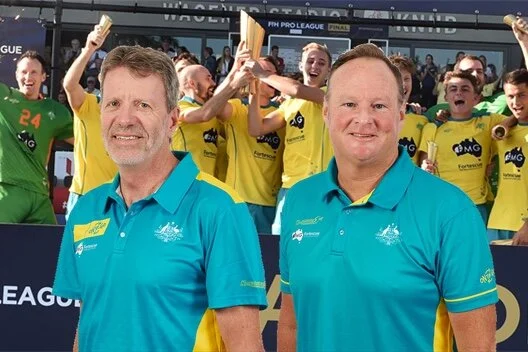
Episode 8 - Colin Batch & Anthony Potter
2 June 2020 · Steve Prior
Listen to this episode ·
Subscribe in Apple Podcasts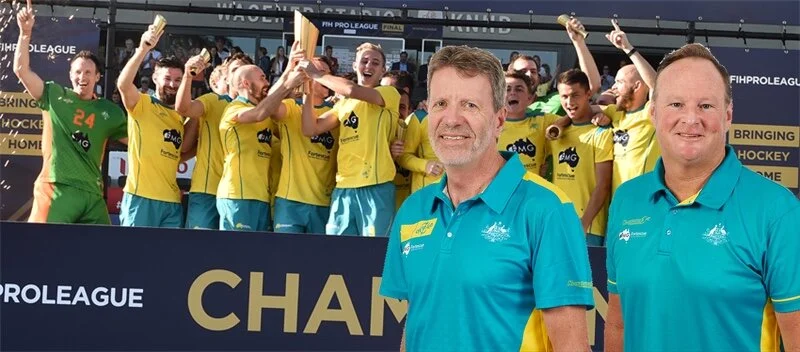
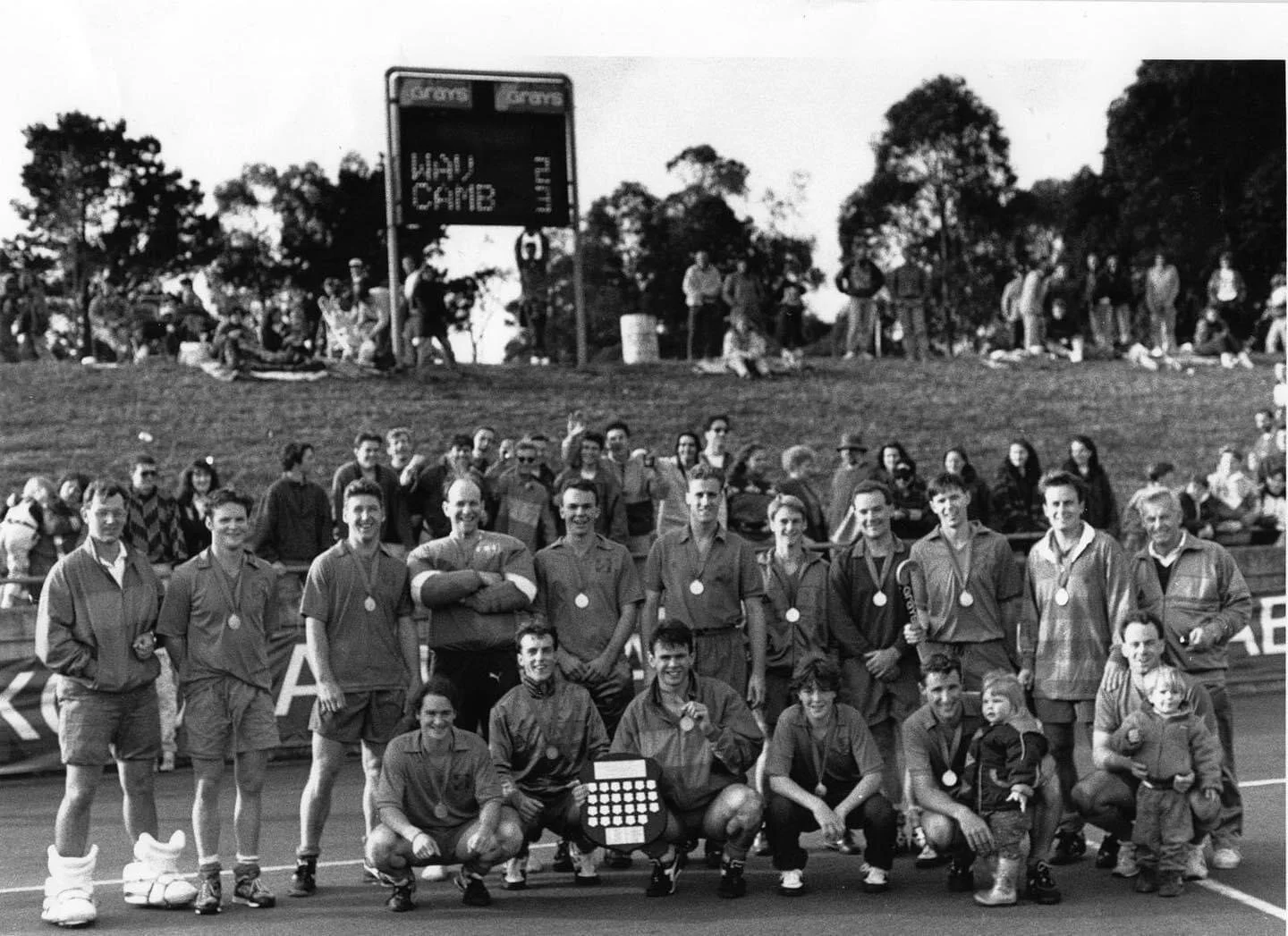
In episode 6 Hamish Ridland and Trav Brooks introduced us to the Bert Batch Cup and the fierce rivalry between the Camberwell and Waverley Hockey clubs. This week we have another two Camberwell and Waverley superstars.
This pair though, also happen to be the head and assistant coach of The Kookaburras.
Wansey is back with Colin Batch and Pottsie in a super candid insight into how the team run the program, manage the squad and approach games tactically. Find out how the guys started their careers and moved into coaching and how they’re managing the delayed Olympic preparation.
Essential listening for all coaches and players.
Episode transcript
⚠️ Automated transcript
This transcript was generated automatically from the episode audio and lightly corrected. It may still contain transcription errors, and individual speakers are not labelled.
In episode 6, Hamish Ridland and Trav Brooks introduced us to the Bert Batch Cup and the fierce rivalry between the Camberwell and Waverley Hockey Clubs. This week we have another two Camberwell and Waverley superstars. This pair, though, also happen to be the head and assistant coach of the Kookaburras. Welcome to the Camberwell Hockey Podcast.
Wansey is back with Colin Batch and Pottsy, and a super candid insight into how the team run the program and prepare for games. Find out how the guys started their careers and moved into coaching, and how they’re managing the delayed Olympic preparation. This has got to be essential listening for all coaches and players. Thanks very much, guys, for your time. I really look forward to catching up for a beverage or two when the games return. Here’s Wansey. All right, fantastic to have on our latest podcast with the Camberwell Hockey Club two current coaches of the Australian team in Colin Batch and Anthony Potter, who are the two men in charge of getting the Aussie team at the moment, I guess, reset for the Tokyo Olympics. All fingers crossed, everything from here starts to improve.
But it’s fantastic to have a team that’s been at the top of the tree for a number of years and currently goes into the Tokyo Olympics as one of the gold medal fancies. So Colin, welcome. And Anthony, welcome. And it must be a crazy, disruptive, unusual time the last couple of months. Do you want to fill us in on what actually is going on over in Perth, where some of the Aussie squad are currently residing? Yeah, g’day, Wansey. Pottsy, really pleased to be with you tonight. It has been a strange time, there’s no doubt about that.
We finished our training in Perth on the 23rd of March, and the players disappeared pretty quickly. We’ve got about half our squad in Perth at the moment, but a number of the players chose to go home, which is completely understandable. And while the restrictions are easing at the moment, we’re hopefully getting many back, but maybe some won’t return to Perth until later in the year. So a lot have joined their local training centre coaches, the NTC programs.
They’ll do their training there for a couple of months and then hopefully rejoin the squad in September, October or thereabouts. The players at the moment have been focusing on their strength and conditioning, and there’s been plenty of conditioning during this period, and they’re all very keen to get back into hockey, which we’ll start next week. So, Pottsy, a bigger welcome to you as an ex-Camberwell player. I can’t believe we’re letting Batchy on just because he’s the Australian coach onto a Camberwell broadcast, but we’ve managed to break some rules. And we had Travis Brooks on a couple of weeks ago, which was surprisingly pleasant.
Yeah, he’s dominated. Yeah, dominated. He did. He was actually reasonably well-behaved too for a blue bagger. But, Potts, just an interesting question I was going to ask you first up was the logistics and timelines. You know, half of this, the preparation that goes into a four-year Olympic campaign is pretty thorough and meticulous and challenging. And to have a campaign, middle of March, sort of stopped in your tracks, how have you seen it? Are you working to now a loose timeline, or do you have to put a firm one in and just assume that Tokyo, whilst we shouldn’t keep talking about Tokyo, it is certainly the finishing bell to set a program? How do you reset? Just to go on from what Cole said, after the 23rd, the main priority for us as staff and as a high performance unit was the safety and the well-being of the players.
So we gave them a four-week holiday away from hockey, and we were contactable every day if players needed. I think with Col, I and Rob and high performance management,
as COVID sort of stepped up the gears over the weeks, plans changed daily, some changed during meetings, and rough drafts just stayed as the norm, so to speak, for the eight weeks that were in lockdown. We’ve sort of come to more sensible planning now, in the sense where we can start to train, as Cole touched on. We’re looking to run some camps because of the cancellation of all Hockey One programs and state championships throughout the country. So we’re, again, hopeful later in the year we can see all our athletes, not only the National Squad athletes, but development and futures in their own programs in camps throughout the year.
Yeah, so it just sounds like it’s got to be flexible and fluid, and as more information comes through, you can keep planning. So I guess it’s just a great insight for people that we see the Aussie team on TV at tournaments, but there’s a lot that goes in from a lot of people behind the scenes. I’ll come back to the actual detail around player programs and what you coach them later in the chat, but let’s just quickly duck back to more introduction around both of you two to hockey. Obviously, Cole, a little bit older than myself, but had an amazing career as an Aussie player, Victorian player, and a Waverley player at all levels.
You know, had a massive impact across the board in your playing career. Many, many games for Australia, World Cups, Olympic Games. And I noted in looking through your CV, there were a few Waverley premierships, national championships, and lots of goals scored. When you look back at your playing career, and, obviously, you’ve been so entrenched in coaching for a number of years, you probably don’t do it that often now. Lucky enough that I can remember exactly lots about your career. What do you look back on as your favourite memories or fond memories of your playing career in those different teams you played in?
Yeah, I guess you always think back to your first game, wherever that was. For Waverley, it was, I went to Waverley in 1973 and got promoted to A grade, as it then was, in ‘74. And Waverley was playing towards the finals in their first year, and they actually got into the finals. So it was a pretty good effort coming from the second division and making the top four in the first year of the club. And I did play towards the end of that season. I didn’t start the season, but towards the end of the season I played a couple of games and played in the first semifinal, which we lost, to the powerhouse. So I do remember that quite vividly and, in fact, scoring a couple of goals in my first game in A grade.
So that was a big thrill. But, you know, apart from the first games that you played for Victoria or Australia or your own club, you do remember the premierships or the championship wins. I was lucky enough to play in the World Cup, the first World Cup winning team for Australia, which was London in ‘86. So that was a huge, very exciting tournament. It was the best run tournament of that time. It has been surpassed since then, but it was an unbelievable tournament run by the English, very enjoyable.
And of course, the Australian team was very successful. We struggled through the final in many respects, but we were very dominant right through the tournament and got over the line against England 2-1. So the real answer, Wansey, is that you play to win the championship, you play to win the grand final. They’re the best memories. Although on the other side of it, it’s so disappointing if you get that far and you lose. So it’s no fun.
Yeah, look, I guess I was lucky, as you talk about some of those moments. It makes me start to think I was pretty lucky. I had a pretty good seat as a youngster, you know, seeing lots of the things you did, knowing you had your brothers in that Waverley team and coming through the Victorian teams. And we all talk about old eras, but, you know, state league hockey in Victoria in those days, it was pretty fantastic to watch some of those finals at Manningham on the grass, which people wouldn’t really now be able to sort of identify with.
To think that you used to train with Jimmy Irvine a lot down at Mike Craig’s tennis court, preparing for Australian teams, and watching some of the things you did as young kids and learning from that. Yeah, they’re really powerful memories. And then you think about some of the Australian stuff, the influence you had on a lot of people when you were captain of Victoria, and the impact on a lot of generations. But I also terribly forgot to mention that World Cup win in ‘86, which was such a massive deal, because you’d been through, I guess, the heartache of the ‘84 Los Angeles Olympics, where you had this amazing, incredible Australian team, as good as any really.
I mean, comparing eras is hard, and the team that won the gold medal in Athens that you’re involved with will always be remembered as the team that won the gold medal. But I know as a kid, growing up, watching that ‘86 World Cup team was full of just world champions. And it would be hard to imagine a better Aussie team. So that must have been extremely sweet to win that in London after ‘84. In ‘84, I remember watching you on television, and that was pretty painful. A lot of people listening wouldn’t be able to remember. But you dominated that tournament and then had a pretty tragic loss against the Pakistanis.
And then lost the bronze medal game. Have you ever managed to get over that, Cole? I get reminded of it every now and then. But, look, you do move on. Even when you win, you move on and you start thinking about what’s the next opportunity to win, and you start planning for the next event. But, look, they are, as I said before, so thrilling to win and so disappointing when you lose. The ‘86 win, I think, the catalyst was losing in Los Angeles in ‘84.
There’s no doubt about that. It was really a driven group. It was slightly different, of course. But there were a lot of drivers in the team to make sure that we finally broke through on one of the majors, being the Olympic Games or the World Cup. So that was a big thrill, no doubt about that. And I was very pleased to be a part of it. So, Potts, your playing story is not completely different, but quite a different tale to Cole’s, in that you’re a young punk that came down to Camberwell that could hit a goal, and you’ve become really, if you think about it, you’ve travelled the world with your hockey from those days of looking around Matlock Park.
It must be funny for you to sort of reflect on the different places you’ve travelled, you’ve played at, the people you’ve met. Oh, absolutely. It probably says what hockey does for us, the sport that we all grew up to love. It’s no secret. We as a family moved around Australia as a young child, I think. I was trying to remember before. I think I went to six schools in eight years and three different states. So am I fortunate or lucky enough?
I’m pretty honoured. I was captain, or played under-13s for Queensland for two years, under-15s for Western Australia, and the 17s, 21s and seniors for Victoria. And on reflection, I was talking to my wife about it tonight. One thing that I love about the game, and what I did when I moved to a town, was I embraced the hockey club I chose to play for, and straight away I’d make friends, and from that you would relax and get involved in the club and the community. And moving to Melbourne, I remember chatting with Clay Folds, the next Camberwell guy, at a state championships, and his dad said, “You need to play for Camberwell,” which I did. “Or I’ll punch you.”
Yeah, I think that was after he punched me. So, yeah, I rocked up to Matlock and on the old sandfield ground with the great man Don Argus leading the troops back then, and had a good reality check straight away on, you may think you’re this, but you’re going to earn your stripes at this club, and don’t talk and run hard, which was great. And when I look back now, I was chatting with, I think, Jay Stacy a few weeks ago; I think it was my third year at the club, and Don started a practice match: “Have you got anything to say?”
And I nearly fell over, because I was never allowed to say a word. But that was the learning for me, to get involved and do the team things. A lot of really fond memories and really, really good learnings from those days, mate. Yeah, so having been travelling to different towns and different clubs and meeting people, the point you made about the community part and the importance of clubs is really interesting, because the longer you’re in the game, you keep wondering about the relevance of sport, and you have children and they come down and play and you get reminded of your own journey.
So I think that was interesting. And then you ended up, I think both of you had stints, as you progressed in hockey, at North Queensland. Cole, did you only coach in North Queensland? You didn’t play with the Barras? No, I did play with the Barras. The first year I went up as the Townsville coaching director, but I also played with the Barras in the second year. I was coaching and I played a little bit as well. So, yeah, it was an incredible experience for everyone.
It was very different to Victorian hockey, but a great experience to be part of that, to watch the way sport is played up there and what it means to the people. They did an amazing job, North Queensland. They did, didn’t they, Potts, with the whole embracing the hockey. I mean, Queensland in itself is quite remarkable how it manages to be such a big state and somehow the country hockey works. But you were firsthand up there. How did you find your North Queensland experience when you got on the hockey field and got out of the pub?
I loved it. And, you know, I really enjoyed playing for Victoria, but I saw it as an opportunity to give back to North Queensland. Born in Cairns, lived in Townsville. I just thought it was a franchise 20 years ahead of its time. The way they promoted the game got the whole, not the community, the whole of North Queensland involved in some way. International players, good players from around Australia, giving back to the community and growing the game. It’s still talked about once a week with the guys at training about the old Barras days, and can we play in Cairns, can we play in Townsville, purely because of the crowd support.
Yeah, it’s a really good point, because we always look at Holland and think, gee, they’re the only ones that seem to be able to do it. Well, Perth, obviously, for many years has been great for crowds and atmosphere, but North Queensland have done a great job through that period. They really did take risks and had a real crack, and it was a great place to play. Tassie, I think you have to say, have also done a great job over the years with internationals and what have you, but it’s hard work. It’s only getting harder probably. The Camberwell, we didn’t mention the Camberwell–Waverley rivalry, having listened to Travis Brooks last week, Cole.
But, yeah, that was an incredible era when you think through it. And it was sort of generational. There were a series of players and waves of players that came through, and it was quite special. You know, a lot of those guys played because they were strong teams in state teams together and forged some really good friendships. But, gee, the local rivalry was pretty strong, wasn’t it? Yeah, it certainly was. They were the best two teams in the competition during the ’80s. And it’s not a joke, but it’s well documented that we used to win in the odd years, and you guys won in the even years.
So it just worked out that way. But there were two very strong sides. It was like playing an international match. That’s how strong the two teams were. We were filled with a number of international players, but also state players. It was a fierce rivalry, there’s no doubt about that. We were friends through being involved in rep sides. And it had that real feel about it, you know, we played at Camberwell or we played at Waverley.
And it had that suburban feel about it, that people were so close to you that you really felt the presence of the spectators. So, you know, you mentioned before about playing at the old Manningham ground, and that was a really special atmosphere, because they used to park the cars around the ground, and that added to the excitement of the game. You know, when someone scored, there was a lot of noise. And it’s fantastic playing on synthetic surfaces and at the state hockey centre and those sorts of venues, but you do miss that closeness that the regional grounds provide. Well, the other theory was, apart from the Waverley winning the odd years and Camberwell even, the other theory we had was that whenever Don Argus was present, we’d lose a final, and when he was off on business, we’d win.
So we used to check, ring up his secretary about a month out from the finals, and see what his work diary looked like to work out whether we had any chance in the finals. But we’ve never told him that, I don’t think. So look, and then from your playing careers, both of you, you had different paths into coaching, but again, you ended up in similar places. And of course, now you share offices and hockey grounds in Perth with one of the great hockey jobs in the world, coaching the Aussie team. How did your coaching path take shape, Pottsy, from your playing career? How did that play out? Apart from doing what we do in Australia, you know, coaching at your clubs, whatever club you’re at, you’re always helping out a youth team and providing where possible.
2002, I moved to Holland. With my then partner and now wife, Mariah, it was quite difficult to get a visa for Australia. So I just thought, okay, let’s go live in Holland. And it was pretty easy to get a visa, and I rang up and I was in. And the club next to Jay’s club, Oranje Zwart back then, there was another club, EMHC, and once the fields, as you probably know, they butted onto each other. So when one party would finish at one club, you’d walk to the other.
That’s how close these clubs were together. But they had sacked their coach at the winter stop and needed a trainer coach for the second half of the year. And the team was, I think, 11th in the second Dutch competition, which was overgangsklasse back then. Beginner’s luck, we went from 11th to third. So you become a hero without really knowing what you’re doing. I know what I did. I made them believe in 12 weeks that they were better than 11th. The following year, head coach and left winger.
So I was a playing coach, which is unheard of in Holland. And we were promoted to the National League. So I was really busy over the summer getting coaching courses and upskilling myself and just trying to get involved in any coaching, not only hockey. But Eindhoven, where I lived, it was PSV, and through contacts, just gathering knowledge from people, ball sports, on how they perceive games to be played. And from there, just moved around and did contracts at clubs, worked with the Belgium Hockey Bond for three or four years with their junior program, which was excellent, and then had a meeting with Hockey Australia and ended up back in Perth.
So a lot of diversity, men and women coaching, a lot of questions along the way, plenty of hiccups, and also some really, really good times. And the Dutch and Belgium approach to things, you obviously must have picked up lots along the way. What have you found? Obviously, you would have come over as an Australian to a completely different way of living, but also going about their hockey. What are the things that sort of stand out for you about their hockey, and apart from the systems and the way the clubs are set up, what about the way they actually play the game?
What’s the mindset and the structures that you saw? The mindset is very different, and that’s from the start of the game. When the umpire blows the whistle, it’s nil all. So in Australia, no one has any points, and in Holland, you start the game with one point. When you go one goal up, you have the three points, so then you go straight into a defensive mindset. And that’s not a negative, that they can defend for long periods and be pretty calm and relaxed in what they’re doing. So that took me a while to get used to, that mindset with the players.
I was always really impressed on how clubs and regions implemented basics for the athletes, for boys and girls, to grow their talent. It’s a race, and maybe it’s a European thing, that they loved training basics, loved getting better at their skills. And if you look at our culture as a kid, we just want to play games, play games, play games. And I think what I do, and that helps Cole coming back, is I can implement the value of upskilling our boys, and then putting that into match play, not a game, to practice what we’re learning. And I think as a group we’ve made really, really good progress on these skills in the last few years.
And Cole, your coaching journey, how would you sum up where you’ve been and how it happened? I think some people think that you just go from one club to the other, and the next one’s a little bit better, and it’s well planned. Coaching’s not like that at all. You upskill yourself and do as much coaching as you can, and if you want to become a coach, you’re best starting to coach with juniors or small groups, as Pottsy was saying. It doesn’t matter whether it’s male or female, just get out there and coach. And there’s plenty of time to do your coaching courses and things like that; they complement each other. For me, it was, I was the assistant coach for the Kookaburras for eight years, a really good period. At the end of that there wasn’t an opportunity to continue. Ric Charlesworth took over, and he had some other plans about who he wanted as assistant coaches. So I took an opportunity to coach in Belgium. And again, it was a great experience, both at club level and also at the senior men’s level. So that was a fantastic experience, something that I never thought I would get an opportunity to do when I was growing up in Melbourne.
It was all about Victoria, perhaps playing for Australia. If you were thinking of moving, you might go to Perth to play some club hockey. But the modern game, all up until this year, you’ve always had an opportunity to play overseas, coach overseas. I think that’s how far the game has gone. So I think anyone that’s looking to coach, really, they can coach anywhere in the world once we get out of the COVID situation. So there’s no real plan to it, but you have to be ready to go to the next levels. And I think you get a lot of experience through coaching first and talking to other coaches, talking to players and finding out where they want to head, and assisting them to get as good, and to improve and develop as much as they can.
So clearly in Belgium, to pick a place, there’s been a pretty big Aussie influence, with the likes of yourself and Potts and Jay Stacy and Adam Commens, and now a Kiwi in charge. Can you tell us a bit more about how that country, sitting next door to Holland, has become a gold medal contender in most major tournaments? Can you give us a pretty good insight into what’s gone on there? Well, I think, firstly, Pottsy has spent longer there in Europe than what I did. But my four years there, look, they have a very good development program through their juniors. So they would start programs with their kids. They call them the A-corners, and I’ve forgotten what age they are, but they’d be certainly under 10. They’re training three times a week for at least an hour, an hour and a half.
So they’re getting a lot of time on the pitch. They’re probably doing that for nine months of the year, and so they have time to spend developing their skills. So you see a lot of good technical players come out of Belgium. I think during my time there, what I was able to give them was my experience of international hockey, what it took to play at the highest level, how to overcome some adversity. And they were very talented. They had some good technical skills, good tactical idea, but it was really the drive to play against and to beat the best players in the world. And I think, you know, I was fortunate to be there during a period where a lot of young good players were coming through and ready for that next start.
And Potts, you would have seen firsthand, I imagine, the Belgium–Dutch games are pretty intense. The German–Dutch games are always big games. Is that now the Belgium–Holland game, you know, one of the big ones in those sorts of tournaments? Yeah, that’s the derby now, mate. Yeah, many, many years ago the German–Dutch games were huge, but the drive south across the border or to Belgium now is game on.
And it’s actually good to see now, because there’s plenty of emotion about what they’re doing, and I think they’re pretty good friends off the field, but game time it is all on. It’s good to see. Yeah, we like that. Now let’s get into some specifics around the actual coaching. So talk a bit about the Aussie program. So you two have got the responsibility to prepare the Aussie team to compete. And just give an insight for the listeners what that involves. So you obviously set it in four-year cycles and break it into smaller time frames, annual and even smaller as you have tournaments.
Let’s use now, whilst it’s not perfect given the uncertain timelines, how do you plan an Australian squad? How do you look at things? I think, you know, right at the moment, it’s a really strange time. We’ve never known a time like this. Usually, you know, you’re going to play an international game in six months — sorry, six weeks’ time — or you’re building up towards a tournament. And that is the difficult stage we’ve got at the moment. It was a clear picture of playing the Olympics in July, so we had our whole program set towards that, and I was really interested to see how our group was going to perform in Tokyo. We won’t have that opportunity this year, but we’re still training for the Olympics, because, as we all know, it’s been set back 12 months. But the funny part at the moment is we don’t know when our next international matches are, and given the situation that we’re faced with around Australia but also more importantly around the world, I’m not sure that we’re going to play another international match this year. So it creates an incredibly strange situation for our group, the coaching staff, the players, wondering when our next game is. So we do have a training plan in place, but it is a bit of a step back in time a little bit, Wansey, and I’ll explain it this way, that suddenly club hockey is the most important thing the players can train for at the moment.
So I think, you know, there’s a lot of good competition around Australia, and I think one of the things that they do miss is the national players playing enough time in the club games, because, you know, we’re forever on the road, and it is a very busy — normally a very busy — international series. So suddenly we take that away. So what have we got? And that is, they’re all training now for club hockey. They’ve had a break. They’ve hardly played hockey over the last six or seven weeks, and they’re dying to get out there and train and play and play in a competition.
And I think the benefit will be all the local matches that we see from time to time. Yeah, absolutely. I think it makes you sort of personally reflect back on how important having those players around is, for a variety of reasons. And, you know, local clubs would thrive on it — even if it wasn’t their own player, if it was somebody next door or another neighbouring suburb, they’d go and watch a Lachlan Dreher in the goals, what have you. Potts, in a normal world, not a COVID world, you’re preparing your team.
So let’s go back to, say, January of this year, coming into Tokyo. How did the month and the week look? How many sort of sessions a week? What were the sessions made up of with the Aussie squad, gym and recovery and what have you? Give us a bit of an insight into what a typical sort of month of training for the Aussie team, say back in January, February, looked like. Yeah, so we started, I think, the first week in January, and the Pro League was starting at the end of January. So the focus for the guys was to maintain their fitness program over the Christmas break. And we used the first week — which, I think, we started with four field trainings in the first week to get their hand-eye coordination back — and then we were just building and getting prepared for Belgium in Sydney. We had Belgium and Great Britain within consecutive weeks in Sydney, so we had just a good process to get the guys match fit, connected. We wanted them connected to play good options with and without the ball together, while keeping it simple. And then we went to Sydney and tested ourselves against Belgium and GB. We continued to train while in Sydney, as we do in between Pro Leagues. But a normal week consisted of five trainings a week, I think — Monday, Tuesday, Wednesday, Friday, and normally Saturday mornings.
And that was set plays, corners, some individual work for the guys. And the guys are also busy with two to three strength and conditioning sessions per week with Brendan Appleby. So we were a bit underdone — or not underdone, I shouldn’t use that word. We were not ready to play consistent international hockey in the first week of the Pro League. And that showed. It was a good game, the first one. The second game, I think they ran over us. It would be fair to say we did some really, I thought, really good reviewing and some culture work in between the two games. And I always said to the guys, you know, make sure our noses are all in the right direction.
And there was a real good, mental, professional shift with the group about getting better and getting your connections better, getting your game plans better. And that showed from the GB and then going into the Argentinian games. We were pretty good those couple of weeks. Training quality was great, but also the match quality, and the guys love playing and, you know, getting a good result at home was awesome. And, Cole, in a particular session — I know each week might differ, and it might depend on what is going on with the team — but do you have sort of a formula in your training sessions, that you might spend the first period of time on skills or game plays?
Could you refer to a sort of a session, what it might be broken up into generally? We would spend about 20 minutes warming up, and normally we train first thing in the morning.
During the early months this year, we trained a little bit later. It was mid-morning, but it’s about 20 minutes warm up. And then after that, we would spend 90 minutes purely doing hockey skills. We usually break the group up into two or three groups and I’ll do a series of technical skills, which both assistant coaches run. So Pottsy will do one technical skill at one end with eight or nine guys. And just to add to that, over six or seven minutes, Rob Hammond, our other assistant coach, will do a slightly different skill at the other end. And then we’ll do some agility in a third group if the group’s big enough.
And then we rotate. So it’s about six or seven minutes in each one. Then we’ll go into two or three exercises. Depends on the focus. Sometimes it might be just tackling. Sometimes it might be goal shooting. There’ll be some match play in there, or there’ll be some tactical development that we’ll also do, depending on who we’re playing. If we’ve got the right numbers, we’ll play against a team that is playing how we predict the opposition may play in the lead up to the next match. So just on that theme, Cole, tactically, some specifics here — and you don’t want to give too much away, because this podcast will go viral around the world and there’ll be all sorts of spies listening, I’m sure. But let’s keep it broad.
But pressing — what would be the tactical things these days that you would focus on? Is it still around what you’re doing when the other team has the ball? Is it how you bring the ball out of defence? From a tactical point of view, you’d be fascinated — what do you think are the sort of things everybody looks at at the moment? I mean, there might be different things between teams. But broadly, what are the themes that people place emphasis on? And then I’m going to ask Potts after that question more at an individual level. What are the sort of the latest things that are most important? Is it receiving? Is it, you know, elimination skills, tackling?
I might just get you to touch on that. But, Cole, from a tactical point of view, do you want to comment on what you think are the big things right now? Yeah, look, what you said there, Wansey, I don’t think the game’s changed all that much. You know, you start with the ball at the back and you build the ball forward, and sometimes you’ve got three outletting at the back. Sometimes you might have four and you change that up a little bit. A lot of teams like to play short. Some will use an aerial to, you know, really good advantage. Other teams will play to the outside and then try and utilise the space on the other side of the ground on the help side.
There’s a whole variety of ways of doing it. That’s with the ball, the way you build up. You’ve always got to be aware that other teams will tactically change. I think the smart teams, when they’re playing quarters these days, are liable to change their tactics, not just within a quarter but quarter to quarter, so you’ve got to be on the lookout for that. And of course, trying to win the ball back when the opposition have got the ball — some teams are still playing marking, but not many; a lot of teams around the world are playing a zonal, half-court type arrangement. And, you know, that varies from team to team. So there are some ways that you’ve got to break down. The key to it is still the way the ball’s delivered, the way you receive.
Have you got penetration to move the ball from one end to the other really quickly? If you can do that, then there’s not going to be too many defenders in the circle when you get there. If it’s a slow build-up, you can expect there’s going to be 11 players behind the ball and 11 players in the back 30, and it’s pretty hard to generate any opportunity in those situations. Yeah, we might talk about rule changes to the game another chat, but it’s one of my pet things, about just numbers on the pitch, and it seems to me there’s too many on the pitch, but I’m getting old and cranky.
Yeah, that’s fascinating. Potts, on the individual side, any particular things at the moment that you’re sort of thinking the players are really focusing on and you’re helping them with, you know, for the club coach out there with the young player listening? Look, once again, it hasn’t — the main thing that’s changed in the game over the years is the speed of the game just continually grows, week by week, year by year. So around that skill set, I’ve been honed and trained more, but still passing and receiving is a main focus for the Kookaburras.
The variety in passing — or I’ll start with the receive, and as Cole touched on before, receiving to adapt to the way opposition teams play is a huge training focus and match focus for us, and we continually review this, because we want to get forward and penetrate at oppositions. So there’s no point in us coming back to the ball when we can receive open, have a pre-scan connection, and play an easy two-on-one. So it’s knowing the opposition, knowing your receive skills, and then, again, just having a really good pass quality.
And, you know, something that all the staff are really — I wouldn’t say aggressive, but push the guys — we actually want them to push the ball more. And, you know, remember watching yourself, your ability to push the ball, just regain and push to a simple option or give it to Jay or Rosie. And that’s what we’re trying and pushing the guys to do in training and games week in, week out. Probably one more thing that’s really important is identifying space, where we used to, you know, try and eliminate your opposition man to create the two-on-one. I think finding free space is a big thing in the game now, that you’re avoiding those one-on-one contests. The standard, I think, is just unbelievable.
You talked about the pace of the game. It certainly has got quicker, like I guess other sports have too. But watching last year the Pro League — and we were all lucky enough to see plenty of it on TV — the pace is just incredible. But just as incredible for me is just the skill level, the lack of errors under pressure, the speed of ball movement. It’s just gone to other levels. I’m fascinated how they’ve actually managed to do it. That’s probably another conversation as well.
But I guess playing the intensity, and I guess other countries also have matched Australia’s historical capacity to play at those levels. And that’s probably brought the whole standard up, because now the Europeans are playing a lot quicker than they ever have. So it’s — look, I sort of got to finish on a note just to say, I think sometimes as coaches and even supporters of the team, we underplay how exceptional this Australian team, both men and women, have been for a number of years.
It continues on. It’s incredible when you think about how well they play, the standards they have off the field. For a sport that has still limited means compared to a lot of other professional sports, we still sometimes don’t appreciate how incredible the Australian hockey team is, both men and women. You guys, do you have a sort of a feel for that? Do you ever look around and feel pretty good about what this squad looks like at the moment? It’s still a work in progress, there’s no doubt about that. We’ve got a number of younger players still coming through. Some have been in the team for two or three years, but we still believe that we’re a team capable of improving quite a bit.
Once we get back out there, we were looking to improve in the final two months building up to Tokyo. We’ve got a little bit longer now to develop that. So I still think it’s a group that can improve quite a bit, and we can see some outstanding results in the next three, four, five years. And I say that knowing that there are some very good hockey teams around the world at the moment. There’s not too many secrets out there. There’s some wonderful players in all countries, and the competition’s never been stronger.
Yeah, and Potts, you must — it must be amazing to have sort of been around the world and then to come back and be involved. I see your excitement when you’re on the bench there, you know, coaching an Aussie team in that Pro League last year. You must be just loving the ride. Oh, absolutely, mate. And, you know, we use as a family the word “an adventure”, and it’s been a great adventure thus far. I mean, sometimes I have to hold myself back on the bench at the Pro League final last year.
Just, you know — I don’t get caught up with the emotion, but just the emotion of seeing the guys just start so well, and it was slipping, and we’ve spoken to the guys at length about, you know, when it’s not going well, what are we going to do? And they just fought really, really hard to hold on to the game and got a really, really deserved victory in the end. Things like that, I just, yeah, I tear up all the time. I’ve got to sort of walk away and grab a drink sometimes and say, OK, come on, you know, you’ve got to be the assistant here, not a spectator.
So I write that on my board now. I write, “Don’t be a fan” on my drawing board so I can focus on my task. Well, I used to have the same problem with Batsy. I used to keep you under control all the time playing with him. I was always the calm one, you could imagine. Look, guys, thank you. I think everybody, every hockey fan listening and others, are just sort of in the background supporting very hard and admiring this team and the way they go about it, which you guys have a lot to do with.
So, you know, what’s been a really tough time, hopefully we can look back in a few months as it starts to unfold, and hopefully get back on track, and you know, this team can regain the momentum. And, you know, it’ll be a tough 12 months, I’m sure, coming up. But, you know, in some ways, the Aussie history and the Aussie tradition is that the tougher it gets, they won’t shirk that. So that must give you some confidence. Everybody wishes you all the best. We thank you tonight for your time, and everybody will be watching really closely.
Thanks, Wansey. Really enjoyed the chat. Both Pottsy and I and all our staff at the Kookaburras, we love doing what we’re doing. We can’t wait to get back out there. And I know the players are really eager to get back out and playing and improving and showing what they’re capable of. And Potts, thanks for you making the time. You realise it is 2020 this year. It’s an even year, so you know what that means in Melbourne.
We’ll get the borders sent down soon. We’ll be on a flight over soon. But also, look, to you and Camberwell Hockey Club, a big thank you. It’s been such a great club to play with and to still be associated with, the learnings from yourself and Argie, Das, Mintz, Stewie Grimshaw, Pointer. There’s some of those lessons of those days I still take into my life functions now, and also try and implement them into some of the cookers at times. Most of the time they shake their head and call me an old prick, but a special place in my heart, and I really appreciate it.
That’s a great way to finish — bit of a scary way to finish. But we’ll sign off on that note. And thanks again for your time, gents.