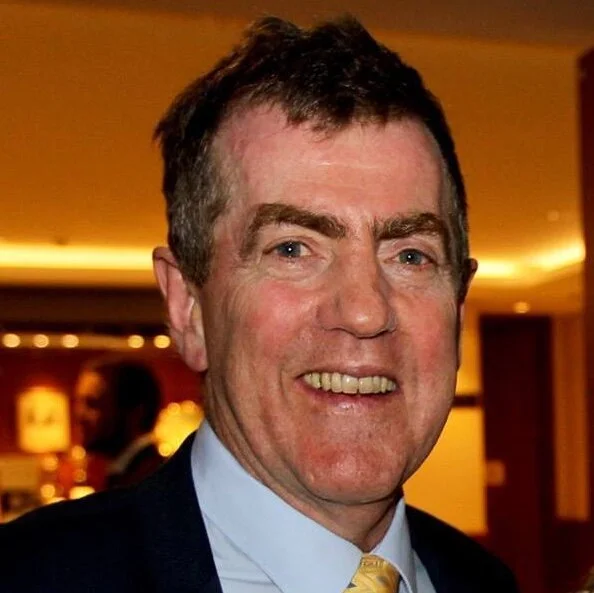
Episode 9 - Phil Everist
10 June 2020 · Steve Prior
Listen to this episode ·
Subscribe in Apple PodcastsSometimes a club’s champions are not on the field winning premierships.
We benefit from the support of over 200 volunteers who apply their skills and enthusiasm across the many roles needed to deliver and support our programs.
Phil Everist has travelled a familiar path for many; supporting his son Tim playing junior hockey, volunteering for various roles and serving as the Mens section secretary and head videographer. Hamish Ridland chats with Phil on his introduction to the club, how he began playing the game with the summer vets and how he’s faced a battle with Leukaemia. Listen on to discover his favourite players he’s watched through the viewfinder over the years.
Episode transcript
⚠️ Automated transcript
This transcript was generated automatically from the episode audio and lightly corrected. It may still contain transcription errors, and individual speakers are not labelled.
Sometimes, a club’s champions are not on the field winning premierships. We benefit from the support of over 200 volunteers who apply their skills and enthusiasm across the many roles needed to deliver and support our programs.
Welcome to the Camberwell Hockey Podcast.
This week, Mish is back, speaking with Phil Everist, one of our great volunteers, who started supporting his son Tim and Juniors before volunteering in many roles and taking up hockey himself in our summer masters. You’ll hear Phil speak quite candidly about his battles with leukaemia, and I’m really pleased to say that everything continues to go well, and we wish Phil the best of health going forward. Here are Hamish Ridland and Phil Everist. Welcome to the next edition of the Camberwell Hockey Club podcast. We’ve got a special guest tonight, which is Phil Everist, who’s a parent and a former committee member. He’s a player and a very passionate supporter of Camberwell.
Like many of our members, Phil did not come to hockey from a hockey background, but through his initial interest as a parent, he’s found his way to engage in the club at many levels. And this is not atypical for many of the members of Camberwell, and it’s certainly a strength of the club. This is his story. Thanks for joining us, Phil. My pleasure. So tell us, how did you find your way to Camberwell? My son, Tim, came home from primary school one day, and probably pretty unusually for him, he said he wanted to try hockey.
So I’d driven past Matlock and came home thinking that was something he wanted to have a go at. That’s how it all started. Minkey still in those days, or was it Hook into Hockey? No, he started at under-11, so he sort of missed the early stages and probably came in a little bit later than lots of the ones these days, lots of the kids, but started under-11. Just some of his friends were playing, or what was the hook to get him in? Well, I was asking him that the other day, and we thought it was one of his friends who wanted to try it and he wanted to follow him down. But no, he’d just seen the sport and thought, maybe that’s for me. Yeah, it’s the same initiative, really.
Yeah, because I was wondering if there was any other family background. So it was just of interest to Tim. Well, that’s basically it. We did have a link to the hockey club through neighbours and friends of ours, Charlie Morley. So we did know about the club, and I did actually visit it once to watch Charlie Morley and Wayne Thornton smash Footscray 18-0 one day. But that was the only time I ever went down there. That was back in the day of cinders, but yeah, really on the red. I really knew about the club but didn’t know much about hockey. And so you played football and a range of other sports.
Where did your major sporting passions lie? Generally through school it was football and cricket, but after school I played amateur football for four years, and it got difficult to get to training when I first started working full-time. But I played a fair bit of tennis at that stage too, so until Tim was born I was probably playing tennis, a bit of indoor cricket, a bit of basketball, a bit of volleyball, a bit of everything — sort of jack of a few trades and master of none. So that was probably another reason that hockey came about: I hadn’t specialised. And so, yeah, you took up hockey as an adult. And what led you to actually playing yourself? I was both spectating with the juniors and, occasionally — quite regularly — Tim would drag me down to watch some of his coaches play in Premier League.
One day in particular, I think there was a bit of a recruiting drive going on, with Jim Forsyth somewhere behind the scenes. And another primary school parent, Dave Tadgell, tapped me on the shoulder and basically said, do you want to play hockey? And I didn’t say no. And I ended up in a team that summer. That was, yeah, I think that was 2005 to 6, actually. So about 15 years ago? Yeah, pretty much 15 years ago, maybe 14. Yeah, 14 years ago, I think. And how did you find — I mean, it’s acquiring new skills as an adult, it’s a bit different to when you’re taking sport up when you’re a young fellow.
So how did you find transitioning into hockey given your previous sporting background? Not that easy. I mean, I still don’t think I’ve got any skills whatsoever, other than maybe getting in the way.
That can be useful to the defender. Well, that’s where the people have hidden me ever since, other than the first season, when I played a bit at left wing. But yeah, look, I can sort of get in the way and maybe do the odd tackle, but the stick skills themselves are pretty basic, and I just try and get the ball and get rid of it to one of my teammates as quickly as I can rather than try and run with it. So I’d say skills are certainly lacking, but enthusiasm isn’t. Yeah, taking up something new that you’re not necessarily a master at straight away. So it would have been easy to sort of play a year or two and just chalk that up to experience.
What was the key for you just to stay involved and keep playing 15 years later? Camaraderie, really, amongst the group. Sort of a great bunch of people, and it was probably an active type of activity, similar to a men’s shed in some ways. We’re all out there having a bit of a run around, which I enjoy, and chasing a ball, which I always enjoyed. But just the camaraderie and the feel around the club is why I’ve stayed involved.
From the game, like, what’s been the most challenging skill to pick up? Has it been hitting, trapping, or tomahawks? What’s the…? I haven’t tried too many tomahawks. It’s probably — I mean, the trapping and hitting I sort of found okay. It’s probably just running with the ball, those sorts of skills. Like, I don’t dare go into a tackle holding onto the ball. I’m trying to get rid of it, either under a foot or pass it off, before I get challenged in any way, because I just don’t think I’ve got enough tricks.
And most of the guys could pick me off pretty easily, I would have thought. I think — I mean, I’ve certainly enjoyed playing with Dad in the last couple of seasons. And I played one game with you in the Acorn side and came with big raps, and we got soundly beaten.
Yeah. We do have ups and downs at the Acorns. Yes, right. Has it always been the Acorns team, or have you spread the love across a few teams? Pretty much always been Acorns in the summer. Obviously, in winters you get more graded into the sort of grades that you truly belong, but the Acorns has been a fantastic group of people to play with over time. Yeah, it’s been fairly stable as well as a group, which has been good.
We’re just all getting too old — the youngies that have come down and started playing at 35, we struggle with them. But, you know, it’s good fun still. Well, I think that’s one of the good things. I think everyone’s — all the teams are relatively balanced, and there’s the draft system that the wise heads pour over and debate about what’s fair and what’s not. And Wansey has the Hollywood team and everything like that and all that goes with it. But I guess you would have played with a few pretty handy hockey players with the Acorns.
Who stood out that you’ve enjoyed playing with from a hockey perspective? Obviously, I’ve got to say Owen, if I’m going to get picked next year. Jamie Watson, Al, with his cack-handed approach — I mean, that was always mind-boggling to me in terms of watching him play. But Jamie Watson and Scotty Grimshaw, those are sort of some of the notable ones that come to mind pretty quickly. And then there’s a few younger guys that are able to run pretty well, so they’ve certainly helped our cause in recent times. And again, when you’ve got people like Wansey out there, or yourself, or some of the other young ones, it changes the dynamic pretty quickly. The Cashmores, et cetera.
Yeah, there’s certainly some great hockey players that have played. I think it’s great that people keep playing. I’d better mention the Prez too, Simon Winter. Yes, well, he’s handy. All that Pilates he’s been doing, he’s looking very nimble lately, isn’t he? He is. And then a year or so into playing, you had, I suppose, the first episode of leukaemia, and life took a different turn. What year was that when you were first diagnosed? Yeah, I remember it pretty vividly.
So it was the Friday of Melbourne Cup week, so in 2008. It certainly heightens your awareness about what you’re doing, and what you have energy for, and what’s important in your life, there’s no doubt. I suppose it must be difficult when the doctor gives you the diagnosis. What was initially going through your mind when he said the C word? Yeah, look, it was interesting, because the person who told me was a friend as well, through primary school, who subsequently didn’t feel he could be the doctor that treated me. But, you know, I didn’t know a lot about leukaemia, and you’re asking yourself, what does it mean? And what’s the prognosis? What’s the treatment? And then, probably after that initial shock, you’re sort of thinking, well, how the hell did that happen? And talking to the specialists afterwards, it’s just sheer dumb luck.
It’s just a probability, or something that’s happened somewhere along the way, with a mutation that didn’t get picked up by your immune system. So then — it happened so quickly. I never left hospital after the diagnosis, and straight across the road to Box Hill, and they started the treatment. So your mind’s really spinning, because you just haven’t had any time to contemplate and get used to the concept and process it. Yeah. So being acute myeloid leukaemia, that’s what the acute means, it’s just rapid onset. So you’re having to be treated really quickly. And what was the treatment back then for you? Was it chemotherapy?
Yes, it was. I did a trial chemotherapy called the ICE regime. And, yeah, so I didn’t even get through the first round of it before things turned for the worse. So I was sort of up to the last day saying, oh, give me the rest of the first dose. And they were saying, no, you’re too sick. So, yeah, about then they carted me off to intensive care,
which was, yeah, pretty ordinary. But then I was in a coma for six weeks, so it was probably definitely more ordinary for the family, because I wasn’t really aware of a whole lot for a long time. It must test all your reserves to come round, to turn the corner and fight your way back from that position. You sort of mentioned the family — what sort of toll did it take on the family? Oh, look, it does sound pretty melodramatic, but one night the family was brought in, and the priest was brought in, and they were saying goodbye to me. So that’s a long way back from there.
Di and her sister were fantastic support for her, but Di was constantly being asked about — you know, we want your permission for this type of treatment — and having to process what that was all about and take those decisions on my behalf. It’s just something I’d hate to be in her shoes for: that moment when you get a call and they say, oh, we think it would be interesting to do this biopsy to your liver, by your jugular, through your heart, there’s a few risks involved — and that sort of stuff that was pretty full on.
So, yeah, look, certainly for Di it was really tough. And then, when they did do a bit of a Hail Mary with the drug that seemed to make me turn the corner, she was sort of watching me try to recover. And I had no idea if I had brain damage or so for, you know, one or two weeks afterwards, because I just couldn’t communicate in any form. I was too weakened, and I lost 30-odd kilos in the coma, and it’s down to 50 kilos or so. And then having to learn to breathe and drink and eat and try and stand and all that sort of stuff, again, when your muscles just waste so badly.
And for the kids, obviously, really tough on them at that age. They were 12 and 15. And so Isabel was in primary school writing a story about this for a teacher and, you know, scaring the teachers to hell. And Tim would come into hospital and look at all the dials and all the sort of drips and things and say, well, how come this number’s changed from yesterday? And, look, he took an incredible interest in just any tweak to the numbers, or… Any signs. Yeah, any signs.
So, yeah, look, it took a pretty heavy toll, and I’m very fortunate to have had the next number of years I’ve had, really. So you sort of started to turn the corner — how long did the recovery take out of intensive care? You’re obviously in hospital a good while. How long did it take, once you started to turn the corner, to come good? Yeah, look, I suppose it was just before Christmas when I woke up. I left hospital on the 27th of Feb — that was basically the rehab hospital, I sort of spent two weeks in there.
But really, even basic things — getting on the floor, getting off the floor — I was still trying to do those things over the next three or four months, trying to just build up my capabilities and strength and things.
So hockey was a fair way away at that stage. A fair way away, yeah. What was the big thing for you? Was it just step by step, day by day, getting closer to coming home? Was that the goal, the light at the end of the tunnel? It really was step by step, basically just plod one foot in front of the other, one day after the other, and just sort of following the process, trusting the process. And when you got the opportunity — like at the rehab hospital, I was doing two lots of physio a day, trying to get off the bar into a frame, and going from the frame to a different frame, and basically starting to try and learn to climb up steps so I could get in the house at home when I got there, and things like that.
So, yeah, it’s pretty tiring doing the physio a couple of times a day. But anyway, I was pretty determined to get home. Stubborn bugger. Yeah, you’ve got to be. So November through December, steep decline, and then you’re sort of having to dig yourself out of hospital in February and home by… Oh, I came home on the 27th of February, yeah. And so there’s continuing treatment, but when did you sort of find out that you were in the clear and in remission? It’s sort of a bit of a moving target, because I mean, you sort of get into remission when your bloods recover, which I think would have happened during that process in February, March.
But you keep on getting told, after two years, well, that’s a good sign. And then five years is more indicative. And then you get to five years and they say seven years is basically cure, and you get to seven years and they say, well, ten years is good. And you sort of have this carrot that gets dangled in front of you and keeps on moving away every time you think you’ve got to where you needed to get. Yeah, the remission happened fairly quickly — I wasn’t able to leave hospital until I was in remission — but it’s just the constant sort of check-ups to see if you’re still in remission.
And every time you go, you’re sort of thinking, am I or aren’t I? But then you start to realise that if you’re feeling okay, you should be okay. I was going to ask, when does it sort of go from front of mind to back of mind in that process, on the road to recovery? Because I’m assuming it’s always in the back of your mind, but when does it stop being front of mind? Yeah, it’s a good question. I don’t know if I’ve really ever thought about that, but it’s very much your focus when you’re recovering, trying to use all your energy to do that, and then whatever else is left over, you sort of try and look after the ones near and dear to you and be positive. But look, I think when you start getting back to doing normal things, you gradually lose that real focus and awareness at front of mind.
But I don’t know if I can put a date on that, to be honest. I mean, even coming back — sort of becoming Dad again and back to work and those sorts of things. There were a couple of things along the way that made me realise that I wasn’t quite right. I can remember coming back and trying to play hockey the first night the following season, so the start of 2009-10. Summer season. Summer season, yeah. And I went to have a little hit-up, and someone just pushed the ball to me quite quietly, but, you know, about a step away from me.
And I had all this thought process of, okay, just move there. And my leg didn’t move, just didn’t follow what the brain was saying. And I just basically fell flat on my face and thought, well, probably not quite right yet. Not quite right yet. Yeah. Need a pre-season. And then I used to run off the bench for a bit. Well, it wasn’t running — it was Thunderbird off the bench for about 15 seconds, and so I called for a replacement.
And Owen looked — that was the first year I think I’d played with the Acorns — and Owen sort of looked at me and thought, well, what have I got here? So I didn’t have anything for him. But anyway, it was great to be back. Great to be back. Yeah, I’m sure I was glad to see you back. You’ve not only got involved as a player, but you’ve also got involved in administration over the years, as Tim’s gone through the ranks in the junior club and then lately also in the senior club.
What sort of roles have you undertaken as part of the club? Yes, I’ve been a year-level coordinator. I’ve followed through with Hot Shots, sort of been team manager for that, sort of the representative stuff, and committee member. And that’s been for four years, until this latest dose. And then, yeah, so basically club men’s section secretary for those four years. And do a bit of video camera work for the MPL. Yeah, we’ll touch on that shortly.
But so what do you see? I mean, you’ve seen a lot of different aspects of the club, both as a parent and administrator and a player. What do you see as some of the real strengths of Camberwell as a whole? I just think it’s a fantastic bunch of people. Amazing and generous people with their time, who have a rare trait overall, I think, of being very proud of the club — it’s successful, it is, yet very humble people. And it’s rare for anybody to have sort of an agenda that’s not in the club’s best interest.
So I think it’s a very easy community to enjoy, because it’s just people all working in the one direction. Yeah, I really grew up at the club, and there’s so many people — you couldn’t name all the people that contribute, I think. Yeah, it’s that even contribution from a lot of people over a long period of time. It’s pretty amazing. Yeah, it’s a really good culture, and, I mean, as tenuous as that can be, it has had a long period of that culture remaining fairly entrenched, but very easily lost as well, I suppose, if we let it go.
And so you’re like a lot of Camberwell supporters that have been involved in the Premier League team. There’s Roy, and there’s been Andrew Henderson, and Mum — Mum’s been obviously a long-time Camberwell supporter as well. You’ve got a bit of joy out of watching Premier League over the years. You could say it’s almost your team now. I certainly — it’s the case for many. What about the team, obviously aside from being a proud parent — what about that team you’ve enjoyed so much watching?
I think there’s a real camaraderie amongst the team. And you always get effort — so the team always turns up. And even on a bad day, you can sort of see the belief. It’s palpable in the body language that there was always a chance, and maybe that’s a consequence of the success over the years, but you always feel like you’re going to get the performance that is befitting of a team that really plays for each other, and that’s great to watch. It really is good to watch.
It’s been great seeing Tim develop over the years, and I think it’s a unique sort of spot — it’s an elite team, but it’s also a pathway to AHL and representative hockey. But there’s a big range of age in that team, particularly people just leaving juniors, but then there’s also people in the national program or finishing the national program well into their 30s. So you can sort of get a 15- to 16-year age gap. As a parent watching your son mature through that team, how do you think that’s influenced Tim growing up? Look, he’s had a remarkable number of great role models through his time there, and the coaching as well, in terms of the passion of Rosie, Katie and Will.
It’s been just unbelievable. But you sort of think about the opportunity to play and be shown what to do by the likes of Lachie Dreher and yourself, Steve Unkles, who are just top-class people as well. So when he first arrived in the team, there was probably a bit of an age gap in previous years — there probably weren’t too many people that were playing in the Premier League. But he’s gone from quite quiet and, not necessarily unsure, but just not necessarily believing himself at that level, to a bit of a leader and basically an organiser of defence and potentially a mentor. He seems to be mentoring some of the kids that are coming through, based on the experience he had where he found it quite difficult to come in with the gap of ages that were present at the time.
So he certainly looks out for the younger guys that are coming into the squad, which is a credit to him. So, yeah, it’s certainly leading in a quiet way generally. But, yeah, I’ve seen him grow significantly through the course of time with that band of people. Yeah, it’s sort of that circle of life, isn’t it? He’s got Hendersons he’s looking after, and Wansbroughs and things, and had others teach him in the same family, which is a nice circle-of-life moment that you get. I suppose one of the great fabrics of the club is people like yourself, being a parent, and the volunteering of the parents.
I remember when I first joined the state league team, there wasn’t a great cohort of parents, but now, you know, you see all the parents from the players heavily involved, doing various things and involved. You must have made some great friendships with some of the parents as well along the way. Yeah, absolutely. And obviously there’s people that you’ve perhaps gone through the juniors with, every second year if you’re a year apart. The mums have been sort of friends throughout the junior days,
but certainly the more senior members of the team at the time have been most welcoming as well, in terms of people coming through and the parents that have followed those players. So, you know, the Unkles, or the Ridlands, or the Websters have been part of that scene for a long time, have been fantastic in welcoming us into the group, and I’d like to do the same for others. And do you think, when Tim puts the stick up, do you think he’ll still come and watch the team? I suspect so. I feel pretty attached. So, yeah, look, I think I would see that as something I’d be doing quite regularly.
I do enjoy watching the sport and the game being played well. And if they can maintain that camaraderie and team spirit that brought those other qualities we talked about before, I think it’d be pretty compelling to come and watch. As I’ve got older, I’ve got a lot of joy seeing some parents and things that I used to play with — my contemporaries — still coming even to this day. And certainly, some of the premiership photos we’ve had, when you have all the faces in the background, there’s people from all different eras of the club that still come and watch.
I think that speaks volumes. You might even get down there on Thursday night with that red wine group.
Who are not, eh? That’s right. Well, I will. So Terry and Alpau would love to have you. And I’d say it would be just a tonic to get you back to health, I think. Absolutely. So Rosie asked you to do the videoing — you’ve been our chief videographer for quite a while. When did he first ask you to do that? I was trying to remember.
And certainly the 2013 year I was doing it, because I remember that grand final that stands out in my mind. But I don’t think it was too much earlier than 2013, certainly seven years. Yeah. Seven years, yeah. And it’s pretty demanding — like, particularly, you know, there’s a bit of discipline. I remember a couple of the early ones, there was, you know, five minutes of George Bazeley in the net and nothing else, but I mean, George wouldn’t mind having it on him for a little while.
But it does take a bit of discipline to be able to still watch the team that you enjoy watching but also do the job at hand. Is there any tricks to the trade? I mean, you’re right — it’s very easy to get so involved in the game you get distracted, when you just sort of feel so attached. So I have had times when my mind has wandered and the camera’s been on the wrong thing, but I think it’s just doing it more and more regularly and trying to, I don’t know, basically just keep focused on the game through the camera as much as I can.
Sometimes it’s hard to see where the ball is if you’re looking through the camera. So you’re sort of constantly looking up and down between the two, to try and make sure you are actually capturing some of the play and not the sunshine or the netting at the side of the court or whatever else, the pitch. I was just going to say, as the camera’s rolling, there’s a microphone on as well, so there’s always that to think about. And I think over the years, we’ve certainly come to enjoy some of the commentary, as the game’s getting more tense. I probably regretted some of the commentary as well. At the time, I do get heavily involved, and I take umbrage at some things that happen, and I’m sure I’ve dropped a few people in it when they’ve been sitting down in their reviews of the play, and said more than I should have about a particular piece of play or something.
But anyway, I don’t think I’ve been cautioned or warned off too many times for breaching a code. But, yeah, it is hard not to say stuff at times. Cody would often cut a clip at the end, after we’d go through that, of maybe a goal that we’d scored and a particular goal celebration, which you’d potentially have done, which was always quite — the team would look forward to that the most, I think, out of the whole game review: what was Phil’s reaction to this or that. Probably overt. Become quite the cult hero.
Yeah, it’s probably too over the top, I would have thought, because I just do get so involved. And when I was filming from the sidelines, you just got immersed in what was going on. At least last year, sort of Will preferred the front-on, the sort of down-the-ground view, which put me in amongst the parents and spectators more so, and I tried to mind my P’s and Q’s a bit more. I remember quite a number of cold nights up at the State Hockey Centre at the top level there.
It can be pretty fresh up there. And I think you were always a bit half full and I was a bit half empty, I think, when it was played back on the video. You were still able to organise them from that far up too, Mish? Only if we weren’t going very well, yeah. It’s amazing how much work goes into a game these days. Obviously, when Rosie took over, he was doing it all himself. And, you know, when there was Katie, myself and Rosie, it was three people doing all the work that Rosie used to do. But, yeah, I think from a player’s perspective, being able to watch yourself and get that feedback is invaluable.
And it was much higher quality having someone like yourself do it all the time, rather than whoever was injured, leaving it up to random players to do it. So I think all the Premier League guys have benefited enormously from having that as a tool week to week, on YouTube, to watch. I did quite enjoy doing it. None of the players that were injured ever wanted to take the camera, for some reason. Like most things at Camberwell, you’ve got to find someone else to replace you. So you’ll have to groom the next person if you want to hand it on. I’m working on him.
He knows who he is.
Anyway, I’m hoping to get back at some stage too, to be honest. I think, yeah, I think we’re looking forward to hearing the dulcet tones and the ohs and the oohs when Michael McLean or one of the umpires doesn’t necessarily agree with your interpretation of a stick tackle or a check. I have got glasses now though too, so I probably can be a little bit fairer on them as well. So obviously when you’ve been doing the filming, you’ve got to see a number of the Camberwell players play. Who are your favourite players that you’ve enjoyed watching over the years? There’s a number of different players that I’ve loved watching for different reasons, so I’m not going to single out one.
Obviously, incredible goalkeepers — Doc and Baz have been amazing over the journey. Declan Gerrity, I loved watching his amazing skills in close, the way he can dodge two or three people and still not move out of a phone box. He’ll be happy with that mention. He’ll be happy with that. Scruffy’s pure athleticism, his ability to break lines, and just his graceful running style is fantastic.
Aaron, obviously very stealthy in his steals. I love the way he used to sort of be like a cat burglar and come up behind people and steal the ball back, but also his work in the circle when he dropped the hammer on a shot — he seemed to be able to do it from anywhere really quickly. I always thought TA had ridiculous hand-eye coordination and his ability to play anywhere, but some of the traps, when people were belting the ball as hard as they can from a metre away — just thought, how the hell would you do that? Yeah, I think he and Aaron are certainly, in that era, the best two ball-handlers for sure. Stevie and yourself, for the leadership and just the professional approach for amateurs — the way you guys go about it was just ridiculous in terms of preparation and leadership.
I loved watching Dita TD for his extended arms, and watching forwards sort of twiddle, twiddle, twiddle and run out of ideas before he just strips them of the ball and runs away with it.
Jimmy and Jaco, just this year, work rate and resilience. And look, obviously enjoy watching Tim, but his strengths are probably more about the unrewarded running and positioning and organisation of defensive efforts, and pretty composed on the ball. And then we’ve had some amazing coaches in the time too, with Rosie, Katie and Will. I mean, the amount they’ve put in — you know, the effort for the reward is just really ridiculous in terms of how much effort those three have put in over the last, I don’t know, is it 10 years?
At least, yeah. Yeah, and just so professional as well. It’s just been amazing to watch. They’ve been great for the group and basically keeping the team and that culture going. Any opposition players you’ve enjoyed watching? One that hasn’t been playing for a while, probably Byron Walton was one I just thought was the heartbeat of Greensborough. When he wanted to change the game, he’d just go and do something ridiculous, and just had the ability to do anything.
So I just thought he was one — I’d probably seen him through some of the juniors as well — that just stepped up straight away in the seniors. And obviously it was a loss to the game when he went to footy, but I always admired his work. Yeah, we had a few ding-dong battles with Greensborough over time, and he certainly figured in a lot of them, for sure. Just always thought he’d step up when they needed him to do something. He would sort of take it on himself to do it. Obviously I apologise to all the others that might be on the edge of that era, but I’ve got a fairly narrow window to comment on in terms of players. But if there are people that have seen a lot more than I have, they’ll sort of probably not even rate some of those in the conversation, but these are the ones that I’ve enjoyed watching.
Well, you see it a bit differently through the viewfinder than you do necessarily in the stands. Yeah. You’ve got a good eye for it. Yeah, for sure. And so you’ve touched on it already, but late last year you got some bad news, that it has come back. I remember seeing you just after Christmas, and you’d sort of started, or were about to start, treatment. And I suppose coronavirus and that was just really on the horizon.
It wasn’t really — it was something we were all aware of, but I don’t think anyone really appreciated what was coming. And I thought this was kind of good to have you on tonight to really talk, because we’re all very keen to get back into hockey and get back into normality. But timing’s everything in life. You find yourself having to get up and go again, but this time also with the added worry, I suppose, with something like coronavirus in the community. Give us a bit of insight into how you’ve had to approach this time around compared to last time, and how you’re going.
A bit more proven than last time. Obviously, 11 years on, there’s been a lot of progress in various treatments. There is a stem cell transplant that I’ve undertaken as well, which is one of those things that’s the only cure that was offered, in terms of the two professors that I consulted about it. There’s risk associated with that as well, but I certainly consulted pretty heavily with the family about undertaking a stem cell transplant, and now we’re day 22 since that, and so far it’s gone reasonably well. So, you know, feeling pretty good, and the bloods are coming back, but there’s a period ahead of me where I’ll have very little immunity, so I’m going to have to stay in a COVID-like bubble for quite some time. So from the point of view of COVID timing, it certainly mucked up the logistics of the stem cell donor sort of having his cells collected and having them transported over here, which changed the process a bit.
They had to come frozen instead of fresh, and they had to be here before I started the treatment, because the risk of them not arriving at the right time was just too high for that to happen. If you’d started treatment and they didn’t arrive, that was basically, as my doctor said the other day, a death sentence.
So a few of those things have changed. But I suppose from the perspective of a patient like myself, the whole COVID thing has made everybody so much more aware of transmission of infections and disease. And so the personal hygiene and disinfection use and all those sorts of things, and the distancing, social distancing, means that what I’m facing as a matter of course, everybody else is faced with, and so there’s a far greater awareness of what’s appropriate. So in a lot of ways, if I was going to do it, now probably wasn’t a bad time to undertake it, because if you’ve got your cells from the donor, then the hospitals are really wary of visitors, numbers of visitors, and have locked down to a greater degree, and the community at large is just so much more aware of the distancing measures, which are important for my ultimate recovery over the next little while.
And what’s the duration that they’re telling you you’re going to need to have that level, until your immunity comes back? What’s the window? So they’re certainly saying 100 days from the transplant are important, but things like all my original immunisations aren’t valid any longer. So anything that I’ve had, like measles, mumps, rubella, I have to go through vaccination again, sort of starting at six months for the inactive ones, but the live vaccines I can’t take until probably two years, when my immune system has developed.
So there’s probably various levels of isolation I need to have that are driven by some of those things. And you had to make a pretty hard choice too, around who was going to live and see you in the last few months. You sort of split your kids down the middle. Yeah, I was limited to two visitors only for the whole time I was in hospital. So given the COVID situation, I sort of opted for the ones that were already living at home and weren’t in danger of having to change what they were doing or potentially bring infections from outside a closer family. So unfortunately, Tim was one that wasn’t on the list — it was Di and Isabel who were both living at home.
Obviously, they were the ones, on that basis, that were probably the safer visitors for me and wouldn’t necessarily change Tim’s world too much in terms of his partner and her family, etc. So, yeah, a bit torn there, but anyway, it was just one of those things. And you were telling me there was a bit of history repeating — you may not live this down with Tim, obviously, that there’s the second rung on the ladder in terms of the favouritism of the children. So you were telling me this is sort of something else that happened in your family as well.
Well, I wasn’t necessarily going to go there, but I don’t think that’s true for Tim. But Dad was awarded an honour at one stage — and this is the one you were talking about, wasn’t it, Mish? That is the OAM story. And he had two — his wife — and two other passes: my older brother and older sister got that, and then they met someone else who had four kids in the award ceremonies, and he’d asked for two more tickets, where his dad didn’t feel it was appropriate to do so.
So, yeah, look, I missed out on that, with my younger brother, but I think I’ll get over it eventually. I don’t think Tim will hold it against you. I think he’d rather see you get back fit and well, for sure. It’s timely for all of us to think about what we’re doing and why we’re doing it. And I think, you know, in Australia, fortunately, COVID-19 has been on the scale that you’d want it to be. So we’ve all been in lockdown and relatively safe, but I thought it was appropriate to talk to you, given the sense that we’re all doing this for people who are vulnerable to infectious disease particularly, and timing has it that you fall in that window. And there’s certainly others in the club, like Anthony Yates and others, that are in different spots in that journey.
But whilst we’re all rushing to get back to hockey, there are bigger things at play at the moment. And look, you certainly appreciate the time you have in between the two bouts. You know, I’ve had a fantastic 10 years, and you sort of really appreciate every moment that you get given, and try and maintain a perspective about what’s important through all of that. And it’s been fantastic to be on your CHC WhatsApp group and seeing all the positive steps and the white blood cell count going north. So just thank you very much for being on the program. It’s certainly a hard topic to cover, but I think, given where we’re at, it’s certainly a good one to talk about.
And I know that the whole club’s certainly behind you in wishing you all the best and staying connected with you to make sure that you feel supported. And we look forward to you talking on the — cheering on the sidelines and commentating on the video very soon, and back out there playing in the Acorns. Yeah, look, I really appreciate all the support I have had, both from the club and members around the club and other people further on — the positive vibes and all that. Really, you do sense it, and you do feel it, and it gives you another thing to keep pushing for.
So, you know, sort of getting back there will be a highlight for me.